Neuroscience Digest – July 10, 2016

ix
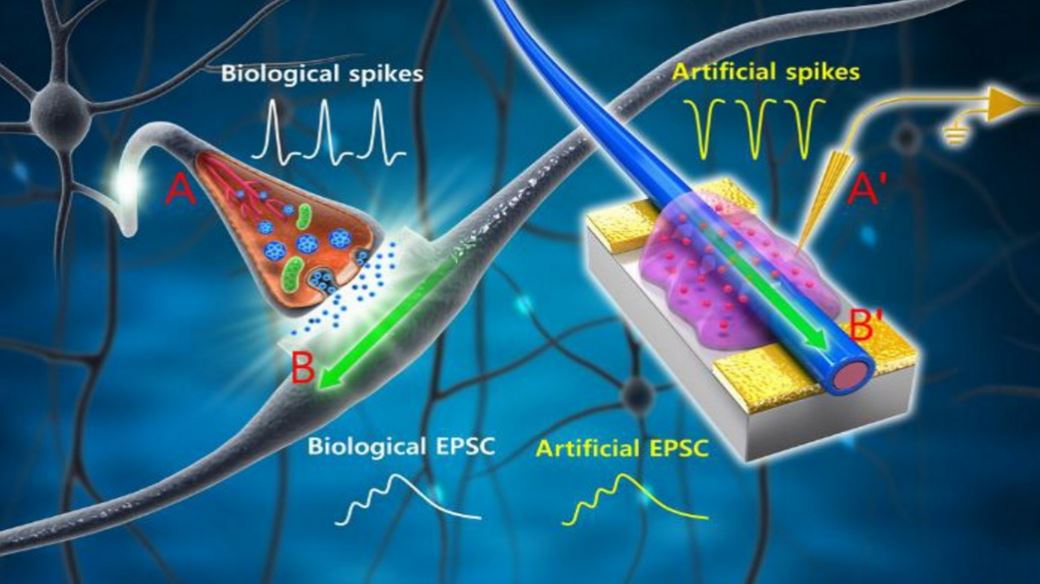
Schematic of biological neuronal network and an organic nanowire (ONW) synaptic transistor (ST) that emulates a biological synapse. The yellow conductive lines and probe (A′) mimic an axon (A) that delivers presynaptic spikes from a pre-neuron to the presynaptic membrane. The mobile ions in the ion gel move in the electrical field, analogous to the biological neuron transmitters in the synaptic cleft; the field later induces an excitatory postsynaptic current (EPSC, light blue line) in the biological dendrite (B). An ONW (B′) combined with a drain electrode (yellow surface) mimics a biological dendrite (B). EPSC (light green line) is generated in the ONW in response to presynaptic spikes and is delivered to a post-neuron through connections to the drain electrode. (credit: Wentao Xu et al./Science Advances)

Summary

Digest for the week of July 4 to July 10, 2016

Featured Post:
Khan Academy – Nervous System Videos

Select items:
Johns Hopkins neuroscientist Richard Huganir elected president of Society for Neuroscience
Artificial synapse said to rival biological synapses in energy consumption and function
Fewer young scientists could spell trouble for biomedical research
Stanford Art of Neuroscience competition

OnAir Post: Neuroscience Digest – July 10, 2016

Discuss

OnAir membership is required. The lead Moderator for the discussions is Scott Joy. We encourage civil, honest, and safe discourse. For more information on commenting and giving feedback, see our Comment Guidelines.

    Skip to toolbar