Noah Hochberg

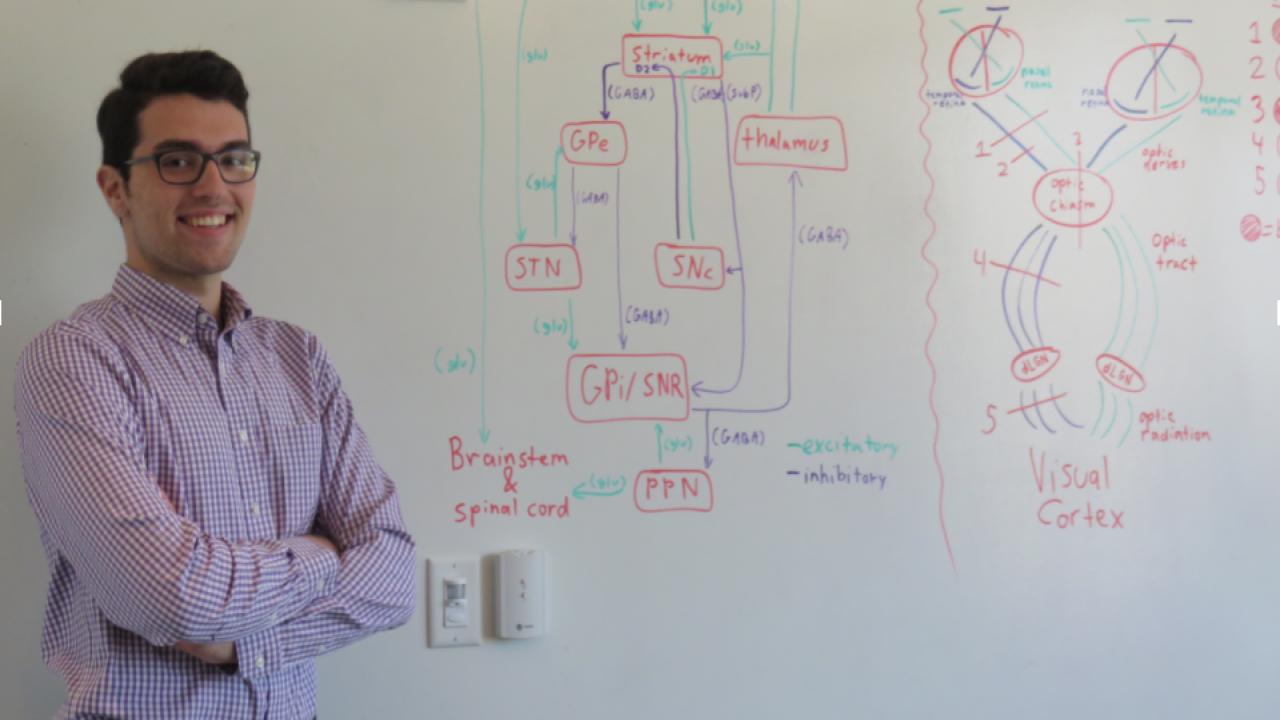
I am an undergraduate student majoring in neuroscience.  I discovered neuroscience in a freshman psychology course, and after completing a course entitled brain and behavior during sophomore year, I declared my major.  Currently, my interests in neuroscience include the eye and the ocular system, addiction and the opioid epidemic, neural recording and mapping, neuroanatomy and physiology, psychopharmacology, pain, movement, neurodegenerative disorders, mental health, etc.  The more I delve into my major, the more I will narrow down my interests.  I am working towards a position in graduate school after Lawrence to obtain either a masters or doctorate in neuroscience.

OnAir Post: Noah Hochberg

Addictions Overview

The main components of a ‘reward system’, and how it connects to brain areas involved in motivation and emotion, are now defined, and much has been discovered about the chemical messenger systems such as dopamine and noradrenaline that are fundamental to the mechanism of addiction.

Link to Addictions Hub

Initial Overview based on Wikipedia entry Jan. 5, 2016

OnAir Post: Addictions Overview

Breakfast increases dopamine levels, reduces food intake

“Our research showed that people experience a dramatic decline in cravings for sweet foods when they eat breakfast,” said Heather Leidy, an assistant professor of nutrition and exercise physiology.

“However, breakfasts that are high in protein also reduced cravings for savory – or high-fat – foods. On the other hand, if breakfast is skipped, these cravings continue to rise throughout the day.”


Press Release

Eating Breakfast Increases Brain Chemical Involved in Regulating Food Intake and Cravings, MU Researchers Find

University Missouri News By Sarah Clinton 10/15.2014

COLUMBIA, Mo. – According to the Centers for Disease Control and Prevention (CDC), many teens skip breakfast, which increases their likelihood of overeating and eventual weight gain. Statistics show that the number of adolescents struggling with obesity, which elevates the risk for chronic health problems, has quadrupled in the past three decades. Now, MU researchers have found that eating breakfast, particularly meals rich in protein, increases young adults’ levels of a brain chemical associated with feelings of reward, which may reduce food cravings and overeating later in the day. Understanding the brain chemical and its role in food cravings could lead ...

OnAir Post: Breakfast increases dopamine levels, reduces food intake

Cigarette smoking and thinning of the brain’s cortex

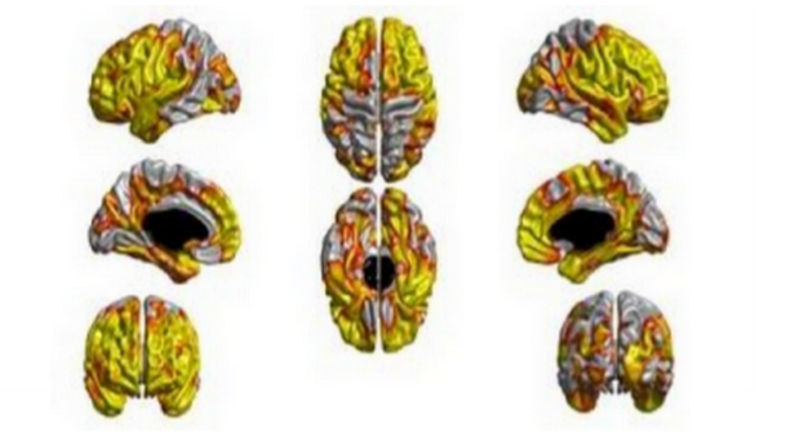
A major study shows new evidence that long-term smoking could cause thinning of the brain’s cortex.

The cortex is the outer layer of the brain in which critical cognitive functions such as memory, language and perception take place. Interestingly, the findings also suggest that stopping smoking helps to restore at least part of the cortex’s thickness.

Molecular Psychiatry, 2/10/15 (open)

Yellow/orange areas are regions where the thickness of the cortex at age 73 is associated with the amount of lifetime smoking; the greater the amount of lifetime smoking, the thinner the cortex.Credit: Molecular Psychiatry, S Karama, IJ Deary et al

Press Release

Montreal Neurological Institute and Hospital.

Years ago, children were warned that smoking could stunt their growth, but now a major study by an international team including the Montreal Neurological Institute at McGill University and the University of Edinburgh shows new evidence that long-term smoking could cause thinning of the brain’s cortex. The cortex is the outer layer of the brain in which critical cognitive functions such as memory, language and perception take place. Interestingly, the findings also suggest that stopping smoking helps to restore at least part of the cortex’s thickness.The study involved 244 male ...

OnAir Post: Cigarette smoking and thinning of the brain’s cortex

Multitasking hunger neurons

In the absence of food, neurons that normally control appetite initiate complex, repetitive behaviors seen in obsessive-compulsive disorder (OCD), and anorexia nervosa, according to a new study by Yale School of Medicine researchers.

Neurons in the hypothalamus that control food intake are also involved in other behaviors. Known as Agrp neurons, these cells also control repetitive, stereotypic behaviors in mice when food is not available, the researchers discovered.

Press Release

Multitasking hunger neurons also control compulsive behaviors

Yale News 3/6/15 by Karen Peat

In the absence of food, neurons that normally control appetite initiate complex, repetitive behaviors seen in obsessive-compulsive disorder (OCD), and anorexia nervosa, according to a new study by Yale School of Medicine researchers.

The findings are published in the March 5 online issue of the journal Cell.

Neural circuits are responsible for flexible goal-oriented behaviors. The Yale team investigated how a population of neurons in the hypothalamus that control food intake are also involved in other behaviors. Known as Agrp neurons, these cells also control repetitive, stereotypic behaviors in mice when food is not available, the researchers discovered.

The team tested the behavior of mice after the Agrp neurons were activated. They found that in the absence of food, ...

OnAir Post: Multitasking hunger neurons

Drugs and the brain on Britain’s Channel 4

Live television tackling scientific documentary, education on safe drug use, stories from users themselves, and debates on international drug policy.

Two episodes completed to date: The Ecstasy Trial. “Onraveling the mysteries of MDMA, revealing how the drug affects the brain” and Cannibis on Trial, “Volunteers take part in a scientific trial looking at the effects on the brain of cannabis.


Episodes

Drugs Live: The Ecstasy Trial (series 1, episode 1)

Drugs Live: Cannibis on Trial (series 1, episode 2)

Articles about Drugs Live Series

Cannabis, neuroscience and TV: A ‘joint’ enterprise

The Guardian by Matt Wall, Rebecca Pope, Tom Freeman and Claire Mokrysz

Drugs Live: Cannabis on Trial, which aired recently in the UK, tried to be a lot of things; it’s rare to see live television tackling scientific documentary, education on safe drug use, stories from users themselves, and debates on international drug policy. For us and our colleagues at University College London (UCL) and Imperial College, it represented the conclusion of two years of work on a major research project, largely funded by Channel 4 (with DrugScience and the Beckley Foundation).

OnAir Post: Drugs and the brain on Britain’s Channel 4

Skip to toolbar