Alzheimer’s Disease Overview

The most common early symptom is difficulty in remembering recent events (short-term memory loss). As the disease advances, symptoms can include problems with language, disorientation (including easily getting lost), mood swings, loss of motivation, not managing self care, and behavioral issues.

Link to Alzheimer's Hub

Initial Overview based on Wikipedia entry Jan. 5, 2016.

OnAir Post: Alzheimer’s Disease Overview

Retrieving memories from early Alzheimer’s


Summary

In the early stages of Alzheimer’s disease, patients are often unable to remember recent experiences. However, a new study from MIT suggests that those memories are still stored in the brain — they just can’t be easily accessed.

The MIT neuroscientists report in Nature that mice in the early stages of Alzheimer’s can form new memories just as well as normal mice but cannot recall them a few days later.

“Memory retrieval by activating engram cells in mouse models of early Alzheimer’s disease” By Roy et al | Nature, 2016 Mar 24


Article in Nature

Memory retrieval by activating engram cells in mouse models of early Alzheimer’s disease

Readcube PDF

By Dheeraj S. Roy, Autumn Arons, Teryn I. Mitchell, Michele Pignatelli, Tomás J. Ryan and Susumu Tonegawa Nature | March 24, 2016 | 531(7595):508-12

Abstract

Alzheimer’s disease (AD) is a neurodegenerative disorder characterized by progressive memory decline and subsequent loss of broader cognitive functions1. Memory decline in the early stages of AD is mostly limited to episodic memory, for which the hippocampus has a crucial role

OnAir Post: Retrieving memories from early Alzheimer’s

More DNA in Alzheimer’s Brain Cells

The Surprise Discovery Offers a New Understanding of the Disease

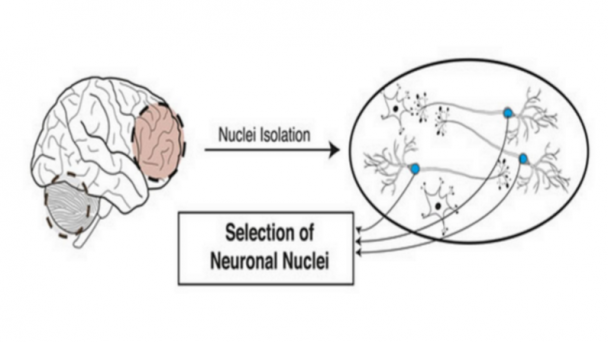
Scientists at The Scripps Research Institute (TSRI) have found diverse genomic changes in single neurons from the brains of Alzheimer’s patients, pointing to an unexpected factor that may underpin the most common form of the disease.

A new study shows Alzheimer’s brains commonly have many neurons with significantly more DNA and genomic copies of the Alzheimer’s-linked gene, APP, than normal brains.

Scripps Press Release

TSRI Scientists Find More DNA and Extra Copies of Disease Gene in Alzheimer’s Brain Cells

LA JOLLA, CA – February 4, 2015 – Scientists at The Scripps Research Institute (TSRI) have found diverse genomic changes in single neurons from the brains of Alzheimer’s patients, pointing to an unexpected factor that may underpin the most common form of the disease.

A new study, published February 4, 2015 in the online journal eLife, shows that Alzheimer’s brains commonly have many neurons with significantly more DNA and genomic copies of the Alzheimer’s-linked gene, APP, than normal brains.

“Our findings open a new window into the normal and diseased brain by providing the first evidence that DNA variation in individual neurons could be related to brain function and Alzheimer’s disease,” said Jerold Chun, professor at ...

OnAir Post: More DNA in Alzheimer’s Brain Cells

Amyloid Clumps in Young Brains

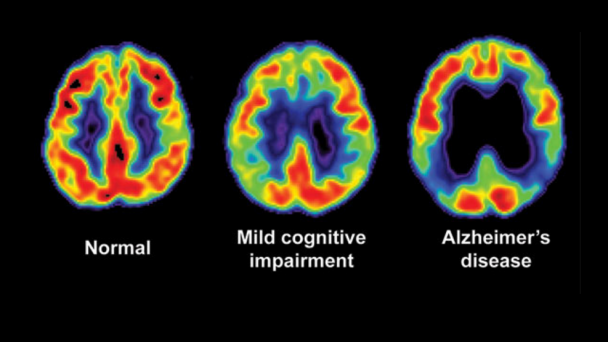
Scientists believe this is the first time amyloid accumulation has been shown in such young human brains.

“Discovering that amyloid begins to accumulate so early in life is unprecedented,” said lead investigator Changiz Geula, PhD, research professor in the Cognitive Neurology and Alzheimer’s Disease Center. “This is very significant. We know that amyloid, when present for long periods of time, is bad for you.” Brain 3/2/15

For the first time, lifelong accumulation of toxic protein has been discovered in younger brains. Previous research has suggested that growing clumps of amyloid likely damage and eventually kill memory-related neurons, leading to Alzheimer’s disease.

Press Release

Northwestern University Feinberg School of Medicine 3/2/15 by Maria Paul

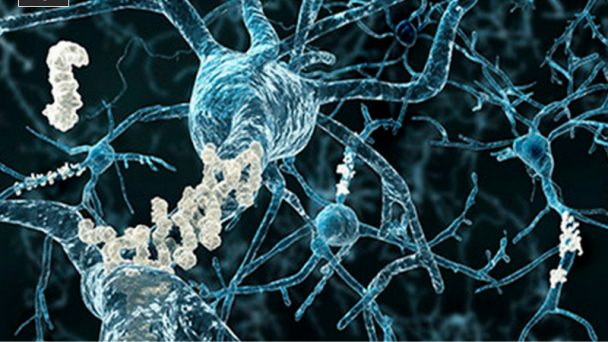
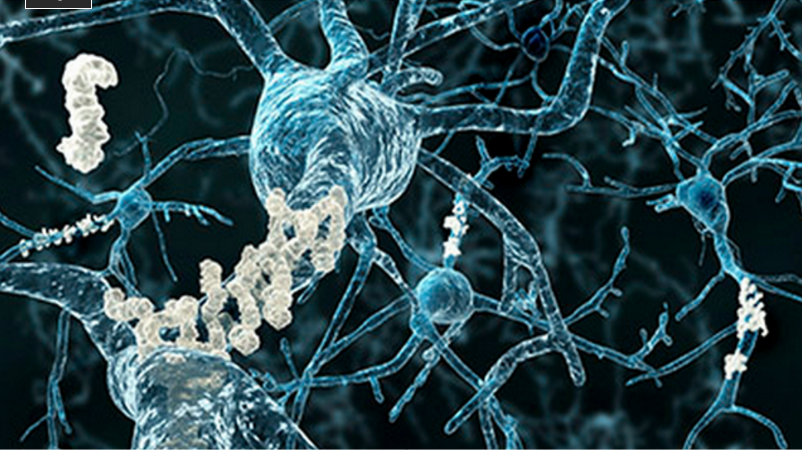
Amyloid – an abnormal protein whose accumulation in the brain is a hallmark of Alzheimer’s disease – starts accumulating inside neurons of people as young as 20, a much younger age than scientists ever imagined, reports a surprising new Northwestern Medicine study.

Scientists believe this is the first time amyloid accumulation has been shown in such young human brains. It’s long been known that amyloid accumulates and forms clumps of plaque outside neurons in aging adults and in Alzheimer’s.

“Discovering that amyloid begins to accumulate so early ...
OnAir Post: Amyloid Clumps in Young Brains

Ultrasound Technology for Alzheimer’s

University of Queensland scientists have found that non-invasive ultrasound technology can be used to treat Alzheimer’s disease and restore memory.

The drug-free approach breaks apart the neurotoxic amyloid plaques that result in memory loss and cognitive decline. The approach is able to temporarily open the blood-brain barrier, activating mechanisms that clear toxic protein clumps and restoring memory functions.

Science Translational Medicine 3/11/15


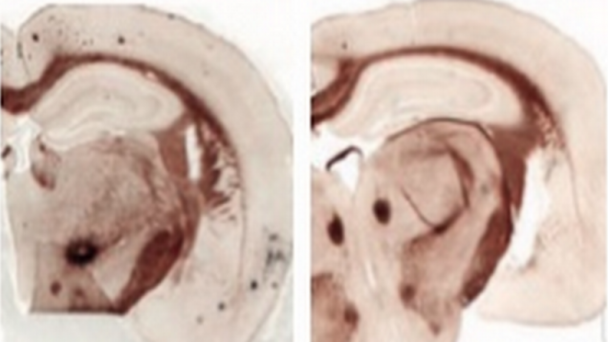
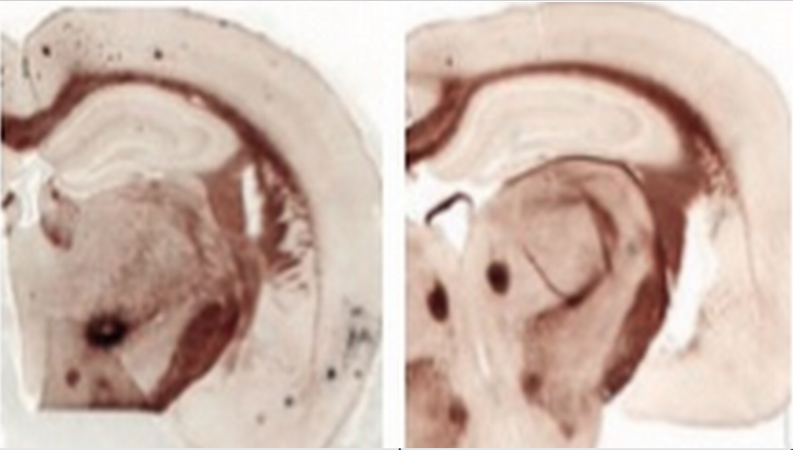
Scanning ultrasound plaque reduction in mouse-model hippocampus. (Left) without treatment. (Right) with treatment. Compact mature plaques are shown in amber and more diffuse amyloid deposits are shown in black. Quantification of amyloid plaques revealed a 56% reduction in the area of cortex occupied by plaques. (credit: Gerhard Leinenga and Jürgen Götz/Science Translational Medicine)

Press Release

University of Queensland News 3/12/15

Queensland scientists have found that non-invasive ultrasound technology can be used to treat Alzheimer’s disease and restore memory.

University of Queensland researchers discovered that the innovative drug-free approach breaks apart the neurotoxic amyloid plaques that result in memory loss and cognitive decline.

Welcoming the findings today at UQ’s Queensland Brain Institute, Queensland Premier Annastacia Palaszczuk said they could have a wide impact for the community.

“The Government’s $9 million investment into this technology was to drive discoveries into clinics, ...

OnAir Post: Ultrasound Technology for Alzheimer’s

‘MIND’ Diet May Protect Against Alzheimer’s

A new diet, known by the acronym MIND, could significantly lower a person’s risk of developing Alzheimer’s disease.

Rush nutritional epidemiologist Martha Clare Morris with her colleagues developed the “Mediterranean-DASH Intervention for Neurodegenerative Delay” (MIND) diet. The study shows that the MIND diet lowered the risk of AD by as much as 53 percent in participants who adhered to the diet rigorously, and by about 35 percent in those who followed it moderately well. Alzheimer’s & Dementia 2/11/15


Press Release

Rush University Medical Center 3/16/15

Even moderate adherence shows reduction in incidence of devastating brain disease.

A new diet, appropriately known by the acronym MIND, could significantly lower a person’s risk of developing Alzheimer’s disease, even if the diet is not meticulously followed, according to a paper published online for subscribers in March in the journal Alzheimer’s & Dementia: The Journal of the Alzheimer’s Association.

Rush nutritional epidemiologist Martha Clare Morris, PhD, and colleagues developed the “Mediterranean-DASH Intervention for Neurodegenerative Delay” (MIND) diet. The study shows that the MIND diet lowered the risk of AD by as much as 53 percent in participants who adhered to the diet rigorously, and by about 35 percent in those who followed it moderately well.

“One of the more exciting ...

OnAir Post: ‘MIND’ Diet May Protect Against Alzheimer’s

Can Video Games Fend Off Mental Decline?

“Brain training” games like Project: Evo have become big business, with Americans spending an estimated $1.3 billion a year on them. They are also a source of controversy.

Adam Gazzaley found that it does indeed appear to prompt older brains to perform like ones decades younger. (“Game changer,” the cover of Nature magazine declared when it published his findings last year.) Now Project: Evo is on its own twisty path — the Boston company that is developing it, Akili, which Gazzaley advises, is seeking approval from the Food and Drug Administration for the game.

Article in NYTimes about effectiveness of Brain Training Games By Clive Thompson Oct. 23, 2014

“Brain training” games like Project: Evo have become big business, with Americans spending an estimated $1.3 billion a year on them. They are also a source of controversy. Industry observers warn that snake-oil salesmen abound, and nearly all neuroscientists agree there’s very little evidence yet that these games counter the mental deficits that come with getting older. Gazzaley, however, is something of an outlier. His work commands respect from even the harshest critics. He spent five years designing and testing the sort of game play I had just experienced, and he found that ...

OnAir Post: Can Video Games Fend Off Mental Decline?

Skip to toolbar