My Inner Life with Asperger’s

https://www.youtube.com/watch?v=3yfFwDq4R5MVideo can’t be loaded because JavaScript is disabled: My Inner Life with Asperger’s | Alix Generous | TED Talks (https://www.youtube.com/watch?v=3yfFwDq4R5M)


Summary

Alix Generous is a young woman with a million and one ideas — she’s done award-winning science, helped develop new technology and tells a darn good joke (you’ll see). She has Asperger’s, a form of autistic spectrum disorder that can impair the basic social skills required for communication, and she’s worked hard for years to learn how to share her thoughts with the world. In this funny, personal talk, she shares her story — and her vision for tools to help more people communicate their big ideas.

Published Sep 8, 2015 | By TED


Profile

Alix Generous is a college student and biology researcher with Asperger syndrome. She stresses the importance of building accepting environments for all kinds of minds.  Alix Generous is a nationally acclaimed public speaker, published scientist, and mental health advocate. She ...

OnAir Post: My Inner Life with Asperger’s

Autism Overview

These signs often develop gradually, though some children with autism reach their developmental milestones at a normal pace and then regress. The diagnostic criteria require that symptoms become apparent in early childhood, typically before age three.

Link to Autism Hub

Initial Overview based on Wikipedia entry Jan. 5, 2016.

OnAir Post: Autism Overview

Can oxytocin treat autism?

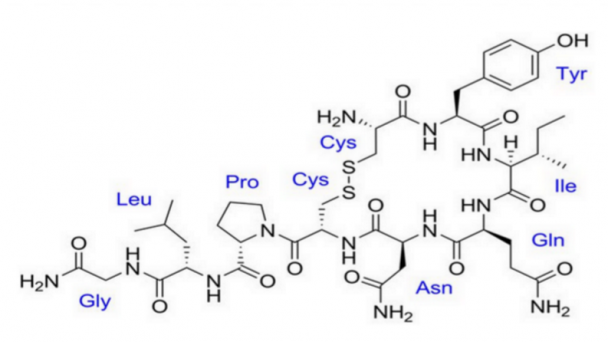
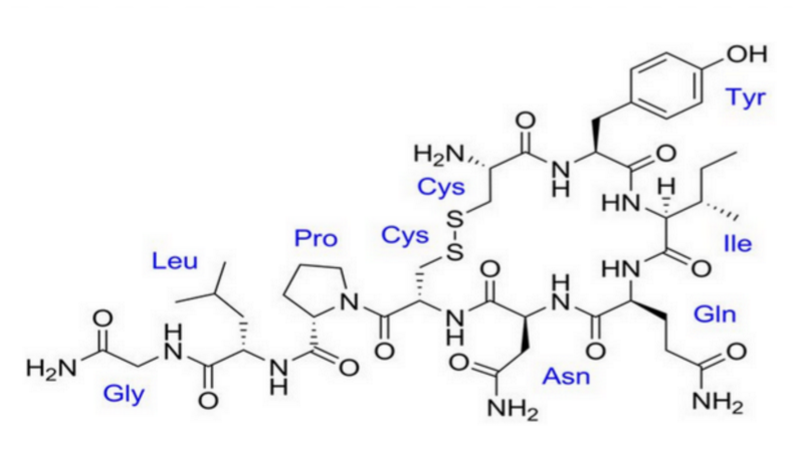
Oxytocin, a natural brain peptide produced in the hypothalamus, has received considerable attention as a potential treatment for social deficits in ASD.

Researchers at the Yerkes National Primate Research Center, Emory University, have shown inducing the release of brain oxytocin may be a viable therapeutic option for enhancing social function in psychiatric disorders, including autism spectrum disorders and schizophrenia. Neuropsychopharmacology 2/5/15

This image is the chemical structure of oxytocin with labeled amino acids. Image credit: Edgar181


Press Release

Oxytocin May Enhance Social Function in Psychiatric Disorders

 The oxytocin system is well-known for creating a bond between a mother and her newborn baby, and oxytocin is a lead drug candidate for treating social deficits in autism. Getting synthetic oxytocin into the brain, however, is challenging because of a blood-brain barrier. In this new study, lead researchers Meera Modi, PhD, and Larry Young, PhD, demonstrated for the first time the potential of oxytocin-releasing drugs to activate the social brain, to create bonds and, they believe, to possibly treat social deficits in psychiatric disorders. Meera, who is now at Pfizer, was a graduate student at the Yerkes Research Center when she worked with Young on ...

OnAir Post: Can oxytocin treat autism?

Humanoid robots engage children with Autism

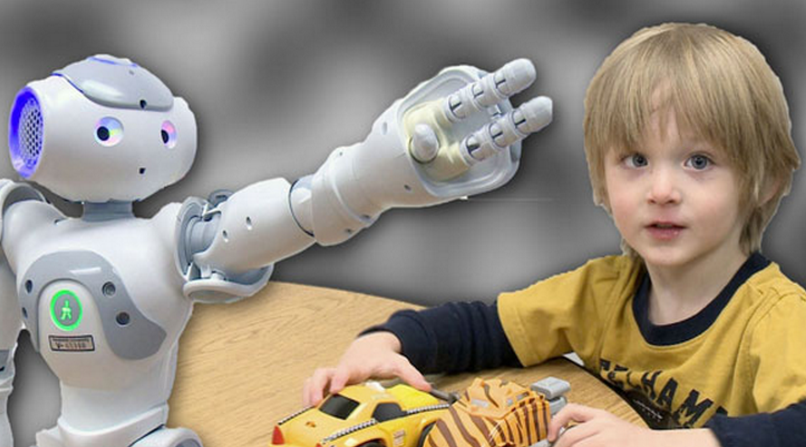
With support from the National Science Foundation (NSF), mechanical and computer engineer Nilanjan Sarkar and psychologist Zachary Warren of Vanderbilt University have developed a learning environment for kids with autism, built around state-of-the-art technologies. Many children with autism have an affinity for technology.

“Engineering researchers are investigating new designs that allow robots to interact easily and work cooperatively with humans,” says Ted Conway, program director in the NSF Directorate for Engineering. “The success of these ‘co-robots’ requires intelligent human-robotic performance that can adapt to a variety of applications

With the National Science Foundation, Nilanjan Sarkar and Zachary Warren of Vanderbilt University have developed a learning environment for kids with autism, built around state-of-the-art technologies including the humanoid robot NAO.

NSF is major catalyst for this research

Humanoid robot “Russell” engages children with autism

Science Nation, NSF’s online magazine, Nov. 18, 2013

With support from the National Science Foundation (NSF), mechanical and computer engineer Nilanjan Sarkar and psychologist Zachary Warren of Vanderbilt University have developed a learning environment for kids with autism, built around state-of-the-art technologies. Many children with autism have an affinity for technology.

The robot has some of the characteristics of a human, but it’s not as ...

OnAir Post: Humanoid robots engage children with Autism

Molecular network identified underlying autism spectrum disorders

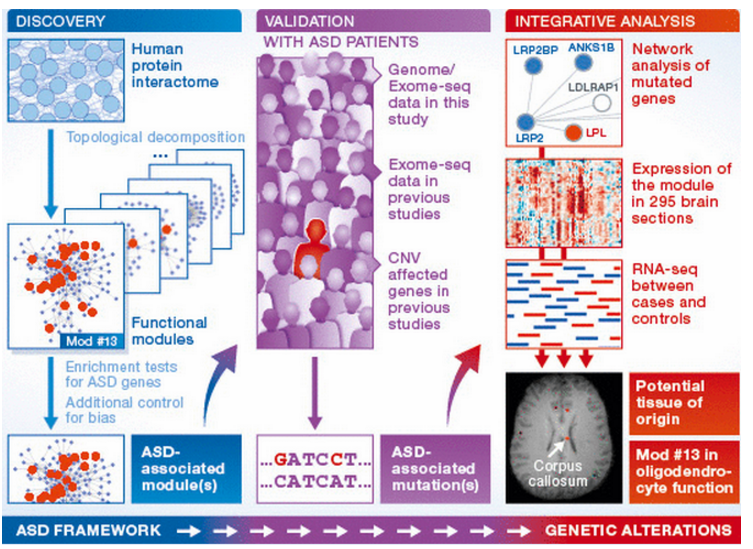
A molecular network that comprises many of the genes previously shown to contribute to autism spectrum disorders has been identified by researchers.

The findings provide a map of some of the crucial protein interactions that contribute to autism and will help uncover novel candidate genes for the disease.

Autism Spectrum DisordersCorpus CallosumFunctional ModulesOligodendrocytesProtein Interaction NetworkMol Syst Biol. (2014)

Article

Integrated systems analysis reveals a molecular network underlying autism spectrum disorders

 Jingjing Li, Minyi Shi, Zhihai Ma, Shuchun Zhao, Ghia Euskirchen, Jennifer Ziskin, Alexander Urban, Joachim Hallmayer, Michael Snyder

From EMBO Press Dec. 30, 2014

A molecular network that comprises many of the genes previously shown to contribute to autism spectrum disorders has been identified by researchers. The findings provide a map of some of the crucial protein interactions that contribute to autism and will help uncover novel candidate genes for the disease.

Researchers in the United States have identified a molecular network that comprises many of the genes previously shown to contribute to autism spectrum disorders. The findings provide a map of some of the crucial protein interactions that contribute to autism and will help uncover novel candidate genes for the disease. The results ...

OnAir Post: Molecular network identified underlying autism spectrum disorders

Genetic Biomarkers Identify Boys with Autism

Proof-of-principle method suggests much-earlier diagnoses could be done with clinic test.

An international team of scientists, led by researchers at the UCSD School of Medicine, report finding a highly accurate blood-based measure that could lead to development of a clinical test for autism spectrum disorder risk in males as young as one to two years old. The degree of accuracy out performs other behavioral and genetic screens for infants and toddlers with ASD described in literature. JAMA Psychiatry 3/4/15

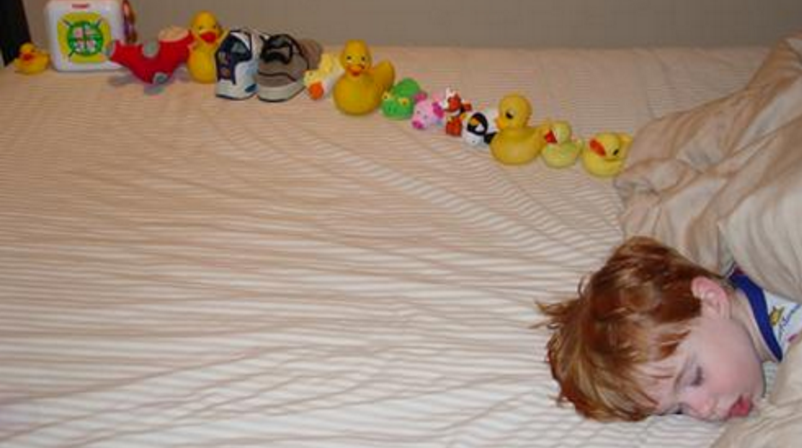
Quinn, an autistic boy, and the line of toys he made before falling asleep. Repeatedly stacking or lining up objects is a behavior commonly associated with autism. Photo by Andwhatsnext via Wikipedia


Press Release

UC San Diego Health System News 3/9/19 by Scott LaFee

In a study published in the current online issue of JAMA Psychiatry, an international team of scientists, led by researchers at the University of California, San Diego School of Medicine, report finding a highly accurate blood-based measure that could lead to development of a clinical test for autism spectrum disorder (ASD) risk in males as young as one to two years old. The test could be done in community pediatric settings. The degree of accuracy, ...

OnAir Post: Genetic Biomarkers Identify Boys with Autism

Skip to toolbar