Brain Tumor Overview

Cancerous tumors can be divided into primary tumors that start within the brain, and secondary tumors that have spread from somewhere else, known as brain metastasis tumors.

Link to Brain Tumor Hub

Initial Overview based on Wikipedia entry Jan. 5, 2016.

OnAir Post: Brain Tumor Overview

‘Tumor Paint’ brain-tumor-detecting dye

The FDA has approved an investigational new drug application for Tumor Paint BLZ-100, a protein-linked dye that highlights cancer cells in images so surgeons can precisely target brain tumors.The FDA move means Blaze Bioscience can proceed with clinical trials.

Twenty-one adult patients who need surgery for often-deadly glioma brain tumors are expected to enroll in the study, which is aimed at examining the safety of injecting the BLZ-100 molecule into the bloodstream, where it rushes to highlight cancer cells.

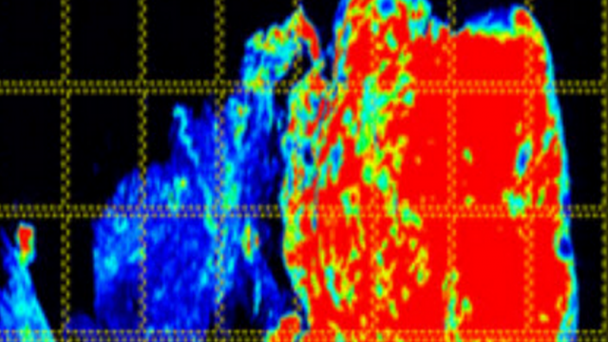
Images of a soft tissue sarcoma from a dog using Tumor Paint BLZ-100. Right: standard histological stain showing the morphology of the tissue; left: fluorescence provided by Tumor Paint, with cancerous cells highlighted in red. (Photo credit: Blaze Bioscience Inc.)

Press Release

By JoNel Aleccia Hutch News Sept. 26, 2014

A new protein-linked dye derived from scorpion venom that lights up cancer cells so surgeons can precisely target brain tumors will get a trial run in the U.S., Blaze Bioscience Inc. officials announced Thursday.

Food and Drug Administration officials have approved an investigational new drug application, or IND, for Tumor Paint BLZ-100, a molecule discovered and first developed by researchers at Fred Hutchinson Cancer Research Center, Seattle Children’s Hospital and the University of Washington.

“I think it really ...
OnAir Post: ‘Tumor Paint’ brain-tumor-detecting dye

Transplant drug could boost power of brain tumor treatments, study finds

Every day, organ transplant patients around the world take a drug called rapamycin to keep their immune systems from rejecting their new kidneys and hearts.

New research suggests that the same drug could help brain tumor patients by boosting the effect of new immune-based therapies.

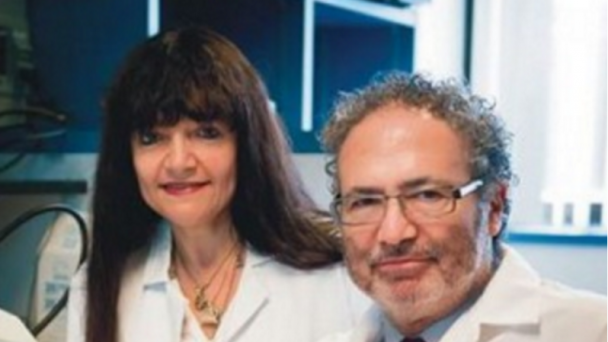
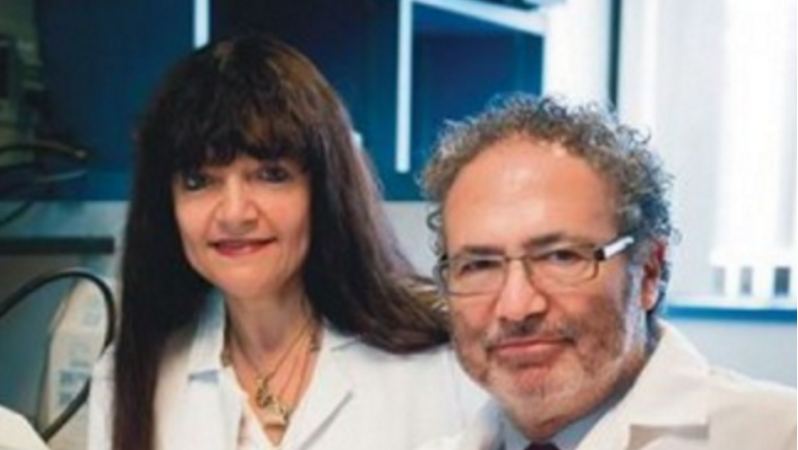
Drs. Maria Castro and Pedro Lowenstein, both of the U-M Department of Neurosurgery, co-led the research.Credit: Image courtesy of University of Michigan Health System


Press Release

University of Michigan Health System   Sept. 2014

Every day, organ transplant patients around the world take a drug called rapamycin to keep their immune systems from rejecting their new kidneys and hearts. New research suggests that the same drug could help brain tumor patients by boosting the effect of new immune-based therapies.

In experiments in animals, researchers from the University of Michigan Medical School showed that adding rapamycin to an immunotherapy approach strengthened the immune response against brain tumor cells.

What’s more, the drug also increased the immune system’s “memory” cells so that they could attack the tumor if it ever reared its head again. The mice and rats in the study that received rapamycin lived longer than those that didn’t.

Now, the U-M team plans to add ...

OnAir Post: Transplant drug could boost power of brain tumor treatments, study finds

Blending High-end Imaging Techniques

Vanderbilt University researchers have achieved the first “image fusion” of mass spectrometry and microscopy that could, among other things, dramatically improve the diagnosis and treatment of cancer.

Combining the best features of both imaging modalities allows scientists to see the molecular make-up of tissues in high resolution.

Nature Methods 2/23/2015

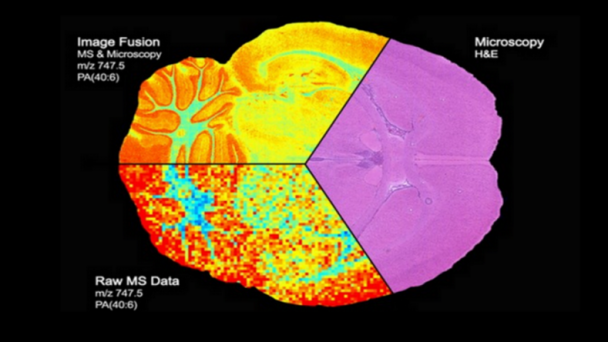
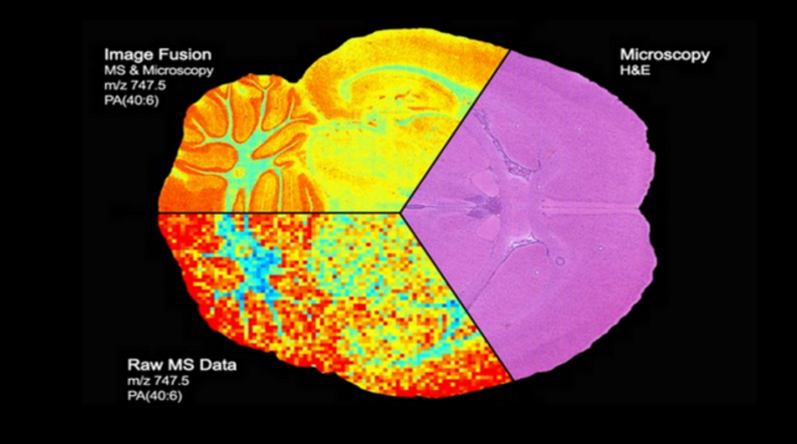
Image of a section of the brain shows the fusion of microscopy (pink area) and mass spectrometry (pixelated colors at bottom) to produce a detailed “map” of the distribution of proteins, lipids and other molecules within sharply delineated brain structures (upper left). Image: Vanderbilt University press

Press Release

Vanderbilt team first to blend high-end imaging techniques

Vanderbilt University researchers have achieved the first “image fusion” of mass spectrometry and microscopy — a technical tour de force that could, among other things, dramatically improve the diagnosis and treatment of cancer.

Microscopy can yield high-resolution images of tissues, but “it really doesn’t give you molecular information,” said Richard Caprioli, Ph.D., senior author of the paper published last week in the journal Nature Methods.

Mass spectrometry provides a very precise accounting of the proteins, lipids and other molecules in a given tissue, but in a spatially coarse or pixelated manner. ...

OnAir Post: Blending High-end Imaging Techniques

MP-MUS destroys brain tumor cells

An experimental drug that attacks brain tumor tissue by crippling the cells’ energy source called the mitochondria has passed early tests in animal models and human tissue cultures, say Houston Methodist scientists.

Our past work has shown that MP-MUS has very low toxicity until it gets into tumor cells. Once it arrives, it is changed to its active form, doing a lot of damage where we want it to, leaving healthy brain cells alone — a bit like a ‘smart bomb.’ To our knowledge, this is the first known example of selective mitochondrial chemotherapy.

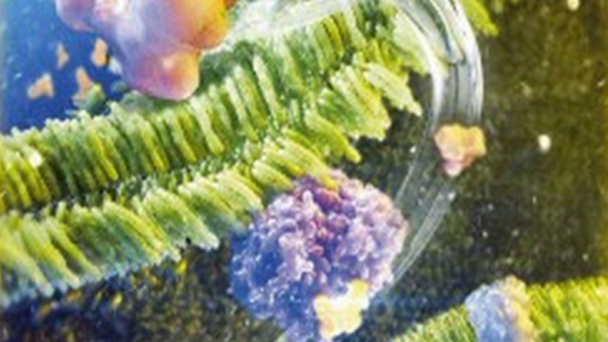
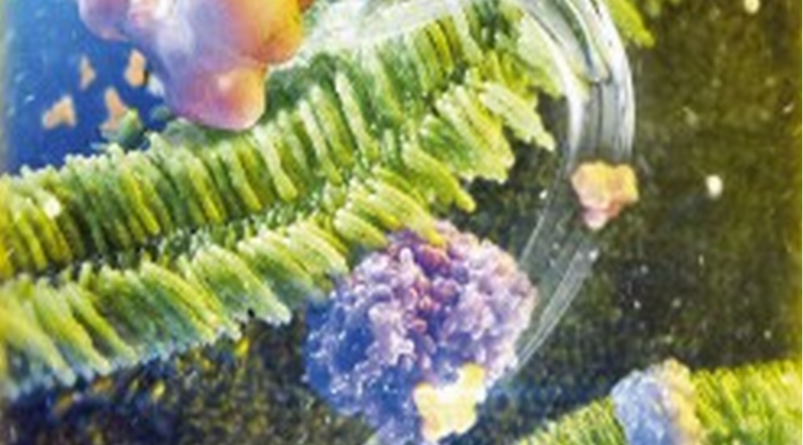
The new drug MP-MUS (yellow) attacks cancer cell mitochondria by infiltrating both inner and outer membranes (green) after being converted from an inactive, non-toxic form to an active, toxic form by the enzyme MAO-B (purple). Once inside, the drug damages mitochondrial DNA, which cannot be repaired.Credit: Dr. David Baskin laboratory, Houston Methodist Hospital


Press Release

Houston Methodist 3/24/15

Brain Tumor Cells Decimated by Mitochondrial “Smart Bomb”

Newswise — HOUSTON — ( March 24, 2015 ) — An experimental drug that attacks brain tumor tissue by crippling the cells’ energy source called the mitochondria has passed early tests in animal models and ...

OnAir Post: MP-MUS destroys brain tumor cells

Skip to toolbar