Brain Observatories Live Webcast


Hangout On Air Summary

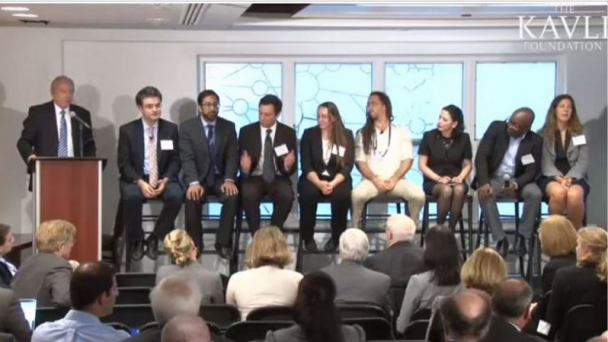
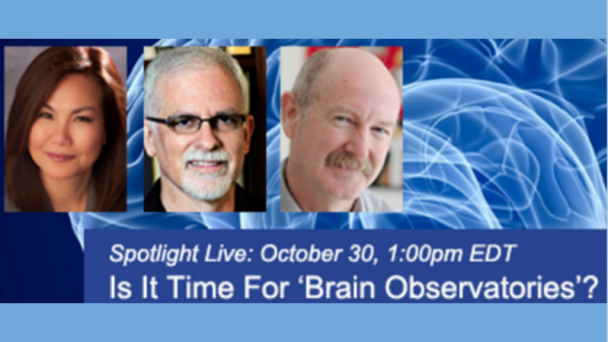
The Kavli Foundation had a live (Hangout On Air) webcast on October 30, 2015 about the proposal for a national network of neurotechnology centers, or ‘brain observatories.’

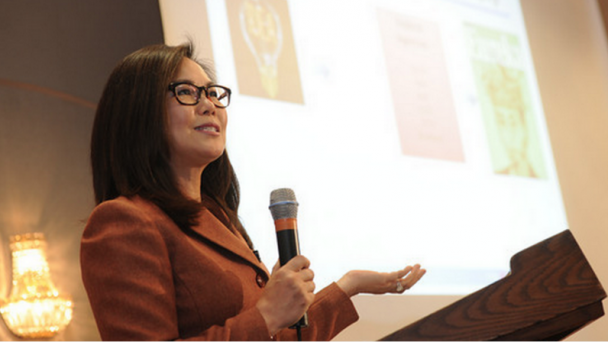
Three of the paper’s authors – Miyoung Chun of The Kavli Foundation, Michael Roukes of the California Institute of Technology and Rafael Yuste of Columbia University – answered the public’s questions about what these observatories could achieve.


Brain Observatories Proposal

The authors of the original proposal for the Brain Activity Map (BAM) Project, which inspired the White House’s BRAIN Initiative, issued today a position statement in Neuron proposing the creation of a national network of neurotechnology centers.

These “brain observatories” would enhance and accelerate the BRAIN Initiative by leveraging the success and creativity of individual laboratories to develop novel neurotechnologies.

Read more about the proposal here.

Webcast

https://www.youtube.com/watch?v=f4Oz4g9O3mM&feature=youtu.beVideo can’t be loaded because JavaScript is disabled: Spotlight Live: A Call for ‘Brain Observatories’ (https://www.youtube.com/watch?v=f4Oz4g9O3mM&feature=youtu.be)


About the Participants

From Kavli Foundation post

MIYOUNG CHUN (moderator) – is Executive Vice President of Science Programs at The Kavli Foundation. Chun’s career spans ...

OnAir Post: Brain Observatories Live Webcast

Kavli Foundation


Summary

The Kavli Foundation is continuing its support for the goals of the BRAIN Initiative and for innovative brain research. Consistent with its commitment in 2013, Kavli and its University Partners have commited $100 Million to brain research by forming three new Kavli Institutes in addition to supporting its existing four institutes.

The Kavli Foundation, based in Oxnard, California, is dedicated to the goals of advancing science for the benefit of humanity and promoting increased public understanding and support for scientists and their work.


Information

Website:  kavlifoundation.org/ YouTube Channel:  youtube.com/user/KavliFoundation Twitter:  twitter.com/KavliFoundation Facebook: facebook.com/KavliFoundation Wikipedia Entry: wiki/The_Kavli_Foundation

Email: Contact form Phone: 805.983.6000 Address: The Kavli Foundation 1801 Solar Drive , Suite 250 Oxnard, CA 93030


Board of Directors

Rockell N. Hankin, LLB Chairman of the Board

Robert W. Conn, PhD President and Chief Executive Officer

Mary Sue Coleman President Emerita, University of Michigan

Thomas E. Everhart President Emeritus, California Institute of Technology

Douglas K. Freeman, Esq. Senior Managing Director, First Foundation Advisors

Richard A. Meserve President Emeritus, Carnegie Institution for Science

Gunnar K. Nilsen President, BizArch Advisors

Henry T. Yang Chancellor, University of California, Santa Barbara


Officers and Staff

Robert W. Conn, PhD President and Chief Executive Officer

Miyoung Chun, PhD Executive Vice President of Science Programs

James Cohen Director of Communications and Public Outreach

Judy Darley Human Resources Manager and Chief of Staff

Christopher Martin Ph.D. Science Program Officer

Nadine ...

OnAir Post: Kavli Foundation

Brain Observatories

The authors of the original proposal for the Brain Activity Map (BAM) Project, which inspired the White House’s BRAIN Initiative, are proposing the creation of a national network of neurotechnology centers.

These “brain observatories” would enhance and accelerate the BRAIN Initiative by leveraging the success and creativity of individual laboratories to develop novel neurotechnologies.

Co-authors of the Brain Observatories proposal.

Brain Observatories press release

A national network of neurotechnology centers for the BRAIN Initiative

EurekAlert Oct. 15, 2015 Columbia University

Neuron article

The authors of the original proposal for the Brain Activity Map (BAM) Project, which inspired the White House’s BRAIN Initiative, issued today a position statement in Neuron proposing the creation of a national network of neurotechnology centers. These “brain observatories” would enhance and accelerate the BRAIN Initiative by leveraging the success and creativity of individual laboratories to develop novel neurotechnologies.

Now in its second year, the BRAIN Initiative is a large-scale, decade-long scientific project with a budget of $300 Million for FY16, that involves more than 100 laboratories throughout the country and has also inspired similar large-scale brain research projects worldwide. On April 2, 2013, President Obama launched the BRAIN Initiative to “accelerate the development and ...

OnAir Post: Brain Observatories

Kavli video on the BRAIN Initiative

Kavli Foundation sponsored numerous symposiums and informal meetings in 2011 through 2013 that developed the initial concept for the BRAIN Inititative. Over 100 neuroscientists participated in these meetings which resulted in the Brain Activity Map Project proposal that "would prove important to the scientific thinking behind the BRAIN Initiative, as well as a major catalyst for its launching."

OnAir Post: Kavli video on the BRAIN Initiative

Institute for Brain Science @Columbia


The Kavli Institute for Brain Science at Columbia University probes the complex network of brain cells and their connections.

Led by Eric Kandel, M.D. (2000 Nobel laureate), and co-directors Thomas Jessell (2008 Kavli Prize laureate) and Rafael Yuste (Investigator, Howard Hughes Medical Institute), the Institute uses advanced imaging technology to observe neurons, synapses, and neural circuits as they develop and function, and as they respond to learning.


Web Information

Kavli web page: http://www.kavlifoundation.org/columbia-university

Institute for Brain Science website: http://kavli.columbia.edu/

About the Institute for Brain Science

From the Kavli web page

The Kavli Institute for Brain Science at Columbia University probes the complex network of brain cells and their connections. Led by Eric Kandel, M.D. (2000 Nobel laureate), and co-directors Thomas Jessell (2008 Kavli Prize laureate) and Rafael Yuste (Investigator, Howard Hughes Medical Institute), the Institute uses advanced imaging technology to observe neurons, synapses, and neural circuits as they develop and function, and as they respond to learning. Researchers examine the brain at the cellular, molecular, and systems level to understand how the nerve cells of neural circuits connect during development to control behavior, and how these neural circuits perform and are modified by learning and memory. As Kandel has noted, “[We need] more powerful tools to ...

OnAir Post: Institute for Brain Science @Columbia

Institute for Neuroscience @Yale


The Kavli Institute for Neuroscience at Yale University studies the neurobiological basis of human thought. Following a broad multidisciplinary strategy, it examines how the nerve cells and synaptic circuits of the cerebral cortex enable humans to learn about the outside world and to remember what they already have learned.

Toward this end, it fosters discussion and innovative research among Yale neuroscientists from multiple disciplines, enabling them to contribute novel ideas and approaches in research on cortical evolution, development, organization and function.


Web Information

Kavli Foundation web page: http://www.kavlifoundation.org/yale-university

Kavli Institute for Neuroscience website: http://medicine.yale.edu/neurobiology/kavli/

About Kavli Institute for Neuroscience

From the Kavli Foundation page

Founded in 2004, the Institute is directed by Pietro De Camilli, M.D., and vice-director David A. McCormick. The inaugural director was 2008 Kavli Prize laureate Pasko Rakic, M.D., Ph.D. It includes other Yale faculty members from disciplines such as neurobiology, cell biology, molecular physics and biochemistry, neurology, and developmental biology. Their research is focused on four themes:


Development and evolution of the cerebral cortex. How does the circuitry that supports the highest cognitive functions develop in each individual? Institute scientists seek answers to this question, one of the most fundamental in biology, by using highly advanced approaches of molecular genetic and ...

OnAir Post: Institute for Neuroscience @Yale

Institute for Brain and Mind @UCSD

Kavli Institute for Brain and Mind (KIBM) researchers bridge disciplinary boundaries to further understanding of the origins, evolution and mechanisms of human cognition, from the brain’s physical and biochemical machinery to the experiences and behaviors we call the mind.

Its advisory board includes scientists and clinicians from UCSD departments of cognitive science, neurobiology, psychology, psychiatry, neurosciences, radiology, and philosophy. The Scripps Research Institute, The Salk Institute for Biological Studies, and The Neurosciences Institute are also represented on the KIBM board.

Web Information

Kavli Foundation web pagehttp://www.kavlifoundation.org/university-california-san-diego

KIBM website:  http://kibm.ucsd.edu/

About KIBM

From the Kavli web page

Scientists have made great strides toward understanding how the human brain works. But as they unlock the secrets of the brain’s cellular machinery, they face a question that has occupied science and philosophy for centuries: What is the relationship between the brain and that complex set of experiences and behaviors we call the “mind?”

That question is central to the mission of the Kavli Institute for Brain and Mind at the University of California, San Diego (KIBM). Under the leadership of co-directors Nicholas Spitzer and Fred “Rusty” Gage, and associate director Ralph J. Greenspan, KIBM seeks to discover the physical and biochemical ...

OnAir Post: Institute for Brain and Mind @UCSD

Institute for Systems Neuroscience @NTNU


How do we know where we are, where we have been and where we are going? Such are the questions that the Kavli Institute for Systems Neuroscience at the Norwegian University of Science and Technology (NTNU) in Trondheim aims to answer.

The Institute seeks to unlock the secrets of memory by studying the neural microcircuits and networks in the hippocampus and associated areas of the brain, where memory is encoded, stored and retrieved. It focuses in particular on the memory of place and direction that underlies our spatial navigation skills.

Web Information

Kavli ISN websitehttp://www.ntnu.edu/web/kavli/home

NTNU websitehttps://www.ntnu.edu/

About Kavli ISN

From Kavli Foundation web page

Founded in August 2007, Kavli at NTNU is able to draw on groundbreaking research that is well under way at its host institution, NTNU. It is closely affiliated with the university’s Centre for the Biology of Memory (CBM), where scientists in 2005 discovered “grid cells” — neurons in the entorhinal cortex that fire in patterns related to an animal’s specific location. The network of these brain cells may make up the neurological “map” that enables us to remember locations and that guides us through our surroundings.

The ultimate goal of the Kavli Institute for Systems Neuroscience is to improve ...

OnAir Post: Institute for Systems Neuroscience @NTNU

Neuroscience Discovery Institute @JHU


The mission of the new Kavli Neuroscience Discovery Institute (Kavli NDI) at JHU is to bring together neuroscientists, engineers and data scientists to investigate neural development, neuronal plasticity, perception and cognition.

“The challenges of tomorrow will not be confined to distinct disciplines, and neither will be the solutions we create,” said Johns Hopkins University President Ronald J. Daniels. “The Kavli Foundation award is a tremendous honor, because it allows Johns Hopkins to build on our history of pioneering neuroscience and catalyze new partnerships with engineers and data scienctists that will be essential to building a unified understanding of brain function.”


Web Information

Kavli Foundation web page:  http://www.kavlifoundation.org/johns-hopkins-university

About Kavli NDI

The Kavli Neuroscience Discovery Institute (Kavli NDI) brings together neuroscience, engineering, and data science – three traditional strengths at Johns Hopkins – with the ultimate goal of reaching a unified understanding of brain function.

New experimental techniques are generating a wealth of information about the brain at different scales – from the levels of single cells to brain circuits to behavior – but neuroscience still lacks effective tools for managing these massive data sets. Kavli NDI researchers are filling this gap by finding new ways to organize, analyze, and extract meaning from neurodata. They plan to ...

OnAir Post: Neuroscience Discovery Institute @JHU

Neural Systems Institute @Rockefeller


The Kavli Neural Systems Institute (Kavli NSI) at The Rockefeller University will promote interdisciplinary research and learn to tackle the biggest questions in neuroscience through high-risk, high-reward projects and the development of new research technologies.

“Kavli’s investment in neuroscience at Rockefeller will enable us to create and share new research approaches and laboratory technologies to capture the possibilities of neuroscience from the micro to the macro level,” said Rockefeller President Marc Tessier-Lavigne, PhD. “


Web Information

Kavli Foundation web page: http://www.kavlifoundation.org/rockefeller-university

About Kavlin NSI

Neuroscience is undergoing a convergence with fields such as bioengineering, nanoscience, and computer science that is expected to accelerate in the coming decades. The Kavli Neural Systems Institute (Kavli NSI) aims to be at the forefront of that shift, where multidisciplinary teams of scientists will work to develop new tools and novel approaches to meet the very biggest challenge’s in neuroscience.

The Kavli NSI fosters collaboration among Rockefeller’s dynamic community of scientists, including faculty, graduate students and postdoctoral fellows. Together, they seek to generate new knowledge about the brain at many levels, from molecules to cells, and from circuits to the whole brain. The ultimate goal is to integrate these different neural systems into a comprehensive view of the brain.

The Kavli ...

OnAir Post: Neural Systems Institute @Rockefeller

Institute for Fundamental Neuroscience @UCSF


The Kavli Institute for Fundamental Neuroscience (Kavli IFN) at UCSF will focus initially on understanding brain plasticity, the remarkable capacity of the brain to modify its structure and function.

The Kavli IFN will partner with engineers at two San Francisco Bay-area national laboratories to develop new tools and approaches to brain research.“UCSF scientists have made some of the seminal discoveries in modern neuroscience,” said UCSF Chancellor Sam Hawgood, MBBS. “The Kavli Institute will sustain this rich tradition into the 21st Century.”

Web Information

Kavli Foundation web page: http://www.kavlifoundation.org/university-california-san-francisco

About Kavli IFN

The Kavli Institute for Fundamental Neuroscience (Kavli IFN) builds new, cross-disciplinary teams of scientists and engineers to tackle the hardest problems in neuroscience. It’s central research theme is neuroplasticity – the brain’s extraordinary ability to change over time. The Institute’s researchers aim to answer fundamental questions such as: How are plasticity and stability established? How is their balance maintained throughout our lifetime? And, importantly, how does that plasticity enable us to adapt our behavior?

The Kavli IFN aims to push the boundaries of interdisciplinary research to make breakthrough discoveries. It has established direct linkages between neuroscientists at UCSF and engineers at Lawrence Livermore National Laboratory and Lawrence Berkeley National Laboratory to develop transformative brain ...

OnAir Post: Institute for Fundamental Neuroscience @UCSF

Kavli and University Partners Commit $100 Million to Brain Research

WASHINGTON, D.C. – Thursday, October 1, 2015 – The Kavli Foundation and its university partners announced today the commitment of more than $100 million in new funds to enable research aimed at deepening our understanding of the brain and brain-related disorders, such as traumatic brain injuries (TBI), Alzheimer’s disease and Parkinson’s disease.

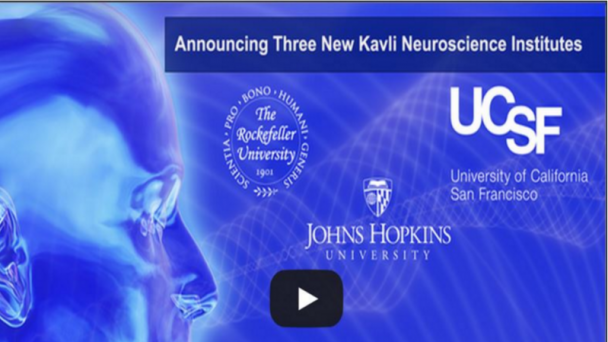
The majority of the funds will establish three new Kavli neuroscience institutes at the Johns Hopkins University (JHU), The Rockefeller University and the University of California, San Francisco (UCSF).


From Kavli Foundation News

Oct. 1, 2015

OnAir Post: Kavli and University Partners Commit $100 Million to Brain Research

Special Symposium: Neuroscience in the 21st Century


October 1, 2-5 pm EDT Live Webcast from Washington, D.C. Moderated by Alan Leshner, CEO Emeritus, the American Association for the Advancement of Science (AAAS).

View symposium hosted by The Kavli Foundation

This special “mini-symposium”looked at the future of neuroscience and the BRAIN Initiative by hearing from some of the nation’s top neuroscientists, as well as leaders from key federal funding agencies.

https://www.youtube.com/watch?v=LnFqfWFN2aUVideo can’t be loaded because JavaScript is disabled: Neuroscience in the 21st Century (https://www.youtube.com/watch?v=LnFqfWFN2aU)

Neuroscience: Past, Present and Future

TIME: 2:00 – 3:00 pm

Six prominent neuroscientists offer insight into how the field has evolved and what they anticipate for the future.

Pietro De Camilli, Yale University Jeffrey Friedman, The Rockefeller University Michael Miller, Johns Hopkins University Alexandra Nelson, University of California, San Francisco Larry Squire, University of California, San Diego Rafael Yuste, Columbia University


The BRAIN Initiative

TIME: 3:15 – 5:00 pm

Early Successes and Future Plans

Opening remarks from federal agencies highlight discoveries emerging from the BRAIN Initiative, as well as share plans for the future.

Walter Koroshetz, Director, National Institute of Neurological Disorders and Stroke James ...

OnAir Post: Special Symposium: Neuroscience in the 21st Century

Bolstering the Investment in Brain Research

Bipartisan Briefing from Capitol Hill on a new commitment to support brain research and an update on the BRAIN Initiative.

October 1, 2015 at 9:30 – 11:00 am EDT United States Capitol Visitor Center, Washington, D.C.

Sponsored by The Kavli Foundation

YouTube link

https://www.youtube.com/watch?v=X7OWguOqJi0Video can’t be loaded because JavaScript is disabled: Bolstering the Investment in Brain Research (https://www.youtube.com/watch?v=X7OWguOqJi0)

About the Briefing

This briefing will provide details about new funding and research endeavors, including a new commitment to support brain research with The Kavli Foundation in partnership with Johns Hopkins University, The Rockefeller University and the University of California, San Francisco. A discussion will focus on the BRAIN Initiative and on the future of neuroscience moderated by Alan Leshner, CEO Emeritus of the American Association for the Advancement of Science. Joining the discussion will be leaders from the White House Office of Science and Technology Policy, the National Institutes of Health, and the National Science Foundation.


Program

Special Remarks

Barbara Mikulski, U.S. Senator (D-Maryland) Andy Harris, MD, MHS, U.S. Member of Congress (R-Maryland) Carolyn Maloney, U.S. Member of Congress (D-New York)

Speakers

France A. ...

OnAir Post: Bolstering the Investment in Brain Research

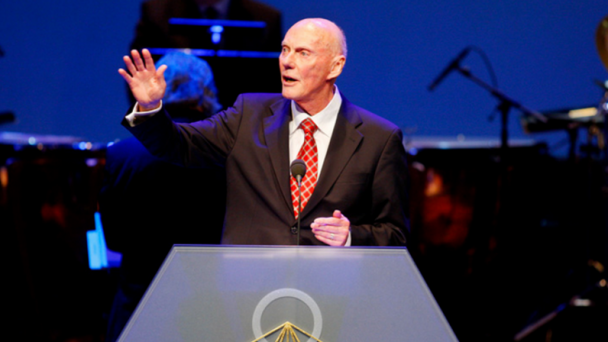
Rockell N. Hankin, LLB – Kavli


Rockell N. Hankin is Chairman of the Board of Semtech Corporation, an analog semiconductor company (Nasdaq) and Chairman of the Board of The Kavli Foundation.

Mr. Hankin has been Chairman or a Board member of seven other listed companies and eleven private companies, as well as other charitable organizations.  He has taught courses in business and law at UNC (Charlotte), UCLA and USC Law School.

Web Information

Kavli Foundation webpagehttp://www.kavlifoundation.org/rockell-n-hankin

Biosketch

Currently, Mr. Hankin is an Executive in Residence at the McColl School of Business, Queens University of Charlotte. Mr. Hankin has been an adjunct faculty member of UNC Charlotte, teaching Entrepreneurship, of USC’s School of Law teaching a joint course to graduate business school and law students regarding governance and other lessons learned from the Enron Era, and of the Anderson Graduate School of Management at the University of California, Los Angeles, where he taught a graduate course in business strategy and planning as part of the school’s entrepreneurship course of study. He previously held a lectureship position at UCLA’s extension university as well as an associate professorship at California State University, Northridge. Mr. Hankin has presented regularly on corporate governance issues at the Duke Capital Markets Director’s Education Institute, UCLA’s ...

OnAir Post: Rockell N. Hankin, LLB – Kavli

Robert W. Conn, PhD – Kavli


Robert W. Conn is President and Chief Executive Officer of The Kavli Foundation and Zable Professor and Dean, Emeritus, of the Jacobs School of Engineering at UC San Diego.

Dr. Conn is widely recognized for his academic achievements and leadership in education and research and for his experience in the private sector.

Web Information

Kavli Foundation webpagehttp://www.kavlifoundation.org/robert-w-conn

Biosketch

Dr. Conn began his academic career at the University of Wisconsin-Madison in 1970 where he became Professor of Engineering Physics, served as founding director of the University’s Fusion Technology Institute and held the Romnes Faculty Chair. Dr. Conn moved to UCLA as Professor of Engineering and Applied Science in 1980 and in 1986 he led the formation of UCLA’s Institute of Plasma and Fusion Research and became its first director.

From 1993 to 2002, Dr. Conn was Dean of the Irwin and Joan Jacobs School of Engineering at the University of California, San Diego and the Walter J. Zable Professor of Engineering Science. While Dean, he led the School through a period of unprecedented growth in faculty, students and reputation resulting in the School’s current ranking among the top twelve engineering schools in the country. He led major changes in the School’s organizational structure to position it ...

OnAir Post: Robert W. Conn, PhD – Kavli

Miyoung Chun, PhD – Kavli


Miyoung Chun is Executive Vice President of Science Programs at The Kavli Foundation.

Dr. Chun’s career spans a wide range of experience in academia and industry. Her academic career began as an Assistant Professor of Biochemistry and a member of Whitaker Cardiovascular Institute at Boston University School of Medicine in 1995. There she taught in the areas of cell biology and molecular medicine, and conducted research in signal transduction of G-protein coupled receptors.


Web Information

Kavli Foundation web pagehttp://www.kavlifoundation.org/miyoung-chun

Biosketch

From 1999 to 2004 she worked for Millennium Pharmaceuticals Inc. as a scientist and project leader, where her research focused on genomics/functional genomics and on molecular imaging in drug discovery and development. She discovered and characterized novel genes that are important to inflammatory and cardiovascular diseases, and has over 30 U.S. and International issued/published patents.

In 2004 she moved back to academia as Assistant Dean of Science and Engineering at the University of California, Santa Barbara (UCSB), in particular serving the California Nanosystems Institute. She was also appointed Director of International Research Advancement at UCSB. In this role she was active in building partnerships among academia, government and industry around the globe.

Dr. Chun was Vice President of Science Programs at The Kavli Foundation since ...

OnAir Post: Miyoung Chun, PhD – Kavli

Fred Kavli


Fred Kavli (1927-2013), a Norwegian-born U.S. citizen, was a physicist, entrepreneur, business leader, innovator and philanthropist dedicated to supporting research and education that has a positive, long-term impact on the human condition.

He established The Kavli Foundation to advance science for the benefit of humanity. Based in Southern California, the Foundation today includes an international community of basic research institutes in the fields of astrophysics, nanoscience, neuroscience, and theoretical physics.

Web Information

Kavli Foundation web page: http://www.kavlifoundation.org/fred-kavli-biography

Wikipedia Entry: https://en.wikipedia.org/wiki/Fred_Kavli

Article in Vesterheim Magazine:  Fred Kavli: A Dreamer Making Dreams Come True

Biosketch

From Eresfjord to California

A naturalized American citizen, Kavli was born in 1927 on a small farm in Eresfjord, Norway – a village nestled in the mountains along the Eira River. Kavli would later recall these early days as giving birth to his interest in science, where he grew up experiencing “the world at its most magnificent.” This interest would blossom further while studying physics at the Norwegian Institute of Technology (now known as the Norwegian University of Science and Technology in Trondheim). As he recalled in remarks prepared for the York Science Festival in 2007, “In those days, I used to ski across the vast white expanses of a quiet and lonely ...

OnAir Post: Fred Kavli

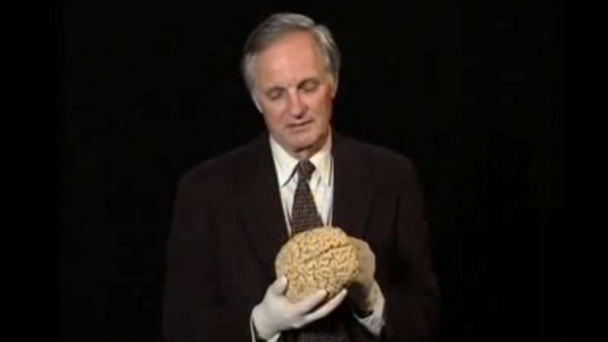
Kavli Foundation: Introduction to Neuroscience

Vidoe narrated by Alan Alda, this introduction to neuroscience gives us a brief overview of the field and illuminates some of the interesting questions being currently researched.

Published on March 6, 2008 by Kavli Foundation


Video

 YouTube Page

https://www.youtube.com/watch?v=PfQkDHopJs8Video can’t be loaded because JavaScript is disabled: Kavli Foundation: Introduction to Neuroscience (https://www.youtube.com/watch?v=PfQkDHopJs8)

OnAir Post: Kavli Foundation: Introduction to Neuroscience

The Brain or the Universe – Where Does Math Come From?

On Aug. 7th, science writer Bruce Lieberman asked your questions of three leading scientists — two neuroscientists and one astrophysicist — about math and the mind.

Join Brian Butterworth (Emeritus Professor of Cognitive Neuropsychology at the Institute of Cognitive Neuroscience at University College London), Rafael Núñez (Professor of Cognitive Science at the University of California, San Diego and member of UCSD’s Kavli Institute for Brain and Mind), and astrophysicist Max Tegmark (Professor of Physics at the Massachusetts Institute of Technology, and member of MIT’s Kavli Institute for Astrophysics and Space Research) as they discuss where math comes from.

Sections of Video

3:15 What are the primary reasons that we think the universe is inherently mathematical? 5:15 If the universe is inherently mathematical how does that effect neuroscience? 8:00 If the universe is not inherently mathematical how does that effect astrophysics? 14:05 If the universe is inherently mathematical, for something to exist does it need to belong to a set/group? 16:50 Are there aspects of the natural world that elude to their innate mathematical properties? 24:05 Does a mathematical universe suggest there was a first cause (god) of all the seen or unseen universe? 29:15 Does the universe have an innate mathematical proportionality?

OnAir Post: The Brain or the Universe – Where Does Math Come From?

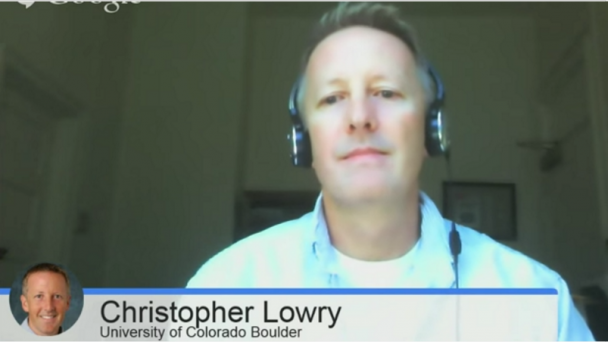
The Microbiome & the Brain – A New State of Mind


Neuroscientist Christopher Lowry discusses the emerging science, that’s connecting the microbiome – the community of microbes that inhabit the body – with brain health including whether we can treat common brain disorders through the gut.

Lindsay Borthwick is moderating the discussion.

Organized by the Kavli Foundation Jan. 15, 2015


Questions

2:40 Do we know which particular species/community are important for brain health? 5:25 Is it likely that other organisms besides bacteria are also important to the microbiome? 7:20 What prompted you to study bacteria and their interaction with our nervous system? 8:50 How did the behavior of mice change in your experiment? 10:40 How do these microbes communicate with the nervous system? 17:30 Have there been human trials to test microbiome treatments? 19:30 How far are we from treating brain disorders with probiotics? 20:45 Can the microbiome effect our brain development? 22:45 Could destruction to the microbiome cause neurological issues? 24:10 How have you changed your lifestyle throughout your research? 28:00 What kind of research is being done to study the average/optimal microbiome?

Hangout On Air

Streamed live on Jan. 15, 2015 by Kavli Foundation

Youtube page

OnAir Post: The Microbiome & the Brain – A New State of Mind

Skip to toolbar