Institute for Brain and Mind @UCSD

Kavli Institute for Brain and Mind (KIBM) researchers bridge disciplinary boundaries to further understanding of the origins, evolution and mechanisms of human cognition, from the brain’s physical and biochemical machinery to the experiences and behaviors we call the mind.

Its advisory board includes scientists and clinicians from UCSD departments of cognitive science, neurobiology, psychology, psychiatry, neurosciences, radiology, and philosophy. The Scripps Research Institute, The Salk Institute for Biological Studies, and The Neurosciences Institute are also represented on the KIBM board.

Web Information

Kavli Foundation web pagehttp://www.kavlifoundation.org/university-california-san-diego

KIBM website:  http://kibm.ucsd.edu/

About KIBM

From the Kavli web page

Scientists have made great strides toward understanding how the human brain works. But as they unlock the secrets of the brain’s cellular machinery, they face a question that has occupied science and philosophy for centuries: What is the relationship between the brain and that complex set of experiences and behaviors we call the “mind?”

That question is central to the mission of the Kavli Institute for Brain and Mind at the University of California, San Diego (KIBM). Under the leadership of co-directors Nicholas Spitzer and Fred “Rusty” Gage, and associate director Ralph J. Greenspan, KIBM seeks to discover the physical and biochemical ...

OnAir Post: Institute for Brain and Mind @UCSD
UCSD Neuroscience


Summary

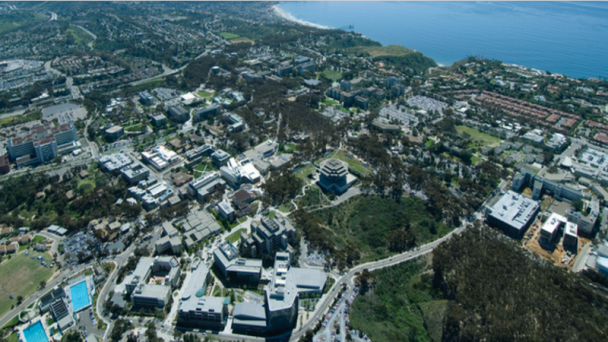
The University of California at San Diego (UCSD) leads the nation as the top neurosciences department in National Institutes of Health (NIH) funding.

With about 120 faculty members, UC San Diego’s Neuroscience department is among the nation’s largest. The program’s labs, medical centers and clinics are located in the heart of the San Diego life sciences district. There are many research centers at UCSD including Kavli Institute for Brain and Mind; Swartz Center for Computational Neuroscience; and Research in Neuroscience at UC San Diego School of Medicine.


Information

Website: ucsd.edu/ Kavli Institute for Brain and Mind: kavlifoundation.org/university-california-san-diego Swartz Center for Computational Neuroscience: http://sccn.ucsd.edu/index.html Research in Neuroscience at UC San Diego School of Medicine: neurosciences.ucsd.edu/research/Pages/default.aspx Wikipedia Entry: wiki/University_of_California,_San_Diego BRAIN Initiative Grant – “Revealing the connectivity and functionality of brain stem circuits” Brain Initiative Grant– “Classifying Cortical Neurons by Correlating Transcriptome with Function” BRAIN Initiative Grant Optogenetic mapping of synaptic activity and control of intracellular signaling”


Research in Neuroscience at UC San Diego School of Medicine

UC San Diego leads the nation as the top neurosciences department in National Institutes of Health (NIH) funding.

With about 120 faculty members, UC San Diego’s Neuroscience department is among the nation’s largest. The program’s labs, medical centers and clinics are located in the heart of the ...

OnAir Post: UCSD Neuroscience

Ralph Greenspan, PhD – UCSD

Associate Director, Kavli Institute for Mind and Brain  Professor, Neurobiology UCSD and Director, Center for Brain Activity Mapping Co-Director, Cal-Brain

Dr. Greenspan was part of a team of six that proposed in 2012 a Brain Activity Map which morphed into the BRAIN Initiative. One of his main interests currently is to understand the role of network level activity in the nervous system and among the genes, motivated by a strong belief that the state of these networks is of major importance in determining behavior.


Web Information

UCSD web page: healthsciences.ucsd.edu/education/neurograd/faculty/Pages/ralph-greenspan.

Center for Brain Activity Mappinghttp://cbam.ucsd.edu/

Lab webpage:  http://greenspanlab.ucsd.edu/greenspan.html

Contact Information

Email: rgreenspan@ucsd.edu

Phone: 858-822-7657

Address: Kavli Institute for Brain and Mind University of California, San Diego 9500 Gilman Dr. 1859 AP&M Annex La Jolla, CA 92093-0126


Biosketch

B.A., Biology 1974 Brandeis University

Ph.D., Biology 1979 Brandeis University

Postdoctoral training 1979-1982 University of California, San Francisco

Dr. Greenspan began working on the genetic and neurobiological basis of behavior in the fruit fly (Drosophila melanogaster) as a graduate student  with one of the field’s founders, Jeffery Hall, at Brandeis University.  His work has ranged from the genetic control of nervous system development in the fruit fly and mouse, to genetic, molecular and neurobiological studies of innate and learned behaviors in the fruit fly. In the course of this work, he has ...

OnAir Post: Ralph Greenspan, PhD – UCSD

Terrence J. Sejnowski, PhD – UCSD/Salk


Professor of Biological Sciences at UCSD and Head ofComputational Neurobiology Laboratory (CNL) at Salk Institute Howard Hughes Medical Institute Investigator Member of the Advisory Committee to the NIH Director

Sejnowski is interested in the hippocampus and the cerebral cortex, which holds our knowledge of the world and how to interact with it. Sejnowski’s team uses sophisticated electrical and chemical monitoring techniques to measure changes that occur in the connections among nerve cells in the hippocampus during a simple form of learning.

Web Information

UCSD Webpage:   biology.ucsd.edu/research/faculty/tsejnowski

CNL Lab Website: cnl.salk.edu/

HHMI Webpage: hhmi.org/scientists/terrence-j-sejnowski

Wikipedia Entry:  wikipedia.org/wiki/Terry_Sejnowski

Contact Information

Email: tsejnowski@ucsd.edu and sejnowski@salk.edu

Phone: (858) 453-4100

Address: CNL-S c/o The Salk Institute 10010 North Torrey Pines Road La Jolla, CA 92037

Biosketch

Terrence Sejnowski is a pioneer in computational neuroscience and his goal is to understand the principles that link brain to behavior. His laboratory uses both experimental and modeling techniques to study the biophysical properties of synapses and neurons and the population dynamics of large networks of neurons. New computational models and new analytical tools have been developed to understand how the brain represents the world and how new representations are formed through learning algorithms for changing the synaptic strengths of connections between neurons. He has published over 300 scientific papers and 12 books, including The ...

OnAir Post: Terrence J. Sejnowski, PhD – UCSD/Salk

Skip to toolbar