Institute for Fundamental Neuroscience @UCSF


The Kavli Institute for Fundamental Neuroscience (Kavli IFN) at UCSF will focus initially on understanding brain plasticity, the remarkable capacity of the brain to modify its structure and function.

The Kavli IFN will partner with engineers at two San Francisco Bay-area national laboratories to develop new tools and approaches to brain research.“UCSF scientists have made some of the seminal discoveries in modern neuroscience,” said UCSF Chancellor Sam Hawgood, MBBS. “The Kavli Institute will sustain this rich tradition into the 21st Century.”

Web Information

Kavli Foundation web page: http://www.kavlifoundation.org/university-california-san-francisco

About Kavli IFN

The Kavli Institute for Fundamental Neuroscience (Kavli IFN) builds new, cross-disciplinary teams of scientists and engineers to tackle the hardest problems in neuroscience. It’s central research theme is neuroplasticity – the brain’s extraordinary ability to change over time. The Institute’s researchers aim to answer fundamental questions such as: How are plasticity and stability established? How is their balance maintained throughout our lifetime? And, importantly, how does that plasticity enable us to adapt our behavior?

The Kavli IFN aims to push the boundaries of interdisciplinary research to make breakthrough discoveries. It has established direct linkages between neuroscientists at UCSF and engineers at Lawrence Livermore National Laboratory and Lawrence Berkeley National Laboratory to develop transformative brain ...

OnAir Post: Institute for Fundamental Neuroscience @UCSF
UCSF Neuroscience

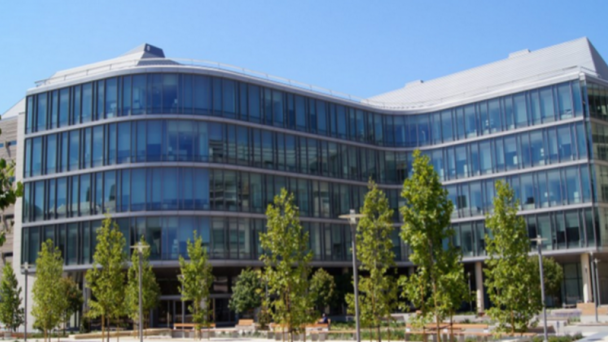
University of California at San Francisco (UCSF) has one of the largest neuroscience complexes in the world including the Sandler Neurosciences Center and Rock Hall. UCSF is ranked by NIH as the #1 department of neurology at US medical schools.

Research is done by the faculty in the Neuroscience Graduate Program and many centers including the UCSF Memory and Aging Center and the Center for Integrative Neuroscience. Affiliated centers include research at San Francisco Medical Centers and the Gladstone Institute of Neurological Disorders.

Web Information

Department of Neurology Website: neurology.ucsf.edu/ UCSF Memory and Aging Center:  memory.ucsf.edu/ Center for Integrative Neuroscience: cin.ucsf.edu/index.html UCSF Neuroscience Graduate Program: neuroscience.ucsf.edu/neurograd BRAIN Initiative Grant – ” Modular systems for measuring and manipulating brain activity” BRAIN Initiative Grant   “Mapping the Developing Human Neocortex by Massively Parallel Single Cell Analysis” BRAIN Initiative Grant – “Identification of enhancers whose activity defines cortical interneuron types”

Contact Information

Address: Sandler Neurosciences Center 675 Nelson Rising Lane, Suite 190 San Francisco, California

Sandler Neurosciences Center

In honor of Herbert and Marion Sandler’s extraordinary commitment to neurological disease research at UCSF, our new neurosciences building at Mission Bay has been named the Sandler Neurosciences Center. This 237,000 square foot facility has laboratories headed by principal investigators from the UCSF Department of Neurology, the Institute for Neurodegenerative Diseases ...

OnAir Post: UCSF Neuroscience

Loren M Frank, PhD – UCSF


Core Faculty, Program in Biological Sciences, UCSF Physiology Department Director:  Frank Laboratory

Frank’s research interests center around learning and spatial coding in the hippocampal-cortical circuit. Frank is interested in understanding the neural correlates of learning and memory. In particular, his laboratory focuses on the circuitry of the hippocampus and adjacent regions. His goal is to examine the relationships among neural firing patterns, behavior, and anatomy to understand how the brain uses and stores information.


Web Information

Webpage: keck.ucsf.edu/physio/people/frankl.html#research UCSF Neuroscience  Brain Initiative Grant

Contact Information

Email: loren@phy.ucsf.edu Phone: 415-502-6317 Address: UCSF 513 Parnassus Box 0444 San Francisco, CA 94143-0444


Research

The ability to use experience to guide behavior (to learn) is one of the central functions of the brain. We are interested in understanding the neural correlates of learning and memory. In particular, our laboratory focuses on the circuitry of the hippocampus and adjacent regions. Our goal is to examine the relationships among neural firing patterns, behavior, and anatomy to understand how the brain uses and stores information. Ultimately we should be able to generate accurate computational models of learning to both test hypotheses concerning hippocampal-cortical interactions and to generate new predictions that can be tested experimentally.

Anatomical organization

The hippocampal formation has a unique anatomical organization in that the connectivity between adjacent hippocampal regions is ...

OnAir Post: Loren M Frank, PhD – UCSF

Skip to toolbar