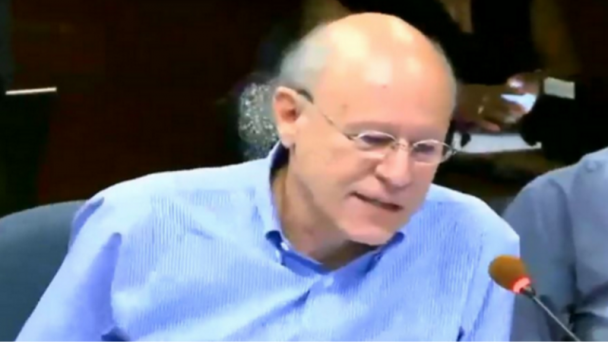
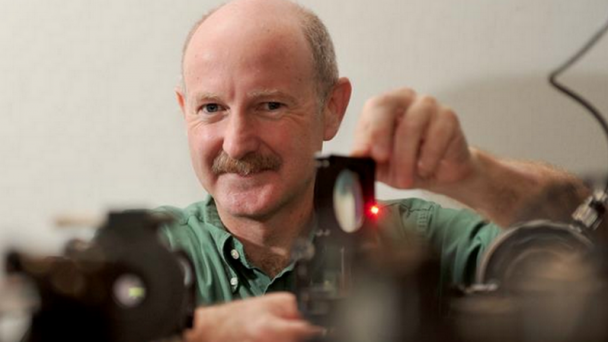
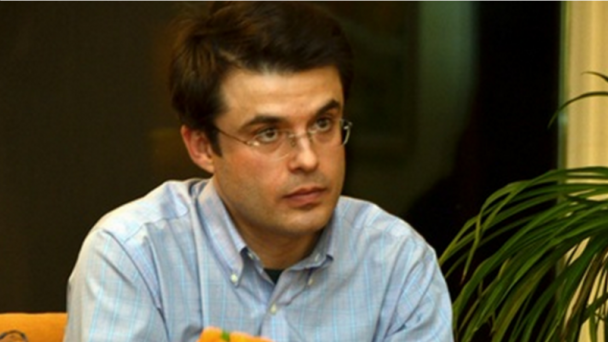
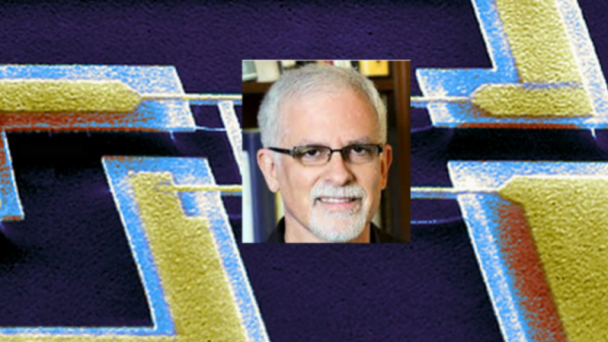
Richard Huganir, PhD – John Hopkins


Professor and Director of the Department of Neuroscience at Johns Hopkins University; Co-Director, Brain Science Institute; and HHMI investigator. Member of Multi-Council Working Group (NIMH council)

Huganir’s lab is credited for examining the molecular mechanisms underlying the regulation of neurotransmitter receptor function with a focus on glutamate receptors. Their studies have suggested that regulation of receptor function may be a major mechanism for the regulation of synaptic plasticity in the nervous system in health and disease.

Web Information

Department Webpage: hneuroscience.jhu.edu/resources/directory/faculty/richard-l.-huganir/

Lab Page: neuroscience.bs.jhmi.edu/huganir/

Twitter:

Contact Information

Email: rhuganir@jhmi.edu

Phone:  410-955-4050

Address: The Solomon H. Snyder Department of Neuroscience Johns Hopkins University School of Medicine 725 North Wolfe Street Baltimore, MD 21205 Room: Hunterian 1009A

Research

Regulation of Neurotransmitter Receptors and Brain Function in Health and Disease

Neurotransmitter receptors mediate signal transduction at the postsynaptic membrane of synaptic connections between neurons in the nervous system. We have been studying the molecular mechanisms in the regulation of neurotransmitter receptor function. Recently we have focused on glutamate receptors, the major excitatory receptors in the brain. Glutamate receptors can be divided into two major classes: AMPA and NMDA receptors. AMPA receptors mediate rapid excitatory synaptic transmission while NMDA receptors play important roles in neuronal plasticity and development. Studies in ...

OnAir Post: Richard Huganir, PhD – John Hopkins

George Church, PhD – Harvard

Professor of Genetics, Harvard Medical School Director, PersonalGenomes.org and the Church Lab

Dr. Church was part of a team of six that proposed in 2012 a Brain Activity Map which morphed into the BRAIN Initiative. They outlined specific experimental techniques that might be used to achieve what they termed a “functional connectome”  as well as new technologies to detect and manipulate neuronal activity. In a 2015 Neuron article, they proposed establishing a national network of Brain Observatories.

Web Information

Website: http://arep.med.harvard.edu/gmc/

Wikipedia Entryhttps://en.wikipedia.org/wiki/George_M._Church

Contact Information

Email: gmc@harvard.edu

Phone: (617) 432-7562

Address: Department of Genetics, New Research Building (NRB) 77 Avenue Louis Pasteur , Room 238 (233, 232). Boston, MA 02115

Brain Actvity Map

Original paper in Neuron 2012

The Brain Activity Map Project and the Challenge of Functional Connectomics

The function of neural circuits is an emergent property that arises from the coordinated activity of large numbers of neurons. To capture this, we propose launching a large-scale, international public effort, the Brain Activity Map Project, aimed at reconstructing the full record of neural activity across complete neural circuits. This technological challenge could prove to be an invaluable step toward understanding fundamental and pathological brain processes.


Closing Keynote at Kavli Futures Symposium

From Kavli Foundation web page about Nov.3-4, 2014 symposium at Columbia University.

In the closing keynote, George ...

OnAir Post: George Church, PhD – Harvard

Paul Alivisatos, PhD – UC Berkeley

Director, Lawrence Berkeley National Laboratory, UC Berkeley Distinguished Professor of Nanoscience and Nanotechnology Director, Kavli Energy Nanosciences Institute

Dr. Alivisatos research breakthroughs include the synthesis of size- and shape-controlled nanoscrystals, and forefront studies of nanocrystal properties, including optical, electrical, structural and thermodynamic. He was also part of a team of six that proposed in 2012 a Brain Activity Map which morphed into the BRAIN Initiative.

Web Information

Alivisatos Group Web page: http://www.cchem.berkeley.edu/pagrp/people.html

Berkeley Labhttp://www.lbl.gov/

Wikipedia Entryhttps://en.wikipedia.org/wiki/Paul_Alivisatos


Contact Information

Email: alivis@berkeley.edu

Phone: 510-642-2148

Address: Alivisatos Lab, Hildebrand D83 UC Berkeley Chemistry Department #1460 Berkeley, CA 94720-1460

Biosketch

Dr. Alivisatos received a Bachelor’s degree in Chemistry in 1981 from the University of Chicago and Ph.D. in Chemistry from UC Berkeley in 1986. He began his career with UC Berkeley in 1988 and with Berkeley Lab in 1991.

Dr. Paul Alivisatos is Director of the Lawrence Berkeley National Laboratory (Berkeley Lab) and is the University of California (UC) Berkeley’s Samsung Distinguished Professor of Nanoscience and Nanotechnology. He also directs the Kavli Energy Nanosciences Institute (ENSI), and holds professorships in UC Berkeley’s departments of materials science and chemistry. In addition, he is a founder of two prominent nanotechnology companies, Nanosys and Quantum Dot Corp, now a part of Life Tech.

OnAir Post: Paul Alivisatos, PhD – UC Berkeley

Ralph Greenspan, PhD – UCSD

Associate Director, Kavli Institute for Mind and Brain  Professor, Neurobiology UCSD and Director, Center for Brain Activity Mapping Co-Director, Cal-Brain

Dr. Greenspan was part of a team of six that proposed in 2012 a Brain Activity Map which morphed into the BRAIN Initiative. One of his main interests currently is to understand the role of network level activity in the nervous system and among the genes, motivated by a strong belief that the state of these networks is of major importance in determining behavior.


Web Information

UCSD web page: healthsciences.ucsd.edu/education/neurograd/faculty/Pages/ralph-greenspan.

Center for Brain Activity Mappinghttp://cbam.ucsd.edu/

Lab webpage:  http://greenspanlab.ucsd.edu/greenspan.html

Contact Information

Email: rgreenspan@ucsd.edu

Phone: 858-822-7657

Address: Kavli Institute for Brain and Mind University of California, San Diego 9500 Gilman Dr. 1859 AP&M Annex La Jolla, CA 92093-0126


Biosketch

B.A., Biology 1974 Brandeis University

Ph.D., Biology 1979 Brandeis University

Postdoctoral training 1979-1982 University of California, San Francisco

Dr. Greenspan began working on the genetic and neurobiological basis of behavior in the fruit fly (Drosophila melanogaster) as a graduate student  with one of the field’s founders, Jeffery Hall, at Brandeis University.  His work has ranged from the genetic control of nervous system development in the fruit fly and mouse, to genetic, molecular and neurobiological studies of innate and learned behaviors in the fruit fly. In the course of this work, he has ...

OnAir Post: Ralph Greenspan, PhD – UCSD

Larry Abbott, PhD – Columbia


William Bloor Professor of Neuroscience, Columbia University College of Physicians and Surgeons Member of BRAIN Multi-Council Working Group (NINDS council)

Dr. Abbott, trained as a physicist, joined Columbia in 2005 as co-director of the Center for Theoretical Neuroscience. Using computational modeling and mathematical analysis, Dr. Abbott explores how single neurons respond to synaptic inputs, how neurons interact in neural circuits, and how large networks of neurons represent, store, and process information.

Web Information

Columbia Webpage:  neurotheory.columbia.edu/~larry/

Contact Information

Email: lfabbott@columbia.edu

Phone: 646-774-7317

Address: Center for Neurobiology and Behavior Department of Physiology and Cellular Biophysics Columbia University College of Physicians and Surgeons Kolb Research Annex, Rm 759 1051 Riverside Drive New York, NY 10032


Biography

Dr. Abbott trained as a physicist and worked in theoretical particle physics at the Stanford Linear Accelerator Center, CERN, the European center for particle physics, and Brandeis. He began his transition to neuroscience research in 1989 and joined Columbia in 2005 as co-director of the Center for Theoretical Neuroscience.

Using computational modeling and mathematical analysis, Dr. Abbott explores how single neurons respond to synaptic inputs, how neurons interact in neural circuits, and how large networks of neurons represent, store, and process information in processes including olfaction, motor-pattern generation, and memory and decision-making.

Dr. Abbott is a faculty member in theNeuroscience and  Physiology & Cellular Biophysics departments at P&S and the ...

OnAir Post: Larry Abbott, PhD – Columbia

Cori Bargmann, PhD – Rockefeller


Torsten N. Wiesel Professor at Rockefeller University and head of the Lulu and Anthony Wang Laboratory of Neural Circuits and Behavior Co-chair of the Advisory Committee to the NIH Director (ACD) and At large member of the Multi-Council Working Group (WCWG) for the BRAIN Initiative

Cori Bargmann was awarded the Kavli Prizein 2012  and the Breakthrough Prize in Life Sciences in 2013.  Cori is known for her work on the behavior in the C. elegans, particularly olfaction in the worm.

Web Information

Rockfeller website:  rockefeller.edu/research/faculty/labheads/CoriBargmann/

HHMI pages: .hhmi.org/scientists/cornelia-i-bargmann

Laboratory of Neural Circuits and Behaviorlab.rockefeller.edu/bargmann/

Wikipedia Entry: en.wikipedia.org/wiki/Cornelia_Bargmann

Contact Information

E-mail: Cori.Bargmann@rockefeller.edu Office Phone: (212) 327-7242 Lab Phone: (212) 327-7411 Address: The Rockefeller University 1230 York Avenue New York, NY 10065


Biography

From the Kavli prize page

Cornelia Isabella Bargmann was born in 1961 in Virginia and raised in Athens, Georgia, where she attended the University of Georgia. She then went north to study cancer-signalling genes and cloned the oncogene HER2, a key factor in breast cancer, in the laboratory of Robert Weinberg at the Whitehead Institute, Massachusetts Institute of Technology.

After receiving her Ph.D. in 1987, Professor Bargmann transferred to the laboratory of H. Robert Horvitz, at MIT, where she became acquainted with the tiny worm C. elegans. Professor Horvitz had already made major contributions to understanding neural ...

OnAir Post: Cori Bargmann, PhD – Rockefeller

Terrence J. Sejnowski, PhD – UCSD/Salk


Professor of Biological Sciences at UCSD and Head ofComputational Neurobiology Laboratory (CNL) at Salk Institute Howard Hughes Medical Institute Investigator Member of the Advisory Committee to the NIH Director

Sejnowski is interested in the hippocampus and the cerebral cortex, which holds our knowledge of the world and how to interact with it. Sejnowski’s team uses sophisticated electrical and chemical monitoring techniques to measure changes that occur in the connections among nerve cells in the hippocampus during a simple form of learning.

Web Information

UCSD Webpage:   biology.ucsd.edu/research/faculty/tsejnowski

CNL Lab Website: cnl.salk.edu/

HHMI Webpage: hhmi.org/scientists/terrence-j-sejnowski

Wikipedia Entry:  wikipedia.org/wiki/Terry_Sejnowski

Contact Information

Email: tsejnowski@ucsd.edu and sejnowski@salk.edu

Phone: (858) 453-4100

Address: CNL-S c/o The Salk Institute 10010 North Torrey Pines Road La Jolla, CA 92037

Biosketch

Terrence Sejnowski is a pioneer in computational neuroscience and his goal is to understand the principles that link brain to behavior. His laboratory uses both experimental and modeling techniques to study the biophysical properties of synapses and neurons and the population dynamics of large networks of neurons. New computational models and new analytical tools have been developed to understand how the brain represents the world and how new representations are formed through learning algorithms for changing the synaptic strengths of connections between neurons. He has published over 300 scientific papers and 12 books, including The ...

OnAir Post: Terrence J. Sejnowski, PhD – UCSD/Salk

Rafael Yuste, MD, PhD – Columbia


Summary

Professor, Biological Sciences and Neuroscience and Co-Director, Kavli Institute for Brain Science at Columbia University Member, Multi-Council Working Group (BRAIN Initiative) Member, Advisory Committee to the Director (NIH)

Dr. Yuste has pioneered the application of imaging techniques, such as calcium imaging of neuronal circuits, two-photon imaging, photostimulation using caged compounds and holographic spatial light modulation microscopy.


Information

Columbia/Kavli Webpage: kavli.columbia.edu/leadership/yuste Lab Webpage: columbia.edu/cu/biology/faculty/yuste/ Allen Institute Webpage: alleninstitute.org/our-institute/advisors/profiles/rafael-yuste/ Twitter:  @yusterafa

Email: rafaelyuste@columbia.edu Phone: 212-854-5023 Address: 901 NWC Building 550 West 120th Street New York, NY 10027

Research

The goal of Dr. Yuste’s research is to understand the function of the cortical microcircuit. The cortex constitutes the larger part of the brain in mammals. In humans it is the primary site of mental functions like perception, memory, control of voluntary movements, imagination, language and music. No accepted unitary theory of cortical function exists yet; nevertheless, the basic cortical microcircuitry develops in stereotyped fashion, is similar in different cortical areas and in different species, and has apparently not changed much in evolution since its appearance. At the same time, the cortex participates in apparently widely different computational tasks, resembling a “Turing machine”. Because of this, it is conceivable that a “canonical” cortical microcircuit may exist and implement a relatively simple, and flexible, computation.

We pursue the reverse-engineering of the ...

OnAir Post: Rafael Yuste, MD, PhD – Columbia

Nenad Sestan, MD/PhD – Yale


Professor of Neurobiology, of Genetics and of Psychiatry, Yale University Director, Sestan Lab

Research Interests- the evolution and development of neuronal circuits of the human cerebral cortex. Research in the Sestan Lab investigates how neurons acquire distinct identities and form precise connections in the developing cerebral cortex, a part of the brain involved in a variety of higher cognitive, emotional, sensory, and motor functions. The Lab also studies how these developmental processes have changed during evolution and in human disorders.

Web Information

Webpage:  medicine.yale.edu/neurobiology/people/nenad_sestan.profile Yale Neuroscience BRAIN Initiative Grant – “A Novel Approach for Cell-Type Classification and Connectivity in the Human Brain”

Contact Information

Email: nenad.sestan@yale.edu Phone: (203) 737-2190 Address: Department of Neurobiology PO Box 208001 333 Cedar Street New Haven, CT 06520-8001


Biography

PhD Yale University School of Medicine (1999) MD University of Zagreb (1995)


Research Summary

Research in our laboratory investigates how neurons acquire distinct identities and form precise connections in the developing cerebral cortex, a part of the brain involved in a variety of higher cognitive, emotional, sensory, and motor functions. We also study how these developmental processes have changed during evolution and in human disorders. We study these problems for primarily two reasons. The first reason is to explore what it is about our brain that makes us human. The most important distinction between humans and other ...

OnAir Post: Nenad Sestan, MD/PhD – Yale

Loren M Frank, PhD – UCSF


Core Faculty, Program in Biological Sciences, UCSF Physiology Department Director:  Frank Laboratory

Frank’s research interests center around learning and spatial coding in the hippocampal-cortical circuit. Frank is interested in understanding the neural correlates of learning and memory. In particular, his laboratory focuses on the circuitry of the hippocampus and adjacent regions. His goal is to examine the relationships among neural firing patterns, behavior, and anatomy to understand how the brain uses and stores information.


Web Information

Webpage: keck.ucsf.edu/physio/people/frankl.html#research UCSF Neuroscience  Brain Initiative Grant

Contact Information

Email: loren@phy.ucsf.edu Phone: 415-502-6317 Address: UCSF 513 Parnassus Box 0444 San Francisco, CA 94143-0444


Research

The ability to use experience to guide behavior (to learn) is one of the central functions of the brain. We are interested in understanding the neural correlates of learning and memory. In particular, our laboratory focuses on the circuitry of the hippocampus and adjacent regions. Our goal is to examine the relationships among neural firing patterns, behavior, and anatomy to understand how the brain uses and stores information. Ultimately we should be able to generate accurate computational models of learning to both test hypotheses concerning hippocampal-cortical interactions and to generate new predictions that can be tested experimentally.

Anatomical organization

The hippocampal formation has a unique anatomical organization in that the connectivity between adjacent hippocampal regions is ...

OnAir Post: Loren M Frank, PhD – UCSF

Michael Roukes, PhD – CalTech


Professor of Physics, Applied Physics, and Bioengineering, CalTech Division of Engineering and Applied Sciences Director, Roukes Group

Roukes research activities are currently focused on developing advanced nanodevices, engineering them into complex systems, and using them to enable fundamental problems in neuroscience and proteomics. A continuing thread in theoretical and experimental investigations focuses on fundamental properties of nanomechanical systems.


Web Information

Lab webpage: caltech.edu/people/3185/profile Division webpage: nano.caltech.edu/people/roukes Caltech Neuroscience Brain Initiative Grant

Contact Information

Email: roukescaltech.edu Phone: 626-395-2916 Address: MC 149-33Pasadena, CA 91125


Biography

B.A., University of California (Santa Cruz), 1978; Ph.D., Cornell University, 1985. Associate Professor, Caltech, 1992-96; Professor of Physics, 1996-2002; Professor of Physics, Applied Physics, and Bioengineering, 2002-11; Abbey Professor, 2011-; Director, Kavli Nanoscience Institute, 2004-06; Co-Director, 2008-2013.


Research

Research Overview

Professor Roukes’s research focuses on nanobiotechnology, nanotechnology, nanoscale physics, nanoscale and molecular mechanics.

List of Research Areas

nanobiotechnology, nanotechnology, nanoscale physics, nanoscale and molecular mechanics

Research Centers

The Kavli Nanoscience Institute, Center for the Physics of Information

OnAir Post: Michael Roukes, PhD – CalTech

Research into brain’s GPS earns three neuroscientists Nobel Prize

"This year's Nobel Laureates have discovered a positioning system, an 'inner GPS' in the brain that makes it possible to orient ourselves in space, demonstrating a cellular basis for higher cognitive function.”

OnAir Post: Research into brain’s GPS earns three neuroscientists Nobel Prize

Skip to toolbar