Simons Foundation & The BRAIN Initiative

The Simons Foundation’s mission is to advance the frontiers of research in mathematics and the basic sciences. Simons sponsors a range of programs that aim to promote a deeper understanding of our world.

The Life Sciences division launched the Simons Collaboration on the Global Brain in Spring 2014. The collaboration supports projects that use new technologies to record the activity of large neural populations at single-cell resolution, in combination with mathematical analyses, to investigate how neural coding and dynamics represent and process information relevant to internal cognitive states and behavior.


Web Information

Website: simonsfoundation.org/ Simons Collaboration on the Global Brain: Wikipedia Entry:  wiki/James_Harris_Simons

Contact Information

Phone: 646.654.0066 Address: Simons Foundation 160 Fifth Avenue, 7th Floor New York, NY 10010

Organization

Director of Simons Collaboration on the Global Brain: David W. Tank Life Sciences Staff

BRAIN Initiative

The BRAIN Initiative Fact Sheet 9/30/14

The Simons Foundation is announcing alignment of $62 million Simons Collaboration on the Global Brain with the goals of the BRAIN Initiative:

In the spring of 2014, the Simons Foundation launched the Simons Collaboration on the Global Brain with a $60 million investment over the next five years. The goal of this collaboration, directed by David ...

OnAir Post: Simons Foundation & The BRAIN Initiative
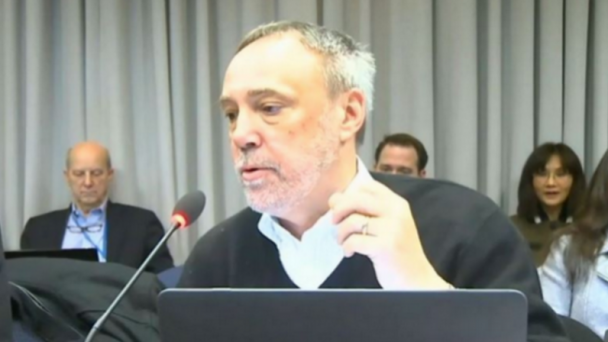
David Tank, PhD – Princeton


Henry L. Hillman professor of neuroscience and molecular biology; Co-Director of the Princeton Neuroscience Institute; and Director, Bezos Center for Neural Circuit Dynamics At large Member of Multi-Council Working Group 

Dr Tank’s research interests include the measurement, analysis, and modeling of neural circuit dynamics. More recently, his work has focused on the mechanisms of persistent neural activity and the development and application of rodent virtual reality systems combined with optical imaging and electrophysiology to study neural circuit dynamics during navigation.

Web Information

Department Webpage:   molbio.princeton.edu/faculty/molbio-faculty/136-tank

Tank Lab Webpage: genomics.princeton.edu/tank/

Bezos Center for Neural Circuit Dynamics  Webpage: pni.princeton.edu/centers/bezos-center-neural-circuit-dynamics

Allen Insitute Webpage: alleninstitute.org/our-institute/advisors/profiles/david-tank/

Contact Information

Email: dwtank@princeton.edu

Phone: (609) 258-7371

Address: 156 Neuroscience

Faculty Assistant: Lisa Glassl glass@princeton.edu

Biosketch

Dr. Tank earned his B.S. in Physics and Mathematics at Case Western Reserve University in 1976 and a Ph.D. degree in Physics from Cornell University in 1983. From 1983-2001 he was a research scientist at Bell Laboratories in Murray Hill, NJ, and became a Bell Laboratories Fellow in 1999. From 1991-2001 he served as Department Head of the Biological Computation Research Department. In 2001, he moved to Princeton University, becoming a founding Co-Director of the Princeton Neuroscience Institute in 2005.

Research Focus

MEASUREMENT AND ANALYSIS OF NEURAL CIRCUIT DYNAMICS

Action potentials are a nearly universal form of electrochemical dynamics in ...

OnAir Post: David Tank, PhD – Princeton

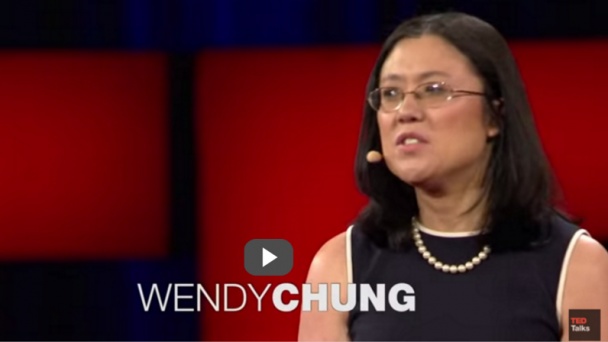
Autism — what we know (and what we don’t know yet)

https://www.youtube.com/watch?v=wKlMcLTqRLsVideo can’t be loaded because JavaScript is disabled: Autism — what we know (and what we don’t know yet) | Wendy Chung (https://www.youtube.com/watch?v=wKlMcLTqRLs)

“In this calm and factual talk, geneticist Wendy Chung shares what we know about autism spectrum disorder — for example, that autism has multiple, perhaps interlocking, causes. Looking beyond the worry and concern that can surround a diagnosis, Chung and her team look at what we’ve learned through studies, treatments and careful listening.”

Filmed March 2014 at TED 2014 Uploaded to YouTube on April 28, 2014 by TED 

OnAir Post: Autism — what we know (and what we don’t know yet)

Skip to toolbar