NIMH

The mission of the National Institute of Mental Health (NIMH) is to transform the understanding and treatment of mental illnesses through basic and clinical research, paving the way for prevention, recovery, and cure.

For the Institute to continue fulfilling this vital public health mission, it must foster innovative thinking and ensure that a full array of novel scientific perspectives are used to further discovery in the evolving science of brain, behavior, and experience. In this way, breakthroughs in science can become breakthroughs for all people with mental illnesses.

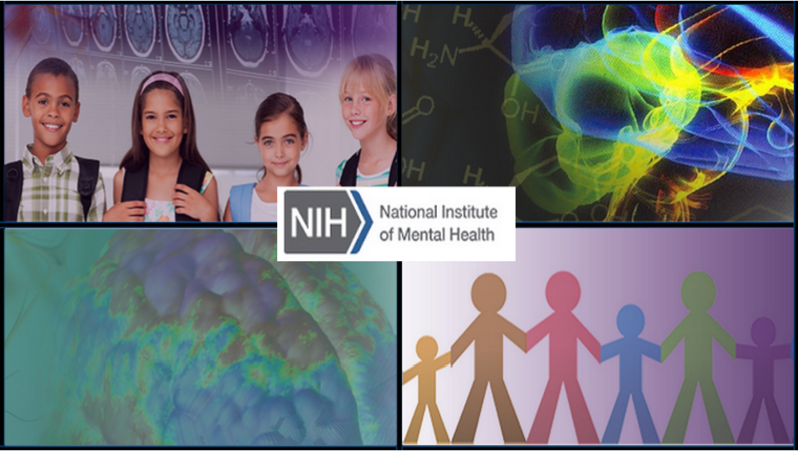
Images are from NIMH website “Clinics and Labs Overview”Upper left: Emotion and Development BranchUpper right: Experimental Therapeutics & Pathophysiology BranchLower right:Genetic Epidemiology Research BranchLower left: Child Psychiatry Branch


Web Information

Website:   nimh.nih.gov/index.shtml YouTube Channel:  youtube.com/user/NIMHgov Twitter:  twitter.com/nimhgov Facebook:  facebook.com/nimhgov Wikipedia Entry:  wiki/National_Institute_of_Mental_Health

Contact Information

EmailNIMHinfo@mail.nih.gov Address: 6001 Executive Boulevard Rockville, MD 20852

Organization

Director’s Blog: Thomas Insel Advisory Committees: National Advisory Mental Health Council (NAMHC);  Peer Review CommitteesBoard of Scientific Counselors (BSC) Staff Directory

NIMH Strategic Plan for Research

Introduction

The National Institute of Mental Health (NIMH) is the lead Federal agency for research on ...

OnAir Post: NIMH
Tom Insel NIMH Blog posts

Tom Insel, while he was Director of NIMH and co-director of the MCWG wrote a number of blog posts that appeared in his blog within the NIMH website.

His BRAIN Initiative related post titles are: ‘The Brain’s Critical Balance’, ‘Early BRAIN Breakthroughs’, ‘BRAIN Awareness’, ‘Creating the Next Generation of Tools’, and ‘New Views into the Brain’.


The Brain’s Critical Balance

Director’s Blog July 29, 2015

We have reached an interesting moment in our quest to understand how the brain works. Our current tools generate an abundance of data, but we are not sure how to turn this data into knowledge. In some ways, neuroscience today is where physics was half a century ago. The physicist Steven Weinberg reminds us, “Rather than being starved for data fifty years ago, we were deluged by data we could not understand. Progress when it came was generally initiated by theoretical advances, with experimentation serving as a referee between competing theories and providing occasional healthy surprises.” While we don’t have a unified field theory of the brain, some of the early projects in the BRAIN Initiative are providing models of how behavior emerges from brain activity.  One of the ...

OnAir Post: Tom Insel NIMH Blog posts

From Neurons to Neighborhoods: Tom Insel

https://www.youtube.com/watch?v=I4XaslROyQQVideo can’t be loaded because JavaScript is disabled: From Neurons to Neighborhoods: charting a new science of mental health (https://www.youtube.com/watch?v=I4XaslROyQQ)

“From Neurons to Neighborhoods: charting a new science of mental health”

Dr. Thomas Insel, Director of the National Institute of Mental Health (NIMH), discusses how a deeper understanding of how the human brain functions will yield new approaches to diagnostics and therapeutics, bending the curve for millions affected by mental disorders.

Published by Stanford on October 20, 2014

Stanford University page   YouTube page

OnAir Post: From Neurons to Neighborhoods: Tom Insel

Greg Farber, PhD – NIMH


Director, Office of Technology Development and Coordination for National Institute of Mental Health (NIMH) Multi-Council Working Group (Staff)

While at Penn State, Dr. Farber’s research included work on structural movies of enzyme action, molecular evolution, and mechanistic enzymology. As Director of TDC, he is responsible for coordinating all technology development and bioinformatics activities at NIMH, overseeing the National Database for Autism Research, managing the Human Connectome Project on behalf of the NIH Neuroscience Blueprint, and overseeing the NIMH small-business program.

Web Information

NIMH Webpage:  nimh.nih.gov/about/organization/od/office-of-technology-development-and-coordination-otdc

Contact Information

Email: FarberG@mail.nih.gov

Phone: 301-435-0778

Address: 6001 Executive Boulevard, Room 7162, MSC 9640 Bethesda, MD 20892-9663

Biosketch

Dr. Farber has a B.S. from the Pennsylvania State University (Penn State) in chemistry (1984) and a Ph.D. from the Massachusetts Institute of Technology in physical chemistry (1988). His research in graduate school involved determining the three-dimensional structure and mechanism of the enzyme xylose isomerase in the laboratory of Dr. Gregory A. Petsko. After graduate school, Dr. Farber received a Life Sciences Research Fellowship to work on mechanistic enzymology with Dr. W. W. Cleland at the University of Wisconsin. Following his postdoctoral fellowship, he returned to Penn State as an Assistant Professor of Biochemistry and rose to the rank of Associate Professor with tenure in 1998. Dr. Farber’s research included ...

OnAir Post: Greg Farber, PhD – NIMH

BRAIN Initiative on Charlie Rose Show

From left to right: Thomas Insel of the National Institute of Mental Health, William Newsome of Stanford University, Story Landis of the National Institute of Health, Cornelia Bargmann of Rockefeller University, William Newsome of Stanford University, and Eric Kandel of Columbia University. Charlie Rose back to camera.

Charlie Rose welcomed on July 14, 2013 a distinguished panel to discuss President Obama’s BRAIN initiative, including Eric Kandel, Thomas Insel, Story Landis, Cornelia Bargmann and William Newsome.

This 14 minute clip includes the opening setup and the conclusion during which the panelists each expresses what results they would like, or hope, to see. This 14th episode concludes the second season of the Charlie Rose Brain Series.

Full episode here: charlierose.com/watch/60241001 

https://www.youtube.com/watch?v=CtdFdWkBv8oVideo can’t be loaded because JavaScript is disabled: Charlie Rose Brain Series 2, Episode 14 (https://www.youtube.com/watch?v=CtdFdWkBv8o)


Curator comment

At the segment starting around minute 42 in the full episode on the Charlie Rose site, Rose says there needs to be a public information project…to facilitate “sharing of knowledge” …. on ...

OnAir Post: BRAIN Initiative on Charlie Rose Show

Toward a new understanding of mental illness

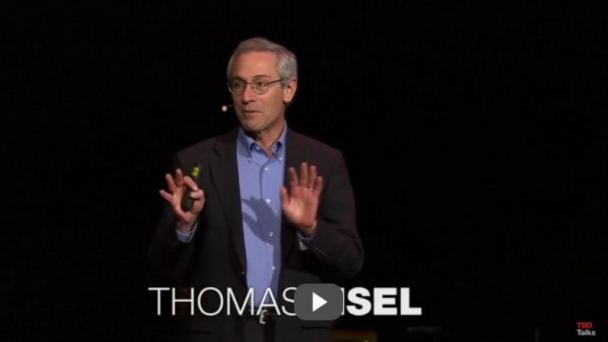
https://www.youtube.com/watch?v=PeZ-U0pj9LIVideo can’t be loaded because JavaScript is disabled: Thomas Insel: Toward a new understanding of mental illness (https://www.youtube.com/watch?v=PeZ-U0pj9LI)

Today, thanks to better early detection, there are 63% fewer deaths from heart disease than there were just a few decades ago. Thomas Insel, Director of the National Institute of Mental Health, wonders: Could we do the same for depression and schizophrenia? The first step in this new avenue of research, he says, is a crucial reframing: for us to stop thinking about “mental disorders” and start understanding them as “brain disorders.”

Filmed January 203 at TEDX Caltech Uploaded to YouTube on April 16, 2013 by TED

 TED Talks webpage

OnAir Post: Toward a new understanding of mental illness

Thomas Insel, MD – Verily


Lead, Google Life Sciences Division Former Director of the National Institute of Mental Health (NIMH) Formerly Co-chair, BRAIN Initiative Multi-Council Working Group (MCWG)

Thomas R. Insel, M.D., was former Director of NIMH, the component of the National Institutes of Health charged with generating the knowledge needed to understand, treat, and prevent mental disorders. His tenure at NIMH had been distinguished by groundbreaking findings in the areas of practical clinical trials, autism research, and the role of genetics in mental illnesses.


Web Information

Wikipedia pagewikipedia.org/wiki/Thomas_R._Insel

NIMH Webpage:  nimh.nih.gov/about/director

Blog: nimh.nih.gov/about/director/

Twitter:  @NIMHgov

Contact Information

Email: thomas.insel@nih.gov


Biosketch

Prior to his appointment as NIMH Director in the Fall 2002, Dr. Insel was Professor of Psychiatry at Emory University. There, he was founding director of the Center for Behavioral Neuroscience, one of the largest science and technology centers funded by the National Science Foundation and, concurrently, director of an NIH-funded Center for Autism Research. From 1994 to 1999, he was Director of the Yerkes Regional Primate Research Center in Atlanta. While at Emory, Dr. Insel continued the line of research he had initiated at NIMH studying the neurobiology of complex social behaviors. He has published over 250 scientific articles and four books, including the Neurobiology of Parental Care (with Michael ...

OnAir Post: Thomas Insel, MD – Verily

NIMH Brain Basics

Mental disorders are common. You may have a friend, colleague, or relative with a mental disorder, or perhaps you have experienced one yourself at some point. Such disorders include depression, anxiety disorders, bipolar disorder, attention deficit hyperactivity disorder (ADHD), and many others.

OnAir Post: NIMH Brain Basics

Skip to toolbar