Cold Spring Harbor Laboratory

Summary

Cold Spring Harbor Laboratory (CSHL) is a private, not-for-profit research and education institution at the forefront of molecular biology and genetics.

CSHL research generates knowledge that will yield better diagnostics and treatments for cancer, neurological diseases and other major diseases, and that will lead to improved and more diverse food resources and more efficient biofuels. The Watson School of Biological Sciences trains the next generation of scientists through an innovative Ph.D. program and other educational offerings.


Information

Website:  http://www.cshl.edu/ Wikipedia Entry: wikipedia.org/wiki/Cold_Spring_Harbor_Laboratory BRAIN Grant – “Towards quantitative cell type-based mapping of the whole mouse brain” BRAIN Grant – “An optogenetic toolkit for the interrogation and control of single cells.”

Email:  contact info Phone: 516-367-8800 Address: One Bungtown Road Cold Spring Harbor, NY 11724

President and Chief Executive Officer:  Bruce W. Stillman Leadership


Neuroscience

CSHL neuroscientists focus on understanding how neural activity and neural circuitry underlie behavior, and how disruptions in these circuits lead to neurological and neuropsychiatric disorders such as Alzheimer’s disease, autism, schizophrenia and depression. These questions are addressed in two model systems—rodents and Drosophila—using molecular, cellular, genetic, developmental, theoretical, physiological and behavioral approaches.

Neuroscience research at CSHL is highly collaborative, and can be divided into three broad themes: sensory processing, cognition, and cognitive disorders.  The sensory processing group addresses basic questions about sensory representations (auditory, olfactory ...

OnAir Post: Cold Spring Harbor Laboratory
Optogenetic toolkit for control of cells

PI: Gregory Hannon,  Hannon Lab Institution: Cold Spring Harbor Laboratory Title: “An optogenetic toolkit for the interrogation and control of single cells.” BRAIN Category: Tools for Cells and Circuits (RFA MH-14-216)

Dr. Hannon’s group will develop optogenetic techniques that use pulses of light to control genes and isolate proteins in specific cell types in the brain for molecular studies.

Project Description

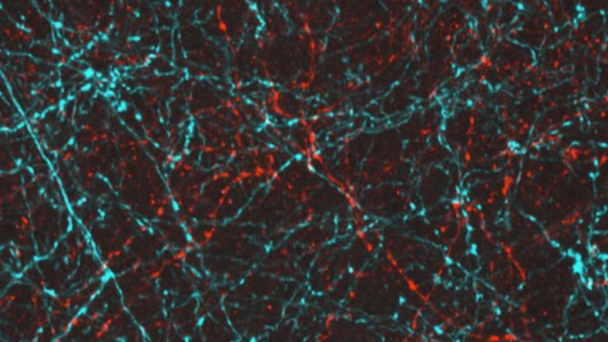
Our understanding of brain function at the cellular and circuit level is critically dependent on the ability to interrogate and alter neural cells withhigh specificity. The use of light, either through single-photon or multi- photon excitation, is the onl method that provides sufficient resolution to probe the brain at the cellular and subcellular levels. While light-activated molecules, like optogenetic proteins or photocaged compounds, have allowed many key insights in neuroscience, their use is still limited to those processes that can be affected by membrane channels. We propose to develop a toolkit allowing the interrogation, regulation, and modification of genetic information in brain cells using light. We wll build on a technology we have recently developed, “LaserTag”, based on the light-dependent interaction between protein tags (i.e. SNAP-tag or HALO-tag) and caged chemical ligands. Such interaction can be either use to recover molecules through affinity purification or to force the ...

OnAir Post: Optogenetic toolkit for control of cells

Mapping the mouse brain in 3-D

https://www.youtube.com/watch?v=kbv9qoJLheQVideo can’t be loaded because JavaScript is disabled: Mapping the mouse brain in 3-D (https://www.youtube.com/watch?v=kbv9qoJLheQ)

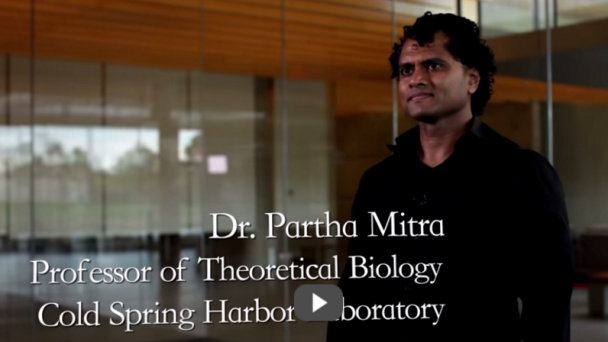
The mapping of the mouse brain is giving researchers like Partha Mitra a better understanding of how neurons are connected and how they communicate across the regions of the brain.


NSF BRAIN Initiative Published APRIL 2, 2014

OnAir Post: Mapping the mouse brain in 3-D

Pavel Osten, MD, PhD – CSHL


Associate ProfessorCold Spring Harbor Laboratory Principal Investigator: Osten Lab

To understand what’s going wrong in illnesses like autism and schizophrenia, we need to know more about how neural circuits are connected in the healthy brain. We’ve developed advanced imaging methods to draw the first whole-brain activation map in the mouse.  Now we’re applying that technology to study changes in brain activity in mice whose behavior models human autism and schizophrenia.


Web Information

Webpage: cshl.edu/Faculty/osten-pavel Brain Initiative Grant

Contact Information

Emailosten@cshl.edu Phone: (516) 367-6990 Address: One Bungtown Road Cold Spring Harbor, NY 11724


Biography

M.D., Medical School of Charles University, Prague, 1991 Ph.D., SUNY Downstate Brooklyn, 1995


Research

To understand what’s going wrong in illnesses like autism and schizophrenia, we need to know more about how neural circuits are connected in the healthy brain. We’ve developed advanced imaging methods to draw the first whole-brain activation map in the mouse.  Now we’re applying that technology to study changes in brain activity in mice whose behavior models human autism and schizophrenia.

Pavel Osten’s lab works on identification and analysis of brain regions, neural circuits, and connectivity pathways that are disrupted in genetic mouse models of autism and schizophrenia. Osten hypothesizes that (1) systematic comparison of multiple genetic mouse models will allow determination ...

OnAir Post: Pavel Osten, MD, PhD – CSHL

Hannon Lab – CSHL

The Hannon Lab comprises a broad spectrum of programs in small RNA biology, mammalian genetics and genomics. The Hannon Lab studies RNAi and related pathways in a wide variety of organisms to extract common themes that define both the mechanisms by which small RNAs act and the biological processes which they impact. Current focus is on microRNAs, endogenous siRNAs and piRNAs and their roles in gene regulation, cancer biology, stem cell biology and in defense of the genome against transposons.

OnAir Post: Hannon Lab – CSHL

Gregory Hannon, PhD – CSHL


Professor at Cold Springs Harbor Laboratory & HHMI Investigator Principal Investigator, Hannon Lab

Greg Hannon explores the processes that cells use to turn genes on and off. My work is focused on understanding a relatively new class of cellular pathways, governed by molecules known as small RNAs, that control gene activation and repression. Our studies of small-RNA biology in early development provide insights into human evolution, diversity, and diseases such as cancer.


Web Information

CSHL Website:  cshl.edu/Faculty/Gregory-Hannon.html HHMI webpage: hhmi.org/scientists/gregory-j-hannon Lab:   hannonlab.cshl.edu/index.html

Contact Information

Emailhannon@cshl.edu Phone: (516) 367-8455 Address: One Bungtown Road Cold Spring Harbor, NY 11724

Biography

Ph.D., Case Western Reserve University,1992

Research

I explore the processes that cells use to turn genes on and off. My work is focused on understanding a relatively new class of cellular pathways, governed by molecules known as small RNAs, that control gene activation and repression. Our studies of small-RNA biology in early development provide insights into human evolution, diversity, and diseases such as cancer.

Gregory Hannon is a pioneer in the study of RNA interference (RNAi), a process in which double-stranded RNA molecules induce gene silencing. Hannon and colleagues have elucidated key elements of the RNAi machinery. During the past several years, the Hannon lab has focused on the ...

OnAir Post: Gregory Hannon, PhD – CSHL

Quantitative cell type-based mapping

Principal Investigator: Pavel Osten Cold Spring Harbor Laboratory Title: “Towards quantitative cell type-based mapping of the whole mouse brain” BRAIN Category: Census of Cell Types (RFA MH-14-215)

The Osten team will develop an automated system to image different types of brain cells and their connections in mice, to pinpoint differences between males and females, across the lifespan.

NIH Webpages

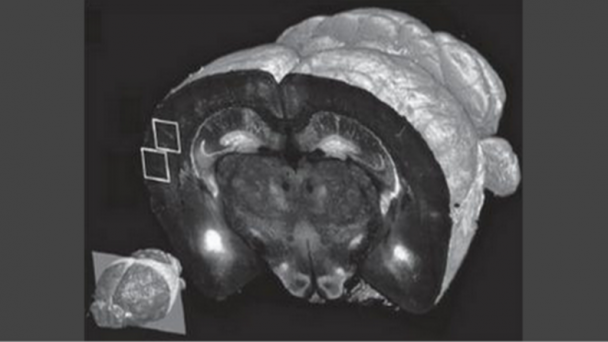
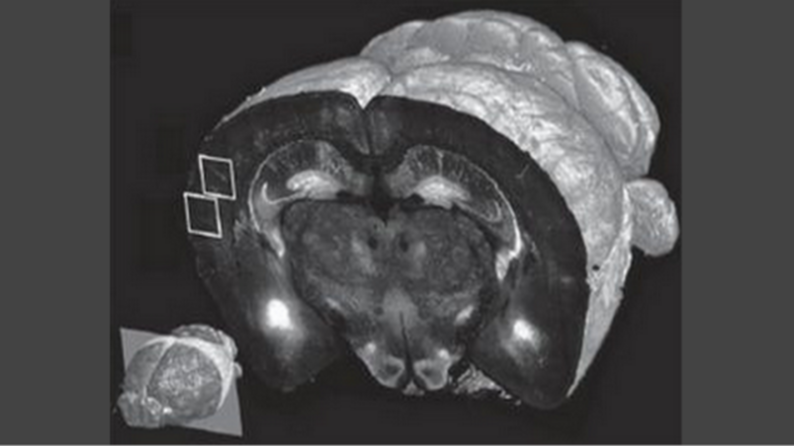
3-D rendering of coronal section of a mouse brain imaged with STP tomography at 20x at a resolution of half a micron. GFP-expressing pyramidal neurons in hippocampus and cortex are targeted.

Project Description

The mouse brain comprises ~70 million neurons and ~30 million glia and other cells. Neurons have been traditionally classified based on their morphology, connectivity, stimulus-response, gene expression, and location in the brain. While we know reasonably well the main cell types that are present at different brain locations, we have little quantitative knowledge about brainwide cell type distribution. In addition, cell type-based brainwide connectivity, especially at the level of projection patterns of single neurons, also remains largely unmapped. This knowledge gap prevents us from incorporating the accumulated cell type-based cellular data into comprehensive circuit models of mammalian brain function. Here we propose to develop a largely automated methodology ...

OnAir Post: Quantitative cell type-based mapping

Skip to toolbar