Mayo Clinic Neuroscience

Mayo Clinic has multiple centers of neuroscience research activity.  In Rochester Minnesota, the main organizational center is the Department of Physiology and Biomedical Engineering and in Florida, the Department of Neuroscience at Mayo Clinic.

Other Mayo Neuroscience related programs  and centers include a PhD program in Neurobiology, an Alzheimer’s Disease Research Center, Center for Advanced Imaging Research, Migraine Research Program, Parkinson’s Disease Research Center, and the Traumatic Brain Injury Program.


Web Information

Website: Department of Physiology and Biomedical Engineering Department of Neuroscience at Mayo Clinic in Florida: mayo.edu/research/department-neuroscience-florida Wikipedia Entry:   wikipedia.org/wiki/Mayo_Clinic Brain Initiative Grant – “Neurotransmitter Absolute Concentration Determination with Diamond Electrode”

Department of Physiology and Biomedical Engineering

Laboratories of primary and joint appointees in the Department of Physiology and Biomedical Engineering:

Biomechanics and Motion Laboratories Bone Histomorphometry – Michael J. Yaszemski Cardiovascular Molecular Imaging – Martin G. Rodriguez-Porcel Cell Imaging and Physiology – Gary C. Sieck Computer-aided Molecular Design – Yuan-Ping Pang Developmental and Regenerative Neurobiology – John R. Henley Gastrointestinal Physiology – Gianrico Farrugia Hepatic Vascular Cell Signaling – Vijay H. Shah Human Integrative Physiology – Michael J. Joyner Kidney Development and Cyst Formation – Caroline R. Sussman Liver Pathobiology – Gregory J. Gores Lung Deformation Injury – Rolf D. Hubmayr Magnetic Resonance ...

OnAir Post: Mayo Clinic Neuroscience

Kendall Lee: Deep Brain Stimulation Research


https://www.youtube.com/watch?v=5HR_Szjhrg8Video can’t be loaded because JavaScript is disabled: Deep Brain Stimulation Research (DBS) – Mayo Clinic (https://www.youtube.com/watch?v=5HR_Szjhrg8)

Kendall Lee, M.D., Mayo Clinic neurosurgeon, describes research into deep brain stimulation being conducted at Mayo Clinic, including the WINCS device that enable precise measurements of the effects of brain stimulation.

Video published on Mar. 18, 2010 by Mayo Clinic


Profile

Professor of Neurosurgery and Physiology, Mayo Clinic

The research interests of Kendall H. Lee, M.D., Ph.D., are to develop deep brain stimulation (DBS) for the treatment of Parkinson’s disease, tremor, depression, obsessive-compulsive disorder and epilepsy. Dr. Lee is fascinated with the possibility of combining sophisticated electrophysiological recordings with miniaturized analytical elements (microprocessors) to augment or repair disrupted function of the brain.

OnAir Post: Kendall Lee: Deep Brain Stimulation Research

Mayo Physiology and Biomedical Engineering Dept.

The Department of Physiology and Biomedical Engineering at Mayo has a long and rich history of scientists and physicians collaborating and translating basic discoveries. The department currently consists of 18 primary and 35 joint appointees. There are 34 doctoral students, 67 research fellows and research associates working in a variety of research areas.

OnAir Post: Mayo Physiology and Biomedical Engineering Dept.

Kendall H Lee, MD/PhD – Mayo


Professor of Neurosurgery and Physiology, Mayo Clinic

The research interests of Kendall H. Lee, M.D., Ph.D., are to develop deep brain stimulation (DBS) for the treatment of Parkinson’s disease, tremor, depression, obsessive-compulsive disorder and epilepsy. Dr. Lee is fascinated with the possibility of combining sophisticated electrophysiological recordings with miniaturized analytical elements (microprocessors) to augment or repair disrupted function of the brain.

Web Information

Webpage: http://www.mayo.edu/research/faculty/lee-kendall-h-m-d-ph-d/bio-00027489 Department of Physiology and Biomedical Engineering: mayo.edu/research/department-physiology-biomedical-engineering Brain Initiative Grant

Contact Information

Email: Lee.Kendall@mayo.edu Address: Joseph Building 4-184W 200 First St. SW Rochester, MN 55905


Biography

Chief Resident – Neurosurgery Dartmouth Hitchcock Medical Center

Resident – Neurosurgery Dartmouth Hitchcock Medical Center

Internship – General Surgery Dartmouth Hitchcock Medical Center

Resident – Neurology Partners’ Neurology Program, Harvard Medical School

Internship – Internal Medicine Hospital of St. Raphael, Yale University School of Medicine

PhD Department of Neurobiology, Yale University Graduate School

MD Yale University Graduate School

M. PhilYale University Graduate School

BA – Major-Biology/Minor-Philosophy University of Colorado, Denver

Research

The research interests of Kendall H. Lee, M.D., Ph.D., are to develop deep brain stimulation (DBS) for the treatment of Parkinson’s disease, tremor, depression, obsessive-compulsive disorder and epilepsy. Dr. Lee is fascinated with the possibility of combining sophisticated electrophysiological recordings with miniaturized analytical elements (microprocessors) to augment or repair disrupted function of the brain.

Focus areas

Real-time DBS. It is currently possible to record pathological behavior in ...

OnAir Post: Kendall H Lee, MD/PhD – Mayo

Diamond Electrodes for Measurement

Principal Investigator: Kendall H  Lee Mayo Clinic Rochester Title: “Neurotransmitter Absolute Concentration Determination with Diamond Electrode” BRAIN Category: Large-Scale Recording-Modulation – New Technologies (RFA NS-14-007)

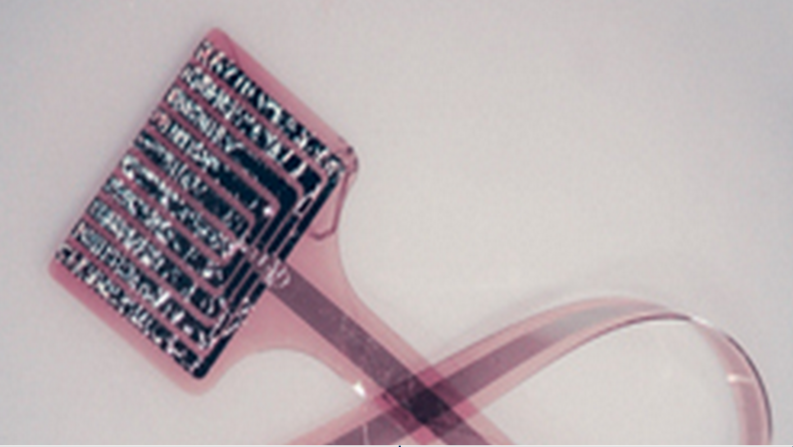
Dr. Kendall and his colleagues will develop diamond-coated electrodes to measure concentrations of the brain chemical dopamine more accurately and over long periods of time in the brain.

NIH Webpages

An implantable diamond-coated flexible electrode. Image from Qmed.

Project Description

Determining the levels of neurotransmitters present in the living brain in real time is a matter of current scientific interest for research and clinicl reasons. Among these reasons is the need for understanding and mapping brain function and for improvement in the clinical application of deep brain stimulation (DBS). One analytical technique that holds potential promise in this application is fast-scan cyclic voltammetry (FSCV), however technical limitations have hindered its adoption for chronic in vivo use. Of particular difficulty has been the construction of a chronically-implantable FSCV electrode that possesses both the proper chemical properties for the monitoring of neurotransmitter levels as well as sufficient durability for chronic implantation in humans or animals. Carbon fiber has been used successfully under some circumstances, particularly at low voltage potentials, but at the higher voltages required for detection ...

OnAir Post: Diamond Electrodes for Measurement

Skip to toolbar