Ecker Lab – Salk

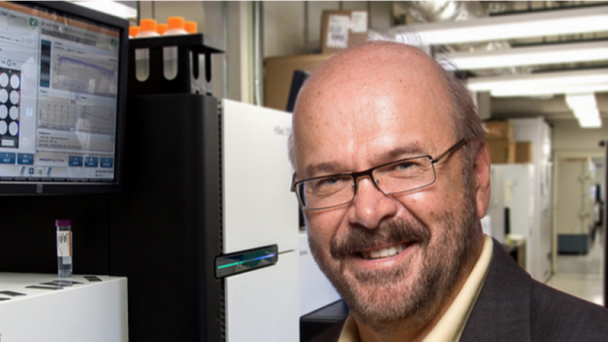
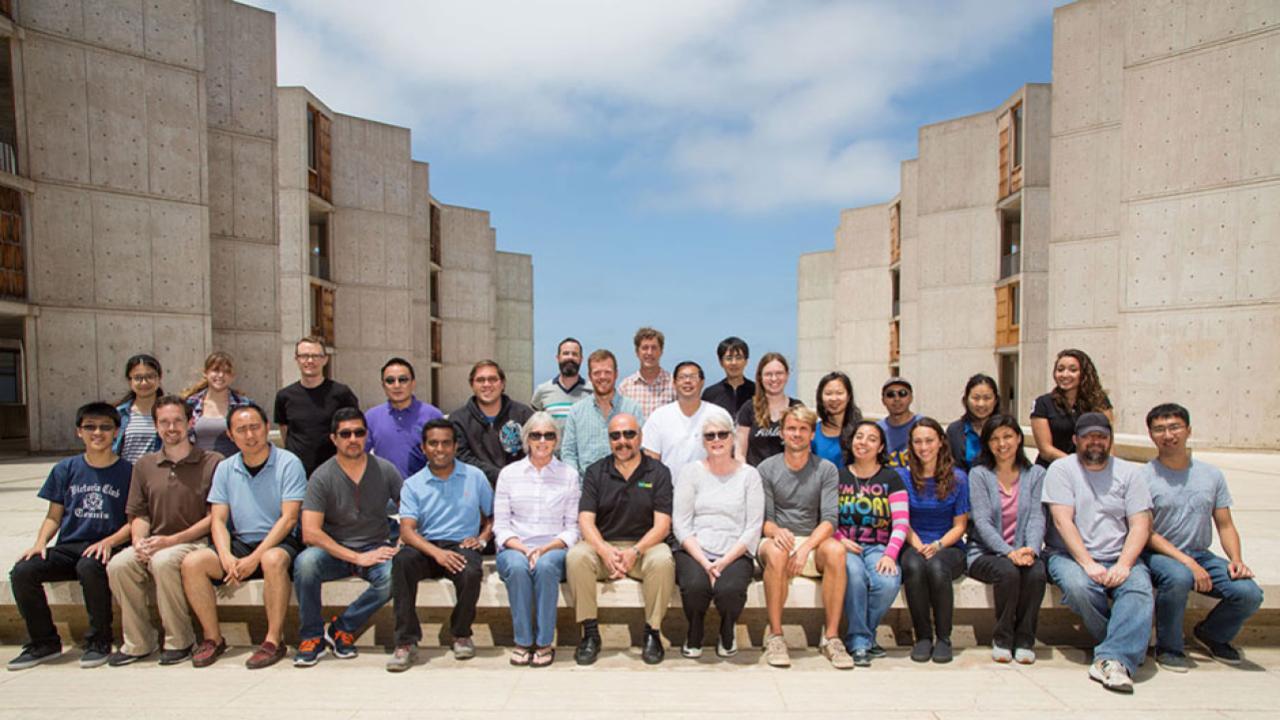
Principal Investigator: Joseph R Ecker Salk Institute for Biological Studies

Being able to study the epigenome in great detail and in its entirety will provide a better understanding of plant productivity and stress resistance, the dynamics of the human genome, stem cells’ capacity to self-renew and how epigenetic factors contribute to the development of tumors and disease. We are now exploring how DNA methylation effects the development of human embryonic stem (hES) cells as well as induced pluripotent stem (IPS) cells as they are induced to differentiate into other types of cells.


Web Information

Website:  pbio.salk.edu/pbioe/members Brain Initiative Grant

Contact Information

Phone: (858) 453-4100 x1752 Address: Salk Institute Genomic Analysis Laboratory 10010 N. Torrey Pines Road La Jolla, CA 92037

Research

The development of DNA sequencing technologies that produce vast amounts of sequence information has triggered a paradigm shift in biology, enabling massively parallel surveying of complex nucleic acid populations. The diversity of applications to which these technologies have already been applied demonstrates the immense range of cellular processes and properties that can now be studied at the single-base resolution. These applications include, but are not limited to, the sequencing of genomes to uncover nucleotide polymorphisms and structural variation, as well as epigenomes to reveal sites of DNA–protein interaction and ...

OnAir Post: Ecker Lab – Salk

Salk Institute for Biological Studies

The Salk Institute was established in the 1960s by Jonas Salk, M.D., the developer of the polio vaccine.

Today the major areas of study at Salk are: molecular biology and genetics, neurosciences, and plant biology. Salk research provides new understanding and potential new therapies and treatments for a range of diseases—from cancer, AIDS and Alzheimer’s disease, to cardiovascular disorders, anomalies of the brain and birth defects.


Web Information

Website: http://www.salk.edu/ Neuroscience Research Centers: salk.edu/centers/ Neuroscience Laboratories: salk.edu/faculty/neuroscience_laboratories Wikipedia Entry: wiki/Salk_Institute_for_Biological_Studies Brain Initiative Grant – Epigenomic mapping approaches for cell-type classification in the brain”

Contact Information

Email: webmaster@salk.edu Phone: 858.453.4100 Address: Salk Institute for Biological Studies 10010 N Torrey Pines Rd La Jolla, CA 92037

About Salk

Mission Statement

Every cure has a starting point. Like Dr. Jonas Salk when he conquered polio, Salk scientists are dedicated to innovative biological research. Exploring the molecular basis of diseases makes curing them more likely. In an outstanding and unique environment we gather the foremost scientific minds in the world and give them the freedom to work collaboratively and think creatively. For over 50 years this wide-ranging scientific inquiry has yielded life-changing discoveries impacting human health. We are home to Nobel Laureates and members of the National Academy of Sciences who train and mentor the next generation of ...

OnAir Post: Salk Institute for Biological Studies

Terrence J. Sejnowski, PhD – UCSD/Salk


Professor of Biological Sciences at UCSD and Head ofComputational Neurobiology Laboratory (CNL) at Salk Institute Howard Hughes Medical Institute Investigator Member of the Advisory Committee to the NIH Director

Sejnowski is interested in the hippocampus and the cerebral cortex, which holds our knowledge of the world and how to interact with it. Sejnowski’s team uses sophisticated electrical and chemical monitoring techniques to measure changes that occur in the connections among nerve cells in the hippocampus during a simple form of learning.

Web Information

UCSD Webpage:   biology.ucsd.edu/research/faculty/tsejnowski

CNL Lab Website: cnl.salk.edu/

HHMI Webpage: hhmi.org/scientists/terrence-j-sejnowski

Wikipedia Entry:  wikipedia.org/wiki/Terry_Sejnowski

Contact Information

Email: tsejnowski@ucsd.edu and sejnowski@salk.edu

Phone: (858) 453-4100

Address: CNL-S c/o The Salk Institute 10010 North Torrey Pines Road La Jolla, CA 92037

Biosketch

Terrence Sejnowski is a pioneer in computational neuroscience and his goal is to understand the principles that link brain to behavior. His laboratory uses both experimental and modeling techniques to study the biophysical properties of synapses and neurons and the population dynamics of large networks of neurons. New computational models and new analytical tools have been developed to understand how the brain represents the world and how new representations are formed through learning algorithms for changing the synaptic strengths of connections between neurons. He has published over 300 scientific papers and 12 books, including The ...

OnAir Post: Terrence J. Sejnowski, PhD – UCSD/Salk

Joseph R. Ecker, PHD – Salk


Professor Plant Molecular and Cellular Biology Laboratory Howard Hughes Medical Institute and Gordon and Betty Moore Foundation Investigator Salk International Council Chair in Genetics Director, Ecker Lab

Ecker is one of the nation’s leading authorities on the molecular biology and genetics of plants. He is interested in understanding the roles of genetic and ‘epigenetic’ processes in cell growth and development thereby understanding the complexity of gene regulatory processes that underlie development and disease in plants and humans.

Ecker is one of the nation’s leading authorities on the molecular biology and genetics of plants. He is interested in understanding the roles of genetic and ‘epigenetic’ processes in cell growth and development thereby understanding the complexity of gene regulatory processes that underlie development and disease in plants and humans.


Web Information

Webpage: salk.edu/faculty/ecker.html Salk Institute for Biological Studies  Brain Initiative Grant

Contact Information

Email: ecker@salk.edu Address: 10010 N Torrey Pines Rd City: La Jolla, CA 92037


Biography

BA, Biology/Chemistry, The College of New Jersey, Ewing, N.J. PhD, Microbiology, Pennsylvania State University College of Medicine Postdoctoral fellow, Stanford University School of Medicine


Research

Joseph R. Ecker, a professor in the Plant Biology Laboratory, is one of the nation’s leading authorities on the molecular biology and genetics of plants. Ecker was a principal investigator in the multinational ...

OnAir Post: Joseph R. Ecker, PHD – Salk

Epigenomic mapping cell-type classification

Principal Investigator: Joseph R Ecker Salk Institute for Biological Studies Title: “Epigenomic mapping approaches for cell-type classification in the brain” BRAIN Category: Census of Cell Types (RFA MH-14-215)

Dr. Ecker’s group will use signatures of epigenetics, the switching on-and-off of genes in response to experience, in mouse frontal cortex to help identify different classes of cells and understand their function.

NIH Webpages

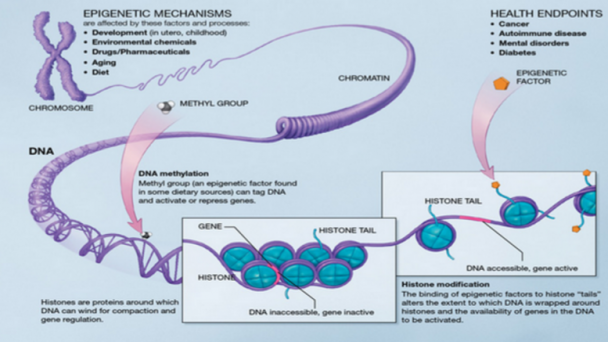
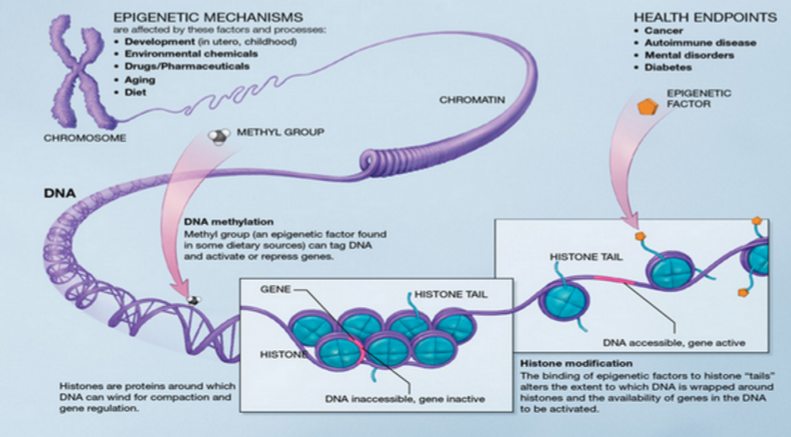
A Scientific Illustration of How Epigenetic Mechanisms Can Affect HealthEpigenetic mechanisms are affected by several factors and processes including development in utero and in childhood, environmental chemicals, drugs and pharmaceuticals, aging, and diet. DNA methylation is what occurs when methyl groups, an epigenetic factor found in some dietary sources, can tag DNA and activate or repress genes. Histones are proteins around which DNA can wind for compaction and gene regulation. Histone modification occurs when the binding of epigenetic factors to histone “tails”; alters the extent to which DNA is wrapped around histones and the availability of genes in the DNA to be activated. All of these factors and processes can have an effect on people’s health and influence their health possibly resulting in cancer, autoimmune disease, mental disorders, or diabetes among other illnesses. NIH Common Fund.

Project ...

OnAir Post: Epigenomic mapping cell-type classification

Skip to toolbar