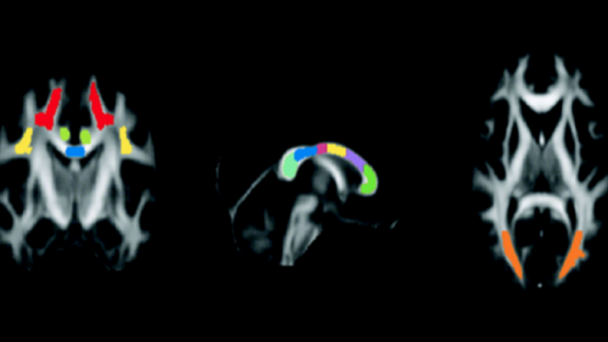
Institute for Translational Neuroscience

The University of Minnesta’s Institute for Translational Neuroscience (ITN) grew out of the Presidential Initiative on Brain Function across the Lifespan.The Institute is not a brick and mortar entity but an umbrella organization.

The Institute’s main goal has been to retain and recruit neuroscience researchers who exemplify the institute’s mission to make discoveries through team work.The Institute’s second goal is to foster and encourage collaboration amongst the scholars, researchers and centers.

Web Information

Website: itn.umn.edu/index.htm Brain Initiative Grant– “Advancing MRI & MRS Technologies for Studying Human Brain Function and Energetics” BRAIN Initiative Grant – “Imaging Brain Function in Real World Environments & Populations with Portable MRI”

Contact Information

Email: oydx004@umn.edu Phone: 612-626-4951 Address: Wallin Medical Biosciences Building Room 3-114 2101 6th Street S.E. Minneapolis, MN 55455

Organization

Director: Harry T. Orr

Institute for Translational Neuroscience

The Institute for Translational Neuroscience (ITN) was established in 2007 as a presidential university-wide initiative in order to promote the transfer of discoveries in the basic neurosciences to clinical practice. The institute is charged to enhance basic science discovery with new knowledge leading to subsequent clinical trials and establishment of new therapeutic principles or tools. The institute aims to attract and recruit top scientists to shape discoveries that will lead to tomorrow’s cures. The lTN exemplifies how different disciplines, departments ...

OnAir Post: Institute for Translational Neuroscience
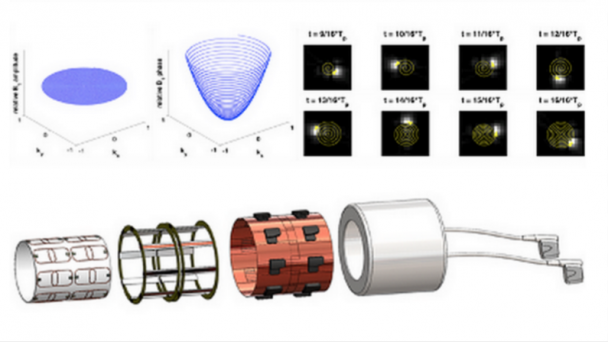
Imaging Brain Function with Portable MRI

Principal Investigator: Michael Garwood Institute for Translational Neuroscience, University of Minnesta Title: “Imaging Brain Function in Real World Environments & Populations with Portable MRI” BRAIN Category: Next Generation Human Imaging (RFA MH-14-217)

By employing smaller, less cumbersome magnets than used in existing MRI, Dr. Garwood and colleagues will create a downsized, portable, less expensive brain scanner.

NIH Webpages

Project Description

Functional magnetic resonance imaging (fMRI) continues to play a critical role in understanding the human brain. Yet current fMRI technology is far less than ideal for studying brain function due to the unnatural environment and restricting space of the magnet bore. Furthermore, fMRI cannot be performed on subjects who have metallic implants in their body (e.g., the elderly, soldiers and veterans), or who are impaired by certain physical disabilities as occurs in a variety of neurological and vestibular disorders. Finally, due to its expense and infrastructure requirements, MRI’s predominant accessibility to wealthier institutions has resulted in a highly biased subject sampling and a shortage of studies in non-western environments and cultures. The general methodology used to obtain MR images today is essentially the same as that used approximately 4 decades ago. One major drawback of such methodology is that the tolerated magnetic field variation over the brain is ...

OnAir Post: Imaging Brain Function with Portable MRI

Advancing MRI & MRS Technologies

Principal Investigator: Wei Chen Institute for Translational Neuroscience, University of Minnesota Title: “Advancing MRI & MRS Technologies for Studying Human Brain Function and Energetics” BRAIN Category: Next Generation Human Imaging (RFA MH-14-217)

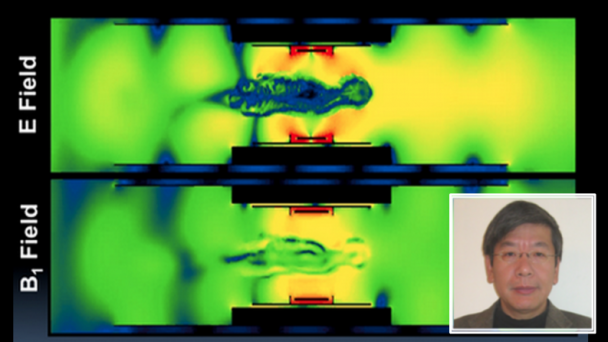
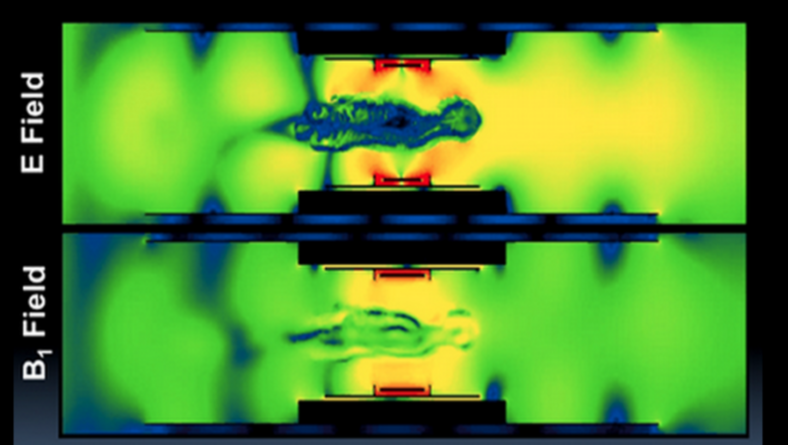
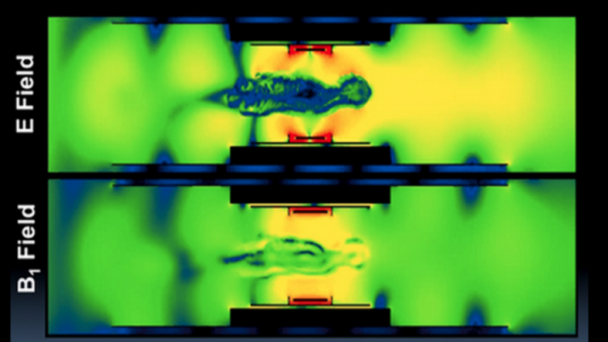
Dr. Chen’s team will achieve unprecedented higher resolution magnetic resonance imaging and spectroscopy scanning by integrating ultra-high dielectric constant material and ultra-high-field techniques.

NIH Webpages

Engineering for Ultrahigh field Magnetic Resonance Imaging (MRI) and Spectroscopy (MRS)

Project Description

Magnetic resonance (MR) imaging (MRI) and in vivo MR spectroscopy (MRS) techniques have become indispensable tools for imaging brain structure, function, connectivity, neurochemistry and neuroenergetics, and for investigating neurological disorders. However, it remains a challenge to achieve superior MRI/MRS detection sensitivity, spatial and temporal imaging resolutions adequate for addressing fundamental and challenging neuroscience questions even with the most advanced technology. The prevailing paradigms for improving MRI/MRS performance largely invoke increasing the magnetic field strength, which may have reached practically achievable limits for human studies due to many technological and safety (i.e., high specific absorption rate (SAR)) concerns, and increasing the receiver channel count which is also ultimately limited due to noise characteristics of coils of decreasing size. To alleviate these major limitations, this R24 proposal relies on the interdisciplinary research efforts and ...

OnAir Post: Advancing MRI & MRS Technologies

Mind-controlled quadcopter

https://www.youtube.com/watch?v=Vilmvv1cD_AVideo can’t be loaded because JavaScript is disabled: Mind-controlled quadcopter demonstrates new possibilities for disabled people – Science Nation (https://www.youtube.com/watch?v=Vilmvv1cD_A)

“Mind-controlled quadcopter demonstrates new possibilities for disabled people”

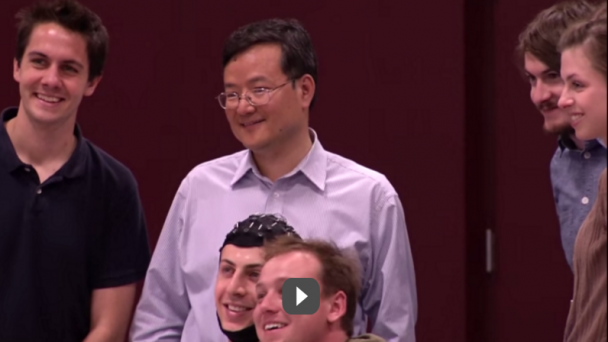
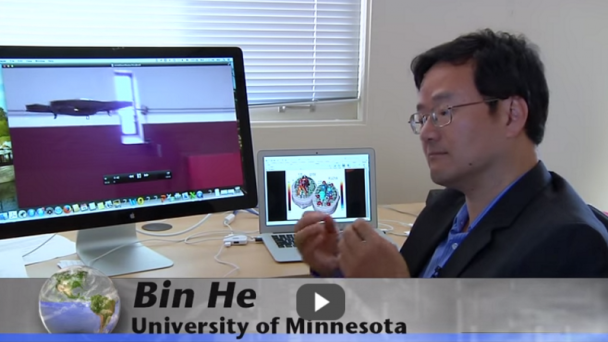
With support from the National Science Foundation (NSF), biomedical engineer Bin He and his team at the University of Minnesota have created a brain-computer interface with the goal of helping people with disabilities.  Participants wear an electro-encephalography, or EEG, cap with 64 electrodes. When the participant thinks about a specific movement, neurons in his or her brain’s motor cortex produce tiny electric signals, which are sent to a computer. The computer processes the signals and sends directions through a Wi-Fi system to direct the quadcopter.

NSF BRAIN Initiative Science Nation – April 2, 2014

Description

Meet the mind-controlled quadcopter. With support from the National Science Foundation (NSF), biomedical engineer Bin He and his team at the University of Minnesota have created a brain-computer interface with the goal of helping people with disabilities, such as paralysis, regain the ability ...

OnAir Post: Mind-controlled quadcopter

Kamil Ugurbil, PhD – Minnesota


Professor of Medicine, Neurosciences and Radiology and Director, Center for Magnetic Resonance Research (CMRR) Member of the Advisory Committee to the NIH Director

Within the CMRR, Dr. Ugurbil and his team have built a center with unique instrumentation and expertise that allows scientists to examine living tissues in great detail. Using noninvasive, high-powered magnetic scans, they can view the inside of human and nonhuman animal bodies. Ugurbil and his colleagues have helped lead the Human Connectome Project.


Web Information

Health Sciences Webpage: health.umn.edu/newsroom/experts/kamil-ugurbil-phd

CMRR Webpage: cmrr.umn.edu/facultystaff/kamil.shtml

Contact Information

Email: kamil@cmrr.umn.edu

Phone: 612-626-9591

Address: Center for Magnetic Resonance Research 2021 6th Street S.E. Minneapolis, MN 55455

Biosketch

Kamil Ugurbil currently holds the McKnight Presidential Endowed Chair Professorship in Radiology, Neurosciences, and Medicine and is the Director of the Center for Magnetic Resonance Research (CMRR) at the University of Minnesota. Prof. Ugurbil was educated at Robert Academy, Istanbul (high school) and Columbia University, New York, N.Y. After completing his B.A. and Ph.D. degrees in physics, and chemical physics, respectively, at Columbia, he joined AT&T Bell Laboratories in 1977, and subsequently returned to Columbia as a faculty member in 1979. He moved to the University of Minnesota in 1982 where his research in magnetic resonance led to the evolution of his laboratory into an interdepartmental and interdisciplinary ...

OnAir Post: Kamil Ugurbil, PhD – Minnesota

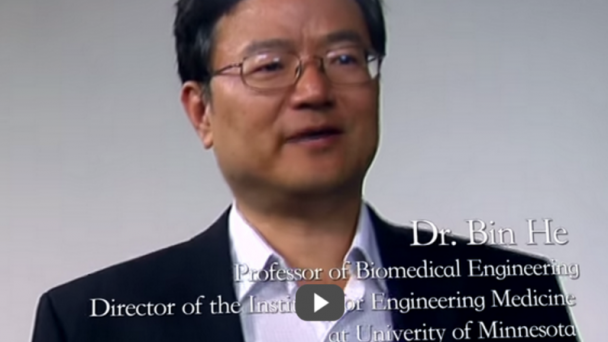
Bin He, PhD – University of Minnesota


Professor of Biomedical Engineering; Chair for Engineering in Medicine; Director, Institute for Engineering in Medicine; and Director, Center for Neuroengineering Member of Multi-Council Working Group (NCCAM council)

Bin He’s major research interests are in the field of neuroengineering and biomedical imaging. Together with his co-workers, he has made significant contributions to the development of electrophysiological functional imaging, multimodal imaging, cardiac electric imaging, and neuroengineering.

Web Information

Department Webpage: bme.umn.edu/people/faculty/he

Lab website: Biomedical Functional Imaging and Neuroengineering Lab

Contact Information

Email: binhe@umn.edu

Phone: 612-626-1115

Address: 6-124 Nils Hasselmo Hall 312 Church St. SE Minneapolis, MN 55455

Biomedical Imaging and Neuroengineering

Functional Neuroimaging

Brain activation is a spatio-temporally-distributed process. Recent advances in medical imaging technology, especially functional MRI, have greatly increased our ability to image brain functions with high spatial resolution but with limited temporal resolution. Electrophysiological recordings such as EEG, on the other hand, offer millisecond temporal resolution in detecting and characterizing brain activity. Our approach is to achieve high resolution spatio-temporal functional neuroimaging by solving the “inverse” problem of the brain from scalp recorded EEG with the aid of MR images. Innovation in engineering methods has led to greatly enhanced spatial resolution of brain electrical imaging, which has been applied to aid presurgical planning in epilepsy patients. Furthermore, we are developing multimodal neuroimaging methods ...

OnAir Post: Bin He, PhD – University of Minnesota

Advances in mind-controlled machines

https://www.youtube.com/watch?v=TjKi0hWFIpUVideo can’t be loaded because JavaScript is disabled: Advances in mind-controlled machines (https://www.youtube.com/watch?v=TjKi0hWFIpU)

Mind-controlled machines have the potential to help people with limited physical control. NSF grantee and biomedical engineer Bin He talks about advances in brain-machine interface technology and the big challenges in brain research.

For more information on Bin He, see his BRAIN 2015 profile.

OnAir Post: Advances in mind-controlled machines

Mind Over Mechanics

https://www.youtube.com/watch?v=6LWz4qa2XQA&feature=youtu.be

In a jaw-dropping feat of engineering, electronics turn a person’s thoughts into commands for a robot. Using a brain-computer interface technology pioneered by University of Minnesota biomedical engineering professor Bin He, several young people have learned to use their thoughts to steer a flying robot around a gym, making it turn, rise, dip, and even sail through a ring.

The technology may someday allow people robbed of speech and mobility by neurodegenerative diseases to regain function by controlling artificial limbs, wheelchairs, or other devices. And it’s completely noninvasive: Brain waves (EEG) are picked up by the electrodes of an EEG cap on the scalp, not a chip implanted in the brain.

A report on the technology has been published in the Journal of Neural Engineering.

For more information on Bin He, see his BRAIN 2015 profile.

Published on June 4, 2013 by University of Minnesota

OnAir Post: Mind Over Mechanics

Michael Garwood, PhD – Minnesota


Professor, University of Minnesota Center for Magnetic Resonance Research

Garwood focus has been on developing cutting-edge MRI and MR spectroscopy techniques and on exploiting them in studies of tissue function, metabolism, and microstructure. An emphasis has been on identifying and validating quantitative metrics to assess normal and disease states non-invasively with imaging, and on applying them to learn about metabolism, hemodynamics, and tissue micro-environment.


Web Information

Webpage:  cmrr.umn.edu/facultystaff/gar.shtml Institute for Translational Neuroscience BRAIN Initiative Grant
Contact Information

Email: gar@cmrr.umn.edu Phone: 612-626-2001 Address: 1-211B CMRR

Research

For the past 26 years, researchers in the Garwood laboratory have had a focus on developing cutting-edge MRI and MR spectroscopy techniques and on exploiting them in studies of tissue function, metabolism, and microstructure. An emphasis has been on identifying and validating quantitative metrics to assess normal and disease states non-invasively with imaging, and on applying them to learn about metabolism, hemodynamics, and tissue micro-environment. On the technical side, the Garwood group has recently made a significant advancement in the way MRI is performed – a technique called SWIFT. SWIFT exploits time-shared RF excitation and acquisition to preserve signals from water molecules possessing extremely short transverse relaxation times, T2 and T2*. With SWIFT, ...

OnAir Post: Michael Garwood, PhD – Minnesota

Center for Magnetic Resonance Research – Minnesota

Center for Magnetic Resonance Research (CMRR) focuses on development of unique magnetic resonance (MR) imaging and spectroscopy methodologies and instrumentation for the acquisition of structural, functional, and biochemical information non-invasively in humans, and utilizing this capability to investigate organ function in health and disease. The distinctive feature of CMMR is the emphasis on ultrahigh magnetic fields (7 Tesla and above).

OnAir Post: Center for Magnetic Resonance Research – Minnesota

Wei Chen, PhD – Minnesota


Professor, Departments of Radiology and Biomedical Engineering, University of Minnesota Faculty, Center for Magnetic Resonance Research

Chen’s research focuses on development of magnetic resonance imaging (MRI)/spectroscopy (MRS) methodologies and technologies for noninvasively studying cellular metabolism, bioenergetics, function and dysfunction of the brain and other organs. He has been a principal investigator for a large number of NIH RO1 grants, served as grant reviewer for many funding organizations and editorial boards for imaging journals.

Web Information

Webpage:  cmrr.umn.edu/facultystaff/wei.shtml Institute for Translational Neuroscience Brain Initiative Grant
Contact Information

Email: wei@cmrr.umn.edu Phone: 612-625-8814 Address: 1-211E CMRR University of Minnesota 2021 Sixth Street SE Minneapolis, MN 55455


Biography

Dr. Chen received his B.S. degree in physical chemistry at Fudan University in Shanghai, China. In 1985, he joined Professor Ackerman’s lab as a graduate student at Washington University in St. Louis and received his Ph.D. in 1990. He spent three years as a postdoctoral fellow and research associate in Professor Shulman’s lab at Yale University Medical School. In 1994, he joined the Center for Magnetic Resonance Research (CMRR) at the University of Minnesota and became a full professor in 2002.S

Research

Dr Chen’s research focuses on development of magnetic resonance imaging (MRI)/spectroscopy (MRS) methodologies and technologies for noninvasively studying cellular metabolism, bioenergetics, function and dysfunction of the brain and other organs. ...

OnAir Post: Wei Chen, PhD – Minnesota

Skip to toolbar