Washington University Neuroscience

The Washington University Neuroscience Program offers outstanding neuroscience education for Ph.D. students and exciting research opportunities for Postdoctoral scientists. 

The Program includes a broad spectrum of research laboratories that study how the brain works. Neuroscience research has included the nobel-prize winning insights of Rita Levi-Montalcini and Viktor Hamburger on formation and development of the nervous sytem, through development of Positron Emission Tomography (PET) imaging, to current innovations in detection and treatment of Alzheimer’s Disease.


Web Information

Neuroscience Program website: hneuroscience.wustl.edu/ Office of Neuroscience Research website: neuroscienceresearch.wustl.edu/ BRAIN Initiative Grant – “Fast High-Resolution Deep Photoacoustic Tomography of Action Potentials in Brains”

Contact Information

Email:  susan@brainvis.wustl.edu Phone: (314) 362-7043 Address: Washington University in St. Louis One Brookings Drive, St. Louis, MO 6313 

Letter from the Directors

Welcome to the Neuroscience Program at Washington University!

How does the brain control movement and produce thoughts, emotions, sensations, memories? How can we help those people for whom diseases have affected their normal cognitive or motor abilities? These questions present the largest and most exciting challenges in modern science. From the earliest work on nerve impulses to the current imaging of human brain activities, the laboratories of Washington University have been at the forefront of training outstanding young neuroscientists.

Today that training is organized into a comprehensive Neuroscience Ph.D. program representing more than 120 faculty ...

OnAir Post: Washington University Neuroscience
Early Cancer Detection with Photoacoustic Tomography

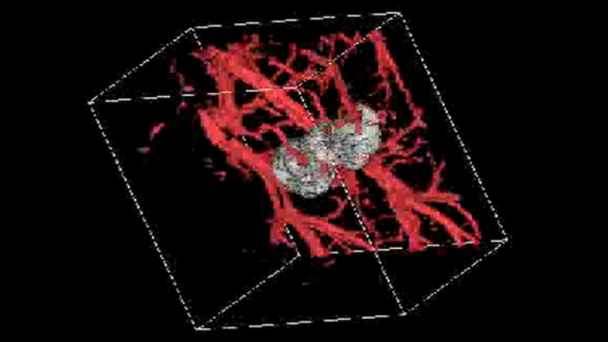
His laboratory invented or discovered functional photoacoustic tomography, 3D photoacoustic microscopy (PAM). PAM broke through the long-standing diffusion limit to the penetration of conventional optical microscopy and reached super-depths for noninvasive biochemical, functional, and molecular imaging in living tissue at high resolution.

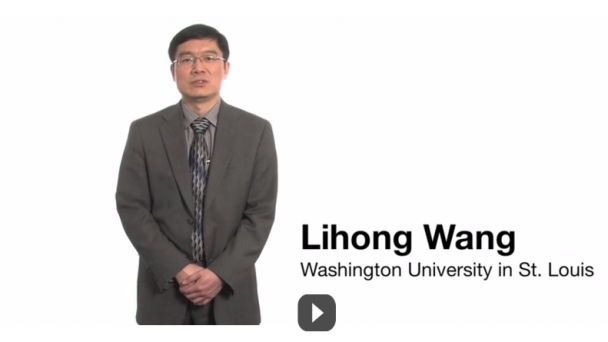
Video published on June 29, 2012 by SPIETV

OnAir Post: Early Cancer Detection with Photoacoustic Tomography

Optical Imaging Laboratory – Washington U

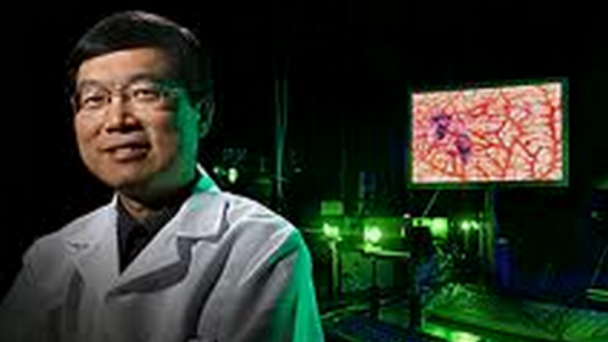
Optical Imaging Laboratory develops novel biophotonic tomography for early-cancer detection and functional imaging, using non-ionizing electromagnetic and ultrasonic waves. Research directions include: Photo-acoustic tomography (PAT), Thermo-acoustic tomography (TAT), Ultrasound-modulated (acousto-) optical tomography (UOT), Mueller optical-coherence tomography (M-OCT), Oblique-incidence reflectometry (OIR) and spectroscopy, and Modeling light transport in tissues.

OnAir Post: Optical Imaging Laboratory – Washington U

Lihong Wang, PhD – Washington U


Professor of Biomedical Engineering, Washington University Director, Optical Imaging Laboratory

His lab reported the first functional photoacoustic tomography, 3D photoacoustic microscopy (PAM), optical-resolution PAM, photoacoustic Doppler effect, photoacoustic reporter gene imaging, microwave-induced thermoacoustic tomography, the universal photoacoustic reconstruction algorithm, frequency-swept ultrasound-modulated optical tomography, time-reversed ultrasonically encoded (TRUE) optical focusing, sonoluminescence tomography, Mueller-matrix optical coherence tomography, and optical coherence computed tomography.

Web Information

Webpage: bme.wustl.edu/people/Pages/faculty-bio.aspx?faculty=19 Washington University Neuroscience Program BRAIN Initiative Grant – “Fast High-Resolution Deep Photoacoustic Tomography of Action Potentials in Brains”

Contact Information

Email: lhwang@biomed.wustl.edu Phone: (314) 935-6152 Address: One Brookings Drive Campus Box 1097 Whitaker Hall, Room 190D St. Louis, MO 63130


Biography

Lihong Wang earned his Ph.D. degree at Rice University, Houston, Texas under the tutelage of Robert Curl, Richard Smalley, and Frank Tittel and currently holds the Gene K. Beare Distinguished Professorship of Biomedical Engineering at Washington University in St. Louis.

His book entitled “Biomedical Optics: Principles and Imaging,” one of the first textbooks in the field, won the Joseph W. Goodman Book Writing Award. He also coauthored a book on polarization and edited the first book on photoacoustic tomography. Professor Wang has published more than 420 peer-reviewed articles in journals including Nature (Cover story), Science, PNAS, and PRL with an h-index of 93 (Google Scholar) and delivered over ...

OnAir Post: Lihong Wang, PhD – Washington U

Deep Photoacoustic Tomography

Principal Investigator: Lihong Wang Washington University Neuroscience Program Title: “Fast High-Resolution Deep Photoacoustic Tomography of Action Potentials in Brains” BRAIN Category: Large-Scale Recording-Modulation – New Technologies (RFA NS-14-007)

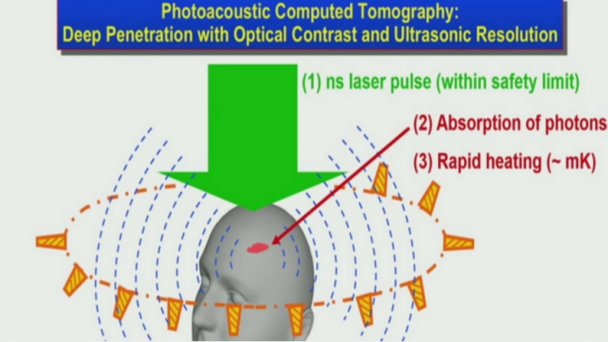
Dr. Wang and his collaborators will test a way to image the electrical activity of neurons deep inside the brain, using a variation on ultrasound imaging he invented called photoacoustic tomography.

NIH Webpages

https://www.youtube.com/watch?v=yNPqOuk_YdgVideo can’t be loaded because JavaScript is disabled: Lihong Wang Hot Topics presentation: Photon-Phonon Synergy: Photoacoustic Tomography and Beyond (https://www.youtube.com/watch?v=yNPqOuk_Ydg)

Project Description

Revealing how our brain works is a great challenge but yet worth our every effort: it will not only illuminate the profound mysteries in science but also provide the key to understanding and treating neurological diseases such as Alzheimer’s and Parkinson’s. The objective of the proposed three-year research is to develop a high- speed, high-spatial-resolution, deep-penetration photoacoustic computed tomography (PACT) system for real- time imaging of action potentials in mouse brains. The proposed hardware imaging system will be unprecedented in the field of PACT in ...

OnAir Post: Deep Photoacoustic Tomography

Skip to toolbar