Mason Neuroscience

Some of the key research centers include: Center for Neural Informatics, Structures, and Plasticity (CN3); Center for the Study of Neuroeconomics (CSNI); Center for Neural Dynamics (CND); and the Center for Applied Proteomics and Molecular Medicine (CAPMM).

OnAir Post: Mason Neuroscience

PSU Institute of the Neurosciences

The Institute also provides oversight and coordination for neuroscience-related activities in education, research, patient care and outreach, while promoting an intellectual environment that enhances the interdisciplinary neuroscience educational experience from the undergraduate to postdoctoral levels.

The Institute also provides oversight and coordination for neuroscience-related activities in education, research, patient care and outreach, while promoting an intellectual environment that enhances the interdisciplinary neuroscience educational experience from the undergraduate to postdoctoral levels.

OnAir Post: PSU Institute of the Neurosciences

Neuroscience @Penn

Neuroscience @Penn is based in the Department of Neuroscience with substantial coordination via the Mahoney Institute of Neuroscience. The Department of Neuroscience is located in the Perelman School of Medicine at the University of Pennsylvania. 

Neuroscience @Penn has a number of affiliated groups including: Behavioral Neuroscience at Penn, ; Center for Study of Addiction; Center for Cognitive Neuroscience, Center for Neuroscience and Society, Center for Sleep and Respiratory Neurobiology, Penn Medicine Neuroscience Center, Department of Neurology, Institute for Research in Cognitive Science, Penn Vision Research Center,  Computational Neuroscience at Penn, and Neuroscience Graduate Group.

Web Information

Department of Neuroscience : http://www.med.upenn.edu/nscience/index.shtml

Institute of Neuroscience: http://www.med.upenn.edu/ins/

Behavioral Neuroscience at Pennhttp://www.psych.upenn.edu/behavneuro/

Center for Study of Addictionhttp://www.med.upenn.edu/csa/index.html

Center for Cognitive Neurosciencehttp://www.ccn.upenn.edu/

Center for Neuroscience and Societyhttp://www.neuroethics.upenn.edu/

Center for Sleep and Respiratory Neurobiologyhttp://www.med.upenn.edu/sleepctr/

Penn Medicine Neuroscience Center: http://www.uphs.upenn.edu/neuroscience-center

Department of Neurology: http://www.uphs.upenn.edu/neuro/

Institute for Research in Cognitive Science: http://www.ircs.upenn.edu/

Penn Vision Research Centerhttp://vrc.med.upenn.edu/

Computational Neuroscience at Penn: http://www.ircs.upenn.edu/compneuro/

Neuroscience Graduate Group: http://www.med.upenn.edu/ngg/

NSF BRAIN Initiative Grant: http://brain2015.onair.cc/noise-in-mental-exploration-for-learning/

Contact Information

Department of Neuroscience and Institute of Neuroscience Email: johndani@mail.med.upenn.edu (John Dani’s is Chair of both organizations)

Chair’s Phone: (215) 898-8498

Address: 211 Clinical Research Building 415 Curie Blvd Philadelphia, PA 19104

Department of Neuroscience 

The Department of Neuroscience, located in the School of Medicine at the University of Pennsylvania. ...
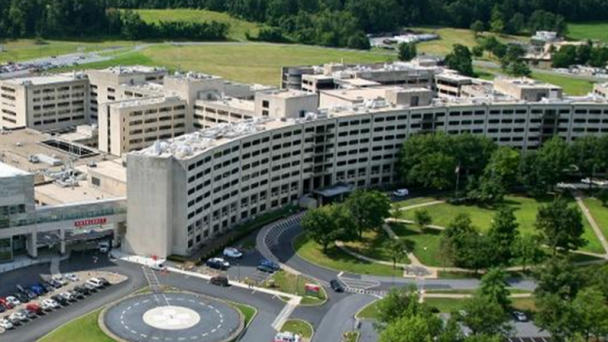
OnAir Post: Neuroscience @Penn

Princeton Neuroscience Institute


The Institute places particular emphasis on the close connection between theory, modeling and experimentation using the most advanced technologies.

Jon Cohen and David Tank serve as co-directors of the Institute. They view the Institute as a stimulus for teaching and research in neuroscience and related fields, as well as an impetus for collaboration and education in disciplines as wide ranging as economics and philosophy. Princeton collaborators come from an array of disciplines including mathematics, physics, engineering, chemistry, computer science, ecology and evolutionary biology, and economics.

Website:  pni.princeton.edu/ Brain Initiative Grant –  “Mechanisms of neural circuit dynamics in working memory” BRAIN Grant – “Vertically integrated approach to visual neuroscience: microcircuits to behavior”

Contact Information

E-mail: ttayler@princeton.edu Phone:  (609)258-0826 Address: Washington Road | Princeton, NJ 08544

Co-Directors: Jon Cohen and David Tank

Faculty by Department Affiliation

CHEMISTRY

Clarence Schutt Biophysics and structural biology

COMPUTER SCIENCE

Robert Schapire Theoretical and applied aspects of machine learning

ECOLOGY AND EVOLUTIONARY BIOLOGY

Carolyn McBride Genes and neural circuits underlying behavioral evolution James Gould Programming and decision making in animals Daniel Rubenstein Adaptive patterns of social behavior

ELECTRICAL ENGINEERING

Peter Ramadge Video and image processing, and adaptive systems

MECHANICAL AND AEROSPACE ENGINEERING

Philip Holmes Mathematical modeling Robert Stengel Optimal control ...

OnAir Post: Princeton Neuroscience Institute

John Hopkins Neuroscience

John Hopkins has two primary centers for neuroscience research: The Solomon Snyder Department of Neuroscience in the School of Medicine and the Department of Psychological and Brain Sciences in the School of Arts & Sciences.

Current research ranges from investigating the development of the nervous system, synaptic plasticity and the molecular and cellular mechanisms of learning and memory to the neural basis of higher brain function such as perception and decision-making.

Web Information

Department of Neuroscience website: neuroscience.jhu.edu/about/contact-us/ Department of Psychological and Brain Sciences website:  pbs.jhu.edu/ Brain Initiative Grant – “Imaging in vivo neurotransmitter modulation of brain network activity in realtime”

Contact Information

Department of Neuroscience Phone: 410-614-2447 AddressThe Johns Hopkins University School of Medicine Department of Neuroscience 1003 Wood Basic Science Building 725 N. Wolfe St. Baltimore, MD 21205 Director, : Rick Huganir

Department of Psychological and Brain Sciences Phone: (410) 516-7055 Address: Department of Psychological & Brain Sciences The Johns Hopkins University 3400 N. Charles St. Baltimore, MD 21218-2686

Solomon H. Snyder Department of Neuroscience

Welcome from the Director

Welcome to the Solomon H. Snyder Department of Neuroscience at Johns Hopkins University. The Department, founded in 1980 by brain science pioneer Sol Snyder, is one of the first Neuroscience Departments in the country. With 32 primary faculty, 4 adjunct faculty and 69 secondary faculty conducting research in all areas of neuroscience ranging from ...

OnAir Post: John Hopkins Neuroscience

WVU Center for Neuroscience

The Center for Neuroscience (CN) mission is to advance knowledge in basic and translational neuroscience through team-based interdisciplinary research.

The CN functions to integrate all neuroscience research activities across a collaborative enterprise of 40 laboratories throughout the WVU campus. Our faculty members are highly interactive and participate with trainees in regular scientific and social events where we explore recent breakthroughs and discuss the major topics in neuroscience research.


Web Information

Website: hsc.wvu.edu/wvucn/ BRAIN Initiative Grant – “Imaging the Brain in Motion: The Ambulatory Micro-Dose, Wearable PET Brain Imager”

Contact Information

Email: mpscott@hsc.wvu.edu Phone: 304.293.2930 Address: WVU Center for Neuroscience PO Box 9304 Morgantown, WV 26506-9304

Organization

Director: George Spirou

WVU Health Sciences Center

Message from the Director

The Center for Neuroscience (CN) mission is to advance knowledge in basic and translational neuroscience through team-based interdisciplinary research.

The CN functions to integrate all neuroscience research activities across a collaborative enterprise of 40 laboratories throughout the WVU campus. Our faculty members are highly interactive and participate with trainees in regular scientific and social events where we explore recent breakthroughs and discuss the major topics in neuroscience research.

Rather unique for research institutions, the WVU CN serves as the hub of activity across a broad array of neuroscience research topics to serve the entire ...

OnAir Post: WVU Center for Neuroscience

UMD Neuroscience and Cognitive Science

The Neuroscience and Cognitive Science (NACS) Graduate Program offer cutting-edge interdisciplinary training in several areas: Cellular and Molecular Neuroscience; Cognitive Neuroscience; Cognitive Science; Computational Neuroscience; and Systems Neuroscience.

These research activities are carried out in laboratories housed in six colleges and 17 different departments on the University of Maryland, College Park campus. Through our official partnership with the National Institutes of Health and active collaboration with Children’s National Medical Center, NACS graduate students may also receive research training.

Web Information

Website: nacs.umd.edu/ BRAIN Initiative Grant – “Crowd coding in the brain: 3D imaging and control of collective neuronal dynamics”

Contact Information

Email: NACS@umd.edu Phone:  301-405-8910 Address:2131 Biology-Psychology Bldg, University of Maryland, College Park, MD 20742

Organization

Director: Jens Herberholz

About the Program

Overall Philosophy

The Neuroscience and Cognitive Science (NACS) Program strives to educate exceptional scientists whose integrative training will form the basis for significant scientific contributions.  This is a research doctoral program designed on an apprenticeship model:  students train to become professional scientists by doing independent research and participating in all aspects of the profession under the guidance of a mentor.

Graduate Program

Students receive their doctorates from NACS. Support is available from training grants, research and teaching assistantships, and university fellowships and includes tuition and health benefits. Students have extensive opportunities for interaction through classes, seminars, special programs, and ...

OnAir Post: UMD Neuroscience and Cognitive Science

University of Pittsburgh Brain Institute

The University of Pittsburgh Brain Institute focuses on unlocking the mysteries of normal and abnormal brain function.

The Brain Institute will support the efforts of more than 150 neuroscientists at the university and create seven new Centers, including the NeuroTech Center, which capitalizes on the University’s advances in brain-computer interfaces for paralyzed individuals, and the NeuroDiscovery Center, which will provide unique resources to enable innovative basic science research.


 Web Information

Website:  neurobio.pitt.edu/about.html Wikipedia Entry: wiki/University_of_Pittsburgh_School_of_Medicine

Contact Information

Email: blaney@bns.pitt Phone: (412) 648-9000 Address: Department of Neurobiology School of Medicine University of Pittsburgh E1440 BSTWR 200 Lothrop Street Pittsburgh, PA 15213-2536

Organization

Scientific Director: Peter L. Strick, Ph.D

Background

The BRAIN Initiative Fact Sheet 9/30/14

University of Pittsburgh is announcing more than $65 million in funding for the University of Pittsburgh Brain Institute:

In January 2014, the University of Pittsburgh announced the creation of a Brain Institute focused on unlocking the mysteries of normal and abnormal brain function. The Brain Institute will support the efforts of more than 150 neuroscientists at the university and create seven new Centers, including the NeuroTech Center, which capitalizes on the University’s advances in brain-computer interfaces for paralyzed individuals, and the NeuroDiscovery Center, which will provide unique resources to enable innovative basic science research. ...

OnAir Post: University of Pittsburgh Brain Institute

Carnegie Mellon ‘BrainHub’

The Carnegie Mellon University (CMU) BrainHub initiative spans across CMU’s colleges and schools, involving nearly 50 faculty and over 150 scientists.

A major facet of this initiative is increasing collaboration among faculty from disciplines such as computer science and engineering with those taking biological and behavioral approaches to neuroscience. Linking brain science to behavior via the application of machine learning, statistics, and computational modeling will be a hallmark of CMU’s efforts, along with commercialization of the new technologies and applications.


Web Information

Brain Hub:  cmu.edu/research/brain

Neuroscience Programs and Centers:  cmu.edu/neuro/


Contact Information

Email: gbalbier@andrew.cmu.edu Phone: 412-268-9718 Address: Brain Hub 5000 Forbes Avenue Pittsburgh, PA 15213

Executive Director: Gerry Balbier Facutly Experts


Research Areas

Sharing the World’s Brain Research Data

Researchers around the world are collecting vast amounts of data from the brain at a rapid pace. We believe that much can be learned by combining the global collection of data. We are creating new tools that will index, aggregate and share this global data, making it accessible in powerful new ways. Faculty experts in this area »

Mapping & Exploring the Interconnectivity of the Brain and Behavior

The brain is made up of billions of neurons, which make billions of connections to communicate information. While scientists have been ...

OnAir Post: Carnegie Mellon ‘BrainHub’

Skip to toolbar