Richard Huganir, PhD – John Hopkins


Professor and Director of the Department of Neuroscience at Johns Hopkins University; Co-Director, Brain Science Institute; and HHMI investigator. Member of Multi-Council Working Group (NIMH council)

Huganir’s lab is credited for examining the molecular mechanisms underlying the regulation of neurotransmitter receptor function with a focus on glutamate receptors. Their studies have suggested that regulation of receptor function may be a major mechanism for the regulation of synaptic plasticity in the nervous system in health and disease.

Web Information

Department Webpage: hneuroscience.jhu.edu/resources/directory/faculty/richard-l.-huganir/

Lab Page: neuroscience.bs.jhmi.edu/huganir/

Twitter:

Contact Information

Email: rhuganir@jhmi.edu

Phone:  410-955-4050

Address: The Solomon H. Snyder Department of Neuroscience Johns Hopkins University School of Medicine 725 North Wolfe Street Baltimore, MD 21205 Room: Hunterian 1009A

Research

Regulation of Neurotransmitter Receptors and Brain Function in Health and Disease

Neurotransmitter receptors mediate signal transduction at the postsynaptic membrane of synaptic connections between neurons in the nervous system. We have been studying the molecular mechanisms in the regulation of neurotransmitter receptor function. Recently we have focused on glutamate receptors, the major excitatory receptors in the brain. Glutamate receptors can be divided into two major classes: AMPA and NMDA receptors. AMPA receptors mediate rapid excitatory synaptic transmission while NMDA receptors play important roles in neuronal plasticity and development. Studies in ...

OnAir Post: Richard Huganir, PhD – John Hopkins

Neuroscience Discovery Institute @JHU


The mission of the new Kavli Neuroscience Discovery Institute (Kavli NDI) at JHU is to bring together neuroscientists, engineers and data scientists to investigate neural development, neuronal plasticity, perception and cognition.

“The challenges of tomorrow will not be confined to distinct disciplines, and neither will be the solutions we create,” said Johns Hopkins University President Ronald J. Daniels. “The Kavli Foundation award is a tremendous honor, because it allows Johns Hopkins to build on our history of pioneering neuroscience and catalyze new partnerships with engineers and data scienctists that will be essential to building a unified understanding of brain function.”


Web Information

Kavli Foundation web page:  http://www.kavlifoundation.org/johns-hopkins-university

About Kavli NDI

The Kavli Neuroscience Discovery Institute (Kavli NDI) brings together neuroscience, engineering, and data science – three traditional strengths at Johns Hopkins – with the ultimate goal of reaching a unified understanding of brain function.

New experimental techniques are generating a wealth of information about the brain at different scales – from the levels of single cells to brain circuits to behavior – but neuroscience still lacks effective tools for managing these massive data sets. Kavli NDI researchers are filling this gap by finding new ways to organize, analyze, and extract meaning from neurodata. They plan to ...

OnAir Post: Neuroscience Discovery Institute @JHU

John Hopkins Neuroscience

John Hopkins has two primary centers for neuroscience research: The Solomon Snyder Department of Neuroscience in the School of Medicine and the Department of Psychological and Brain Sciences in the School of Arts & Sciences.

Current research ranges from investigating the development of the nervous system, synaptic plasticity and the molecular and cellular mechanisms of learning and memory to the neural basis of higher brain function such as perception and decision-making.

Web Information

Department of Neuroscience website: neuroscience.jhu.edu/about/contact-us/ Department of Psychological and Brain Sciences website:  pbs.jhu.edu/ Brain Initiative Grant – “Imaging in vivo neurotransmitter modulation of brain network activity in realtime”

Contact Information

Department of Neuroscience Phone: 410-614-2447 AddressThe Johns Hopkins University School of Medicine Department of Neuroscience 1003 Wood Basic Science Building 725 N. Wolfe St. Baltimore, MD 21205 Director, : Rick Huganir

Department of Psychological and Brain Sciences Phone: (410) 516-7055 Address: Department of Psychological & Brain Sciences The Johns Hopkins University 3400 N. Charles St. Baltimore, MD 21218-2686

Solomon H. Snyder Department of Neuroscience

Welcome from the Director

Welcome to the Solomon H. Snyder Department of Neuroscience at Johns Hopkins University. The Department, founded in 1980 by brain science pioneer Sol Snyder, is one of the first Neuroscience Departments in the country. With 32 primary faculty, 4 adjunct faculty and 69 secondary faculty conducting research in all areas of neuroscience ranging from ...

OnAir Post: John Hopkins Neuroscience

Researching human spatial recognition

https://www.youtube.com/watch?v=OT6XT2NSxRcVideo can’t be loaded because JavaScript is disabled: Researching human spatial recognition – Science Nation (https://www.youtube.com/watch?v=OT6XT2NSxRc)

“Researching human spatial recognition”

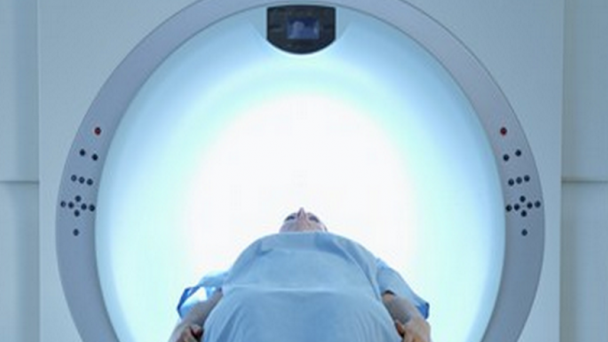
With funding from the National Science Foundation, Amy Shelton is testing human spatial recognition. Study subjects learn and recall their way around a virtual maze while an MRI scans their brains. By analyzing MRI images of blood flow in the human Shelton can get a picture of how the brain learns and recalls the spatial world outside the body.

NSF BRAIN Initiative Science Nation – April 2, 2014

Description

What happens in your brain when you get lost or forget something? Johns Hopkins University Neuroscientist Amy Shelton believes she can find the answer. With funding from the National Science Foundation, she’s testing human spatial recognition. Study subjects learn and recall their way around a virtual maze while an MRI scans their brains. By analyzing MRI images of blood flow in the human Shelton can get a picture of how the brain learns and recalls the spatial world outside the body. By ...

OnAir Post: Researching human spatial recognition

NIH Neuroscience Seminar- April 13, 2015

TITLE: Mechanisms of ubiquitin signaling in gene regulation and chromatin dynamics

AUTHOR: Cynthia Wolberger, Ph.D., Johns Hopkins University

TIME: 12:00:00 PM  DATE: Monday, April 13, 2015

PLACE: Porter Neuroscience Research Center

Live NIH Videocast (archived after seminar)


Profile

Professor of Biophysics and Biophysical Chemistry, School of Medicine Principal Investigator, Wolberger Lab

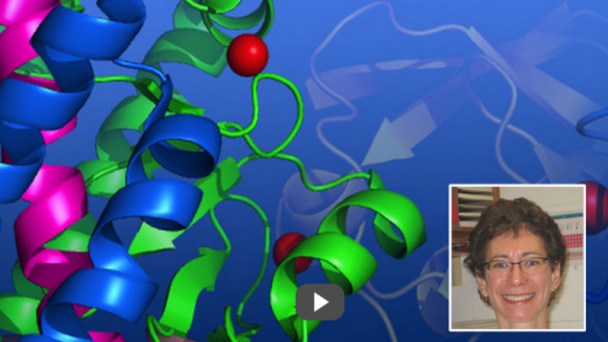
Cynthia Wolberger is interested in the structural and mechanistic basis for transcriptional regulation and ubiquitin signaling.Her lab focuses on molecular basis for these events, which ensure the integrity and expression of the genome. We use x-ray crystallography, enzymology, cell-based assays and a variety of biophysical tools to gain insights into the mechanisms underlying these essential cellular processes.

Web Information

Wolberger Webpage: http://pmcb.jhu.edu/faculty/wolberger-profile.html

Research Overview

One of the key ways in which cells dynamically regulate protein function is through reversible post-translational modifications. Lysine residues in particular are subject to a remarkably diverse array of modifications. Our research centers on two types of lysine modification, ubiquitination and acetylation, which play critical role in regulating transcription, the response to DNA damage and intracellular signaling. We use a wide array of approaches including x-ray crystallography, small-angle x-ray scattering, biophysical studies of binding interactions, enzymology and cell-based studies to tackle biological questions.

The attachment of the small protein, ubiquitin, to lysine residues serves a wide variety of signaling functions. In addition to its ...

OnAir Post: NIH Neuroscience Seminar- April 13, 2015

Section of High Resolution Brain PET Imaging

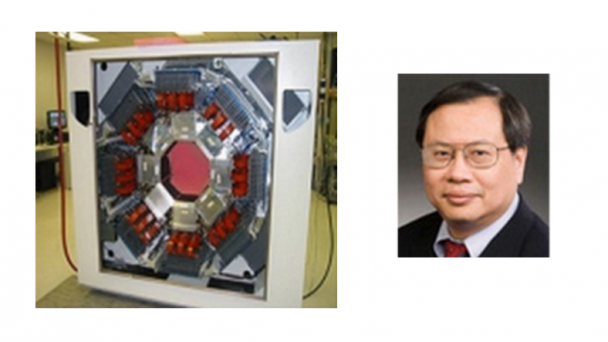
John Hopkins neuroimaging specialists will develop a noninvasive way of measuring human brain neuronal activity and chemical changes in milliseconds as opposed to several minutes, as in current PET scans. The new technique will also be much more sensitive to neurochemical processes than other imaging techniques, including functional magnetic resonance imaging and magnetoencephalographic recording of brain magnetic fields.

OnAir Post: Section of High Resolution Brain PET Imaging

Dean Foster Wong, MD/PhD – JHU


Professor, Johns Hopkins Medicine Department of Radiology and Radiological Science Radiology Vice Chair, Research Administration and Training Director Section of High Resolution Brain PET Imaging, Division of Nuclear Medicine

Dr. Wong has used PET scanning to uncover key insights into brain chemistry and to identify receptors for the major neurotransmitters. He oversaw the first dopamine PET receptor imaging in human beings; led the first study suggesting D2 dopamine receptors in schizophrenia, and how dopamine is transported in and out of cells.

Web Information

Webpage: neuroscience.jhu.edu/resources/directory/faculty/dean-f.-wong-m.d.-ph.d/ Brain Initiative Grant

Contact Information

Email: dfwong@jhmi.edu Phone: 410-955-8433 Address: Johns Hopkins University School of Medicine Department of Neuroscience 1003 Wood Basic Science Building 725 N. Wolfe St. Baltimore, MD 21205

Biography

MD (University of Toronto)

PhD (Johns Hopkins University)

Research

In vivo Neurochemistry with PET, SPECT and MRI

The use of novel methods in positron emission tomography (PET) and single photon emission computed tomography (SPECT) have, in the past few decades, been used to study a wide variety of neuropsychiatric illness, basic brain chemistry and pharmacology. Our focus is on the design, development and application of radiopharmaceuticals imaged PET and SPECT for the study of in vivo brain chemistry. Our research extends from collaborations in basic chemistry ...

OnAir Post: Dean Foster Wong, MD/PhD – JHU

Imaging in vivo neurotransmitter modulation


Project Description

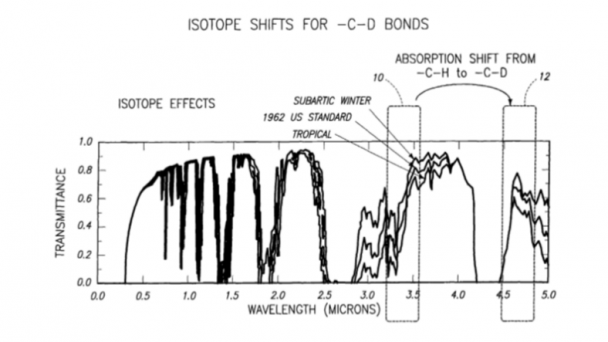
Neuronal depolarization and neurotransmitter release underlie some of the most fundamental components of normal physiology and the etiology of brain pathophysiology. There is a tremendous need for high temporal resolution measurements of neurotransmitter release and its modulation of brain neuronal networks. While there has been progress in measuring neuronal depolarization in vivo in small animals, the current overall methodology of deployment, excitation and measurement of signal from voltage sensitive dyes (VSDs) commonly entails craniotomy and other invasive measures, and thus is currently only practical in rodent studies. We aim to develop a transformative brain imaging technique which will allow minimally invasive/non-invasive imaging of neuronal depolarization and related neurotransmitter release ultimately in the living human brain. While challenging methodologically, we believe that our team of multidisciplinary experts consisting of neuroscientists, neuropharmacologists, electrical and bioengineers, and brain imaging physicists and chemists, will be able to plan over a period of three years a practical and clear path to the development of such a potentially paradigm-shifting imaging technique. To do so, we propose three Aims. Aim 1 is to develop voltage sensitive probes for sub-millisecond measurements of membrane potentials and action potentials of cortical neurons in humans and other primates in vivo. ...

OnAir Post: Imaging in vivo neurotransmitter modulation

Skip to toolbar