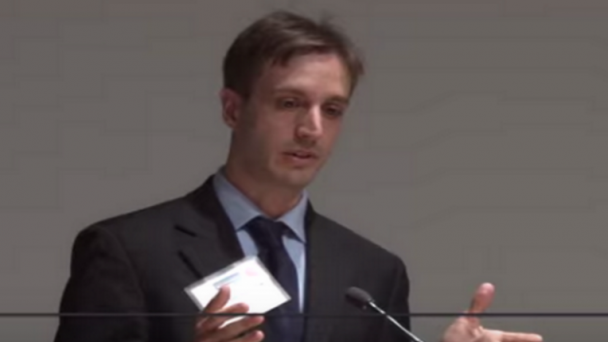
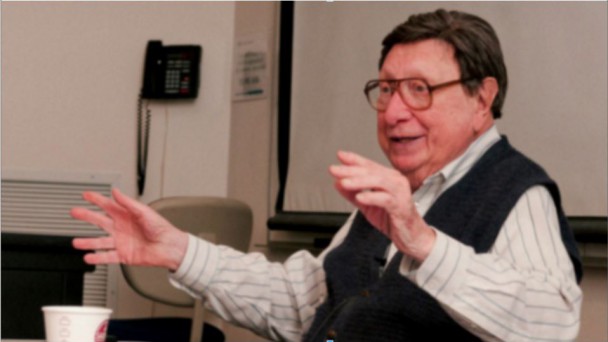
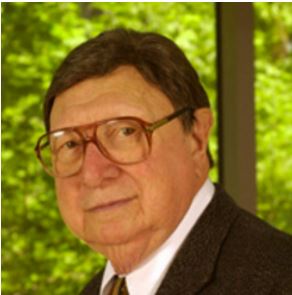
Giorgio Ascoli

Founding Editor-in-Chief, Neuroinformatics

The main effort of Dr. Ascoli's lab is to connect the cellular organization of brain networks to cognitive functions such as learning and memory. His laboratory hosts and curates a central inventory of digitally reconstructed neurons in NeuroMorpho.Org and Hippocampome knowledge  base and has developed L-Neuron, a neuron modeling  tool. His  long-term scientific and philosophical goal consists in establishing a working model for the highest cognitive functions such as human consciousness.

OnAir Post: Giorgio Ascoli

Mason Neuroscience

Some of the key research centers include: Center for Neural Informatics, Structures, and Plasticity (CN3); Center for the Study of Neuroeconomics (CSNI); Center for Neural Dynamics (CND); and the Center for Applied Proteomics and Molecular Medicine (CAPMM).

OnAir Post: Mason Neuroscience

Hippocampome Portal

Knowledge concerning dentate gyrus, CA3, CA2, CA1, subiculum, and entorhinal cortex is distilled from published evidence and is continuously updated as new information becomes available. Each reported neuronal property is documented with a pointer to, and excerpt from, relevant published evidence, such as citation quotes or illustrations.

Link to Hippocampome Hub

OnAir Post: Hippocampome Portal

Neuromorpho.org

NeuroMorpho.Org is the largest collection of publicly accessible 3D neuronal reconstructions. The goal of NeuroMorpho.Org is to provide dense coverage of available reconstruction data for the neuroscience community enabling the full and continuing research potential of existing digital reconstruction data.

Website: neuromorpho.org

OnAir Post: Neuromorpho.org

BigNeuron

The key idea is to create a single platform on which all algorithms can be run, compared, and their results combined to form reconstructions better than any one could achieve alone.

Link to BigNeuron Hub

See also Allen Cell Type Data Bases post.

OnAir Post: BigNeuron

Computational Neuroanatomy Group – GMU

We are specifically interested in the description and generation of dendritic morphology, and in its effect on neuronal electrophysiology. In the long term, we seek to create large-scale, anatomically plausible neural networks to model entire portions of a mammalian brain (such as a hippocampal slice, or a cortical column).

OnAir Post: Computational Neuroanatomy Group – GMU

Nathalia Peixoto


Summary

Associate Professor, Electrical and Computer Engineering Department Director, Neural Engineering Lab

Dr. Peixoto’s research interests include implantable electrodes and systems, hybrid systems (cell cultures and electronics), control of assistive technology, bioMEMS (bio-micro-electro-mechanical systems), and experimental models of neuropathologies such as epilepsy and spreading depression.


Information

Department webpagehttps://ece.gmu.edu/people/full-time-faculty/nathalia-peixoto Neural Engineering Lab website:  http://neural.bioengineering.gmu.edu/ Google Scholar

Email: npeixoto@gmu.edu Phone: 703.993.1567 Address: Nguyen Engineering Building Engineering 3912


Biosketch

Professional Preparation

Univ. Campinas, Sao Paulo, Brazil B.S. 1991-1995 Electrical Engineering

Univ. Campinas, Sao Paulo, Brazil M.S. 1996 Biomedical Engineering

Univ. Sao Paulo, Sao Paulo, Brazil Ph.D. 1997-2001

Microelectronics Stanford University, CA Postdoc 2001-2002 Electrical Engineering

George Mason University, Fairfax, VA Postdoc 2003-2006 Neuroscience

Products (in chronological order)

(i) Closely related to the project 1. Peixoto, N., Lima, V.M.F., Hanke, W., Correlation of the electrical and intrinsic optical signals in the spreading depression phenomenon, Neuroscience Letters, 299(1), 89-92, 2001.

2. Minnikanti, S., Skeath, P., Peixoto, N., Electrochemical Characterization of Carbon Nanotube Electrodes for Biological Applications, Carbon, 47, pg 884-893, 2009.

3. Minnikanti S, Pereira MG, Jaraiedi S, Jackson K, Costa-Neto CM, Li Q, Peixoto, N, In vivo electrochemical characterization and inflammatory response of multiwalled carbon nanotubebased electrodes in rat hippocampus. J. Neural Engineering, 2;7(1):016002 (10 pages), 2010.

4. Hamilton F, Berry T, Peixoto N, Sauer T. Real-time tracking of neuronal ...

OnAir Post: Nathalia Peixoto

Crowdsourcing Brain Data

National Academies Keck Futures Initiative is a step toward giving researchers another tool in their work. It’s a data overload worth organizing because, as Ascoli points out, such a “knowledge base” could reveal patterns, show untapped areas for future research and cut duplication.

OnAir Post: Crowdsourcing Brain Data

Jane Flinn


Summary

Associate Professor, Psychology Department, George Mason University Director, GMU Undergraduate Neuroscience Program Director, Flinn Lab

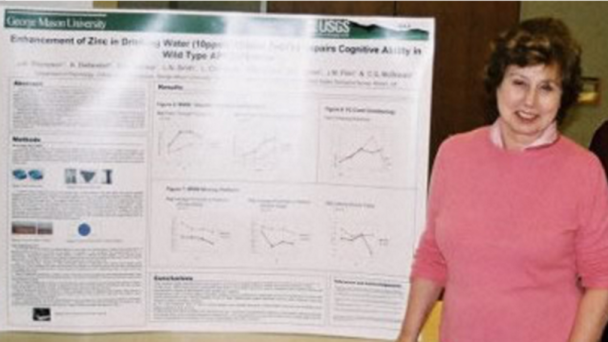
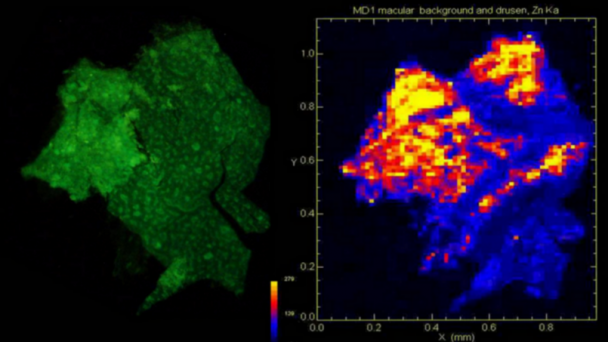
Dr. Flinn’s research has emphasized the roles of zinc, copper and iron in learning and memory and also in macular degeneration. Her research currently focuses on two specific aspects of metals in behavior, Alzheimer’s disease (AD) and the extinction of learned fears.


Information

Webpage:  psychology.gmu.edu/people/jflinn

Email: jflinn@gmu.edu Phone:   703.993.4107 Office Hours:  Tues 3:00PM-4:00PM, R 4:00PM-5:00PM Address: David King Hall 2022 Fairfax, Va. 22030

Biosketch

Dr. Flinn was the chair of the Department of Psychology from 1984 to 1995. During her tenure, the department was ranked as one of the most improved programs by the National Chronicle of Higher Education. After stepping down as chair, she became the coordinator of the biopsychology concentration and developed the concentration in biopsychology in the PhD in psychology. In 2006, she took over the newly approved undergraduate BS in neuroscience. The first students graduated in 2009, and there are now over 200 students in the program.

Education

George Washington University Ph.D. Psychology 1974 Catholic University of America Ph.D. Physics 1969 University of California at Los Angeles M.Sc. Physics 1962 Oxford University B.A.Physics 1960

Professional Experience

Director Undergraduate Neuroscience Program 2006-present Director Biopsychology Program 1995-2006 Chairman, Department of Psychology 1984-1995

Honors and Awards

University Undergraduate Mentoring Award 2015 Distinguished Faculty Award, George Mason University 1990, ...

OnAir Post: Jane Flinn

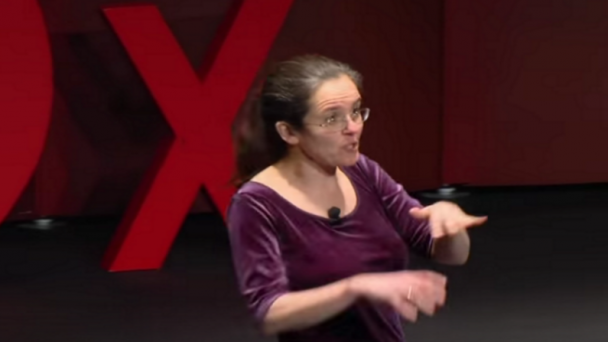
Trees of the Brain Presentation

This inaugural event of the series, which is sponsored by the George Mason University Bookstore, was held in the Fenwick Library Main Reading Room, on Tuesday, March 29th, at 2:30 p.m.

OnAir Post: Trees of the Brain Presentation

Ted Dumas


Summary

Associate Professor, Molecular Neuroscience Department, Krasnow Institute Principal Investigator, Physiological and Behavioral Neuroscience in Juveniles Lab (PBNJ)

Dr. Dumas research focuses on neural substrates of memory, neural and cognitive development, stress and behavioral control, real-time brain activity focus in a multidisciplinary setting.

Information

Webpage:   neuroscience.gmu.edu/people/tdumas

Email: tdumas@gmu.edu Phone:  703.993.9170 Address:  Krasnow Institute 109 Fairfax, Va. 22030

About

Ted Dumas is an Assistant Professor of Molecular Neuroscience who balances education and research to discover novel relationships between neural network activities and cognitive abilities and disseminate knowledge to students of all ages. Dr. Dumas received his B.S. degree at the University of Connecticut and double majored in Physiology and Neurobiology (Life Sciences Dept.) and Psychology. Having found his career niche in basic research, he then attended the University of Virginia where he earned his first individual NIH fellowship and received his M.S. and Ph.D. degrees in the Neuroscience and Behavior Program in the Department of Psychology. He then moved across the country to work as an NIH-funded postdoctoral fellow with Dr. Robert Sapolsky at Stanford University focusing on gene therapy techniques designed to prevent and promote recovery from brain injury. His second postdoctoral fellowship was at the University of Oregon with Dr. Clifford Kentros where he contributed to a large effort ...

OnAir Post: Ted Dumas

Martin Wiener


Summary

Assistant Professor, Dept. of Psychology, George Mason University AAAS Fellow, Directorate for Computer & Information Science & Engineering Division of Information and Intelligent Systems Class of 2015

Dr. Wiener’s research entailed neuroscientific investigations into the neural bases of time perception and rhythmic processing, where he utilized a number of techniques, including neurogenetics, functional Magnetic Resonance Imaging and Transcranial Magnetic Stimulation.


Information

GMU Department page: psychology.gmu.edu/people/mwiener   CV   Cognitive Behavioral Science Program:  cbn.gmu.edu/ Twitter: @MartinMwiener  LinkedIn page     NSF web page

Email: mwiener@gmu.edu Office Hours: 10 am to 11:50 am Phone: 703.993.6217 Address:  David King Hall 2055 Fairfax, Va. 22030


Biosketch

Dr. Wiener’s background is in Psychology and Neuroscience, where he received his PhD from the University of Pennsylvania in 2011.  Dr. Wiener’s research entailed neuroscientific investigations into the neural bases of time perception and rhythmic processing, where he utilized a number of techniques, including neurogenetics, functional Magnetic Resonance Imaging and Transcranial Magnetic Stimulation.  Dr. Wiener has completed two post-doctoral fellowships, at the University of Pennsylvania and George Mason University.  Dr. Wiener is a Big Data & Analytics fellow with CISE, where he is interested in projects at the intersection of neuroscience and big data, such as President Obama’s BRAIN initiative.  Additionally, Dr. Wiener is interested in helping ...

OnAir Post: Martin Wiener

Kabbani Lab research

Director, Dr. Nadine Kabbani

It is through science that we prove, but through intuition that we discover.

-Henri Poincare


Information

GMU website OnAir website

Email: nkabbani@gmu.edu

Address: Krasnow Institute 4400 University Dr. Fairfax, VA 22030


Research

1. The role of the nicotinic acetylcholine receptor in axon growth and regeneration

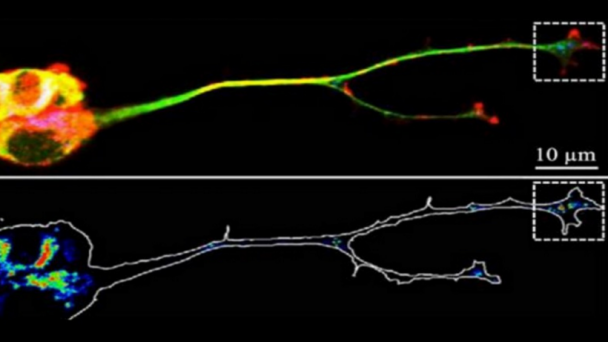
Cholinergic neurotransmission plays an important role in brain and spinal cord development and can contribute to synaptic plasticity as well as regeneration. We are examining the involvement of the α7 nicotinic acetylcholine (nACh) receptor in early axon growth in the brain and spinal cord using various cellular tools including real-time calcium and cytoskeletal imaging.

2. Identification and characterization of nicotinic receptor interactomes in neural and immune cells

Systematic drug use is associated with significant changes in the immune system.  In the case of nicotine, action on nAChRs in  immune cells presents a path by which smoking can lead to immune-associated disorders including various cancers and inflammatory disease such arthritis and asthma. In collaboration with Dr. Imad Damaj, we have uncovered a mechanism of nAChR function in CD4+ T cells and hypothesize that this process mediates long-term changes in immunity in smokers.

OnAir Post: Kabbani Lab research

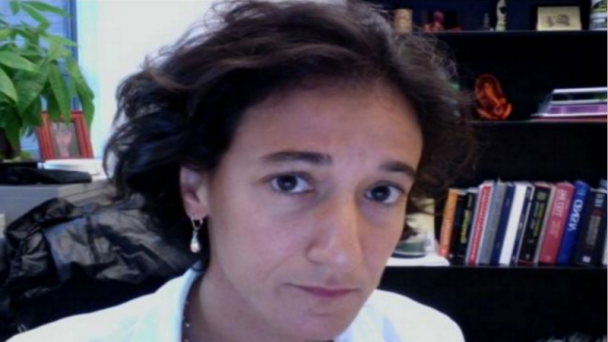
Nadine Kabbani

Summary

Associate Professor, Molecular Neuroscience Department, Krasnow Institute of Advanced Studies Director, GMU Program in Neuroethics

Dr. Kabbani’s research focuses on the cellular and molecular mechanisms of nicotinic receptor drug actions in the brain and immune system.


Biography

Nadine Kabbani is a faculty member at the Krasnow Institute for Advanced Study and an Associate Professor in the Department of Molecular Neuroscience with joint appointment in the School of Systems Biology. Her research focuses on the cellular and molecular mechanisms of nicotinic receptor drug actions in the brain and immune system. She is a member of the Society for Neuroscience, the Protein Society, the Society for Pharmacology and Experimental Therapeutics, and the VA Youth Tobacco Project. Dr. Kabbani serves on the editorial board for Amino Acids, Proteomics Insights, and the Children’s Medical Safety Research Institute. She has been the recipient of awards by the National Institute for Neurological Disorders and Stroke, the Philip Morris Corporation, the Foundation for Medical Research, and the International Brain Research Organization. Her research is currently funded by the VA Foundation for health youth and the Wings for Life Spinal Cord Research Foundation. She is an author on 40+ published scientific articles and several book chapters. Dr. Kabbani pursued postdoctoral ...

OnAir Post: Nadine Kabbani

Todd Gillette

Todd's dissertation was titled "Comparative topological analysis of neuronal arbors via sequence representation and alignment".

In addition to being the lead curator for NKN, Todd is overseeing the development of the Neuroscience Aircasts.

Todd has participated in the Allen Institute BigNeuron hackathon at Janelia and will be involved in the Oak Ridge hackathon Nov. 16-20, 2015.

OnAir Post: Todd Gillette

David Hamilton

PhD, Neuroscience at George Mason University Dissertation title: “Machine-readable Knowledge Management of Neuron Properties.”

David said “Neuroscience is the most interesting and potentially useful field of study available to me at this stage in my career. I was trained as an electrical engineer, worked most of my life as a software engineer, but desire to learn how the brain works to glean useful architectural aspects for continued advancement in problem solving.”

Web Information

LinkedIn page:   https://www.linkedin.com/pub/david-hamilton/38/91/5aa

Contact Information

Email:

Phone:

Address:

Biography

Education

George Mason University

PhD Candidate, Neuroscience   2007 – 2016

Estimated time-frame for dissertation final defense: Summer 2016. Dissertation title: “Machine-readable Knowledge Management of Neuron Properties.”

Activities and Societies: Society for Neuroscience, AAAS, IEEE

Loyola College in Maryland

MS, Electrical Engineering 1978 – 1981

Penn State University

BS, Electrical Engineering  1973 – 1977

Work Experience

Neuroscience PhD Candidate

George Mason University 2007 – Present (8 years)Fairfax, VAExpect to defend Spring 2016

Software Engineer

Northrop Gruman Information Systems –July 2004 – Present (11 years 2 months)

Software & Systems Research & Development

VP Software Development NeuralTech November 1994 – June 2004 (9 years 8 months) Merchant Dispute ...

OnAir Post: David Hamilton

Michael Pritz

Summary

Affiliate: Krasnow Institute for Advanced Study, Deparment of Bioengineering, George Mason University Principal Investigator: Developmental Evolutionary Neurobiology Lab

Dr. Pritz’s research investigates the development and evolution of vertebrate brains.   The present focus is on two areas: (1.) forebrain organization and development in a model vertebrate system and (2.) general principles that underlie the formation of brain nuclei. He also teaches a course on mammalian neurobiolgy.


Information

Web page: krasnow.gmu.edu/kifaculty/michael-b-pritz

Research Gate   LinkedIn

Email: mpritz@gmu.edu Phone: 703-993-9720 Address: 4400 University Drive, MS 2A1 Fairfax, Virginia 22030


Biosketch

My prior experience has been in Schools of Medicine where I worked as a neurosurgeon reaching the professor level with a focus on cerebrovascular disease and skull base problems. At Indiana University School of Medicine, I was the Director of Cerebrovascular and Skull Base Surgery in the Department of Neurological Surgery. At the end of December, 2012, I retired from clinical neurosurgery and have devoted my time and efforts to basic science research. I have now moved to the Department of Molecular Neuroscience at the Krasnow Institute for Advanced Study. This opportunity will provide me with a rich environment to pursue my research in developmental evolutionary neurobiology and as well as give me an opportunity to teach a graduate level course in neuroanatomy. After ...

OnAir Post: Michael Pritz

Rubén Armañanzas

Dr. Armañanzas research topics include machine learning, computational neuroscience, and neuroinformatics. In particular, applications within these topics are: knowledge discovery in digital neuronal reconstructions, automatic classification of neuronal types, complex neuromorphic networks, and unveiling key aspects of neuronal morphogenesis in the developing brain.

OnAir Post: Rubén Armañanzas

Keivan Moradi


Information

LinkedIn page

Email: k.moradi@gmail.com

Biosketch

Dr. Moradi is a graduate of medicine and a PhD student in neuroscience. I have been a member of different gifted and talented programs that include: “The National Organization for Development of Exceptional Talents (NODET)”, “Iranian Young Scholars’ Club”, “The Gifted and Talented Program office” of Zanjan University of Medical Sciences and “The National Foundation of Elites”, respectively. Currently, I am a PhD student and research assistant at “Krasnow Institute for Advanced Studies” at George Mason University.

Education

George Mason University Doctor of Philosophy (Ph.D.), Neuroscience 2014 – 2018 Zanjan University of Medical Sciences Doctor of Medicine (M.D.), General Practitioner, B 2001 – 2009 Biochemistry, Pharmacology Physiology, Immunology, Human Anatomy, Histology, Pathology, Bacteriology, Virology, Parasitology, Entomology, Mycology, Epidemiology, Infectious disease, Surgery, Orthopedics Neurosurgery, Neurology, Psychology, Internal Medicine, Pediatrics, Obstetrics and Gynecology, Ophthalmology, Otolaryngology, Dermatology, Medical Physics, Radiology ECG interpretation, Adult and Infant CPR, ABG, wound closure Evidence-based Medicine, Hospitals, and Healthcare

Activities and Societies: Gifted and Talented Program, Board of Founders Research Committee, Board Member 1st Prize winner of the18th International Medical Sciences Student Congress, 2003, Turkey, Top Student in research, 2003 and 2004 Allameh ...

OnAir Post: Keivan Moradi

Sridevi Polavaram

Dr. Polavaram received her Ph.D. in Neuroscience from George Mason University, she has been working for over a decade in the field of Computational Neuroanatomy and Neuroinformatics providing services in software engineering, data management, analytics,  visualization, and applied ontologies. Her current area of research investigates biologically meaningful morphological patterns derived from digitally reconstructed neuronal arbors representing the cellular diversity of the nervous system.

OnAir Post: Sridevi Polavaram

Sumit Nanda

Sumit Nanda research focuses on modelling and simulation of dendritic morphology.

OnAir Post: Sumit Nanda

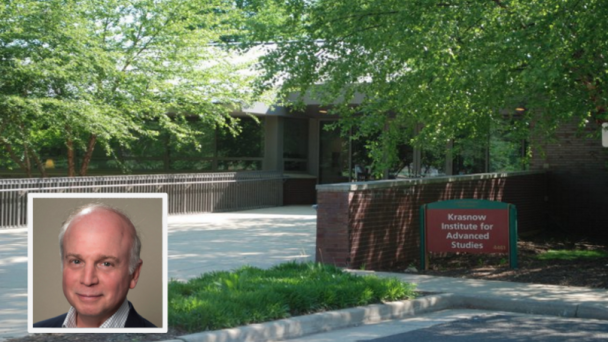
Harold Morowitz (1928-2016)


Summary

Founding Director, Krasnow Institute for Advanced Studies Professor, Molecular Biophysics and Biochemistry, Yale University Eminent Scholar, GMU Molecular Neuroscience Department and Robinson Fellow

Biophysicist Harold Morowitz became a Robinson Professor after a long career of teaching and research at Yale University as Professor of Molecular Biophysics and Biochemistry and serving for five years as Master of Pierson College. Dr. Morowitz was interested in philosophical foundations of neurobiology and the problem of consciousness.


Information

Web:  Robinson web page     Wikipedia Entry Email: morowitz@gmu.edu Phone: 703.993.4334 Location: Krasnow Institute


Biosketch

Born Dec. 4, 1927, died March 22, 2016.

From Robinson web page

Biophysicist Harold Morowitz became a Robinson Professor after a long career of teaching and research at Yale University as Professor of Molecular Biophysics and Biochemistry and serving for five years as Master of Pierson College. The author of several books, Morowitz has written extensively on the thermodynamics of living systems, as well as on popular topics in science. Included in those publications are Mayonnaise and the Origins of Life, Cosmic Joy and Local Pain, The Thermodynamics of Pizza, Entropy and the Magic Flute,and The Kindly Dr. Guillotin. In his current research, Morowitz is investigating the interface of biology and information sciences and continues his exploration of the origins ...

OnAir Post: Harold Morowitz (1928-2016)

Flinn Lab – GMU


Summary

Director, Jane Flinn

The Flinn Lab is interested in the biological bases of learning and memory. Current research focuses on the role of metals in normal memory and in Alzheimer’s disease (AD).

Zinc, iron and copper are all elevated in the plaques found in the brains of people with AD.


Information

GMU Webpage

Email: jflinn@gmu.edu Phone: 703-993-4107    Fax: 703-993-1359 Office: David King Hall Rm. 2022 Address: George Mason University Department of Psychology, Mail Stop 3F5 4400 University Blvd. Fairfax, VA 22030

Research

We maintain a mouse colony at George Mason University with transgenic mice that carry an APP mutation, so that they develop plaques. We have looked at a model of early onset-AD and are currently developing a new model for late-onset AD. We are examining the effect on behavior and on plaque development of raising these mice on different levels of metals in the drinking water. We find that both zinc and iron significantly impaired spatial memory in mice modeling early onset AD, but copper partially remediated the zinc effect.

We have also shown that increased zinc impairs both spatial memory and the ability to learn that a stimulus is no longer fearful in normal mice and rats. The latter effect may be a model for post-traumatic stress disorder (PTSD). These memory deficits ...

OnAir Post: Flinn Lab – GMU

Skip to toolbar