Computational Neuroanatomy Group – GMU

We are specifically interested in the description and generation of dendritic morphology, and in its effect on neuronal electrophysiology. In the long term, we seek to create large-scale, anatomically plausible neural networks to model entire portions of a mammalian brain (such as a hippocampal slice, or a cortical column).

OnAir Post: Computational Neuroanatomy Group – GMU

Kabbani Lab research

Director, Dr. Nadine Kabbani

It is through science that we prove, but through intuition that we discover.

-Henri Poincare


Information

GMU website OnAir website

Email: nkabbani@gmu.edu

Address: Krasnow Institute 4400 University Dr. Fairfax, VA 22030


Research

1. The role of the nicotinic acetylcholine receptor in axon growth and regeneration

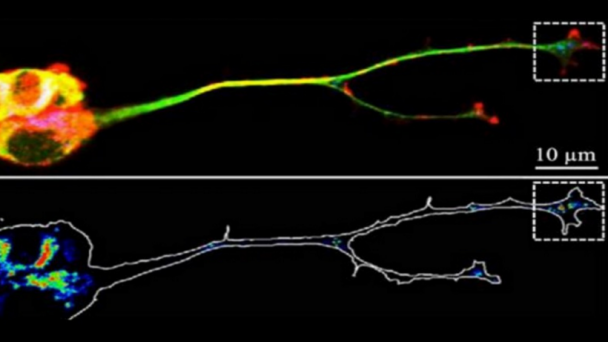
Cholinergic neurotransmission plays an important role in brain and spinal cord development and can contribute to synaptic plasticity as well as regeneration. We are examining the involvement of the α7 nicotinic acetylcholine (nACh) receptor in early axon growth in the brain and spinal cord using various cellular tools including real-time calcium and cytoskeletal imaging.

2. Identification and characterization of nicotinic receptor interactomes in neural and immune cells

Systematic drug use is associated with significant changes in the immune system.  In the case of nicotine, action on nAChRs in  immune cells presents a path by which smoking can lead to immune-associated disorders including various cancers and inflammatory disease such arthritis and asthma. In collaboration with Dr. Imad Damaj, we have uncovered a mechanism of nAChR function in CD4+ T cells and hypothesize that this process mediates long-term changes in immunity in smokers.

OnAir Post: Kabbani Lab research

Flinn Lab – GMU


Summary

Director, Jane Flinn

The Flinn Lab is interested in the biological bases of learning and memory. Current research focuses on the role of metals in normal memory and in Alzheimer’s disease (AD).

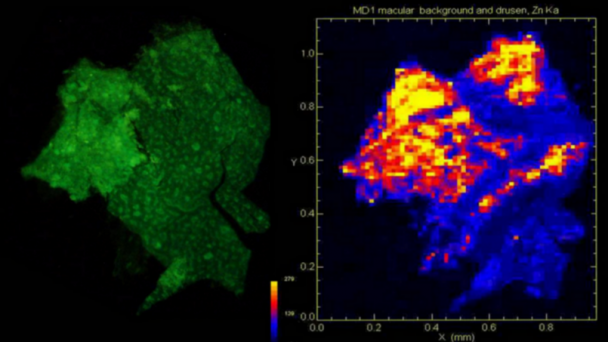
Zinc, iron and copper are all elevated in the plaques found in the brains of people with AD.


Information

GMU Webpage

Email: jflinn@gmu.edu Phone: 703-993-4107    Fax: 703-993-1359 Office: David King Hall Rm. 2022 Address: George Mason University Department of Psychology, Mail Stop 3F5 4400 University Blvd. Fairfax, VA 22030

Research

We maintain a mouse colony at George Mason University with transgenic mice that carry an APP mutation, so that they develop plaques. We have looked at a model of early onset-AD and are currently developing a new model for late-onset AD. We are examining the effect on behavior and on plaque development of raising these mice on different levels of metals in the drinking water. We find that both zinc and iron significantly impaired spatial memory in mice modeling early onset AD, but copper partially remediated the zinc effect.

We have also shown that increased zinc impairs both spatial memory and the ability to learn that a stimulus is no longer fearful in normal mice and rats. The latter effect may be a model for post-traumatic stress disorder (PTSD). These memory deficits ...

OnAir Post: Flinn Lab – GMU

Skip to toolbar