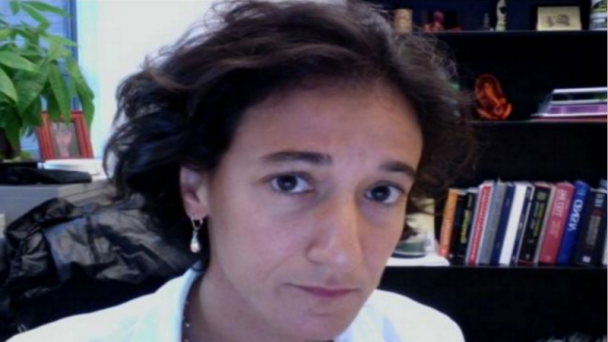
GMU Introductory Neuroethics Course

This course will survey emerging ethical questions raised by recent neuroscientific discoveries on genetic and environmental factors that influence human behavior, decision-making, personality traits, and mental states.

Instructor: Dr. Nadine Kabbani

For information about Spring 2017 course, contact nkabbani@gmu.edu.

For all current posts on this post, see this slider on the Neuroethics Hub

2016 Syllabus

Download (PDF, 20KB)

OnAir Post: GMU Introductory Neuroethics Course

Kabbani Lab research

Director, Dr. Nadine Kabbani

It is through science that we prove, but through intuition that we discover.

-Henri Poincare


Information

GMU website OnAir website

Email: nkabbani@gmu.edu

Address: Krasnow Institute 4400 University Dr. Fairfax, VA 22030


Research

1. The role of the nicotinic acetylcholine receptor in axon growth and regeneration

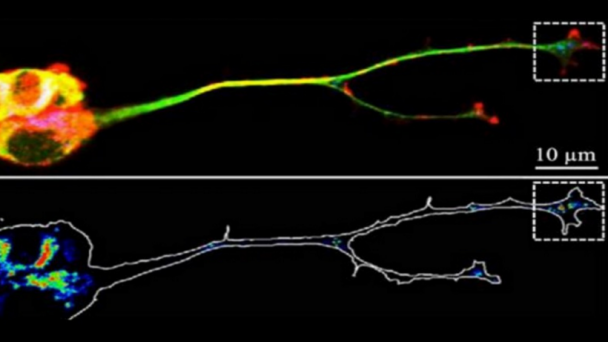
Cholinergic neurotransmission plays an important role in brain and spinal cord development and can contribute to synaptic plasticity as well as regeneration. We are examining the involvement of the α7 nicotinic acetylcholine (nACh) receptor in early axon growth in the brain and spinal cord using various cellular tools including real-time calcium and cytoskeletal imaging.

2. Identification and characterization of nicotinic receptor interactomes in neural and immune cells

Systematic drug use is associated with significant changes in the immune system.  In the case of nicotine, action on nAChRs in  immune cells presents a path by which smoking can lead to immune-associated disorders including various cancers and inflammatory disease such arthritis and asthma. In collaboration with Dr. Imad Damaj, we have uncovered a mechanism of nAChR function in CD4+ T cells and hypothesize that this process mediates long-term changes in immunity in smokers.

OnAir Post: Kabbani Lab research

Nadine Kabbani

Summary

Associate Professor, Molecular Neuroscience Department, Krasnow Institute of Advanced Studies Director, GMU Program in Neuroethics

Dr. Kabbani’s research focuses on the cellular and molecular mechanisms of nicotinic receptor drug actions in the brain and immune system.


Biography

Nadine Kabbani is a faculty member at the Krasnow Institute for Advanced Study and an Associate Professor in the Department of Molecular Neuroscience with joint appointment in the School of Systems Biology. Her research focuses on the cellular and molecular mechanisms of nicotinic receptor drug actions in the brain and immune system. She is a member of the Society for Neuroscience, the Protein Society, the Society for Pharmacology and Experimental Therapeutics, and the VA Youth Tobacco Project. Dr. Kabbani serves on the editorial board for Amino Acids, Proteomics Insights, and the Children’s Medical Safety Research Institute. She has been the recipient of awards by the National Institute for Neurological Disorders and Stroke, the Philip Morris Corporation, the Foundation for Medical Research, and the International Brain Research Organization. Her research is currently funded by the VA Foundation for health youth and the Wings for Life Spinal Cord Research Foundation. She is an author on 40+ published scientific articles and several book chapters. Dr. Kabbani pursued postdoctoral ...

OnAir Post: Nadine Kabbani

Nadine Kabbani – TEDxGMU

https://www.youtube.com/watch?v=J8w_0sZ97BcVideo can’t be loaded because JavaScript is disabled: From Saints to Sociopaths: Dopamine and Decisions | Nadine Kabbani | TEDxGeorgeMasonU (https://www.youtube.com/watch?v=J8w_0sZ97Bc)

From Saints to Sociopaths: Dopamine and Decisions

By Nadine Kabbani Pubished on March 21, 2016 TEDx Talks

Nadine Kabbani, PhD is a group leader at the Krasnow Institute for Advanced Study and an Assistant Professor of Molecular Neuroscience at George Mason University.

Her research focuses on the cellular and molecular mechanisms of nicotinic acetylcholine receptor signaling in the developing and regenerating nervous system. Her lab explores the role of acetylcholine in synapse formation and maturation during early life stages using high resolution live cell imaging, genetics, and proteomics.

OnAir Post: Nadine Kabbani – TEDxGMU

Justin King

Summary

PhD Student, GMU Lab Assistant, Kabbani Lab

My research focuses on identification and characterization of a G protein-binding cluster in α7 nicotinic acetylcholine receptors and the effects of menthol on nicotine pharmacokinetic, pharmacology and dependence in mice.


Biosketch

Current PhD student at George Mason University pursuing a degree in Molecular Neuroscience

Education

Westminster College (PA) Bachelor of Science (B.S.), Neuroscience 2008 – 2012

Honors and Awards

4-VA Grant Award, April 2015 Nadine Kabbani and Justin King Receive 4-VA Grant Award for their project “Mechanisms of susceptibility to nicotine addiction in adolescents: A focus on the addition of menthol to tobacco products”

Experience

Graduate Research Assistant George Mason University, August 2013 Present (2 years 8 months) Fairfax Va Uncovering novel signaling mechanisms of Nicotinic Acetylcholine Receptors and looking at their effects effects on neuronal growth and development.

Research Intern Allegheny General Hospital June 2012 – August 2013 (1 year 3 months) Greater Pittsburgh Area Developement and data analysis of neurophysiology research projects


Publications

Identification and characterization of a G protein-binding cluster in α7 nicotinic acetylcholine receptors

Journal of Biological Chemistry June 18, 2015

α7 nicotinic acetylcholine receptors (nAChRs) play an important role in synaptic transmission and inflammation. In response to ligands, this receptor channel opens to conduct cations into the cell but desensitizes rapidly. In recent studies we show that α7 nAChRs bind signaling proteins such as ...
OnAir Post: Justin King

Skip to toolbar