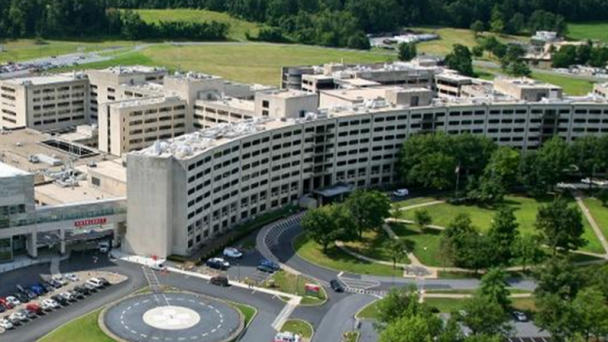
PSU Institute of the Neurosciences

The Institute also provides oversight and coordination for neuroscience-related activities in education, research, patient care and outreach, while promoting an intellectual environment that enhances the interdisciplinary neuroscience educational experience from the undergraduate to postdoctoral levels.

The Institute also provides oversight and coordination for neuroscience-related activities in education, research, patient care and outreach, while promoting an intellectual environment that enhances the interdisciplinary neuroscience educational experience from the undergraduate to postdoctoral levels.

OnAir Post: PSU Institute of the Neurosciences

Center for Neural Engineering – PSU

Summary

The Penn State Center for Neural Engineering is a university-wide Center, bridging the campuses and Colleges of Engineering and Science at University Park, with the College of Medicine at Hershey. It is housed within facilities of the Department of Neurosurgery and theDepartment of Engineering Science and Mechanics.

The Center has resident core faculty, with a considerable number of faculty Affiliates drawn from University Park and Hershey.The Center enables the successful conduct of interdisciplinary research and acquisition of funding for projects that individual Penn State scientists could not perform on their own.

Categories: Penn State Neuroscience, Neural Engineering


Information

Web page

Emaillabs@esm.psu.edu Twitter:  twitter.com/PSUESM Phone: 814.865.4523 Address: Dept. of Engineering Science and Mechanics The Pennsylvania State University 212 Earth-Engineering Sciences Building University Park, PA 16802

Director: Steven J. Schiff


About

The Center is positioned to facilitate and enable collaboration between faculty from the Huck Institutes for the Life Sciences, Materials Research, and Neuroscience Institutes at Penn State, and forms a physical conduit for faculty and students from across the Engineering Departments, the Integrative Biosciences Neuroscience Program, Physics, Mathematics, and Biology, as well as trainees and faculty from Neurosurgery, Neurology, and Psychiatry.

The Center for Neural Engineering provides the core facilities to:

Coordinate collaboration between Departments at ...

OnAir Post: Center for Neural Engineering – PSU

Steven Schiff

Categories: Penn State Neuroscience, NIH BRAIN Researchers, Neural Engineering, Neuroethics people, Neuromodulation researchers, Mason Neuroscience Alumni

Research interests include neural engineering, neurosurgery, epilepsy, Parkinson's Disease, wave mechanics, brain machine interfaces, EEG, electrical fields, and control theory.

OnAir Post: Steven Schiff

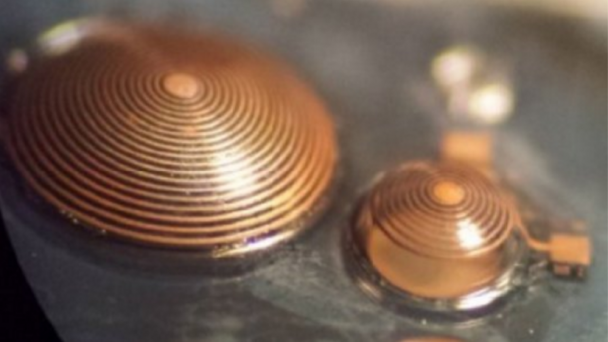
Implantable Brain MEMS-MAGSS


Summary

Principal Investigator(s): Steven J. Schiff and Srinivas Tadigadapa Title: Implantable brain microelectromechanical magnetic sensing and stimulation (MEMS-MAGSS) Category: Large-Scale Recording and Modulation Project Number: 1R21EY026438-01     NIH webpage Lab:  Center for Neural Engineering   University: Penn State Neuroscience

We seek to offer proof-of-concept testing and development of a novel class of MEMS-MAGSS technology. This project would produce a ‘first-of-kind’ technology capable of 1) cellular resolution detection of spiking activity in neurons, 2) cellular level modulation of neuronal firing, 3) adaptve noise cancellation enabling use outside of magnetically shielded environments, 4) room-temperature operation enabling packaging for long-term implantation within with biological tissue for animal or human use, and 5) a clear translational pathway for long-term human implantation across a person’s life-span.

Categories: Penn State Neuroscience, NIH 2015-16 grants, and Research (Neuromodulation)


Project Description

This NIH BRAIN Initiative R21 will initiate development of a completely Implantable Brain Microelectromechanical Magnetic Sensing and Stimulation (MEMS-MAGSS) technology. Significance: We seek to offer proof-of-concept testing and development of a novel class of MEMS-MAGSS technology, to address the NIH BRAIN Initiative: New Concepts and Early-Stage Research for Large-Scale Recording and Modulation in the Nervous System (R21). The current state of the art for large-scale recording of neuronal activity does not have cellular resolution for sensing and ...

OnAir Post: Implantable Brain MEMS-MAGSS

Understanding Science Text

The overall goal of this project is to understand the neurocognitive mechanisms underlying reading comprehension of expository scientific texts by school-aged children, adult first language readers, and adult second language readers. It combines methods from functional magnetic resonance imaging and advanced data-analytic techniques in cognitive modeling and brain networks.

OnAir Post: Understanding Science Text

Ping Li, PhD – Penn State


Professor of Psychology, Linguistics, & Information Sciences & Technology Co-Director, Center for Brain, Behavior, and Cognition Facult, Center for Language Science (CLS)

Dr. Li’s research aims at understanding the relationships among language, brain, and culture. He investigates the computational and neural mechanisms underlying language acquisition and representation in both native and non-native speakers of Western languages.

Web Information

Department webpagehttp://psych.la.psu.edu/directory/pul8

Brain, Language, and Computation Lab websitehttp://blclab.org/

Penn State Neurosciencehttp://brain2015.onair.cc/psu-institute-of-neurosciences/

NSF BRAIN Initiative Granthttp://brain2015.onair.cc/neural-approaches-to-understanding-science-text/

Contact Information

Email: pul8@psu.edu

Phone: (814) 863-3921

Address: 452 Moore Building


Biography

Education and Professional Preparation

1992 Post-doctoral fellow McDonnell-Pew Center for Cognitive Neuroscience, San Diego, USA

1990-1992 Post-doctoral fellow Center for Research in Language, University of California, San Diego, USA

1990 Ph.D. in Psycholinguistics, University of Leiden, The Netherlands (graduate training at the Max Planck Institute for Psycholinguistics)

1986 M.A. in Theoretical Linguistics, Peking University, China

1983 B.A. in Chinese Linguistics, Peking University, China

CV

Research

My research aims at understanding the relationships among language, brain, and culture. In particular, we examine the dynamic changes that occur in the language learner and the dynamic interactions that occur in the competing language systems over the course of learning. We investigate the computational and neural mechanisms underlying language acquisition and representation in both native and non-native speakers of Western languages (e.g., English) and ...
OnAir Post: Ping Li, PhD – Penn State

Lisa Genova – Conversations from Penn State

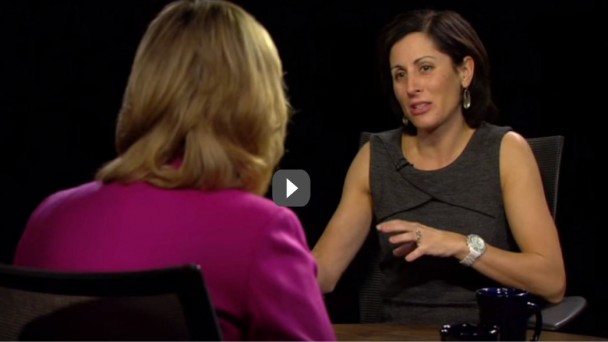
Dr. Lisa Genova is the best-selling author of Still Alice and Left Neglected. She discusses how her background in neuroscience helps shape her narratives, her personal experiences with Alzheimer’s, and her upcoming novel, Love Anthony.

Video published Dec. 7, 2011 by wpsu

https://www.youtube.com/watch?v=FMlst-7de2AVideo can’t be loaded because JavaScript is disabled: Lisa Genova – Conversations from Penn State (https://www.youtube.com/watch?v=FMlst-7de2A)

OnAir Post: Lisa Genova – Conversations from Penn State

Skip to toolbar