Princeton Neuroscience Institute


The Institute places particular emphasis on the close connection between theory, modeling and experimentation using the most advanced technologies.

Jon Cohen and David Tank serve as co-directors of the Institute. They view the Institute as a stimulus for teaching and research in neuroscience and related fields, as well as an impetus for collaboration and education in disciplines as wide ranging as economics and philosophy. Princeton collaborators come from an array of disciplines including mathematics, physics, engineering, chemistry, computer science, ecology and evolutionary biology, and economics.

Website:  pni.princeton.edu/ Brain Initiative Grant –  “Mechanisms of neural circuit dynamics in working memory” BRAIN Grant – “Vertically integrated approach to visual neuroscience: microcircuits to behavior”

Contact Information

E-mail: ttayler@princeton.edu Phone:  (609)258-0826 Address: Washington Road | Princeton, NJ 08544

Co-Directors: Jon Cohen and David Tank

Faculty by Department Affiliation

CHEMISTRY

Clarence Schutt Biophysics and structural biology

COMPUTER SCIENCE

Robert Schapire Theoretical and applied aspects of machine learning

ECOLOGY AND EVOLUTIONARY BIOLOGY

Carolyn McBride Genes and neural circuits underlying behavioral evolution James Gould Programming and decision making in animals Daniel Rubenstein Adaptive patterns of social behavior

ELECTRICAL ENGINEERING

Peter Ramadge Video and image processing, and adaptive systems

MECHANICAL AND AEROSPACE ENGINEERING

Philip Holmes Mathematical modeling Robert Stengel Optimal control ...

OnAir Post: Princeton Neuroscience Institute
Kenneth Norman, Phd – Princeton


Professor of Psychology and the Princeton Neuroscience Institute Principal Investigator, Computational Memory Lab
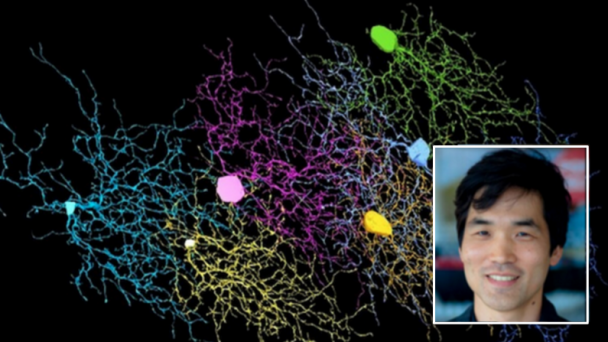
A major focus of Dr. Norman’s research is characterizing how different subregions of the medial temporal lobes (in particular, the hippocampus and perirhinal cortex) contribute to recognition and recall, and how the contributions of these structures differ from one another. He is also interested in how accuracy and distortion in episodic memory arise from interactions between medial temporal structures and prefrontal cortex.

Web Information

Department web pagehttps://psych.princeton.edu/psychology/research/norman/index.php

Princeton Neuroscience Institute (BRAIN 2015)http://brain2015.onair.cc/princeton-neuroscience-institute/

Computational Memory Lab website: http://compmem.princeton.edu/?n=Main.HomePage

Contact Information

Email: knorman@princeton.edu

Phone: (609) 258-9694

Address: Department of Psychology Princeton University Green Hall, Washington Road Princeton, NJ 08540


Biosketch

Education

June 1999 Ph.D. in Psychology, Harvard University Advisor: Daniel Schacter, Ph.D. Thesis: “Differential Effects of List Strength on Recollection and Familiarity”

June 1996 MA in Psychology, Harvard University

June 1993 BS with distinction, Stanford University Advisors: John Gabrieli, Ph.D., Fred Dretske, Ph.D. Honors Thesis: “Is Consciousness the Gatekeeper of Memory?”

June 1999 – June 2002 NIH NRSA postdoctoral fellow, University of Colorado, Boulder Mentor: Randall O’Reilly, Ph.D.

1995 Fellow, McDonnell Summer Institute in Cognitive Neuroscience, Davis, CA

Click here for full CV

Research

In the Norman lab, we use biologically realistic neural network models to explore how the brain gives rise to learning and memory phenomena, and we test these models’ predictions using several different ...

OnAir Post: Kenneth Norman, Phd – Princeton

I am my connectome

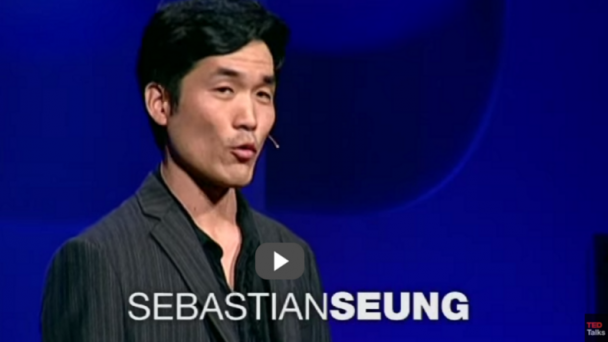
https://www.youtube.com/watch?v=HA7GwKXfJB0Video can’t be loaded because JavaScript is disabled: Sebastian Seung: I am my connectome (https://www.youtube.com/watch?v=HA7GwKXfJB0)

Sebastian Seung is mapping a massively ambitious new model of the brain that focuses on the connections between each neuron. He calls it our “connectome,” and it’s as individual as our genome — and understanding it could open a new way to understand our brains and our minds.

Filmed July 2010 at TED Global 2010 Uploaded to YouTube on Sept. 28, 2010 by TED 

OnAir Post: I am my connectome

Integrated approach to visual neuroscience

PI: Sebastian Seung, Princeton University Title: “Vertically integrated approach to visual neuroscience: microcircuits to behavior” BRAIN category: Understanding Neural Circuits (RFA NS-14-009)

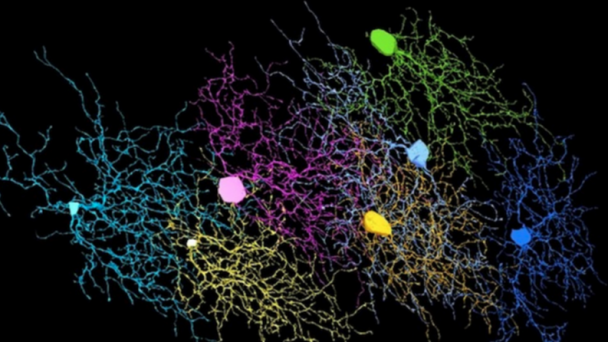
Dr. Seung and colleagues Thomas Euler (U Tübingen), Andrew Huberman (UC San Diego), Markus Meister (Caltech), and Rachel Wong (UW Seattle) will use state-of-the-art genetic, electrophysiological, and imaging tools to map the connectivity of the retina, the light-sensing tissue in the eye. The goal is to delineate all the retina’s neural circuits and define their specific roles in visual perception and behavior.

NIH Webpages

Project Description

Visual neuroscience is finally beginning to achieve a “vertically integrated” understanding of the retina, bridging all levels from molecules to microcircuits to behavior. Success could be achieved for all retinal microcircuits in just a decade, if progress were sped up drastically. Such acceleration will be attained by generating the following foundational data and disseminating it to the community. (1) We will use genetic control of ganglion cell types to pinpoint their specific roles in a suite of ethologically relevan, visually guided behaviors. Our functional explorations will be guided by the tracing of downstream pathways into subcortical and cortical regions using genetic techniques. (2) We will apply two-photon calcium imaging and serial electron microscopy to a single patch of ...

OnAir Post: Integrated approach to visual neuroscience

David Tank, PhD – Princeton


Henry L. Hillman professor of neuroscience and molecular biology; Co-Director of the Princeton Neuroscience Institute; and Director, Bezos Center for Neural Circuit Dynamics At large Member of Multi-Council Working Group 

Dr Tank’s research interests include the measurement, analysis, and modeling of neural circuit dynamics. More recently, his work has focused on the mechanisms of persistent neural activity and the development and application of rodent virtual reality systems combined with optical imaging and electrophysiology to study neural circuit dynamics during navigation.

Web Information

Department Webpage:   molbio.princeton.edu/faculty/molbio-faculty/136-tank

Tank Lab Webpage: genomics.princeton.edu/tank/

Bezos Center for Neural Circuit Dynamics  Webpage: pni.princeton.edu/centers/bezos-center-neural-circuit-dynamics

Allen Insitute Webpage: alleninstitute.org/our-institute/advisors/profiles/david-tank/

Contact Information

Email: dwtank@princeton.edu

Phone: (609) 258-7371

Address: 156 Neuroscience

Faculty Assistant: Lisa Glassl glass@princeton.edu

Biosketch

Dr. Tank earned his B.S. in Physics and Mathematics at Case Western Reserve University in 1976 and a Ph.D. degree in Physics from Cornell University in 1983. From 1983-2001 he was a research scientist at Bell Laboratories in Murray Hill, NJ, and became a Bell Laboratories Fellow in 1999. From 1991-2001 he served as Department Head of the Biological Computation Research Department. In 2001, he moved to Princeton University, becoming a founding Co-Director of the Princeton Neuroscience Institute in 2005.
Research Focus

MEASUREMENT AND ANALYSIS OF NEURAL CIRCUIT DYNAMICS

Action potentials are a nearly universal form of electrochemical dynamics in ...

OnAir Post: David Tank, PhD – Princeton

William Bialek, Theoretical Biophysicist

How does our brain use coding to interpret the world?

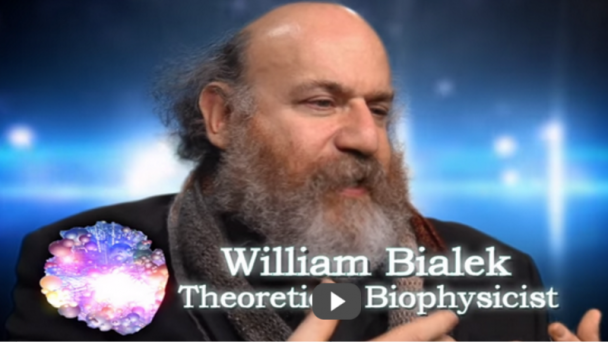
https://www.youtube.com/watch?v=pYojI666FIMVideo can’t be loaded because JavaScript is disabled: How does our brain use coding to interpret the world? (https://www.youtube.com/watch?v=pYojI666FIM)

Theoretical biophysicist William Bialek discusses how our brain interprets information in a continuous way.

NSF BRAIN Initiative Published APRIL 28, 2014


Observing multiple neurons simultaneously

https://www.youtube.com/watch?v=kD4uyHic4uEVideo can’t be loaded because JavaScript is disabled: Observing multiple neurons simultaneously (https://www.youtube.com/watch?v=kD4uyHic4uE)

NSF BRAIN Initiative Published APRIL 28, 2014

A thought requires roughly a million different brain neurons

https://www.youtube.com/watch?v=qP_cogP_qR8Video can’t be loaded because JavaScript is disabled: A thought requires roughly a million different brain neurons (https://www.youtube.com/watch?v=qP_cogP_qR8)

NSF BRAIN Initiative Published APRIL 28, 2014

OnAir Post: William Bialek, Theoretical Biophysicist

Perceiving Brain: Mysteries of the Brain

https://www.youtube.com/watch?v=_WPtDO6KXc8

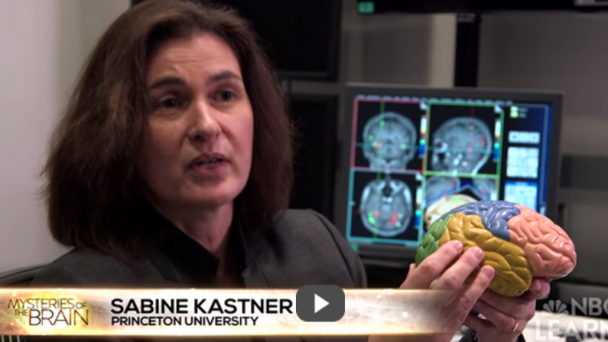
Sabine Kastner, a professor of neuroscience and psychology at Princeton University, is studying how the brain determines what information is most important in everyday scenes. Using functional magnetic resonance imaging, Kastner is able to peek inside the brain and see what areas are active when a person sees a face, place or object.

“Mysteries of the Brain” is produced by NBC Learn in partnership with the NSF.

NSF BRAIN Initiative Published June 9, 2015

OnAir Post: Perceiving Brain: Mysteries of the Brain

Sebastian Seung, PhD – Princeton


Professor, Computer Science Department and Princeton Neuroscience Institute Principal Investigator, Seung Lab

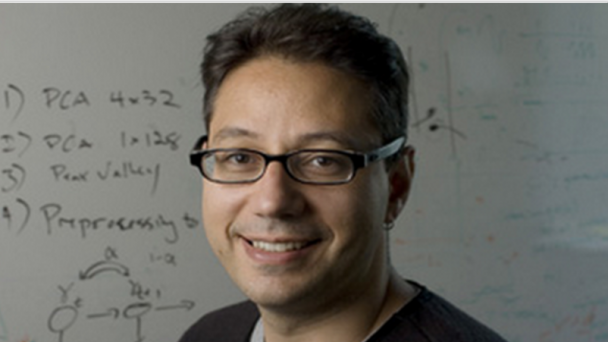
Seung is a multi-disciplinary expert whose research efforts have spanned the fields of neuroscience, artificial intelligence. physics and bioinformatics. His TED talk “I am my connectome” has been viewed more than 750,000 times. His book Connectome: How the Brain’s Wiring Makes Us Who We Are is considered by some as “the best lay book on brain science I’ve ever read.” Seung is also the organizer of the Citizens Science project/game called EyeWire.


Web Information

Lab website:  eunglab.org/

Wikipedia entry :  wikipedia.org/wiki/Sebastian_Seung

Twitter: twitter.com/sebastianseung 

Contact Information

E-mail:  sseung@princeton.edu

Address: 153 Princeton Neuroscience Institute Washington Road Princeton, NJ 08544
 

Biography

From Wikipedia entry

Hyunjune Sebastian Seung (Hangul: 승현준; hanja: 承現峻; is a Korean American multi-disciplinary expert whose research efforts have spanned the fields of neuroscience, physics and bioinformatics. He was a professor of Computational Neuroscience in the Department of Brain and Cognitive Sciences and a professor of Physics at the Massachusetts Institute of Technology and is now a professor at Princeton University. He also was an Investigator of the Howard Hughes Medical Institute. He is the son of the philosopher, T. K. Seung.

Seung studied theoretical physics at Harvard University where he obtained his Ph.D. degree ...

OnAir Post: Sebastian Seung, PhD – Princeton

Seung Lab – Princeton

Principal Investigator: Sebastian Seung Princeton Neuroscience Institute

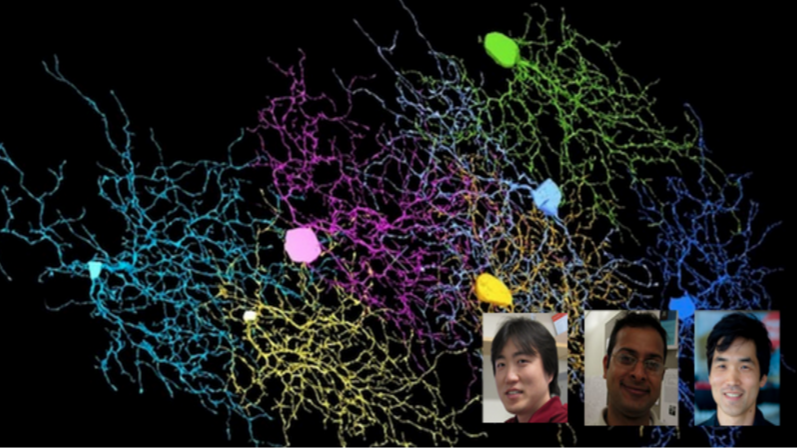
The Seung Lab uses techniques from machine learning and social computing to extract brain structure from light and electron microscopic images. EyeWire showcases our approach by mobilizing gamers from around the world to create 3D reconstructions of neurons by interacting with a deep convolutional network. The Seung Lab also develops computational methods for relating brain structure to function. Seung Lab is best known for our work on the reconstruction of neural circuits using serial electron microscopy.

EyeWire is a game that helps scientists map the brain. Image: EyeWire

Web Information

Website: http://seunglab.org/

Contact Information

E-mail: sseung@princeton.edu

Address: 153 Princeton Neuroscience Institute Washington Road Princeton, NJ 08544

Research

The Seung Lab uses techniques from machine learning and social computing to extract brain structure from light and electron microscopic images.  EyeWire showcases our approach by mobilizing gamers from around the world to create 3D reconstructions of neurons by interacting with a deep convolutional network.

The Seung Lab also develops computational methods for relating brain structure to function. To establish this relationship, we often reconstruct the connectivity of the same neurons after observation of their activity via two-photon imaging. We also classify neurons into cell types that have characteristic structural and functional properties. The latter approach was used to create a new model for how ...

OnAir Post: Seung Lab – Princeton

Neural circuit dynamics in working memory

Principal Investigator: Carlos D  Brody Princeton Neuroscience Institute Title: “Mechanisms of neural circuit dynamics in working memory” BRAIN Category: Understanding Neural Circuits (RFA NS-14-009)

Dr. Brody and his colleagues will study the underlying neuronal circuitry that contributes to short-term “working” memory, using tools to record circuit activity across many brain areas simultaneously while rodents run on a track-ball through virtual mazes projected onto a screen.

NIH Webpages

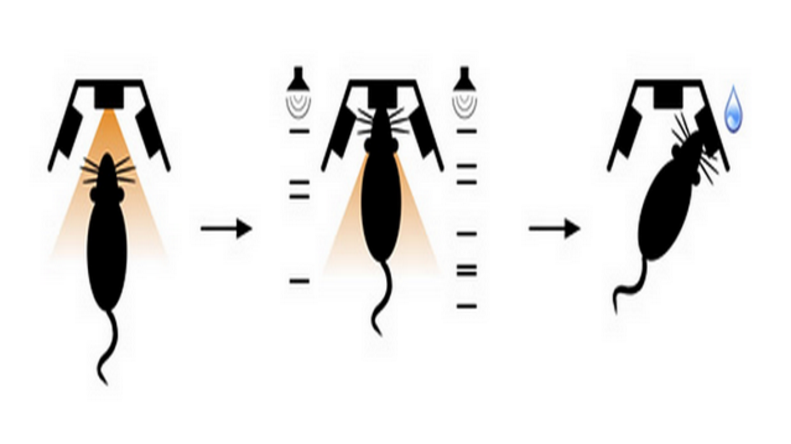
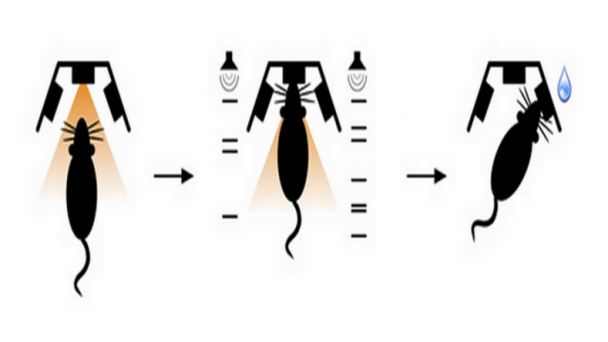
Figure: A decision-making task requiring accumulation of evidence over time. The capacity to gradually and steadily accumulate evidence favoring one choice or another is thought to be a core component of many different types of decision-making. In order to establish a rodent model of this cognitive process, we developed a task in which subjects hear simultaneously presented trains of randomly timed clicks, one train coming from a speaker to their left, the other from a speaker to their right. At the end of the trains, the subjects have to decide which side played the greater total number of clicks. We were able to train rats to perform this task, and to show that well-trained animals use a strategy of accumulating clicks over time. Having established a behavior that depends on gradual ...

OnAir Post: Neural circuit dynamics in working memory

Brodylab – Princeton

Principal Investigator: Carlos D  Brody Princeton Neuroscience Institute

Brodylab’s focus is on novel quantitative behaviors that allow exploring high-level cognitive questions using powerful emerging tools for studying neural mechanisms in rats. The lab now uses rats to investigate the neural bases of decision making, working memory and executive control using a combination of high-throughput semiautomated behavior as well as computational, electrophysiological, pharmacological and optogenetic methods.


Web Information

Website:  brodylab.org/ Brain Initiative Grant

Contact Information

Email: brody@princeton.edu Phone: (609) 258-7645 Address: Princeton University 119 Lewis Thomas Laboratory Washington Road Princeton, NJ 08544-1014

Research

What are we interested in?  Here’s an example: you’re browsing DVDs in a video store. You pick one up– you like it, perhaps you might buy it. But you’re not sure yet. You put it back down, and stroll down the aisle. You compare them; perhaps today you decide to buy the first DVD. What happened in your brain as you went through all this? What are the neural mechanisms that allow you to remember, for a few seconds, how much you liked the first DVD; to compare the two DVDs; to make a decision; to apply the rules of behavior appropriate for the context you’re in (here, a video store)? In other words, what are the neural mechanisms underlying our cognitive abilities? What ...

OnAir Post: Brodylab – Princeton

Carlos D Brody, PhD – Princeton


Professor of neuroscience and molecular biology, Princeton  Neuroscience Institute Howard Hughes Medical Institute Investigator Principal Investigator, Brodylab
Brody’s focus is on novel quantitative behaviors that allow exploring high-level cognitive questions. Brody’s group now uses rats to investigate the neural bases of decision making, working memory and executive control using a combination of high-throughput semiautomated behavior as well as computational, electrophysiological, pharmacological and optogenetic methods.

Web Information

Webpage: molbio.princeton.edu/faculty/molbio-faculty/142-brody HHMI page:  hhmi.org/scientists/carlos-d-brody Simons Foundation page: simonsfoundation.org/life-sciences/collaboration-on-the-global-brain/ Brain Initiative Grant

Contact Information

Email: brody@princeton.edu Phone: (609) 258-7645 Address: Princeton University 119 Lewis Thomas Laboratory Washington Road Princeton, NJ 08544-1014


Biography

Carlos Brody completed his Ph.D. in 1997, in computation and neural systems with John Hopfield at California Technical Institute. Starting in 2001, he led a computational neuroscience group as an assistant professor at Cold Spring Harbor Laboratory. Inspired by the efforts that Zachary Mainen’s and Anthony Zador’s experimental groups at Cold Spring Harbor Laboratory were making in developing highly controlled behaviors for rats, Brody added experimental approaches to his research portfolio. His focus is on novel quantitative behaviors that allow exploring high-level cognitive questions using powerful emerging tools for studying neural mechanisms in rats. Brody’s group now uses rats to investigate the neural bases of decision making, working memory and executive control using a ...

OnAir Post: Carlos D Brody, PhD – Princeton

Skip to toolbar