BU Neuroscience

Boston University is creating a new Center for Integrated Life Science and Engineering (CILSE) for interdisciplinary research which will bring together outstanding scientists and engineers from across the University to work collaboratively in the areas of neuroscience and biological design.

CILSE will comprise 170,000 square feet. Its core resources will include a shared equipment facility for Cognitive Neuroimaging. Three new research Centers will be launched including the Center for Systems Neuroscience and the Center for Sensory Communication and Neural Technology.


Web Information

BU Neuroscience Website:  http://www.bu.edu/neuro/

Graduate Program for Neuroscience:  http://www.bu.edu/neuro/graduate/

Center for Systems Neuroscience:  http://www.bu.edu/csn/

Center for Sensory Communication and Neural Technology (formerly CompNet):  http://compnet.bu.edu/


Contact Information

Director of Graduate Program for Neuroscience, Shelley Russek: srussek@bu.edu

Director of Center for Systems Neuroscience, Michael Hasselmo:  hasselmo@bu.edu

Director of Center for Sensory Communication and Neural Technology, Barbara Shinn-Cunningham: shinn@bu.edu


BU Neuroscience

The Neuroscience Mission of BU resonates with a shared belief that major discoveries will come from innovative thinking and an interdisciplinary community of faculty and students.

The broad range of neuroscience research at BU is coordinated through a unified community of investigators from multiple research groups of our Charles River and MED campuses.

Centers bridge the efforts of  individual laboratories and their leaders via scientific retreats, innovative workshops, and collaborative research grants that stimulate ...

OnAir Post: BU Neuroscience

Brandeis University

Brandeis University has a highly interactive research culture, with many cross-lab interactions and collaborations. This interactive culture begins with the rotation program: all first-year PhD students perform rotations in 4 research labs.

Brandeis has significant expertise in behavioral/cognitive neuroscience, cellular and molecular neuroscience, computational neuroscience and systems neuroscience (including the Sloan-Swartz Center for Theoretical Neuroscience), and developmental neuroscience.

Web Information

Website:   http://www.bio.brandeis.edu/grad/neuro/index.html BRAIN Grant – “Combining genetics, genomics, and anatomy to classify cell types across mammals”

Contact Information

Email: scigradoffice @ brandeis.edu Phone: (781) 736-2000 Address:415 South Street, Waltham, MA

Graduate Program

The Graduate Program in Neuroscience brings together students from a variety of intellectual backgrounds — including biology, computer science, chemistry, engineering, genetics, physics, and psychology — who conduct interdisciplinary research to understand the fundamental principles of the nervous system.

Students entering the Neuroscience Program at Brandeis have opportunities to work in a range of fields, including cognitive neuroscience in humans, neurophysiology in behaving animals, the physiology and theory of synapses and networks, the structure and function of ion channels, and the neurogenetics of behavior. Brandeis has significant expertise inbehavioral/cognitive neuroscience, cellular and molecular neuroscience, computational neuroscience and systems neuroscience (including the Sloan-Swartz Center for Theoretical Neuroscience), and developmental neuroscience.

Brandeis University is an ...

OnAir Post: Brandeis University

Columbia Neuroscience


Summary

Columbia Neuroscience is centered around the Kavli Institute for Brain Science and the Zuckerman Mind Brain Behavior Institute with 70 labs in 15 different departments.

Cumulatively, the Columbia neuroscience community of world-class neurobiologists generates more research funding than any other group in the country. Among them are two Nobel Prize winners, KIBS Director Eric Kandel  and KIBS Investigator Richard Axel; 11 Howard Hughes Medical Institute investigators; eight members of the National Academy of Sciences; and 13 members of the Institute of Medicine of the National Academies.


Information

Columbia Neuroscience/KIBS website: kavli.columbia.edu/ Zuckerman Mind Brain Behavior Institute websitezuckermaninstitute.columbia.edu/ Brain Initiative Grant –  “Developing drivers for neuron type-specific gene expression”

Emailkavli@columbia.edu Phone: 646-774-6830 Address:Kavli Institute for Brain Science Columbia University 1051 Riverside Drive, Unit 87 New York, NY 10032

Director: Eric Kandel


Mortimer B. Zucker­man Mind Brain Behavior Institute

Vision

The mechanisms of the brain, the workings of the mind, the complexities of human behavior—these are the challenges that define the scientific frontier for the Mortimer B. Zucker­man Mind Brain Behavior Institute.

The past 30 years have revolutionized our understanding of the biology of the brain, as new methods and tools have been used to explore the structure of its component neurons and circuits. Unraveling the details of how these neuronal networks function ...

OnAir Post: Columbia Neuroscience

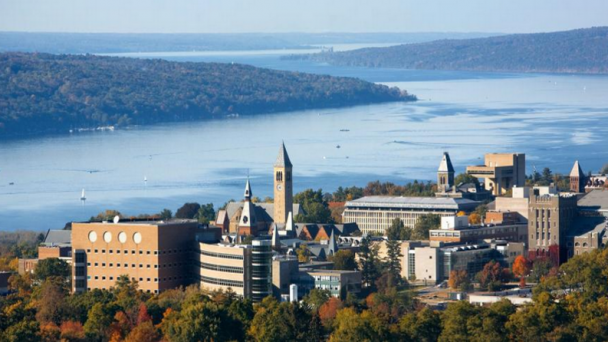
Cornell University Neuroscience

Neuroscience at Cornell University, Ithaca campus, emphasizes an integrated and interdisciplinary approach. The Program in Neuroscience spans several graduate fields and includes faculty affiliated with many departments.

Faculty researcg encompasses neuroscience from human cognition to biophysics, including diverse experimental and computational approaches using a variety of model organisms. Graduate students acquire expertise in their primary disciplines while cultivating a broader understanding of the bigger picture.

Web Information

Website:  neuroscience.cornell.edu/index.html  Neuroscience at Weill Cornell:  http://neuroscience.med.cornell.edu/ BRAIN Grant – “Optimization of 3-photon microscopy for Large Scale Recording in Mouse Brain”

Contact Information

Emailkathie.ely@cornell.edu Phone: (607)254-4351 Address: Cornell University, W111 Mudd Hall, Ithaca, NY 14853

Faculty

About the Program

At the heart of neuroscience is the study of systems. Molecular mechanisms of transcriptional regulation underlie persistent synaptic plasticity and thereby mediate learning and memory. Decoding the information content of spike trains requires an understanding of the higher-order architectures of the neural circuits in which they are embedded. The adaptations of sensory systems to efficiently encode and interpret natural scenes reflect the species’ ecological niche and evolutionary descent. The analysis of cognitive processes depends on understanding the allocation of metabolic resources, from adenosine triphosphate to selective attention. The larger questions in neuroscience require an integrated approach.

Neuroscience at Cornell University, Ithaca campus, emphasizes an ...

OnAir Post: Cornell University Neuroscience

Harvard Neuroscience

The Program in Neuroscience draws together neuroscientists from across Harvard. The physical home base of the program is located at the Longwood Campus of Harvard Medical School, in the Department of Neurobiology.

Research sites include the Longwood Medical Area, Cambridge Campus, Massachusetts General Hospital, and the McLean Hospital. The Center for Brain Science unites many neuroscience labs and houses in the newly established Swartz Program in Theoretical Neuroscience.

Web Information

Website: dms.hms.harvard.edu/neuroscience/prospective/AboutPIN Research Sites: dms.hms.harvard.edu/neuroscience/prospective/ResearchSites Brain Initiative Grant – “Comprehensive Classification Of Neuronal Subtypes By Single Cell Transcriptomics” BRAIN Initiative Grant– “Magnetic Particle Imaging (MPI) for Functional Brain Imaging in Humans” BRAIN Initiative Grant– “Mapping neuronal chloride microdomains” Brain Initiative Grant– “Neural circuits in zebrafish: form, function and plasticity”

Contact Information

Email: karen_harmin@hms.harvard.edu Phone: (617) 432-0912 Address: Program in Neuroscience Harvard Medical School 220 Longwood Avenue Goldenson 129 Boston, MA 02115

About the Program in Neuroscience

Mission Statement: We are an inter-departmental Ph.D. program for training in neuroscience. Our mission is to provide students with the instruction, research experience, and mentoring they need to become leaders in research and education.

Who we are: The Program in Neuroscience draws together neuroscientists from across Harvard. The physical home base of the program is located at the Longwood Campus of Harvard Medical School, in the Department of Neurobiology. Most coursework occurs at this campus, ...

OnAir Post: Harvard Neuroscience

MIT Neuroscience

MIT has numerous academic and research programs related to neuroscience. Key institutions include the Department of Brain, and Cognitive Sciences, Department of Biological Engineering, and the MIT Media Lab.

Important neuroscience related centers include: Center for Neurobiological Engineering (CNBE); McGovern Institute Neurotechnology (MINT) program; Simons Center for the Social Brain (SCSB); Synthetic Biology Center;Picower Center for Learning and Memory; and the Martinos Imaging Center at MIT.

Grant Information

Brain Initiative Grant – “Advancing MRI & MRS Technologies for Studying Human Brain Function and Energetics” Brain Initiative Grant – “Novel technologies for nontoxic transsynaptic tracing”“Novel technologies for nontoxic transsynaptic tracing” Brain Initiative Grant – “Ultra-Multiplexed Nanoscale In Situ Proteomics for Understanding Synapse Types” Brain Initiative Grant – “Calcium sensors for molecular fMRI” Brain Initiative Grant – “Next generation high-throughput random access imaging, in vivo” Brain Initiative Grant – “Cortical circuits and information flow during memory-guided perceptual decisions”

Department of Brain and Cognitive Sciences

Undergraduate program

Graduate program

Postdoctoral Program

Open Courseware

People

48 faculty members,over 200 graduate & undergraduate students, 180 researchers and post-docs and 36 staff

Department Head: James Dicarlo, PhD

Department of Biological Engineering

Academic Programs

Faculty

MIT Media Lab

Research

People

Research Centers 

Center for Neurobiological Engineering (CNBE)

OnAir Post: MIT Neuroscience

Yale Neuroscience


Summary

Yale University’s neuroscience research and academic programs are located in the Faculty of Arts and Science and the School of Medicine. 

The interdisciplinary research programs of Yale neuroscience faculty are central to Yale’s Interdepartmental Neuroscience Program (INP). Other major groups are the Kavli Institute for Neuroscience which awards grants to Yale faculty to support new research initiatives and the Center for Neuroscience and Regenerative Research which is dedicated to molecular and cell-based discoveries.

Information

Interdepartmental Neuroscience Program website: medicine.yale.edu/neuroscience Kavli Institute for Neuroscience website:  kavli.yale.edu/research Center for Neuroscience and Regenerative Research website: medicine.yale.edu/cnrr/ BRAIN Initiative Grant– “Development of Protein-based Voltage Probes” BRAIN Initiative Grant – “A Novel Approach for Cell-Type Classification and Connectivity in the Human Brain” BRAIN Initiative Grant – Three Dimensional Holography for Parallel Multi-target Optogenetic Circuit Manipulation”


Interdepartmental Neuroscience Program

The interdisciplinary research programs of Yale neuroscience faculty are central to Yale’s Interdepartmental Neuroscience Program (INP). This unique, broad-based training program can best be described as a “department without walls,” with the primary purpose of providing students with a maximum of diversity and depth in the most important areas of neuroscience research.


Academics

The interdisciplinary research programs of Yale neuroscience faculty are central to Yale’s Interdepartmental Neuroscience Program (INP). This unique, broad-based training program can best be described as ...

OnAir Post: Yale Neuroscience

Rockefeller University

Centered around 76 cutting-edge laboratories working in a broad range of fields, The Rockefeller University fosters a collaborative research environment for its faculty and provides an innovative educational experience for its outstanding graduate students and postdoc researchers.

To help reduce artificial barriers and provide its investigators with the greatest degree of freedom, Rockefeller does not have academic departments. As a result, the university is not constrained to perform research in any particular field and can recruit the most accomplished and gifted investigators across a wide spectrum of disciplines in the sciences.

Web Information

Website: rockefeller.edu/ Wikipedia Entry: wiki/Rockefeller_University Brain Initiative Grant – “Remote regulation of neural activity”

Contact Information

Email: contacts Phone: 212-327-8000 Address: The Rockefeller University | 1230 York Avenue, New York, NY 10065

Fisher Center for Alzheimer’s Disease Research

The Fisher Center is a nexus for Alzheimer’s disease research at Rockefeller. The center’s scientists use state-of-the-art technologies to expand and accelerate Alzheimer’s research and lay the foundation for new treatment strategies.

The center’s investigations build on Alzheimer’s studies conducted in Rockefeller University labs, particularly research focused on how the cells of the brain process the amyloid precursor protein (APP). Faulty regulation of APP processing — in which APP is chopped into smaller pieces during normal brain cell ...

OnAir Post: Rockefeller University

UMass Amherst Neuroscience

The Neuroscience and Behavior Program at UMass Amherst is an interdepartmental graduate degree-granting academic unit that brings together faculty members from various departments to provide cutting-edge research training.

Neuroscience research at UMass Amherst falls within five broadly defined areas: Neuroendocrinology; Molecular and Cellular Neuroscience; Animal Behavior and Learning; Neural and Behavioral Development; and Sensorimotor, Cognitive, and Computational Neuroscience.

Web Information

Neuroscience and Behavior Program: https://www.umass.edu/neuro/


Neuroendocrinology

This nationally recognized group of faculty has formed a Center for Neuroendocrine Studies, which emphasizes interdisciplinary and collaborative studies on the interactions between hormones, brain function, and behavior. Current research interests include hormones and neuronal development, regulation of neuroendocrine cells and behavior, circadian rhythms, environmental endocrine disruptors, stress, and neuronal integration of experiential, metabolic, and hormonal signals. There is particular emphasis on reproductive neuroendocrinology and the role of gonadal steroids in ovulation and female mating behavior and sexual differentiation


Molecular and Cellular Neuroscience

Faculty members within this area apply state-of-the-art molecular and genetic techniques to the analysis of neuronal function and development in a variety of model systems. Particularly noteworthy is a strong and highly interactive group using zebrafish as a model organism to investigate the molecular mechanisms of neural development and organization. Another major area of interest involves ...

OnAir Post: UMass Amherst Neuroscience

SUNY Stony Brook Neuroscience

SUNY Stony Brook  University’s Neurosciences Institute is comprised of multi-disciplinary teams of clinical and research professionals with more than 70 laboratories actively pursuing breakthroughs in neurobiology, stroke, multiple sclerosis, autism, alzheimer’s, spine and brain trauma, and behavioral neurosciences, to name a few.

The Stony Brook graduate program in Neuroscience, in the College of Arts and Sciences, offers doctoral training in neuroscience. Departments include Neurobiology and Behavior and Psychology.

Web Information

Neurosciences Institutehttp://neuro.stonybrookmedicine.edu/about

Graduate program in Neuroscience: https://www.grad.stonybrook.edu/brochure/neuro/

Department of Neurobiology and Behaviorhttp://medicine.stonybrookmedicine.edu/neurobiology/about

Department of Psychologyhttp://www.stonybrook.edu/commcms/psychology/

Neurosciences Institute

Biomedical Engineering 

Our faculty are involved in cutting-edge research in the areas of biomechanics, biomaterials, bioinstrumentation, molecular biomedical engineering, tissue engineering, medical imaging and biomedical modeling. This work ranges from quantifying the dynamics of the cell membrane, to the evaluation of therapeutics in the clinic and provides the student the opportunity to contribute to our understanding of the etiology of disease, as well as design new modes of treatment. Indeed, we are fully committed to bringing science from the bench-top to the bedside.

In 1997, the University became the manager for Brookhaven National Laboratory (BNL), one of our country’s strongest federal research labs. That the lab is 15 miles from campus, interactions have thrived. As might be expected, ...

OnAir Post: SUNY Stony Brook Neuroscience

NYU Neuroscience Institute

In 2011, The New York University School of Medicine established a new, state-of-the-art Neuroscience Institute, with special thanks to a $100M founding gift from the Druckenmiller Foundation.

The Institute leverages NYU’s excellence in both basic science and clinical medicine. By developing strategic links and fostering innovative collaborations, we are addressing some of society’s most challenging health care issues, from Alzheimer’s disease and epilepsy to multiple sclerosis, psychiatric disorders, and malignant brain tumors.

Web Information

Website: hmed.nyu.edu/neuroscience/ Brain Initiative Grant – “Behavioral readout of spatiotemporal codes dissected by holographic optogenetics”

Contact Information

Email: cordee01@nyumc.org Phone: 212-263-9119 Address: Alexandria Center for Life Science 450 East 29th St, 9th Floor New York, NY  10016

Administrative Coordinator: Eileen Cordero

Overview of the Neuroscience Institute

In 2011, The New York University School of Medicine established a new, state-of-the-art Neuroscience Institute, with special thanks to a $100M founding gift from the Druckenmiller Foundation.

The NYU Neuroscience Institute leverages NYU’s excellence in both basic science and clinical medicine. By developing strategic links and fostering innovative collaborations, we are addressing some of society’s most challenging health care issues, from Alzheimer’s disease and epilepsy to multiple sclerosis, psychiatric disorders, and malignant brain tumors. In the coming years, we will continue to recruit world-class faculty, students, and investigators who will work together with ...

OnAir Post: NYU Neuroscience Institute

Skip to toolbar