Institute for Brain Science @Columbia


The Kavli Institute for Brain Science at Columbia University probes the complex network of brain cells and their connections.

Led by Eric Kandel, M.D. (2000 Nobel laureate), and co-directors Thomas Jessell (2008 Kavli Prize laureate) and Rafael Yuste (Investigator, Howard Hughes Medical Institute), the Institute uses advanced imaging technology to observe neurons, synapses, and neural circuits as they develop and function, and as they respond to learning.


Web Information

Kavli web page: http://www.kavlifoundation.org/columbia-university

Institute for Brain Science website: http://kavli.columbia.edu/

About the Institute for Brain Science

From the Kavli web page

The Kavli Institute for Brain Science at Columbia University probes the complex network of brain cells and their connections. Led by Eric Kandel, M.D. (2000 Nobel laureate), and co-directors Thomas Jessell (2008 Kavli Prize laureate) and Rafael Yuste (Investigator, Howard Hughes Medical Institute), the Institute uses advanced imaging technology to observe neurons, synapses, and neural circuits as they develop and function, and as they respond to learning. Researchers examine the brain at the cellular, molecular, and systems level to understand how the nerve cells of neural circuits connect during development to control behavior, and how these neural circuits perform and are modified by learning and memory. As Kandel has noted, “[We need] more powerful tools to ...

OnAir Post: Institute for Brain Science @Columbia

Columbia Neuroscience


Summary

Columbia Neuroscience is centered around the Kavli Institute for Brain Science and the Zuckerman Mind Brain Behavior Institute with 70 labs in 15 different departments.

Cumulatively, the Columbia neuroscience community of world-class neurobiologists generates more research funding than any other group in the country. Among them are two Nobel Prize winners, KIBS Director Eric Kandel  and KIBS Investigator Richard Axel; 11 Howard Hughes Medical Institute investigators; eight members of the National Academy of Sciences; and 13 members of the Institute of Medicine of the National Academies.


Information

Columbia Neuroscience/KIBS website: kavli.columbia.edu/ Zuckerman Mind Brain Behavior Institute websitezuckermaninstitute.columbia.edu/ Brain Initiative Grant –  “Developing drivers for neuron type-specific gene expression”

Emailkavli@columbia.edu Phone: 646-774-6830 Address:Kavli Institute for Brain Science Columbia University 1051 Riverside Drive, Unit 87 New York, NY 10032

Director: Eric Kandel


Mortimer B. Zucker­man Mind Brain Behavior Institute

Vision

The mechanisms of the brain, the workings of the mind, the complexities of human behavior—these are the challenges that define the scientific frontier for the Mortimer B. Zucker­man Mind Brain Behavior Institute.

The past 30 years have revolutionized our understanding of the biology of the brain, as new methods and tools have been used to explore the structure of its component neurons and circuits. Unraveling the details of how these neuronal networks function ...

OnAir Post: Columbia Neuroscience

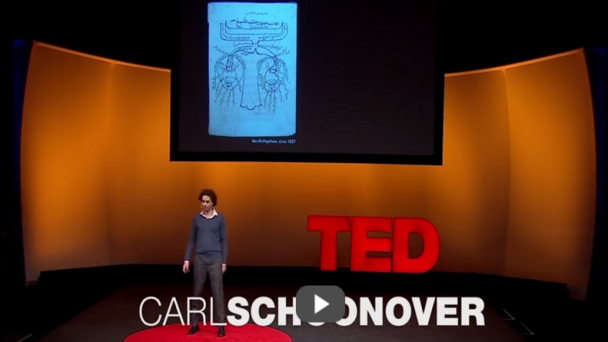
How to look inside the brain

https://www.youtube.com/watch?v=sYhMAjfdxD8Video can’t be loaded because JavaScript is disabled: How to look inside the brain – Carl Schoonover (https://www.youtube.com/watch?v=sYhMAjfdxD8)

There have been remarkable advances in understanding the brain, but how do you actually study the neurons inside it? Using gorgeous imagery, neuroscientist and TED Fellow Carl Schoonover shows the tools that let us see inside our brains.

Filmed February 2012 at TED 2012 Uploaded to YouTube on July 12, 2013 by TED

OnAir Post: How to look inside the brain

Larry Abbott, PhD – Columbia


William Bloor Professor of Neuroscience, Columbia University College of Physicians and Surgeons Member of BRAIN Multi-Council Working Group (NINDS council)

Dr. Abbott, trained as a physicist, joined Columbia in 2005 as co-director of the Center for Theoretical Neuroscience. Using computational modeling and mathematical analysis, Dr. Abbott explores how single neurons respond to synaptic inputs, how neurons interact in neural circuits, and how large networks of neurons represent, store, and process information.

Web Information

Columbia Webpage:  neurotheory.columbia.edu/~larry/

Contact Information

Email: lfabbott@columbia.edu

Phone: 646-774-7317

Address: Center for Neurobiology and Behavior Department of Physiology and Cellular Biophysics Columbia University College of Physicians and Surgeons Kolb Research Annex, Rm 759 1051 Riverside Drive New York, NY 10032


Biography

Dr. Abbott trained as a physicist and worked in theoretical particle physics at the Stanford Linear Accelerator Center, CERN, the European center for particle physics, and Brandeis. He began his transition to neuroscience research in 1989 and joined Columbia in 2005 as co-director of the Center for Theoretical Neuroscience.

Using computational modeling and mathematical analysis, Dr. Abbott explores how single neurons respond to synaptic inputs, how neurons interact in neural circuits, and how large networks of neurons represent, store, and process information in processes including olfaction, motor-pattern generation, and memory and decision-making.

Dr. Abbott is a faculty member in theNeuroscience and  Physiology & Cellular Biophysics departments at P&S and the ...

OnAir Post: Larry Abbott, PhD – Columbia

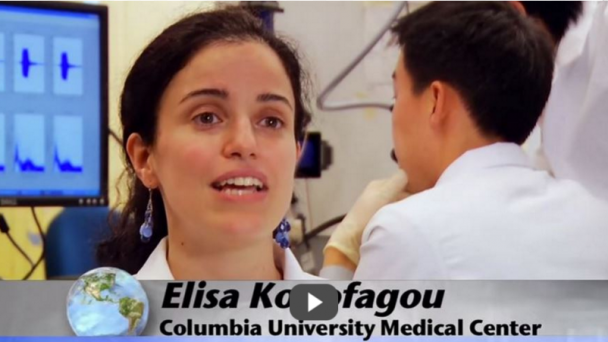
Ultrasound tech for degenerative diseases

https://www.youtube.com/watch?v=0ruQ7zU4yE0Video can’t be loaded because JavaScript is disabled: Ultrasound technology could treat degenerative brain diseases – Science Nation (https://www.youtube.com/watch?v=0ruQ7zU4yE0)

“Ultrasound technology could treat degenerative brain diseases”

Elisa Konofagou, a bioengineer at Columbia University, believes ultrasound technology could become be a vital component in treating and perhaps curing degenerative brain diseases such as Cancer, Alzheimer’s and Parkinson’s disease. One big problem associated with treating these diseases today is associated with the blood/brain barrier…a chemical shield of sorts that protects the brain against chemicals in the blood. Konofagou believes ultrasound waves could be one key to turning the blood/brain barrier on and off.

NSF BRAIN Initiative Science Nation – April 2, 2014

Description

Elisa Konofagou, a bioengineer at Columbia University, believes ultrasound technology could become be a vital component in treating and perhaps curing degenerative brain diseases such as Cancer, Alzheimer’s and Parkinson’s disease. One big problem associated with treating these diseases today is associated with the blood/brain barrier…a chemical shield of sorts that protects ...

OnAir Post: Ultrasound tech for degenerative diseases

Rafael Yuste, MD, PhD – Columbia


Summary

Professor, Biological Sciences and Neuroscience and Co-Director, Kavli Institute for Brain Science at Columbia University Member, Multi-Council Working Group (BRAIN Initiative) Member, Advisory Committee to the Director (NIH)

Dr. Yuste has pioneered the application of imaging techniques, such as calcium imaging of neuronal circuits, two-photon imaging, photostimulation using caged compounds and holographic spatial light modulation microscopy.


Information

Columbia/Kavli Webpage: kavli.columbia.edu/leadership/yuste Lab Webpage: columbia.edu/cu/biology/faculty/yuste/ Allen Institute Webpage: alleninstitute.org/our-institute/advisors/profiles/rafael-yuste/ Twitter:  @yusterafa

Email: rafaelyuste@columbia.edu Phone: 212-854-5023 Address: 901 NWC Building 550 West 120th Street New York, NY 10027

Research

The goal of Dr. Yuste’s research is to understand the function of the cortical microcircuit. The cortex constitutes the larger part of the brain in mammals. In humans it is the primary site of mental functions like perception, memory, control of voluntary movements, imagination, language and music. No accepted unitary theory of cortical function exists yet; nevertheless, the basic cortical microcircuitry develops in stereotyped fashion, is similar in different cortical areas and in different species, and has apparently not changed much in evolution since its appearance. At the same time, the cortex participates in apparently widely different computational tasks, resembling a “Turing machine”. Because of this, it is conceivable that a “canonical” cortical microcircuit may exist and implement a relatively simple, and flexible, computation.

We pursue the reverse-engineering of the ...

OnAir Post: Rafael Yuste, MD, PhD – Columbia

The pursuit of ignorance

“What does real scientific work look like? As neuroscientist Stuart Firestein jokes: It looks a lot less like the scientific method and a lot more like “farting around … in the dark.” In this witty talk, Firestein gets to the heart of science as it is really practiced and suggests that we should value what we don’t know — or “high-quality ignorance” — just as much as what we know”

Filmed February 2013 at TED 2013 Uploaded to YouTube on September 24, 2013 by TED 


TED Talks webpage

https://www.youtube.com/watch?v=nq0_zGzSc8gVideo can’t be loaded because JavaScript is disabled: Stuart Firestein: The pursuit of ignorance (https://www.youtube.com/watch?v=nq0_zGzSc8g)

“What does real scientific work look like? As neuroscientist Stuart Firestein jokes: It looks a lot less like the scientific method and a lot more like “farting around … in the dark.” In this witty talk, Firestein gets to the heart of science as it is really practiced and suggests that we should value what we don’t know — or “high-quality ignorance” — just as much as what we know”.

Filmed February 2013 at TED 2013 Uploaded to YouTube on September ...

OnAir Post: The pursuit of ignorance

Oliver Hobert, PhD – Columbia


Professor Biochemistry & Molecular Biophysics, Columbia Neuroscience HHMI Investigator Director, Hobert Lab

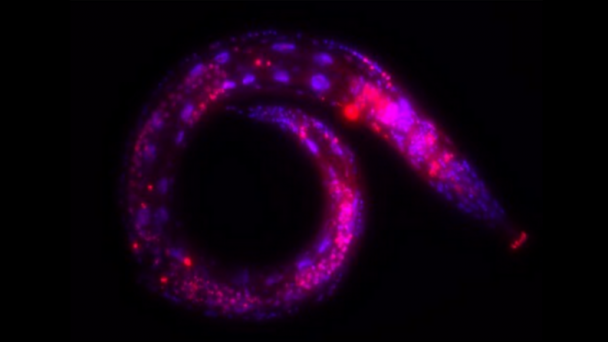
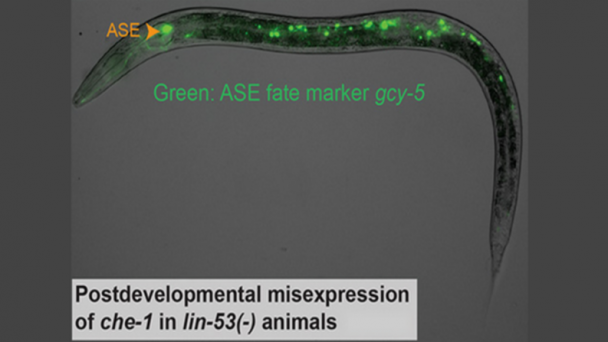
Oliver Hobert studies molecular mechanisms that control the generation of the enormous diversity of cell types in the nervous system. Using Caenorhabditis elegans as a model system, his laboratory decodes genomic cis-regulatory information of gene batteries expressed in specific neuronal cell types and identifies trans-acting factors that act at various stages of neuronal development to impose specific terminal differentiation programs onto individual neuron types.

Web Information

Webpage:   columbia.edu/cu/biology/faculty-data/oliver-hobert/faculty HHMI profile: hhmi.org/research/how-build-nervous-system Brain Initiative Grant

Contact Information

Emailor38@columbia.edu Phone: (212) 305-0065 Address: 701 W. 168th St. HHSC 724 New York, NY 10032

Research

From HHMI page (see webpage above for videos)

How to Build a Nervous System

Oliver Hobert studies molecular mechanisms that control the generation of the enormous diversity of cell types in the nervous system. Using Caenorhabditis elegans as a model system, his laboratory decodes genomic cis-regulatory information of gene batteries expressed in specific neuronal cell types and identifies trans-acting factors that act at various stages of neuronal development to impose specific terminal differentiation programs onto individual neuron types.

The main focus of my laboratory is to understand the gene regulatory control mechanisms that generate the astounding diversity of cell types in the nervous system. We study this problem by ...

OnAir Post: Oliver Hobert, PhD – Columbia

Hobert Lab – Columbia

Principal Investigator: Oliver Hobert Columbia Neuroscience

The main focus of the laboratory is to understand the molecular mechanisms that generate the astounding diversity of cell types in a nervous system. Using the C.elegans model system, they have revealed a core regulatory logic for how terminal neuronal identity is controlled in several different neuron types and have demonstrated that these regulatory mechanisms are conserved in chordates.

Web Information

Website:   hobertlab.org/  Brain Initiative Grant

Contact Information

Emailor38@columbia.edu Phone: (212) 305-0065 Address: 701 W. 168th St. HHSC 724 New York, NY 10032

Research

The main focus of the laboratory is to understand the molecular mechanisms that generate the astounding diversity of cell types in a nervous system. Using the C.elegans model system, we have revealed a core regulatory logic for how terminal neuronal identity is controlled in several different neuron types [1-6]. We have demonstrated that these regulatory mechanisms are conserved in chordates [4, 5]. These insights have allowed us to reprogram the identity of heterologous cell types to that of specific neuron types [7, 8]. Venturing into a little explored area of neuronal diversification, we have developed a novel paradigm to study asymmetry across the left/right axis [9, 10], by far the least understood axis in any nervous system, and identified a complex ...

OnAir Post: Hobert Lab – Columbia

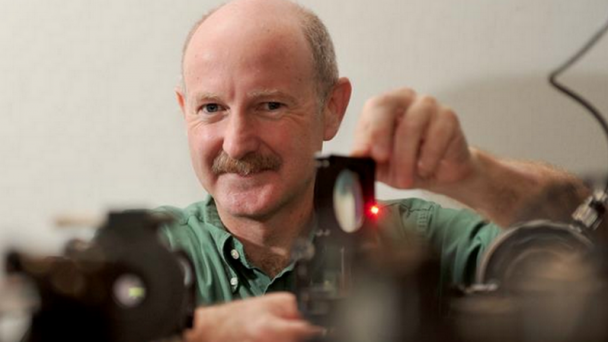
NIH Neuroscience Seminar- March 23, 2015

Larry Abbott

Summary

TITLE: Learning to Predict: Studies of Neural Circuits in Fish and Flies

AUTHOR: Larry Abbott, Ph.D., Columbia University

TIME: , 12:00:00 PM  DATE: Monday, March 23, 2015

PLACE: Porter Neuroscience Research Center

HOST: Bruno Averbeck

Abstract

Reacting properly to sensory inputs and knowing the potential consequences of an action is crucial to survival. An animal needs to know what sights, sounds and smells lead to a dangerous or advantageous situation, and how their actions will impact the likelihood of receiving an award, or put them in a perilous situation.

In his lecture, Abbott will discuss research into two neural circuits: one that allows flies to interpret the implications of different odors, and another that predicts the consequences of motor actions in an electric fish. This research provides key insights into understanding how the brain computes and allows for the construction of predictive models of brain function.

Abbott received his Ph.D. in physics at Brandeis University in 1977 and spent 10 years working in theoretical particle physics. His research in neuroscience involves the mathematical modeling and analysis of neurons and neural networks using analytic techniques and computer simulations to show how populations of neurons interact to produce functional circuits with the goal of determining the ...

OnAir Post: NIH Neuroscience Seminar- March 23, 2015

Drivers for neuron gene expression

Principal Investigator: Oliver Hobert Columbia Neurosciencez Title: “Developing drivers for neuron type-specific gene expression” BRAIN Category: (RFA MH-14-216) 

Dr. Hobert and colleagues will create a highly selective technology for experimentally manipulating genes in neurons, by tapping into the regulatory machinery of individual cell types.

NIH Webpages


Project Description

Driver lines that direct Cre protein to specific neuron types have proven to be invaluable tools to not only visualize specific neuron types but also to manipulate their activity through the Cre- mediated activation of optogenetic probes or to assess gene function by Cre-mediated gene knockout. Most Cre driver lines, such as BAC-based Cre drivers or knock-ins of Cre into specific loci, monitor the complete expression pattern of entire genetic loci. However, very few genes are exclusively expressed in very small populations of specific neuron types and this lack of cellular specificity limits the use of these driver lines. W propose here to develop transgenic mouse driver lines that direct Cre expression to very restricted numbers of neuronal cell types in different regions of the mouse brain, thereby providing tools to precisely map their function and molecular composition. To achieve this aim, we aim to test the hypothesis – built from our past work in the nematode C.elegans – that ...

OnAir Post: Drivers for neuron gene expression

Skip to toolbar