Cornell University Neuroscience

Neuroscience at Cornell University, Ithaca campus, emphasizes an integrated and interdisciplinary approach. The Program in Neuroscience spans several graduate fields and includes faculty affiliated with many departments.

Faculty researcg encompasses neuroscience from human cognition to biophysics, including diverse experimental and computational approaches using a variety of model organisms. Graduate students acquire expertise in their primary disciplines while cultivating a broader understanding of the bigger picture.

Web Information

Website:  neuroscience.cornell.edu/index.html  Neuroscience at Weill Cornell:  http://neuroscience.med.cornell.edu/ BRAIN Grant – “Optimization of 3-photon microscopy for Large Scale Recording in Mouse Brain”

Contact Information

Emailkathie.ely@cornell.edu Phone: (607)254-4351 Address: Cornell University, W111 Mudd Hall, Ithaca, NY 14853

Faculty

About the Program

At the heart of neuroscience is the study of systems. Molecular mechanisms of transcriptional regulation underlie persistent synaptic plasticity and thereby mediate learning and memory. Decoding the information content of spike trains requires an understanding of the higher-order architectures of the neural circuits in which they are embedded. The adaptations of sensory systems to efficiently encode and interpret natural scenes reflect the species’ ecological niche and evolutionary descent. The analysis of cognitive processes depends on understanding the allocation of metabolic resources, from adenosine triphosphate to selective attention. The larger questions in neuroscience require an integrated approach.

Neuroscience at Cornell University, Ithaca campus, emphasizes an ...

OnAir Post: Cornell University Neuroscience
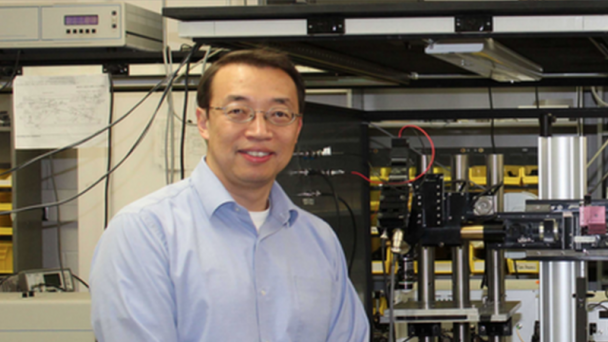
Chris Xu, PhD – Cornell

Xu's research has two main thrusts: biomedical imaging and fiber optics. He is exploring new concepts and techniques for in vivo imaging deep into scattering biological specimens, such as mouse brain; developing new medical endoscopes for non-invasive real-time diagnostics of tissues without any exogenous contrast agent and novel optical fibers and fiber-based devices for biomedical imaging and optical communications.

OnAir Post: Chris Xu, PhD – Cornell

Xu Research Group – Cornell

Principal Investigator, Chris Xu Cornell University

Xu Research Group has two main thrusts: biomedical imaging and fiber optics. The Group is exploring new concepts and techniques for in vivo imaging deep into scattering biological specimens, such as mouse brain; developing new medical endoscopes for non-invasive real-time diagnostics of tissues without any exogenous contrast agent and novel optical fibers and fiber-based devices for biomedical imaging and optical communications.

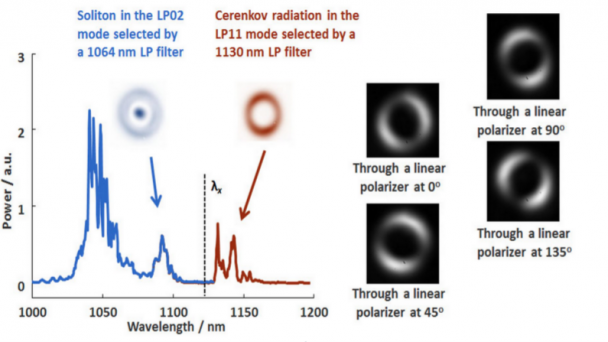
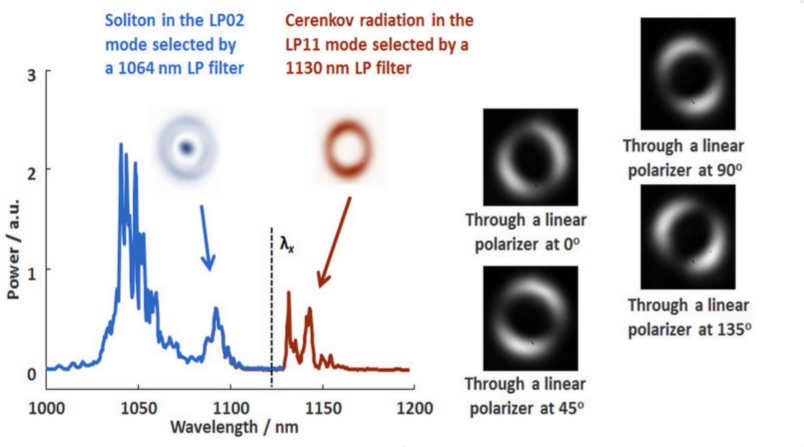
Nonlinear Optics in Higher-order-mode Fibers. Xu Research Group

Web Information

Website:  http://xu.research.engineering.cornell.edu/ Brain Initiative Grant

Contact Information

EmailCX10@cornell.edu Phone: 607 255-1460 Address: 276 Clark Hall:

Research

    Our research has two main thrusts: biomedical imaging and fiber optics. We are exploring new concepts and techniques for in vivo imaging deep into scattering biological specimens, such as mouse brain. We are developing new medical endoscopes for non-invasive real-time diagnostics of tissues without any exogenous contrast agent. We are developing novel optical fibers and fiber-based devices for biomedical imaging and optical communications.

Biomedical Imaging

Deep Imaging in Scattering Biological Tissue Laser scanning multiphoton microscopy (MPM) has greatly improved the penetration depth of optical imaging and is proven to be well suited for a variety of imaging applications deep within intact or semi-intact tissues. Nonetheless, MPM ...

OnAir Post: Xu Research Group – Cornell

Optimization of 3-photon microscopy

Principal Investigator: Chris Xu Cornell University Title: “Optimization of 3-photon microscopy for Large Scale Recording in Mouse Brain” BRAIN Category: Large-Scale Recording-Modulation – Optimization (RFA NS-14-008)

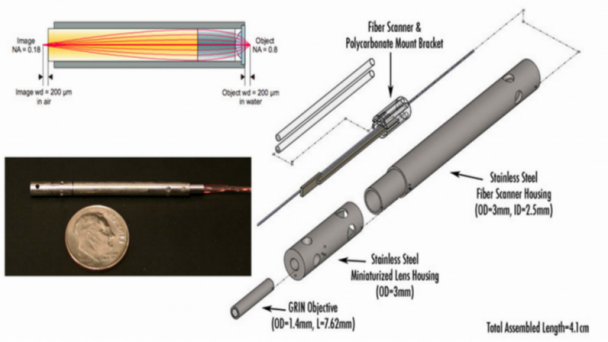
Dr. Xu and his collaborators will build new lasers and lenses to use three-photon microscopy to watch neuronal activity far deeper inside the brain than currently possible.

NIH Webpages

Project Description

The goal of this research program is to optimize three-photon fluorescence microscopy (3PM) for large scale, noninvasive, volumetric imaging of neuronal activity. To leverage the superb performance of green-fluorescent protein based genetically engineered Ca-probes (e.g., GCaMPs), 3PM at the 1300-nm spectral window will be developed, which not only preserves the tissue penetration capability of 3PM at the longer excitation wavelength but also enables a wide variety of blue and green fluorophores, including a number of fluorescent proteins and Ca-indicators, to be excitable via three-photon excitation. To improve the signal-to-noise ratio (SNR) so that a practical frame rate can be achieved for imaging dynamic brain activity even at a penetration depth of 1.1 mm or beyond, new objective lenses will be designed and fabricated that will collect the signal efficiently at depth. In additin, the lens design will also support convenient integration with adaptive optics (AO), with the goal of making ...

OnAir Post: Optimization of 3-photon microscopy

Skip to toolbar