NYU Neuroscience Institute

In 2011, The New York University School of Medicine established a new, state-of-the-art Neuroscience Institute, with special thanks to a $100M founding gift from the Druckenmiller Foundation.

The Institute leverages NYU’s excellence in both basic science and clinical medicine. By developing strategic links and fostering innovative collaborations, we are addressing some of society’s most challenging health care issues, from Alzheimer’s disease and epilepsy to multiple sclerosis, psychiatric disorders, and malignant brain tumors.

Web Information

Website: hmed.nyu.edu/neuroscience/ Brain Initiative Grant – “Behavioral readout of spatiotemporal codes dissected by holographic optogenetics”

Contact Information

Email: cordee01@nyumc.org Phone: 212-263-9119 Address: Alexandria Center for Life Science 450 East 29th St, 9th Floor New York, NY  10016

Administrative Coordinator: Eileen Cordero

Overview of the Neuroscience Institute

In 2011, The New York University School of Medicine established a new, state-of-the-art Neuroscience Institute, with special thanks to a $100M founding gift from the Druckenmiller Foundation.

The NYU Neuroscience Institute leverages NYU’s excellence in both basic science and clinical medicine. By developing strategic links and fostering innovative collaborations, we are addressing some of society’s most challenging health care issues, from Alzheimer’s disease and epilepsy to multiple sclerosis, psychiatric disorders, and malignant brain tumors. In the coming years, we will continue to recruit world-class faculty, students, and investigators who will work together with ...

OnAir Post: NYU Neuroscience Institute

Holographic optogenetics and olfactory coding

Principal Investigator: Dmitry Rinberg NYU Neuroscience Institute Title: “Behavioral readout of spatiotemporal codes dissected by holographic optogenetics” BRAIN Category: Understanding Neural Circuits (RFA NS-14-009)

Dr. Rinberg’s team aims to understand how the brain turns odors into nerve signals by activating and recording neurons in the olfactory bulbs of mice as they detect a variety of odors.

NIH Webpages

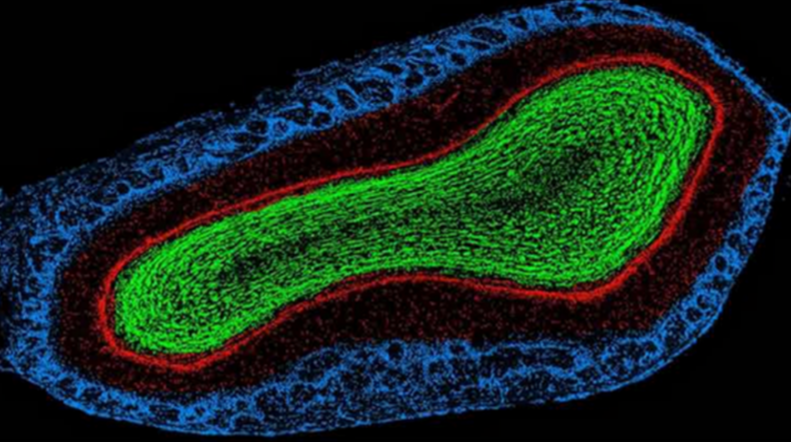
Scientists are now able to determine which receptors respond to certain odors in awake, freely behaving animals. This image is for illustrative purposes only and shows a coronal section through the main olfactory bulb of an adult male mouse. Credit Matt Valley.

Project Description

Two of the most fundamental questions of sensory neuroscience are: 1) how is stimulus information represented by the activity of neurons at different levels of information processing? And 2) what features of this activity are read by the higher brain areas to guide behavior? The first question has been the subject of a large body of work across different sensory modalities. To answer the second question, one needs to establish a causal link between neuronal activity and behavior. In many systems, fine spatiotemporal patterns of activity underlie the neural representation of information. In these systems, deciphering the salient ...

OnAir Post: Holographic optogenetics and olfactory coding

Rinsberg Lab – NYU

Rinsberg's lab has been focused on temporal aspects of olfactory coding. They recently discovered that a) olfactory neuronal code at the level of olfactory bulb is temporally very precise (~10 ms) [Shusterman-2011], and b) the mammalian olfactory system can read and interpret temporal patterns at this time scales [Smear-2011]. The lab's efforts are directed towards establishing causal connection between neuronal coding and animal behavior.

OnAir Post: Rinsberg Lab – NYU

Dmitry Rinsberg, PhD – NYU


Associate Professor, Department of Neuroscience & Physiology,NYU Neuroscience Institute Principal Investigator: Rinberg Lab

Rinsberg’s research uses electrophysiology, optogenetics, and psychophysics to understand the principles of the sensory information processing. Specifically we are focused on two questions: 1) how is odor information coded in the brain of the awake, behaving mouse? And 2) how is information relevant to animal behavior extracted by the brain? In short, we want to know what the mouse’s nose tells its brain.


Web Information

Webpage: neuro-physio.med.nyu.edu/faculty/Dmitry-rinberg Brain Initiative Grant

Contact Information

Email: Dmitry.Rinberg@nyumc.org Phone: 646-501-4535 Address: 450 East 29th St Room 935 East River Science Park New York, NY 10016


Biography

Research

Our lab is using electrophysiology, optogenetics, and psychophysics to understand the principles of the sensory information processing. Specifically we are focused on two questions: 1) how is odor information coded in the brain of the awake, behaving mouse? And 2) how is information relevant to animal behavior extracted by the brain? In short, we want to know what the mouse’s nose tells its brain.

Recently, our laboratory has been focused on temporal aspects of olfactory coding. We discovered that a) olfactory neuronal code at the level of olfactory bulb is temporally very precise (~10 ms) [Shusterman-2011], and b) the mammalian olfactory system can read and interpret temporal patterns at ...

OnAir Post: Dmitry Rinsberg, PhD – NYU

NIH Neuroscience Seminar- April 6, 2015

TITLE: Linking neuronal activity and gene expression: Ca nanodomains and long-range signaling

AUTHOR: Richard Tsien, D.Phil., NYU Neuroscience Institute

TIME: 12:00:00 PM  DATE: Monday, March 23, 2015

PLACE: Porter Neuroscience Research Center

Live NIH Videocast (archived after seminar)

Profile

Professor of Neuroscience and Director of NYU School of Medicine Neuroscience Institute

Webpages: tsienlab.med.nyu.edu/people/richard-tsien-d-phil 

med.nyu.edu/biosketch/richat04

About

Richard W. Tsien, DPhil, to Be Inaugural Director of New Neuroscience Institute and Druckenmiller Professor of Neuroscience

NYU Langone Medical Center announced today that it has appointed internationally renowned scientist and leader Richard W. Tsien, DPhil, as the first director of the Neuroscience Institute and the Druckenmiller Professor of Neuroscience, effective January 2012. Dr. Tsien—a member of both the Institute of Medicine and National Academy of Sciences and a former Rhodes Scholar—joins NYU Langone from Stanford University, where he currently serves as the George D. Smith Professor of Molecular and Genetic Medicine in the Department of Molecular and Cellular Physiology.

In 2009, NYU Langone Medical Center received a $100 million gift from the Druckenmiller Foundation to establish a state-of-the-art neuroscience institute and to provide for the recruitment and support of the highest caliber neuroscientists. The appointment of Dr. Tsien further reinforces NYU Langone’s existing strengths ...

OnAir Post: NIH Neuroscience Seminar- April 6, 2015

Skip to toolbar