Institute for Neuroscience @Yale


The Kavli Institute for Neuroscience at Yale University studies the neurobiological basis of human thought. Following a broad multidisciplinary strategy, it examines how the nerve cells and synaptic circuits of the cerebral cortex enable humans to learn about the outside world and to remember what they already have learned.

Toward this end, it fosters discussion and innovative research among Yale neuroscientists from multiple disciplines, enabling them to contribute novel ideas and approaches in research on cortical evolution, development, organization and function.


Web Information

Kavli Foundation web page: http://www.kavlifoundation.org/yale-university

Kavli Institute for Neuroscience website: http://medicine.yale.edu/neurobiology/kavli/

About Kavli Institute for Neuroscience

From the Kavli Foundation page

Founded in 2004, the Institute is directed by Pietro De Camilli, M.D., and vice-director David A. McCormick. The inaugural director was 2008 Kavli Prize laureate Pasko Rakic, M.D., Ph.D. It includes other Yale faculty members from disciplines such as neurobiology, cell biology, molecular physics and biochemistry, neurology, and developmental biology. Their research is focused on four themes:


Development and evolution of the cerebral cortex. How does the circuitry that supports the highest cognitive functions develop in each individual? Institute scientists seek answers to this question, one of the most fundamental in biology, by using highly advanced approaches of molecular genetic and ...

OnAir Post: Institute for Neuroscience @Yale

Yale Neuroscience


Summary

Yale University’s neuroscience research and academic programs are located in the Faculty of Arts and Science and the School of Medicine. 

The interdisciplinary research programs of Yale neuroscience faculty are central to Yale’s Interdepartmental Neuroscience Program (INP). Other major groups are the Kavli Institute for Neuroscience which awards grants to Yale faculty to support new research initiatives and the Center for Neuroscience and Regenerative Research which is dedicated to molecular and cell-based discoveries.

Information

Interdepartmental Neuroscience Program website: medicine.yale.edu/neuroscience Kavli Institute for Neuroscience website:  kavli.yale.edu/research Center for Neuroscience and Regenerative Research website: medicine.yale.edu/cnrr/ BRAIN Initiative Grant– “Development of Protein-based Voltage Probes” BRAIN Initiative Grant – “A Novel Approach for Cell-Type Classification and Connectivity in the Human Brain” BRAIN Initiative Grant – Three Dimensional Holography for Parallel Multi-target Optogenetic Circuit Manipulation”


Interdepartmental Neuroscience Program

The interdisciplinary research programs of Yale neuroscience faculty are central to Yale’s Interdepartmental Neuroscience Program (INP). This unique, broad-based training program can best be described as a “department without walls,” with the primary purpose of providing students with a maximum of diversity and depth in the most important areas of neuroscience research.


Academics

The interdisciplinary research programs of Yale neuroscience faculty are central to Yale’s Interdepartmental Neuroscience Program (INP). This unique, broad-based training program can best be described as ...

OnAir Post: Yale Neuroscience

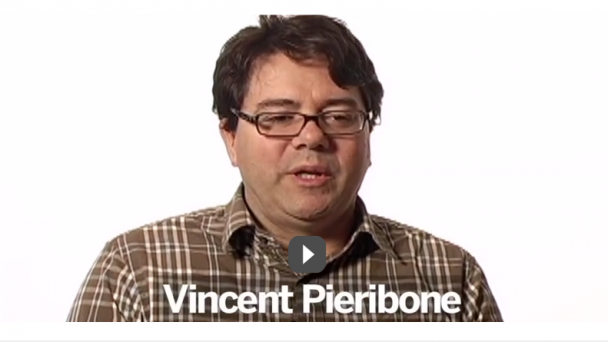
Big Think Interview With Vincent Pieribone

https://www.youtube.com/watch?v=zgZMyY27tfgVideo can’t be loaded because JavaScript is disabled: Big Think Interview With Vincent Pieribone | Big Think (https://www.youtube.com/watch?v=zgZMyY27tfg)

Vincent Pieribone Profile

Professor of Cellular and Molecular Physiology and of Neurobiology, Yale University Fellow, John B. Pierce Laboratory

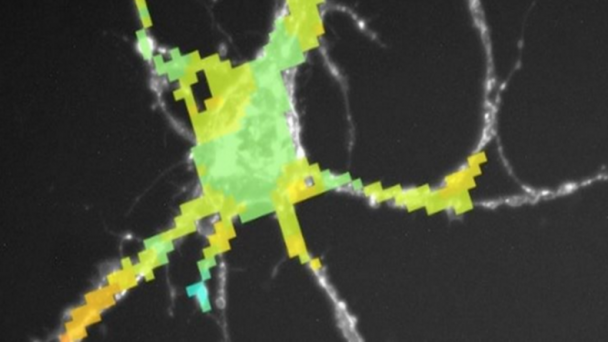
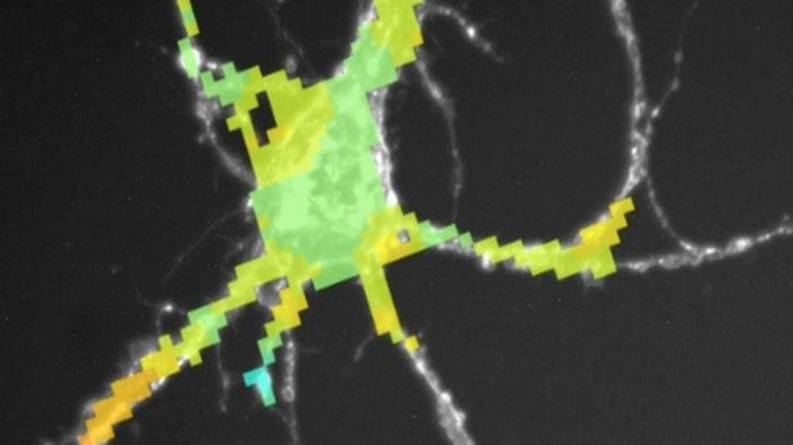
Dr Pieribone is developing genetically encoded fluorescent probes of membrane electrical potential. These probes allow one to use optical instruments (microscopes) to monitor the electrical activity of neurons. He has also engineered miniature imaging systems that can be head mounted on mammels and allow mobile recording of neuronal activity.

Video published on April 23, 2012 by Big Think

OnAir Post: Big Think Interview With Vincent Pieribone

Sestan Lab – Yale

Principal Investigator: Nenad Sestan Yale Neuroscience

The Sestan Lab’s research centers on understanding the molecular and cellular basis of how neurons acquire distinct identities and form proper synaptic connections in the cerebral cortex, a part of the brain that is critical for cognition, perception and behavior. The Lab also studies how these complex developmental processes have evolved and become compromised in human disorders, such as autism. An important element of our research is the integration of complementary approaches.


Web Information

Website:  medicine.yale.edu/lab/sestan/ BRAIN Initiative Grant – “A Novel Approach for Cell-Type Classification and Connectivity in the Human Brain”

Contact Information

Email: sestanlab@yale.edu Phone: 203.737.1435 Address: Sterling Hall of Medicine 333 Cedar Street, SHM C-316C New Haven, CT 06510

Research Interests

Our research centers on understanding the molecular and cellular basis of how neurons acquire distinct identities and form proper synaptic connections in the cerebral cortex, a part of the brain that is critical for cognition, perception and behavior. We also study how these complex developmental processes have evolved and become compromised in human disorders, such as autism. An important element of our research is the integration of complementary approaches that combines 1) analyses of evolutionarily conserved developmental mechanisms using the genetically tractable mouse model, 2) comparative genomic and cellular analyses of non-human primates and humans to identify human-specific features of ...

OnAir Post: Sestan Lab – Yale

Nenad Sestan, MD/PhD – Yale


Professor of Neurobiology, of Genetics and of Psychiatry, Yale University Director, Sestan Lab

Research Interests- the evolution and development of neuronal circuits of the human cerebral cortex. Research in the Sestan Lab investigates how neurons acquire distinct identities and form precise connections in the developing cerebral cortex, a part of the brain involved in a variety of higher cognitive, emotional, sensory, and motor functions. The Lab also studies how these developmental processes have changed during evolution and in human disorders.

Web Information

Webpage:  medicine.yale.edu/neurobiology/people/nenad_sestan.profile Yale Neuroscience BRAIN Initiative Grant – “A Novel Approach for Cell-Type Classification and Connectivity in the Human Brain”

Contact Information

Email: nenad.sestan@yale.edu Phone: (203) 737-2190 Address: Department of Neurobiology PO Box 208001 333 Cedar Street New Haven, CT 06520-8001


Biography

PhD Yale University School of Medicine (1999) MD University of Zagreb (1995)


Research Summary

Research in our laboratory investigates how neurons acquire distinct identities and form precise connections in the developing cerebral cortex, a part of the brain involved in a variety of higher cognitive, emotional, sensory, and motor functions. We also study how these developmental processes have changed during evolution and in human disorders. We study these problems for primarily two reasons. The first reason is to explore what it is about our brain that makes us human. The most important distinction between humans and other ...

OnAir Post: Nenad Sestan, MD/PhD – Yale

John B. Pierce Laboratory – Yale

The John B. Pierce Laboratory is a nonprofit, independent research institute that is formally affiliated with Yale University. The Laboratory has a long and distinguished history as a leading center for the study of physiological regulatory systems such as those that maintain body temperature, respiration, body fluids, and metabolism within healthy limits.

OnAir Post: John B. Pierce Laboratory – Yale

Vincent Allen Pieribone, PhD – Yale


Professor of Cellular and Molecular Physiology and of Neurobiology, Yale University Fellow, John B. Pierce Laboratory

Dr Pieribone is developing genetically encoded fluorescent probes of membrane electrical potential. These probes allow one to use optical instruments (microscopes) to monitor the electrical activity of neurons. He has also engineered miniature imaging systems that can be head mounted on mammels and allow mobile recording of neuronal activity.

Web Information

Webpage: medicine.yale.edu/bbs/people/vincent_pieribone-3 Fluorogenetic Voltage Sensors website:  fluorogenetic-voltage-sensors.org/ Yale Neuroscience Brain Initiative Grant

Contact Information

Email: vincent.pieribone@yale.edu Phone: (203) 562-9901 x214 Address: The John B. Pierce Laboratory 290 Congress Avenue New Haven, CT 06519


Biography

B.A. New York University, Washington Square University College, Biology and Chemistry, 1986

Ph.D. New York University, Graduate School, Washington Square, Neurobiology, 1992

Research Associate, The American Museum of Natural History Scientific Board of Directors, Mystic Aquarium and Center for Exploration

Research

Research Interests

The brain uses complex and highly parallel computational paradigms to process sensory information, create and retrieve memories, and execute motor actions. The unit of this computing network is the neuron and its attendant synaptic connections. The structure and physiology of the brain makes direct study of these structures in the living organisms very difficult – neurons and synapses are tiny, very delicate, and tightly packed. Our laboratory is dedicated to the study of how neuronal ...

OnAir Post: Vincent Allen Pieribone, PhD – Yale

Protein-based Voltage Probes

Principal Investigator: Vincent Allen Pieribone Yale Neuroscience Title: “Development of Protein-based Voltage Probes” BRAIN Category: Large-Scale Recording-Modulation – Optimization (RFA NS-14-008)

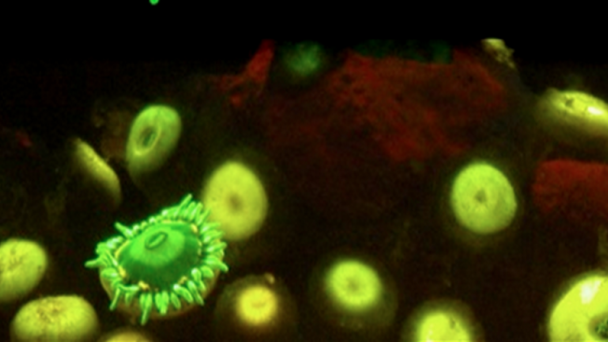
Dr. Pieribone and his team will optimize fluorescent voltage probe technology, to allow scientists to measure the activity of thousands of neurons using only a camera and a microscope.

NIH Webpages

Fluorogenetic Voltage Sensors. From website.

Project Description

The use of genetically encoded fluorescent activity probes represent the most advanced method to monitor the electrical activity of networks of neurons without using electrodes. While genetically encoded calcium indicators have been evolved to produce robust signals in a variety of different neuronal preparations, fluorescent probes of membrane potential have not been well evolved. Current voltage probes, while finally in expanded use, will need considerable improvement if the goal of recording the activity of a large number of neurons simultaneously in vivo is to be achieved. The goal of this project is to discover protein-based fluorescent voltage probes with signal to noise characteristics that allow routine optical recording of action potentials from single cortical neurons in vivo. We are seeking probes with significantly improved signal to noise characteristics, red-shifted fluorescence spectra, faster on and off rates and better plasma membrane expression. This ...

OnAir Post: Protein-based Voltage Probes

Cell-Type Classification in the Human Brain

Principal Investigator: Nenad Sestan Yale Neuroscience Title: “A Novel Approach for Cell-Type Classification and Connectivity in the Human Brain” BRAIN Category: Census of Cell Types (RFA MH-14-215)

Dr. Sestan’s group will substantially advance the profiling of cell types – their molecular identities and connections – made possible by a new method of better preserving brain tissue to maintain cell integrity.

NIH webpage


Project Description

The human brain is arguably the most complex biological structure. Understanding how many different cell types exist in the human brain and mapping neural connections are critical tasks to better understand the development and function of the brain. This is particularly challenging in the human brain due to inherent limitations of working with postmortem tissue. This grant is specifically addressing these tasks in the human brain as well as a closely related non-human primate, Rhesus macaque, and a commonly studied mammalian organism, the mouse. The objective of this proposal is to employ novel methods and approaches to generate a systematic inventory/census of cell types and connections in the developing and adult human, macaque monkey and mouse prefrontal cortex (PFC). We have chosen PFC for this project due both to its importance in higher cognitive functions as well as for the alterations observed in PFC ...

OnAir Post: Cell-Type Classification in the Human Brain

Skip to toolbar