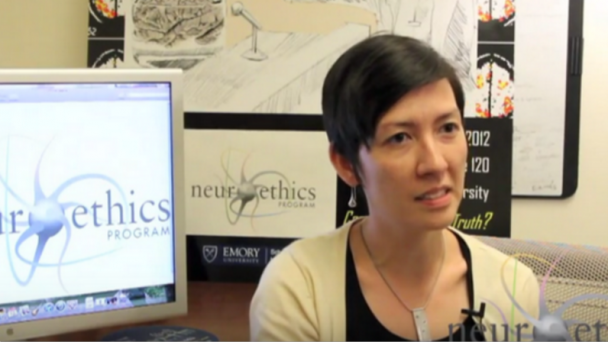
Karen Rommelfanger, PhD – Emory

Assistant Professor, Department of Neurology  at Emory University Secondary appointment, Department of Psychiatry Program Director, Emory’s  Neuroethics Program 

Dr. Rommelfanger’s current research explores the nature and utility of placebo using Psychogenic Movement Disorders as a therapeutic model. She is also the Neuroscience Editor-in-Residence for the American Journal of Bioethics Neuroscience.


Web Information

Emory web page: http://ethics.emory.edu/people/Faculty/Karen_Rommelfanger.html

Personal websitehttp://karenrommelfanger.com/

Neuroethics Bloghttp://www.theneuroethicsblog.com/

NEW Leaders website: http://neuroethicswomenleaders.com/

Contact Information

Email: krommel@emory.edu

Phone: (404) 727-1150

Address: 1531 Dickey Drive Atlanta, Georgia 30322

Biosketch

Karen Rommelfanger is the Neuroethics ProgramDirector at the Center for Ethics and an Assistant Professor in the Department of Neurology with a secondary appointment in the Department of Psychiatry and Behavioral Sciences. Dr. Rommelfanger received her PhD in Neuroscience from Emory University, her research focused on movement disorders. Her current research explores the nature and utility of placebo using Psychogenic Movement Disorders as a therapeutic model. She is also the Neuroscience Editor-in-Residence for the American Journal of Bioethics Neuroscience.

Dr. Rommelfanger has been a neuroscience researcher for over 10 years and her work has been published in high-impact peer-reviewed journals such as the Proceedings of the National Academy of Sciences, and the Journal of Neuroscience; her research on Parkinson Disease has been featured in the popular media including Scientific American. She has presented ...

OnAir Post: Karen Rommelfanger, PhD – Emory
Emory Neuroethics Program

The Emory University’s Neuroethics Program is an interdisciplinary, inter-departmental group of scholars interested in the intersection of neuroscience, ethics, and society.

The Program aims to become a center of excellence that informs responsible applications of neuroscience in research, the clinic, and society as well as engages and activates our community in neuroethics discourse.

Web Information

Neuroethics Program webpagehttp://www.ethics.emory.edu/pillars/health_sciences/neuroethics.html

The Neuroethics Bloghttp://www.theneuroethicsblog.com/

Twitter: @EmoryNeuroethic

Facebook pagefacebook.com/The-Neuroethics-Program-at-Emory-University

YouTube Channel:  https://www.youtube.com/user/EmoryNeuroethics/videos

Contact Information

Email: neuroethics@emory.edu

Phone number: 404.712.8307

Address: 1531 Dickey Drive Atlanta, Georgia 30322

Program Director: Karen Rommelfanger  (BRAIN 2015 profile)

Mission

Vision

The Neuroethics Program aspires to create and support a community of scholars to collaboratively explore the ethical and social implications of neuroscience and emerging neurotechnologies.

Mission

The Neuroethics Program has 3 primary initiatives:

Education and Outreach – Create innovative educational resources in neuroethics. – Disseminate neuroethics curricula and instructional materials to students, staff, and faculty at Emory and at other universities. – Provide fellowships and other opportunities for training and education in neuroethics. – Create public programs to educate the community about neuroethical issues.

Research and Scholarship – Promote innovative research at the intersection of neuroscience and ethics, and generate and disseminate scholarly interdisciplinary work. – Provide fellowships for doctoral research, and host conferences and workshops facilitating neuroethics discourse and scholarship.

Advising and Consulting – Provide neuroethics consultations for policy ...

OnAir Post: Emory Neuroethics Program

Skip to toolbar