UNC Neuroscience

The UNC Neuroscience Center is an interdepartmental research center at the UNC-Chapel Hill School of Medicine.

The mission of the Neuroscience Center is to promote neuroscience research that is innovative, collaborative and translational. The Center promotes this goal by bringing together researchers working on fundamental problems in basic and clinical neuroscience. By integrating work across the spectrum of neuroscience, we aim to advance our understanding of brain development and function, and to identify new therapeutic approaches to a broad range of neurological and psychiatric disorders.

Web Information

UNC Neuroscience Center website: med.unc.edu/neuroscience Behavioral Neuroscience Graduate Program: bnpsych.unc.edu/ BRAIN Initiative Grant – ” Dreadd2.0: An Enhanced Chemogenetic Toolkit”

Contact Information

Email:  admin info Phone: (919) 843-8536 Address: 8109 Neuroscience Research Building CB# 7250 115 Mason Farm Rd. Chapel Hill, NC 27599

About the UNC Neuroscience Center

The UNC Neuroscience Center is an interdepartmental research center at the UNC-Chapel Hill School of Medicine. The mission of the Neuroscience Center is to promote neuroscience research that is innovative, collaborative and translational. The Center promotes this goal by bringing together researchers working on fundamental problems in basic and clinical neuroscience. By integrating work across the spectrum of neuroscience, we aim to advance our understanding of brain development and function, and to identify new therapeutic approaches to a broad range ...

OnAir Post: UNC Neuroscience

Dreadd2.0: A Chemogenetic Toolkit

Principal Investigator: Bryan L Roth UNC Neuroscience Title: ” Dreadd2.0: An Enhanced Chemogenetic Toolkit” BRAIN Category: Tools for Cells and Circuits (RFA MH-14-216)

Dr. Roth and colleagues will build second generation technology that uses artificial neurotransmitters and receptors to manipulate brain activity simultaneously across select cells and pathways to understand their functions and potentially treat brain disorders.

NIH Webpages

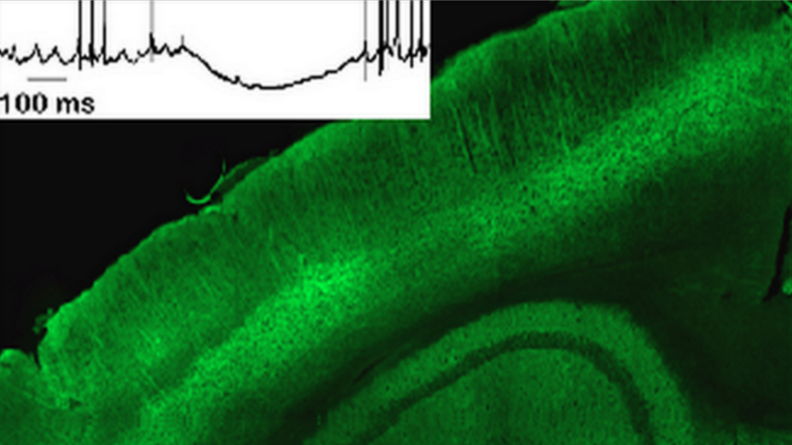
Roth’s Lab has pioneered the use of directed molecular evolution to create GPCRs which are suitable for remotely controlling cellular signaling. Using a variety of mouse genetic approaches (e.g. Cre-mediated recombination. they are able to control neuronal firing and non-neuronal signaling in real-time in awake, freely moving animals.Ongoing projects are to use this technology to deconstruct the neuronal requirements for simple and complex behaviors, particularly as they relate to schizophrenia and drug abuse

Project Description

The Brain Research through Advancing Innovative Neurotechnologies (BRAIN) Initiative has the ambitious goal of elucidating how neuronal ensembles interactively encode higher brain processes. To accomplish this goal, new and improved methods for both recording and manipulating neuronal activity will be needed. In this application, we focus on technologies for manipulating neuronal activity. The major significance of this application is that we will provide an enhanced chemogenetic toolbox that ...

OnAir Post: Dreadd2.0: A Chemogenetic Toolkit

Bryan Roth, MD/PhD – UNC

Professor. Department of Pharmacology, University of North Carolina Director, NIMH Psychoactive Drug Screening Program Director, Roth Lab

Roth studies all aspects of GPCR structure and function ranging from the atomic-level analysis of ligand-receptor interactions to in vivo studies. Currently we are focused on members of the serotonin (5-hydroxytryptamine; 5-HT) and opioid receptor families and their accessory proteins. Other goals are to discover and develop novel small molecule probes for in vitro and in vivo validation of molecular targets for therapeutic drug discovery.


Web Information

Webpage: med.unc.edu/pharm/people/primaryfaculty/bryan-roth-1 UNC Neuroscience BRAIN Initiative Grant – ” Dreadd2.0: An Enhanced Chemogenetic Toolkit”

Contact Information

Emailbryan_roth[at]med.unc.edu Phone: 919-966-7535 Address: 4072 Genetic Medicine UNC-CH School of Medicine Chapel Hill, NC 27599-7365

Biography

Carroll College, Helena MT BA 06/77 Biology and Chemistry St. Louis University Medical School, St. Louis, MO MD, PhD 06/83 Medicine and Biochemistry NIMH Lab of Preclinical Pharmacology, Washington, DC Postdoctoral Training 07/83-06/88 Pharmacology Stanford University Medical Center Psychiatry Residency 07/88-06/91 Psychiatry Nancy Pritzer Laboratory, Stanford University Fellowship

Research

Research Interests

GPCR Structure and Function Drug Discovery

Research Synopsis

GPCR structure and function

G-protein coupled receptors (GPCRs) represent one of the most evolutionarily diverse superfamilies of the human genome. My lab studies all aspects of GPCR structure and function ranging from the atomic-level analysis of ligand-receptor interactions to in vivo studies. Currently we are focused on members of the serotonin ...

OnAir Post: Bryan Roth, MD/PhD – UNC

Roth Lab – UNC

Principal Investigator: Bryan Roth UNC Neuroscience

Roth Lab studies the structure and function of G-Protein coupled receptors (GPCRs). Roth Lab is part of the Department of Pharmacology, a research department in the School of Medicine at the University of North Carolina at Chapel Hill. The Roth lab is the principal contractor for the NIMH Psychoactive Drug Screening Program which includes the PDSP Ki database.

Serotonin receptor neurobiology: Since 1984, my lab has studied serotonin (5-hydroxytryptamine; 5-HT) and its receptors. Recently we have been focused on targeting and trafficking of 5-HT2-family receptors . Ongoing projects are directed to using mouse genetics to delineate the roles of accessory proteins and post-translational modifications in 5-HT receptor actions.

Web Information

Website:  pdspdb.unc.edu/rothlab/ BRAIN Initiative Grant – ” Dreadd2.0: An Enhanced Chemogenetic Toolkit”

Contact Information

Email: estelalopez@unc.edu Phone: 919-966-7535 Address: 4072 Genetic Medicine UNC-CH School of Medicine Chapel Hill, NC 27599-7365

Research

The Roth lab perfected the chemogenetic technology we have named “DREADD” (Designer Receptor Exclusively Activated by Designer Drugs; Armbruster et al, 2007). DREADD technology has afforded 100’s of labs world-wide the opportunity to discover how cell-type specific modulation of signaling is translated into behavioral and non-behavioral outcomes (see Urban and Roth, Ann Rev Pharmacol Toxicol 2015 for recent review)

The Roth lab continues to enhance ...

OnAir Post: Roth Lab – UNC

Skip to toolbar