UCSD Neuroscience


Summary

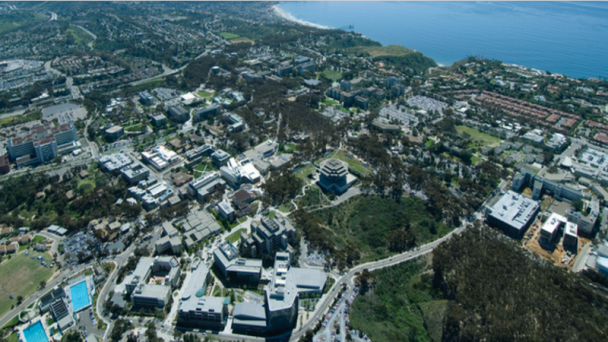
The University of California at San Diego (UCSD) leads the nation as the top neurosciences department in National Institutes of Health (NIH) funding.

With about 120 faculty members, UC San Diego’s Neuroscience department is among the nation’s largest. The program’s labs, medical centers and clinics are located in the heart of the San Diego life sciences district. There are many research centers at UCSD including Kavli Institute for Brain and Mind; Swartz Center for Computational Neuroscience; and Research in Neuroscience at UC San Diego School of Medicine.


Information

Website: ucsd.edu/ Kavli Institute for Brain and Mind: kavlifoundation.org/university-california-san-diego Swartz Center for Computational Neuroscience: http://sccn.ucsd.edu/index.html Research in Neuroscience at UC San Diego School of Medicine: neurosciences.ucsd.edu/research/Pages/default.aspx Wikipedia Entry: wiki/University_of_California,_San_Diego BRAIN Initiative Grant – “Revealing the connectivity and functionality of brain stem circuits” Brain Initiative Grant– “Classifying Cortical Neurons by Correlating Transcriptome with Function” BRAIN Initiative Grant Optogenetic mapping of synaptic activity and control of intracellular signaling”


Research in Neuroscience at UC San Diego School of Medicine

UC San Diego leads the nation as the top neurosciences department in National Institutes of Health (NIH) funding.

With about 120 faculty members, UC San Diego’s Neuroscience department is among the nation’s largest. The program’s labs, medical centers and clinics are located in the heart of the ...

OnAir Post: UCSD Neuroscience
Stanford Neurosciences Institute


Summary

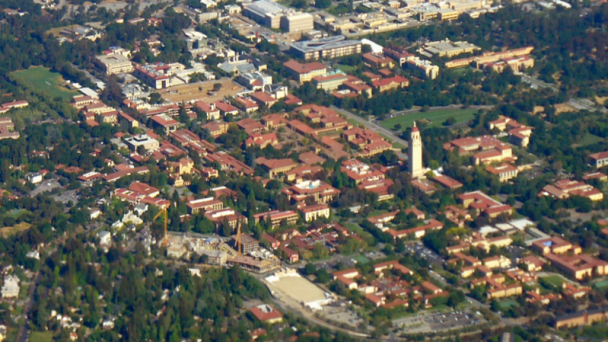
The goal of the Stanford Neurosciences Institute is to understand how the brain gives rise to mental life and behavior.

The Institute’s interdisciplinary community of scholars will draw from a multiplicity of disciplines, including neuroscience, medicine, education, law and business.  Their discoveries aim to remodel understanding of brain function, individuals, and society, enabling positive change and enhancing human potential. Current research themes: The Changing Brain, Cracking the Neural Code, Enhancing the Brain, Understanding Thought, and How We Learn.

https://www.youtube.com/watch?v=v9s6W77jHHAVideo can’t be loaded because JavaScript is disabled: Cracking the Neural Code (https://www.youtube.com/watch?v=v9s6W77jHHA)

Information

Website:  neuroscience.stanford.edu/ Brain Initiative Grant – “Protein voltage sensors: kilohertz imaging of neural dynamics in behaving animals”

Email: neuroscience@stanford.edu Phone: 650-497-8019 Address: James H. Clark Center 318 Campus Drive, Suite S170 Stanford, CA 94305-5443

Organization

Director: William T. Newsome


About Us

Our Mission

The goal of the Stanford Neurosciences Institute is to understand how the brain gives rise to mental life and behavior, both in health and in disease. Our research community draws from and informs multiple disciplines, including neuroscience, medicine, engineering, psychology, education and law. New discoveries will transform our understanding of the human brain, provide novel treatments for brain disorders, and promote brain health throughout the lifespan. We aim to create positive benefits ...

OnAir Post: Stanford Neurosciences Institute

UCSF Neuroscience

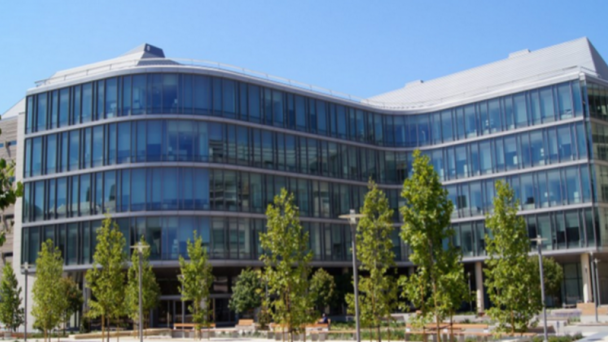
University of California at San Francisco (UCSF) has one of the largest neuroscience complexes in the world including the Sandler Neurosciences Center and Rock Hall. UCSF is ranked by NIH as the #1 department of neurology at US medical schools.

Research is done by the faculty in the Neuroscience Graduate Program and many centers including the UCSF Memory and Aging Center and the Center for Integrative Neuroscience. Affiliated centers include research at San Francisco Medical Centers and the Gladstone Institute of Neurological Disorders.

Web Information

Department of Neurology Website: neurology.ucsf.edu/ UCSF Memory and Aging Center:  memory.ucsf.edu/ Center for Integrative Neuroscience: cin.ucsf.edu/index.html UCSF Neuroscience Graduate Program: neuroscience.ucsf.edu/neurograd BRAIN Initiative Grant – ” Modular systems for measuring and manipulating brain activity” BRAIN Initiative Grant   “Mapping the Developing Human Neocortex by Massively Parallel Single Cell Analysis” BRAIN Initiative Grant – “Identification of enhancers whose activity defines cortical interneuron types”

Contact Information

Address: Sandler Neurosciences Center 675 Nelson Rising Lane, Suite 190 San Francisco, California

Sandler Neurosciences Center

In honor of Herbert and Marion Sandler’s extraordinary commitment to neurological disease research at UCSF, our new neurosciences building at Mission Bay has been named the Sandler Neurosciences Center. This 237,000 square foot facility has laboratories headed by principal investigators from the UCSF Department of Neurology, the Institute for Neurodegenerative Diseases ...

OnAir Post: UCSF Neuroscience

University of Utah Neuroscience Initiative

The University of Utah Health Sciences has committed $10 million to launch a Neuroscience Initiative that will catalyze interdisciplinary approaches to neuroscience research.

The goal is to deepen the understanding of the function and disorders of the nervous system and to improve patient care through innovation and integration of basic, translational, and clinical research efforts. Initial funds will be used to create a “neuroscience hub,” including space for collaborative research and neuroscience training.


Web Information

Website:   neurogateway.utah.edu/Neuroscience-Institute Twitter: twitter.com/uu_neuro

Contact Information

Emailparker.becca@utah.edu Phone: (801) 585-0343 Address:

Organization

Program Manager: Becca Parker, Ph.D.

Background

The BRAIN Initiative Fact Sheet 9/30/14

University of Utah is committing $10 million to launch a Neuroscience Initiative to support the goals of the BRAIN Initiative:

The University of Utah Health Sciences has committed $10 million to launch a Neuroscience Initiative that will catalyze interdisciplinary approaches to neuroscience research. The goal is to deepen the understanding of the function and disorders of the nervous system and to improve patient care through innovation and integration of basic, translational, and clinical research efforts. This targeted investment by the university will lay the foundation for an expanded effort to enhance neuroscience research and advance the goals of ...

OnAir Post: University of Utah Neuroscience Initiative

Helen Wills Neuroscience Institute

The Helen Wills Neuroscience Institute (HWNI) at UC Berkeley is an active, collaborative research community that investigates fundamental questions about how the brain functions.

Using approaches from many disciplines (including biophysics, chemistry, cognitive science, computer science, genetics, mathematics, molecular and cell biology, physics, and physiology), HWNI seeks to understand how the brain generates behavior and cognition, and to better understand, diagnose and treat neurological disorders.

Web Information

Website:  http://neuroscience.berkeley.edu/ Partnership with Zeiss: UC Berkeley-Zeiss BrainMIC Twitter:  https://twitter.com/UCBerkeleyNeuro Wikipedia Entry: http://en.wikipedia.org/wiki/Helen_Wills_Neuroscience_Institute BRAIN Grant – “Classification of Cortical Neurons by Single Cell Transcriptomics” BRAIN Grant – “MRI Corticography (MRCoG): Micro-scale Human Cortical Imaging” BRAIN Grant – ”Optical control of synaptic transmission for in vivo analysis of brain circuits and behavior”

Contact Information

Phone: 510.642.2593 Address:UC Berkeley 175 Li Ka Shing Center, MC#3370 Berkeley, CA 94720

DirectorEhud Isacoff Admin & Staff

Research & Technology Centers

Advances in understanding brain function and brain disorders are often enabled by cutting-edge technology. The Helen Wills Neuroscience Institute fosters technological advances by sponsoring Technology Centers. These centers bring together physical scientists (e.g., from physics, chemistry, computer science, and engineering) and neuroscientists to develop tools for neuroscience research, and apply these tools to advance our understanding of the brain.

Center for Neural Engineering and Prostheses (CNEP)

Deep ...

OnAir Post: Helen Wills Neuroscience Institute

Caltech Neuroscience

Several Caltech laboratories are applying basic science findings to animal models of brain disorders, and these translational approaches are opening up novel therapeutic avenues.

Caltech Neuroscience research spans a wide range: from the molecular function of receptors; through signaling organelles like the synapse; the structure and function of single neurons; the assembly and function of circuits of nerve cells; and the collective function of brain systems in controlling behavior, perception, memory, cognition, and emotion.


Web Information

Neurobiology website:   http://neurobiology.caltech.edu/ Computaton & Neural Systems website: http://www.cns.caltech.edu/ Wikipedia Entry: http://en.wikipedia.org/wiki/California_Institute_of_Technology BRAIN Initiative Grant – Time-Reversal Optical Focusing for Noninvasive Optogenetics BRAIN Initiative Grant – “Modular nanophotonic probes for dense neural recording at single-cell resolution” BRAIN Initiative Grant – “Integrative Functional Mapping of Sensory-Motor Pathways” BRAIN Initiative Grant – “Dissecting human brain circuits in vivo using ultrasonic neuromodulation”

Contact Information

Email: meister@caltech.edu Phone: 626) 395-1782 Address: Neurobiology California Institute of Technology 1200 E. California Blvd., MC 216-76 Pasadena, CA 91125

Executive Officer for Neurobiology: Marianne Bronner

Computation and Neural Systems

Research

The CNS faculty maintain strong connections with colleagues throughout the Division, the Institute, and the Jet Propulsion Laboratory (JPL). Our faculty collaborate with colleagues from Bioengineering, Biology, Electrical Engineering, Control and Dynamical Systems, Mechanical Engineering, Physics, Mathematics and Astronomy, and JPL.

Neurophysiology Allman : Andersen :

OnAir Post: Caltech Neuroscience

UCLA Neuroscience

UCLA is the home of an outstanding and vibrant neuroscience community, including laboratories in diverse departments in the David Geffen School of Medicine, the College and the Samueli School of Engineering.

UCLA offers graduate training in Neuroscience through the Interdepartmental PhD Program for Neuroscience (NS-IDP). The program includes about 150 laboratories in diverse areas spanning the field from molecular analysis to genetics and behavior. Students learn modern problem solving skills and use state of the art approaches to explore a deeper understanding of how the brain processes information.


Web Information

Website: neuroscience.ucla.edu/ BRAIN Initiative Grant– “Defining cell types, lineage, and connectivity in developing human fetal cortex” BRAIN Initiative Grant– “Novel Genetic Strategy for Sparse Labeling and Manipulation of Mammalian Neurons”

Contact Information

Email: felixs@ucla.edu Phone: ext. 4-5733 AddressUCLA Brain Research Institute 1506 Gonda (Goldschmied) Neuroscience and Genetics Research Center 695 Charles Young Drive South, Los Angeles, CA 90095

Organization

Chair: Felix E. Schweizer, Neurobiology Vice-Chair: Tom O’Dell, Physiology

Graduate Program

The Interdepartmental PhD Program in Neuroscience (NSIDP) is one of eighteenGraduate Programs in Biosciences at UCLA. The NSIDP has an independent admissions process and an independent curriculum, but all programs share some of the administrative structures.

Neuroscience research at UCLA is not restricted to an individual department. In fact ...

OnAir Post: UCLA Neuroscience

UC Davis Neurosciences

University of California Davis Neuroscience occurs both at the Sacramento campus, home of UC Davis Health System and at the UC Davis campus 15 miles west of Sacramento. 

The Center for Neuroscience is UC Davis’ hub for studying the entire scope of neuroscience, ranging from cellular and molecular neurobiology, through systems and developmental neuroscience, to studies of human perception, memory, language, and the nature of consciousness. Some of the major UC Davis Health System research centers include the UC Davis MIND Institute, Eye and Pain Medicine Centers.

Web Information

UC Davis Neurosciences Website: ucdmc.ucdavis.edu/giving/leadinginitiatives/neurosciences UC Davis Center for Neuroscience website: neuroscience.ucdavis.edu BRAIN Initiative Grant – “Large-Scale Recording-Modulation – New Technologies (RFA NS-14-007)” BRAIN Initiative Grant – “Genetically encoded reporters of integrated neural activity for functional mapping of neural circuitry”

Organization

Director Center for Neuroscience: Cameron Carter

UC Davis MIND Institute, Vision Sciences and the Eye Center, and Pain Medicine

Neurosciences is a key strategic emphasis for UC Davis, and is a campus-wide research area with collaborations across nearly every school and college.

Nearly 50 million people in the U.S. are impacted by neurological, developmental, and ophthalmological disorders, as well as chronic pain. Advances in technology have opened possibilities for faculty in the vision sciences, neurosciences and pain medicine to better ...

OnAir Post: UC Davis Neurosciences

USC Neuroscience

University of Southern California (USC) has neuroscience undergraduate and graduate programs in addition to its USC Keck School of Medicine.

USC has numerous neuroscience related research centers and labs including: USC Imaging Genetics Center; LONI Laboratory of Neuro Imaging; Zilkha Neurogenetic Institute; USC Brain and Creativity Institute; USC Davis School of Gerontology; and USC Neurorestoration Center.

USC Neuroscience Undergraduate Program

Offers three different undergraduate degrees in Neuroscience, plus a Minor. Please click on the links below to see details of the BS in Neuroscience, the BS in Computational Neuroscience, the BA in Neuroscience, and the Minor in Neuroscience.

USC Neuroscience Graduate Program

Overview:

Students and faculty in the USC Neuroscience Graduate Program come from a variety of academic backgrounds to study questions spanning the entire spectrum of modern neuroscience research. Key questions include:

how do molecules work together in time and space to build functioning nerve cells? how do individual neurons and their interconnections lead to the emergent properties of neural circuits? how do the information processing functions of neural circuits lead to complex behaviors, memories, emotions, and thought?

Departing from the traditional focus on individual disciplines, USC Neuroscience is characterized by collaborative interactions between faculty and students who have undergraduate or graduate degrees in biology, engineering, ...

OnAir Post: USC Neuroscience

UC Irvine Neuroscience

UC Irvine’s neuroscience efforts are primarily focused on the Department of Anatomy & Neurobiology in the School of Medicine and the Department of Neurobiology and Behavior in the School of Biological Sciences.

Research projects aim to discover treatments and cures for epilepsy, Alzheimer’s disease, stroke, learning and memory disorders, drug addiction, ALS (Lou Gehrig’s disease), deafness and other hearing disorders, spinal cord injury, Parkinson’s disease, dementia, mental retardation and to learn more about systems neuroscience, learning and memory, cell signaling, and hearing research.


Web Information

Department of Anatomy & Neurobiology Website:  anatomy.uci.edu/ Department of Neurobiology and Behavior website: neurobiology.uci.edu/ Brain Initiative Grant – “Towards a Complete Description of the Circuitry Underlying Memory replay”

Organization

Chair Department of Anatomy & Neurobiology: Ivan Soltesz Chair Department of Neurobiology and Behavior: Marcelo Wood mwood@uci.edu

Department of Neurobiology and Behavior

The Department of Neurobiology and Behavior is made up of a community of faculty, students, postdoctoral fellows and staff who share a common goal: creating an exciting intellectual environment that optimizes our research and teaching missions. Our faculty are highly distinguished both nationally and internationally. Presently two of our faculty are in the National Academy of Science, two in the American Academy of Arts and Sciences, two in the Royal Society of London, and ...

OnAir Post: UC Irvine Neuroscience

Skip to toolbar