Caltech Neuroscience

Several Caltech laboratories are applying basic science findings to animal models of brain disorders, and these translational approaches are opening up novel therapeutic avenues.

Caltech Neuroscience research spans a wide range: from the molecular function of receptors; through signaling organelles like the synapse; the structure and function of single neurons; the assembly and function of circuits of nerve cells; and the collective function of brain systems in controlling behavior, perception, memory, cognition, and emotion.


Web Information

Neurobiology website:   http://neurobiology.caltech.edu/ Computaton & Neural Systems website: http://www.cns.caltech.edu/ Wikipedia Entry: http://en.wikipedia.org/wiki/California_Institute_of_Technology BRAIN Initiative Grant – Time-Reversal Optical Focusing for Noninvasive Optogenetics BRAIN Initiative Grant – “Modular nanophotonic probes for dense neural recording at single-cell resolution” BRAIN Initiative Grant – “Integrative Functional Mapping of Sensory-Motor Pathways” BRAIN Initiative Grant – “Dissecting human brain circuits in vivo using ultrasonic neuromodulation”

Contact Information

Email: meister@caltech.edu Phone: 626) 395-1782 Address: Neurobiology California Institute of Technology 1200 E. California Blvd., MC 216-76 Pasadena, CA 91125

Executive Officer for Neurobiology: Marianne Bronner

Computation and Neural Systems

Research

The CNS faculty maintain strong connections with colleagues throughout the Division, the Institute, and the Jet Propulsion Laboratory (JPL). Our faculty collaborate with colleagues from Bioengineering, Biology, Electrical Engineering, Control and Dynamical Systems, Mechanical Engineering, Physics, Mathematics and Astronomy, and JPL.

Neurophysiology Allman : Andersen :

OnAir Post: Caltech Neuroscience
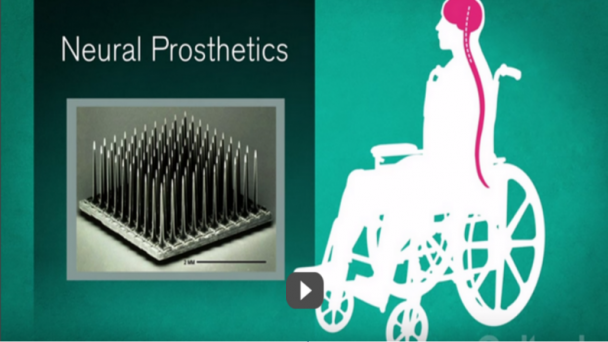
Next Generation of Neuroprosthetics

https://www.youtube.com/watch?v=F4wAvlA_Of0Video can’t be loaded because JavaScript is disabled: Next Generation of Neuroprosthetics: Science Explained – R. Andersen – May 2015 (https://www.youtube.com/watch?v=F4wAvlA_Of0)

Next Generation of Neuroprosthetics: Science Explained

Published on May 21, 2015 by caltech

Read the news story: http://www.caltech.edu/news/controlli…

Read the abstract of this research: http://resolver.caltech.edu/CaltechAU… “Decoding Motor Imagery from the Posterior Parietal Cortex of a Tetraplegic Human.” Science, 348 (6237). pp. 906-910. ISSN 0036-8075

OnAir Post: Next Generation of Neuroprosthetics

Richard Andersen, PhD – Caltech


James G. Boswell Professor of Neuroscience, California Institute of Technology

Dr. Andersen studies the neurobiological underpinnings of brain processes including the senses of sight, hearing, balance and touch, the neural mechanisms of action, and the development of neural prosthetics. He has trained 60 postdoctoral and doctoral students who now work in academia and industry; 35 currently hold tenure or tenure track faculty positions at major research universities throughout the world. He has published approximately 140 technical articles and edited two books.

Web Information

Department webpagebbe.caltech.edu/content/richard-andersen

Andersen Lab websiteis.caltech.edu/research

Wikipedia entrygoogle.com/webhp?sourceid=chrome-instant&ion=1&espv=2&ie=UTF-8#q=Richard+Andersen+caltech

Caltech Neuroscience: brain2015.onair.cc/neuroscience-caltech/

Contact Information

Email: andersen@vis.caltech.edu

Address: ANDERSEN LAB 1200 E CALIFORNIA BLVD PASADENA CA 91125

Biography

Professor Andersen studies the neurobiological underpinnings of brain processes including the senses of sight, hearing, balance and touch, the neural mechanisms of action, and the development of neural prosthetics. He has trained 60 postdoctoral and doctoral students who now work in academia and industry; 35 currently hold tenure or tenure track faculty positions at major research universities throughout the world. He has published approximately 140 technical articles and edited two books.

Education. Andersen obtained a Ph.D. in Physiology from the University of California, San Francisco with thesis advisor Michael Merzenich, and was a ...

OnAir Post: Richard Andersen, PhD – Caltech

Integrating neural interfaces & machine intelligence for prosthetics

Principal Investigators: Charles Liu, PhD – USC; Kapil Katyal, PhD – JHU; Richard Andersen, PhD – Caltech Title: Integrating neural interfaces and machine intelligence for advanced neural prosthetics BRAIN Category: Neuroengineering and Brain-inspired concepts and design 

This collaborative project will decode high-level cognitive actions from neural signals recorded in the parietal cortex of a tetraplegic human, then carry out those intents using a smart robotic prosthesis. Experimental results will be used to construct BMI control algorithms optimized to decode these cognitive signals.

Abstract

Brain-machine interfaces (BMI) read signals directly from the brain to control external devices such as robotic limbs. While this technology has great potential to benefit people who are paralyzed, BMIs often have poor performance because they use noisy, low-level signals to simultaneously control many aspects of the robotic limb’s movements. In contrast, this project will address this shortcoming by reading high-level intents from the brain in order to control an intelligent robotic system. These changes reflect cutting-edge advances in neuroscience and machine intelligence and will require close cooperation between scientists, engineers, and physicians. The project aims to leverage expertise across these diverse fields in order to generate significant improvements in BMI technology to advance the national health, increase scientific understanding of the brain, and lead to dramatic ...

OnAir Post: Integrating neural interfaces & machine intelligence for prosthetics

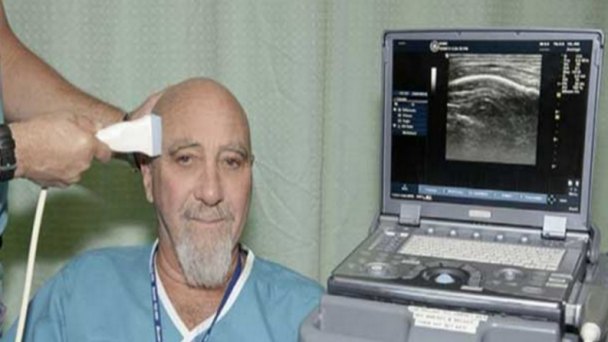
Ultrasonic neuromodulation in vivo

PI: Doris Ying  Tsao California Institute of Technology Title: “Dissecting human brain circuits in vivo using ultrasonic neuromodulation” BRAIN category: Next Generation Human Imaging (RFA MH-14-217)

In rodents, monkeys and eventually humans, Dr. Tsao’s team will explore use of non-invasive, high resolution ultrasound to impact neural activity deep in the brain and modify behavior.

NIH Webpages


Project Description

A dream of neuroscience is to be able to non-invasively modulate any given region of the human brain with high spatial resolution. This would open new horizons for understanding human brain function and connectivity, and create completely new options for the non-invasive treatment of brain diseases such as intractable epilepsy, depression, and Parkinson’s disease. Current non-invasive brain stimulation methods such as transcranial magnetic stimulation (TMS) and transcranial electrical stimulation (TES) can be applied only to superficial cortical areas, with crude 1 cm-scale resolution, limits placed upon these techniques by fundamental physics. Ultrasonic neuromodulation, the use of ultrasound as an energy modality to affect the activity of the brain, could overcome these limitations and thereby transform both basic and clinical human neuroscience. In fact, the engineering challenge of non-invasively focusing ultrasound to mm-sized regions, either shallow or deep in the brain, has been solved: clinical studies have already demonstrated ...

OnAir Post: Ultrasonic neuromodulation in vivo

Doris Ying Tsao, PhD – Caltech


Professor of biology and biological engineering at Caltech Director, Tsao Lab

Doris Ying Tsao is a systems neuroscientist interested in the neural mechanisms underlying primate vision i.e. how visual objects are represented in the brain, and how these representations are used to guide behavior. She is investigating mechanisms at multiple stages in the visual hierarchy. Techniques we use include: electrophysiology, fMRI, electrical microstimulation, anatomical tracing, psychophysics, and mathematical modeling.

Web Information

Website:  cns.caltech.edu/people/faculty/tsao Lab:   brain2015.onair.cc/tsao-lab/

Contact Information

Email: dortsao@caltech.edu Phone: 626-395-1702 Address: 34 Broad

Biography

Harvard University PhD 2002 Neuroscience (Advisor: Margaret Livingstone)

California Institute of Technology BS 1996 Biology and Math

Research

I am a systems neuroscientist interested in the neural mechanisms underlying primate vision. The central problem I want to understand is how visual objects are represented in the brain, and how these representations are used to guide behavior. To address this, my lab is investigating mechanisms at multiple stages in the visual hierarchy, from early processes for segmenting visual input into discrete objects, to midand high-level perceptual processes for assigning meaningful identity to specific objects, to processes by which these perceptual representations govern behavior. Techniques we use include: electrophysiology, fMRI, electrical microstimulation, anatomical tracing, psychophysics, and mathematical modeling.

Publications

2013

Ohayon S, Grimaldi P, Schweers N, Tsao D. Saccade modulation evoked by ...

OnAir Post: Doris Ying Tsao, PhD – Caltech

Mapping Sensory-Motor Pathways

Principal Investigator: Michael Dickinson Caltech Neuroscience Title: “Integrative Functional Mapping of Sensory-Motor Pathways” BRAIN Category: Understanding Neural Circuits (RFA NS-14-009)
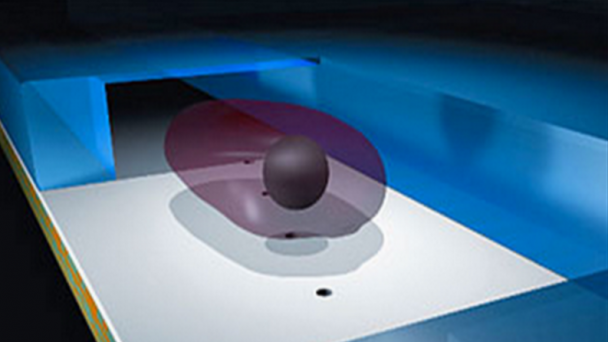
Dr. Dickinson will lead an interdisciplinary team to study how the brain uses sensory information to guide movements, by recording the activity of individual neurons from across the brain in fruit flies, as they walk on a treadmill and see and smell a variety of sights and odors.

NIH Webpages

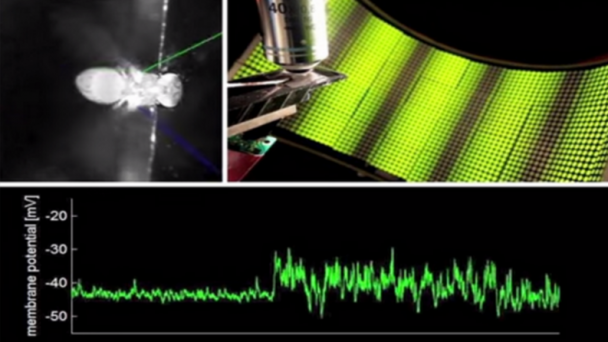
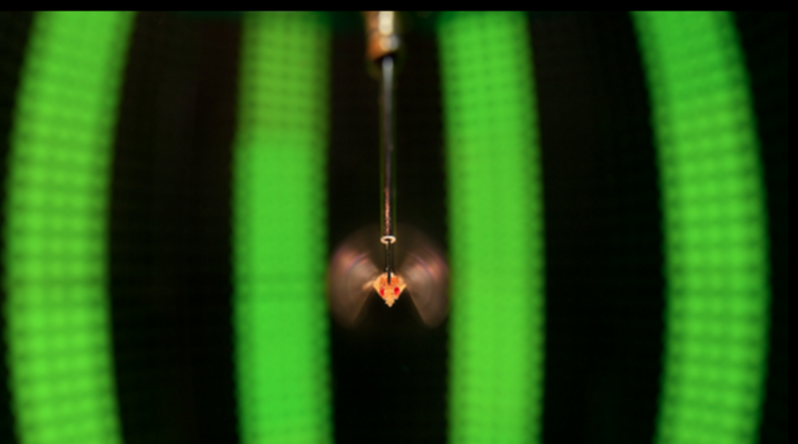
Flying Patch Clamp. Meausuring interneurons while flying.

Project Description

The goal of the project team is to develop a robust, multi-lab research framework, enabled by large scale imaging, which will lead to principled integrative models of ethologically-relevant behaviors that incorporate a detailed knowledge of individual cell classes. The specific neurobiological question that the team will address is how the brain integrates sensory information in order to guide locomotion in a particular direction. Our strategy is to systematically map and functionally characterize the neural circuits that underlie goal-directed locomotion, using the fruit fly, Drosophila, in order to exploit the convergence of powerful genetic, optical, behavioral, and analytical tools that are available in this species. The proposal focuses primarily on refining functional imaging approaches to map the activity of small ...

OnAir Post: Mapping Sensory-Motor Pathways

David Anderson, PhD – Caltech


Seymour Benzer Professor of Biology Investigator, Howard Hughes Medical Institute Member of the Advisory Committee to the NIH Director

Dr. Anderson’s lab focus is on understanding how emotional behavior is encoded in the brain, at the level of specific neuronal circuits, and the specific neuronal subtypes that comprise them. The lab seeks to understand the structure and dynamic properties of these circuits and how they give rise to the outward behavioral expressions of emotions such as fear, anxiety or anger.

Web Information

Caltech Webpage:  davidandersonlab.caltech.edu/davidanderson

Lab Webpage:   davidandersonlab.caltech.edu/

HHMI Webpage: hhmi.org/scientists/david-j-anderson

Contact Information

Address: The David Anderson Research Group 156-29 1200 E. California Blvd. Pasadena, Ca. 91125

Research Summary

Neural Circuits for Innate Emotional Behaviors

Research in this laboratory is aimed at understanding the neurobiology of emotion. We seek to elucidate how fundamental properties common to emotional states, such as arousal, are encoded in the circuitry and chemistry of the brain and how these internal states combine with sensory stimuli to elicit specific emotional behaviors, such as fear or aggression. Our work employs molecular genetic tools to mark, map, and manipulate specific circuits to determine how identifiable populations of neurons contribute in a causal manner to behavior. These studies are complemented by the use of electrophysiology and functional imaging to measure activity ...

OnAir Post: David Anderson, PhD – Caltech

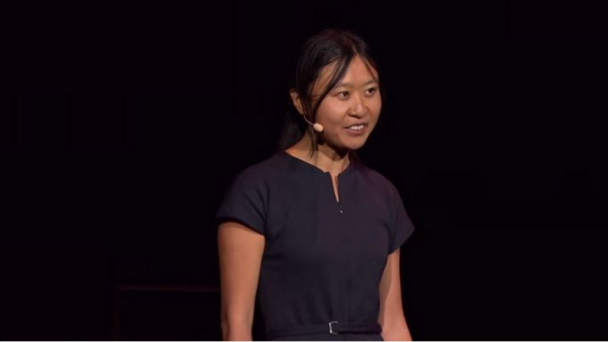
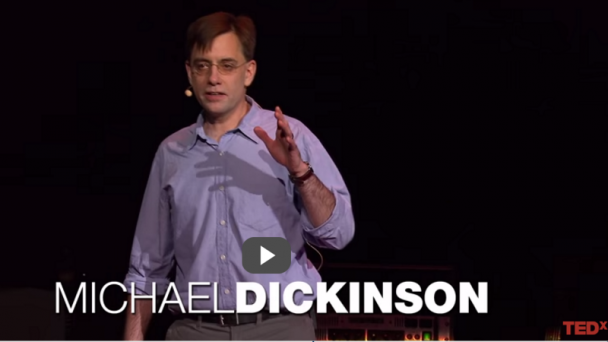
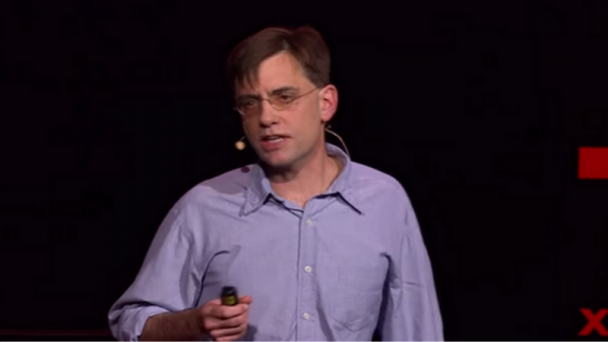
How flies fly: Michael Dickinson

“An insect’s ability to fly is perhaps one of the greatest feats of evolution. Michael Dickinson looks at how a fruit fly takes flight with such delicate wings, thanks to a clever flapping motion and flight muscles that are both powerful and nimble. But the secret ingredient: the incredible fly brain.”

Video filmed Jan. 2013 at TEDx Caltech

Profile

Zarem Professor of Bioengineering, Caltech Neuroscience Director, Dickinson Lab

The aim of Dickinson’s research is to elucidate the means by which flies accomplish their aerodynamic feats. A rigorous mechanistic description of flight requires an integration of biology, engineering, fluid mechanics, and control theory. The long term goal, however, is not simply to understand the material basis of insect flight, but to develop its study into a model that can provide insight to the behavior and robustness of complex systems in general.


OnAir Post: How flies fly: Michael Dickinson

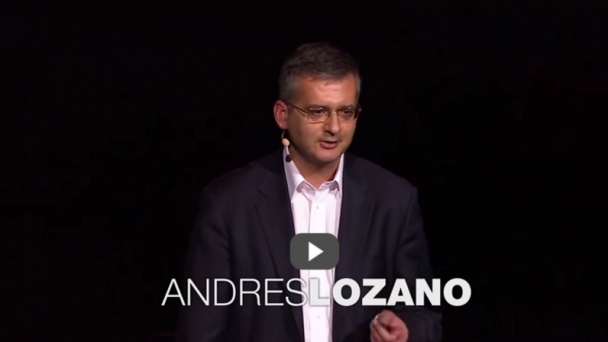
Turning off Parkinson’s and depression

https://www.youtube.com/watch?v=9wiHfHOPbyEVideo can’t be loaded because JavaScript is disabled: Parkinson’s, depression and the switch that might turn them off – Andres Lozano (https://www.youtube.com/watch?v=9wiHfHOPbyE)

Deep brain stimulation is becoming very precise. This technique allows surgeons to place electrodes in almost any area of the brain, and turn them up or down — like a radio dial or thermostat — to correct dysfunction. Andres Lozano offers a dramatic look at emerging techniques, in which a woman with Parkinson’s instantly stops shaking and brain areas eroded by Alzheimer’s are brought back to life.

Filmed January 2013 at TEDs Caltech 2013 Uploaded to YouTube on June 12,, 2013 by TED 

OnAir Post: Turning off Parkinson’s and depression

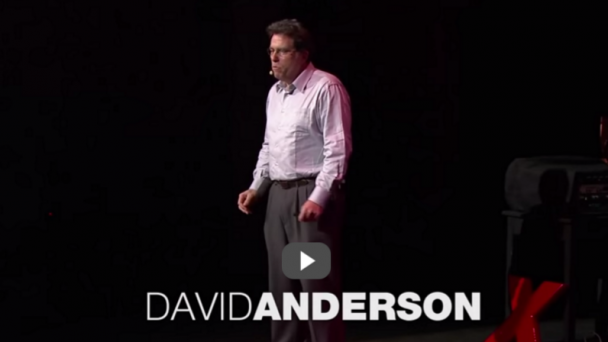
Your brain is more than a bag of chemicals


https://www.youtube.com/watch?v=D9xJl4S6NsMVideo can’t be loaded because JavaScript is disabled: David Anderson: Your brain is more than a bag of chemicals (https://www.youtube.com/watch?v=D9xJl4S6NsM)

“Modern psychiatric drugs treat the chemistry of the whole brain, but neurobiologist David Anderson believes in a more nuanced view of how the brain functions. He illuminates new research that could lead to targeted psychiatric medications — that work better and avoid side effects. How’s he doing it? For a start, by making a bunch of fruit flies angry”.

Filmed January 2013 at TEDx Caltech 2013 Uploaded to YouTube on March 12, 2013 by TED

TED Talks webpage

OnAir Post: Your brain is more than a bag of chemicals

Biophotonics Laboratory – Caltech

Principal Investigator: Changhuei Yang Caltech Neuroscience

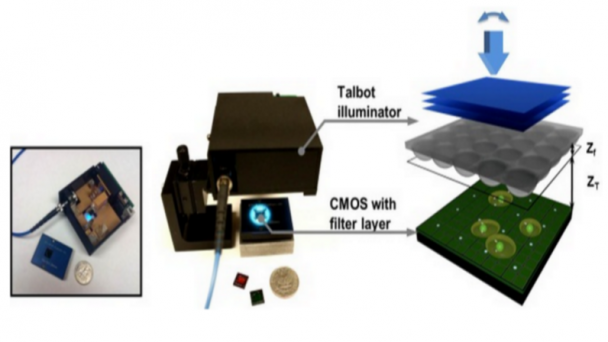
The Biophotonics Laboratory is focused on the development of novel tools that combine optics and microfluidics to tackle diagnostic and measurement problems in biology and medicine. The major techniques that are under development in the laboratory include the ePetri, Fourier Ptychographic microscopy, and time-reversal optical focusing.

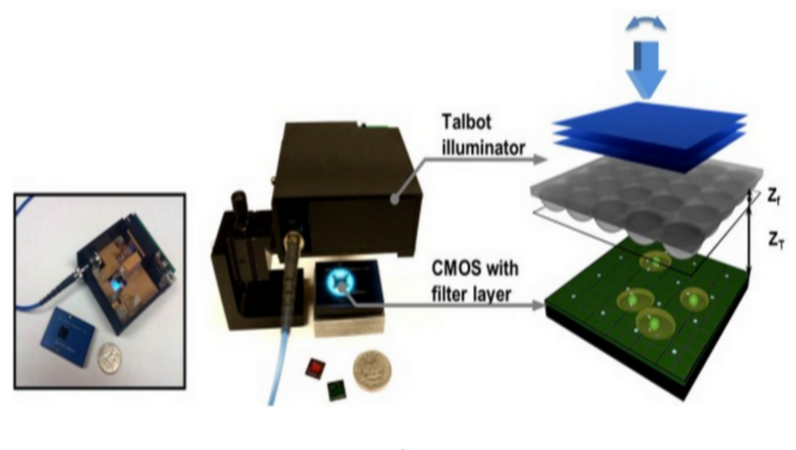
Wide Field-of-view on-chip Fluorescence Microscopy.Because of the high specificity and high sensitivity of fluorescent probes, fluorescence microscopy plays a vital role in modern clinical diagnosis and biological research. However, due to its limited field-of-view (FOV), size, and cost, conventional microscopy is becoming a bottleneck in rapidly emerging and evolving areas such as large-scale genome screening, point-of-care diagnosis, and long-term cell imaging.We have developed a wide FOV on-chip fluorescence microscopy method based on the Talbot effect, termed fluorescence Talbot microscopy (FTM)

Web Information

Website:  biophot.caltech.edu/ BRAIN Initiative Grant – Time-Reversal Optical Focusing for Noninvasive Optogenetics

Contact Information

Email:  chyang@caltech.edu Phone: (626) 395-8922 Address: Moore Laboratory MC 136-93, 262 Moore:

About the Lab

The research of the Biophotonics Laboratory, led by Professor Changhuei Yang, is focused on the development of novel tools that combine optics and microfluidics to tackle diagnostic and measurement problems in biology and medicine. The major techniques that are under development in the laboratory ...

OnAir Post: Biophotonics Laboratory – Caltech

Changhuei Yang, PhD – Caltech


Professor of Electrical Engineering, Bioengineering and Medical Engineering, Caltech Director, Biophotonics Lab

Professor Yang’s research efforts are in the areas of novel microscopy development and time-reversal based optical focusing. Prof. Yang’s group is developing a number of technologies aimed at transforming the conventional microscope into high throughput, automated and cost-effective formats. Prof. Yang’s group is working on the use of ‘time-reversal’ techniques to undo the effect of tissue light scattering.

Web Information

Webpage:   biophot.caltech.edu/people/yang Caltech Neuroscience BRAIN Initiative Grant – Time-Reversal Optical Focusing for Noninvasive Optogenetics

Contact Information

Email:  chyang@caltech.edu Phone: (626) 395-8922 Address: Moore Laboratory MC 136-93, 262 Moore


Biography

PhD, EECS, MIT, 2002 BSc, Mathematics, MIT, 2002 MEng, EECS, MIT, 1997 BSc, Physics, MIT, 1997 BSc, EECS, MIT, 1997

Research

Professor Yang’s research efforts are in the areas of novel microscopy development and time-reversal based optical focusing. Prof. Yang joined the California Institute of Technology in 2003. He is a professor in the areas of Electrical Engineering, Bioengineering and Medical Engineering. He has received the NSF Career Award, the Coulter Foundation Early Career Phase I and II Awards, and the NIH Director’s New Innovator Award. In 2008 he was named one of Discover Magazine’s ‘20 Best Brains Under 40’. He is a Coulter Fellow, an AIMBE Fellow and an OSA Fellow.

His research efforts can be categorized ...

OnAir Post: Changhuei Yang, PhD – Caltech

Roukes Group – CalTech

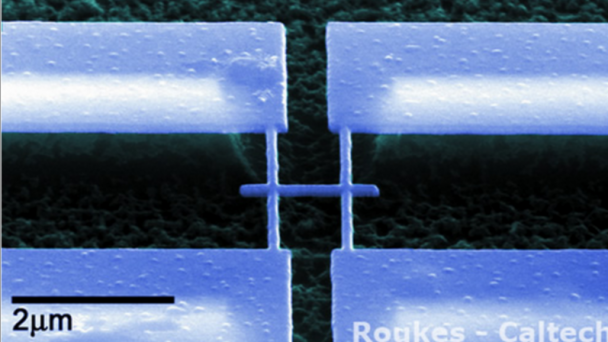
The Roukes Group is working to explore new physics at the nanoscale, and to apply this knowledge to realizing advanced tools for the biomedical and life sciences. Our group's current focus is on (a) next-gen methods for neuroscience enabled by very-large-scale integration of nanoelectronic and nanophotonic devices, (b) single-molecule mass spectrometry and molecular analysis enabled by arrays of nanoelectromechanical systems (NEMS), and (c) on the fundamental physics of NEMS.

OnAir Post: Roukes Group – CalTech

Michael Roukes, PhD – CalTech


Professor of Physics, Applied Physics, and Bioengineering, CalTech Division of Engineering and Applied Sciences Director, Roukes Group

Roukes research activities are currently focused on developing advanced nanodevices, engineering them into complex systems, and using them to enable fundamental problems in neuroscience and proteomics. A continuing thread in theoretical and experimental investigations focuses on fundamental properties of nanomechanical systems.


Web Information

Lab webpage: caltech.edu/people/3185/profile Division webpage: nano.caltech.edu/people/roukes Caltech Neuroscience Brain Initiative Grant

Contact Information

Email: roukescaltech.edu Phone: 626-395-2916 Address: MC 149-33Pasadena, CA 91125


Biography

B.A., University of California (Santa Cruz), 1978; Ph.D., Cornell University, 1985. Associate Professor, Caltech, 1992-96; Professor of Physics, 1996-2002; Professor of Physics, Applied Physics, and Bioengineering, 2002-11; Abbey Professor, 2011-; Director, Kavli Nanoscience Institute, 2004-06; Co-Director, 2008-2013.


Research

Research Overview

Professor Roukes’s research focuses on nanobiotechnology, nanotechnology, nanoscale physics, nanoscale and molecular mechanics.

List of Research Areas

nanobiotechnology, nanotechnology, nanoscale physics, nanoscale and molecular mechanics

Research Centers

The Kavli Nanoscience Institute, Center for the Physics of Information

OnAir Post: Michael Roukes, PhD – CalTech

Dickinson Lab – Caltech

Principal Investigator, Michael Dickinson Caltech Neuroscience 
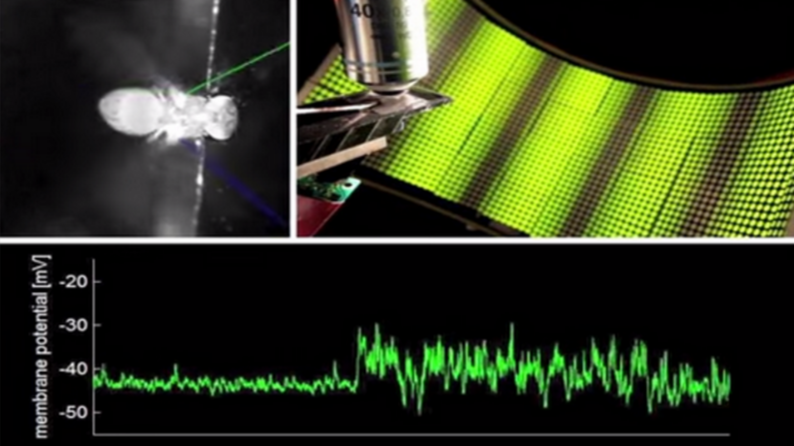
The Dickinson Lab studies the neural and biomechanical basis of behavior in the fruit fly, Drosophila. We strive to build an integrated model of behavior that incorporates an understanding of morphology, neurobiology, muscle physiology, physics, and ecology. Although our research focuses primarily on flight control, we are interested in how animals transform sensory information into a code that controls motor output and behavior.

Fly in flight simulator. Dickinson Lab

Web Information

Website:   http://depts.washington.edu/flyarama/ (unavailable 7/29/15) Brain Initiative Grant

Contact Information

Email: flyman@caltech.edu Phone: (626)395-5775 Address: The California Institute of Technology Mail Code 216-76 Pasadena, CA 91125

Research

Michael Dickinson received a Ph. D. in the Dept. of Zoology at UW in 1989. His dissertation project focused on the physiology of sensory cells on the wings of flies. It was this study of wing sensors that led to an interest in insect aerodynamics and flight control circuitry. He worked briefly at the Max Planck Institute for Biological Cybernetics in Tübingen, Germany, and served as an Assistant Professor in the Dept. of Anatomy at the University of Chicago in 1991. He moved to the University of California, Berkeley in 1996 and was appointed as the Williams Professor in the Department of Integrative ...

OnAir Post: Dickinson Lab – Caltech

Michael Dickinson, PhD – Caltech


Zarem Professor of Bioengineering, Caltech Neuroscience Director, Dickinson Lab
The aim of Dickinson’s research is to elucidate the means by which flies accomplish their aerodynamic feats. A rigorous mechanistic description of flight requires an integration of biology, engineering, fluid mechanics, and control theory. The long term goal, however, is not simply to understand the material basis of insect flight, but to develop its study into a model that can provide insight to the behavior and robustness of complex systems in general.

Web Information

Webpage:   eas.caltech.edu/people Lab:  http://depts.washington.edu/flyarama/ TEDx video:  ted.com/talks/michael_dickinson_how_a_fly_flies Wikipedia Entry: wiki/Michael_Dickinson BRAIN Initiative grant

Contact Information

Email: flymancaltech.edu Phone: 626-395-5775 Address: The California Institute of Technology Mail Code 216-76 Pasadena, CA 91125


Biography

from Wikipedia page

Michael H. Dickinson (born 1963) is an American fly bioengineer and neuroscientist, and Zarem Professor of Biology and Bioengineering at the California Institute of Technology. He studies Drosophila flight control systems and sensory processing.

He graduated from Brown University with a B.S. in 1984, and from University of Washington with a Ph.D. in 1989. He was previously part of the faculty at the University of Chicago,  the University of California, Berkeley, and the University of Washington.

He is a Monitoring Editor at the Journal of Experimental Biology.He was a course director of the Neural Systems and ...

OnAir Post: Michael Dickinson, PhD – Caltech

Tsao Lab – Caltech

Tsao Lab explores the neural mechanisms underlying primate vision: how visual objects are represented in the brain, and how these representations are used to guide behavior. How does the brain stitch together pixels into invariant, discrete recognizable objects in space? This is the problem our lab is trying to solve. We are tackling it through study of the monkey brain, the mouse brain, and mathematical modeling. In addition, we are developing a new technique to study the human brain.

OnAir Post: Tsao Lab – Caltech

Modular nanophotonic probes

Principal Investigator: Michael Roukes Caltech Neuroscience Title: “Modular nanophotonic probes for dense neural recording at single-cell resolution” BRAIN Category: Large-Scale Recording-Modulation – New Technologies (RFA NS-14-007)
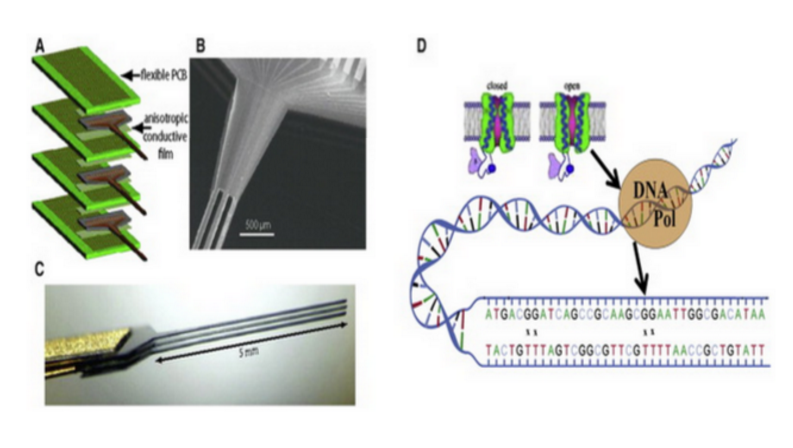
Dr. Roukes and his team propose to build ultra-dense, light-emitting and -sensing probes for optogenetics, which could simultaneously record the electrical activity of thousands of neurons in any given region of the brain.

NIH Webpages

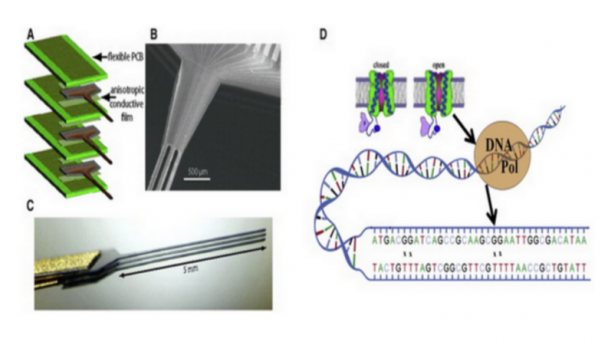
Nanoprobes, Wireless, and Synthetic Biology Technologies for the BAM Project(Left) Silicon nanoprobe arrays (after Du et al., 2009b ). (A) Flip-chip assembly scheme for connecting the silicon devices with printed circuit boards. (B) SEM micrograph of the rear section of a 50-μm-thick shaft array showing the multilayer stacked structure. Adjacent layers have a spacing of 100 μm, which is set by the thickness of the flexible cable. (C) Side view of the 50-μm-thick shaft array showing that the shafts are stress balanced and are able to retain approximately constant relative spacing.(Right) Synthetic biology approaches. (D) A voltage sensitive calcium channel influences the error rate of an engineered DNA polymerase. X marks sites of mismatch between “T” in the template strand (lower) and “G” new copy strand. Note scale of the various devices and cells.

Project Description

Our understanding of ...

OnAir Post: Modular nanophotonic probes

Time-Reversal Optical Focusing

Principal Investigator: Changhuei Yang Caltech Neuroscience Title: Time-Reversal Optical Focusing for Noninvasive Optogenetics BRAIN Category:  Large-Scale Recording-Modulation – New Technologies (RFA NS-14-007)
Dr. Yang’s team plans to develop a light and sound system that will noninvasively shine lasers on individual cells deep within the brain and activate light-sensitive molecules to precisely guide neuronal firing.

NIH Webpages

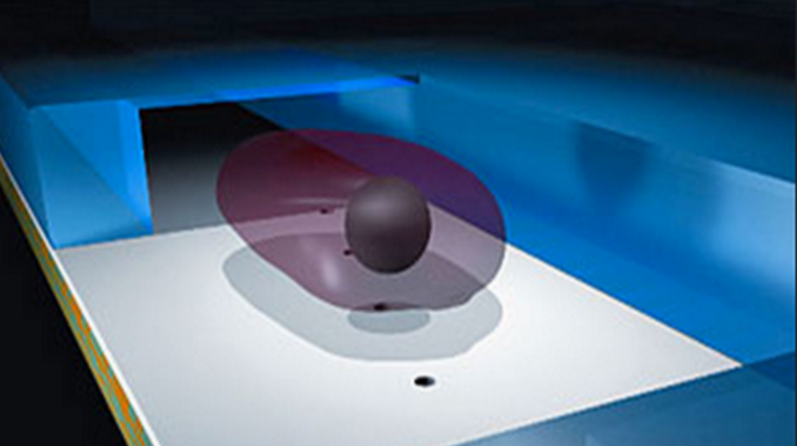
Optofluidic microscopy (OFM) is a new compact and lensless microscopic imaging technique invented in our lab. It abandons the conventional microscope design, which requires expensive lenses and large space to magnify images, and instead utilizes microfluidic flow to deliver specimens across array(s) of micrometer-size apertures defined on a metal-coated CMOS sensor to generate direct projection images. The size of our OFM prototype device is as small as a US quarter, and yet can render images comparable in quality to those of a microscope with 20X objective.

Project Description

Our bodies appear optically opaque because biological tissue scatters light strongly. Although advances such as multiphoton excitation have enabled deeper access for optical imaging by gating out scattered light, these strategies are still fundamentally limited to superficial depths (~ 1 mm). Yang’s group at Caltech has pioneered time-reversal symmetry of optical scattering as a direct strategy ...

OnAir Post: Time-Reversal Optical Focusing

Skip to toolbar