Helen Wills Neuroscience Institute

The Helen Wills Neuroscience Institute (HWNI) at UC Berkeley is an active, collaborative research community that investigates fundamental questions about how the brain functions.

Using approaches from many disciplines (including biophysics, chemistry, cognitive science, computer science, genetics, mathematics, molecular and cell biology, physics, and physiology), HWNI seeks to understand how the brain generates behavior and cognition, and to better understand, diagnose and treat neurological disorders.

Web Information

Website:  http://neuroscience.berkeley.edu/ Partnership with Zeiss: UC Berkeley-Zeiss BrainMIC Twitter:  https://twitter.com/UCBerkeleyNeuro Wikipedia Entry: http://en.wikipedia.org/wiki/Helen_Wills_Neuroscience_Institute BRAIN Grant – “Classification of Cortical Neurons by Single Cell Transcriptomics” BRAIN Grant – “MRI Corticography (MRCoG): Micro-scale Human Cortical Imaging” BRAIN Grant – ”Optical control of synaptic transmission for in vivo analysis of brain circuits and behavior”

Contact Information

Phone: 510.642.2593 Address:UC Berkeley 175 Li Ka Shing Center, MC#3370 Berkeley, CA 94720

DirectorEhud Isacoff Admin & Staff

Research & Technology Centers

Advances in understanding brain function and brain disorders are often enabled by cutting-edge technology. The Helen Wills Neuroscience Institute fosters technological advances by sponsoring Technology Centers. These centers bring together physical scientists (e.g., from physics, chemistry, computer science, and engineering) and neuroscientists to develop tools for neuroscience research, and apply these tools to advance our understanding of the brain.

Center for Neural Engineering and Prostheses (CNEP)

Deep ...

OnAir Post: Helen Wills Neuroscience Institute

Paul Alivisatos, PhD – UC Berkeley

Director, Lawrence Berkeley National Laboratory, UC Berkeley Distinguished Professor of Nanoscience and Nanotechnology Director, Kavli Energy Nanosciences Institute

Dr. Alivisatos research breakthroughs include the synthesis of size- and shape-controlled nanoscrystals, and forefront studies of nanocrystal properties, including optical, electrical, structural and thermodynamic. He was also part of a team of six that proposed in 2012 a Brain Activity Map which morphed into the BRAIN Initiative.

Web Information

Alivisatos Group Web page: http://www.cchem.berkeley.edu/pagrp/people.html

Berkeley Labhttp://www.lbl.gov/

Wikipedia Entryhttps://en.wikipedia.org/wiki/Paul_Alivisatos


Contact Information

Email: alivis@berkeley.edu

Phone: 510-642-2148

Address: Alivisatos Lab, Hildebrand D83 UC Berkeley Chemistry Department #1460 Berkeley, CA 94720-1460

Biosketch

Dr. Alivisatos received a Bachelor’s degree in Chemistry in 1981 from the University of Chicago and Ph.D. in Chemistry from UC Berkeley in 1986. He began his career with UC Berkeley in 1988 and with Berkeley Lab in 1991.

Dr. Paul Alivisatos is Director of the Lawrence Berkeley National Laboratory (Berkeley Lab) and is the University of California (UC) Berkeley’s Samsung Distinguished Professor of Nanoscience and Nanotechnology. He also directs the Kavli Energy Nanosciences Institute (ENSI), and holds professorships in UC Berkeley’s departments of materials science and chemistry. In addition, he is a founder of two prominent nanotechnology companies, Nanosys and Quantum Dot Corp, now a part of Life Tech.

OnAir Post: Paul Alivisatos, PhD – UC Berkeley

Hawkins: How brain science will change computing

https://www.youtube.com/watch?v=G6CVj5IQkzkVideo can’t be loaded because JavaScript is disabled: Jeff Hawkins: How brain science will change computing (https://www.youtube.com/watch?v=G6CVj5IQkzk)

Palm creator Jeff Hawkins urges us to take a new look at the brain — to see it not as a fast processor, but as a memory system that stores and plays back experiences to help us predict, intelligently, what will happen next.

Filmed Feb. 2003 at TED 2003TED Page TED Page


Transcript

0:11 I do two things: I design mobile computers and I study brains. And today’s talk is about brains and, yay, somewhere I have a brain fan out there. (Laughter) I’m going to, if I can have my first slide up here, and you’ll see the title of my talk and my two affiliations. So what I’m going to talk about is why we don’t have a good brain theory, why it is important that we should develop one and what we can do about it. And I’ll try to do all that in 20 minutes. I have ...

OnAir Post: Hawkins: How brain science will change computing

NIH Neuroscience Seminar- June 15, 2015

TITLE: Photo-control of endogenous ion channels and neurotransmitter receptors in the CNS

AUTHOR: Richard Kramer, Ph.D., University of California, Berkeley

TIME: 12:00:00 PM  DATE: Monday, June 15, 2015

PLACE: Porter Neuroscience Research Center

 Live NIH Videocast (archived after seminar)


Abstract

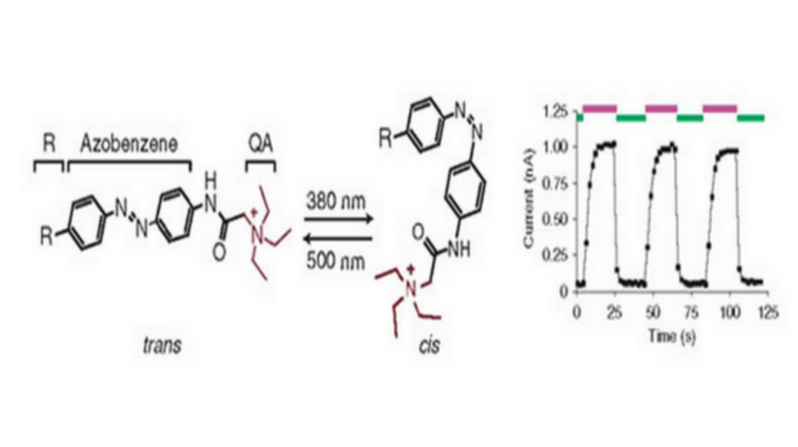
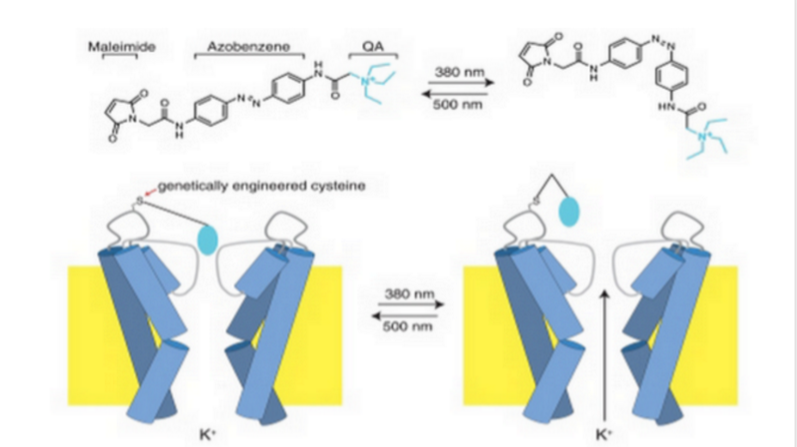
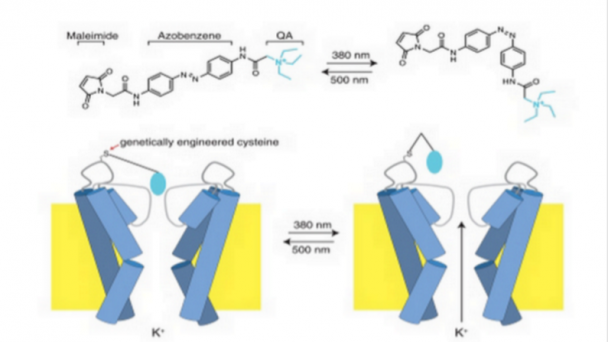
Remote control of neural activity with “light-activated” ion channels To overcome the loss of retinal photoreceptors in diseases such as retinitis pigmentosa and macular degeneration, scientists are attempting to develop electrical prosthetic devices, in which an implantable array of electrodes is used to stimulate remaining healthy neurons downstream in the visual pathway. We are taking a different approach, which involves direct optical regulation of the electrical activity of neurons without using invasive implantable devices. We have engineered the first ion channel that is directly activated with light. This channels consists of a genetically engineered ion channel protein that is covalently attached to a specially designed light-sensitive molecule, which includes a blocker of the channel’s pore. Photoisomerization of the light-sensitive molecule extends or retracts the blocker, opening or closing the flow of ions through the pore. Different wavelengths of light switch the molecule back and forth between blocking and unblocking states, so both channel opening and closing are controllable with light. Expression of these channels ...

OnAir Post: NIH Neuroscience Seminar- June 15, 2015

Richard Kramer, PhD – Berkeley


Associate Professor of Neurobiology, UC Berkeley Director, Kramer Lab

Kramer uses a combination of optical, electrophysiological, and molecular methods to study ion channels, the proteins that generate electrical signals, and synaptic transmission, the process that allows a neuron to communicate chemically with other cells. Many of our most recent studies utilize novel chemical reagents, designed to manipulate or monitor the function of ion channels and synapses. Current Project: Optical studies of synaptic transmission in the retina.

Web Information

Webpage: vision.berkeley.edu/?p=415 UC Berkeley Helen Wills Neuroscience Institute Brain Initiative Grant
Contact Information

Email: rhkramer@berkeley.edu Phone: (510) 643-2406 Address: University of California Department of Molecular and Cell Biology 121 Life Sciences Addition Berkeley, CA 94720-3200


Research

Measuring and controlling neural activity in the retina

Neurons in the retina communicate using electrical and chemical signals. We use a combination of optical, electrophysiological, and molecular methods to study ion channels, the proteins that generate electrical signals, and synaptic transmission, the process that allows a neuron to communicate chemically with other cells. Many of our most recent studies utilize novel chemical reagents, designed to manipulate or monitor the function of ion channels and synapses.

Current Projects

Optical studies of synaptic transmission in the retina Rod and cone photoreceptors transmit information to other neurons through specialized structures called ribbon synapses. Insights into how these synapses ...

OnAir Post: Richard Kramer, PhD – Berkeley

Kramer Lab – Stanford

Principal Investigator: Richard  Kramer UC Berkeley Helen Wills Neuroscience Institute
Kramer Lab studies utilize novel chemical reagents to modify the function of ion channels and synapses.  This Chemical-Biological approach is designed to allow non-invasive optical sensing and optical manipulation of channels and synapses in the nervous system. One major goal of this research is to develop the technology for restoring vision in degenerative blinding diseases.

Regulating native ion channels with light – we have sought a simple method for bestowing light-sensitivity onto neurons that does not require exogenous gene expression, but rather can be carried out on freshly obtained, relatively unadulterated, neural tissue.

Web Information

Website:  mcb.berkeley.edu/labs/kramer/ Brain Initiative Grant

Contact Information

Email: rhkramer@berkeley.edu Phone: (510) 643-2406 Address: University of California Department of Molecular and Cell Biology 121 Life Sciences Addition Berkeley, CA 94720-3200

Research

Nerve cells communicate using electrical and chemical signals. Ion channels are the proteins that generate electrical signals in neurons, and synaptic transmission is the process that allows a neuron to communicate chemically with other cells.  Our studies utilize novel chemical reagents to modify the function of ion channels and synapses.  This Chemical-Biological approach is designed to allow non-invasive optical sensing and optical manipulation of channels and synapses in the nervous system. One major goal of ...

OnAir Post: Kramer Lab – Stanford

Single Cell Transcriptomics Classification

PI: John J. Ngai, Ngai Lab Helen Wills Neuroscience Institute Title: “Classification of Cortical Neurons by Single Cell Transcriptomics” BRAIN Category: Census of Cell Types (RFA MH-14-215)
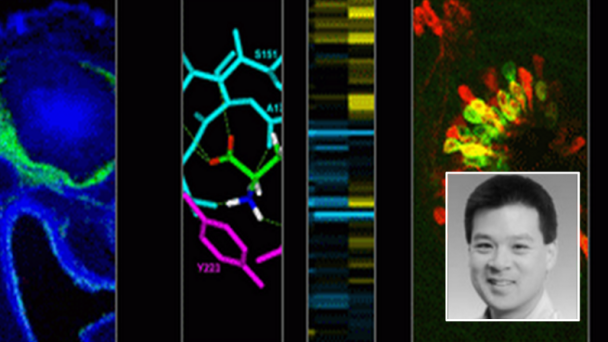
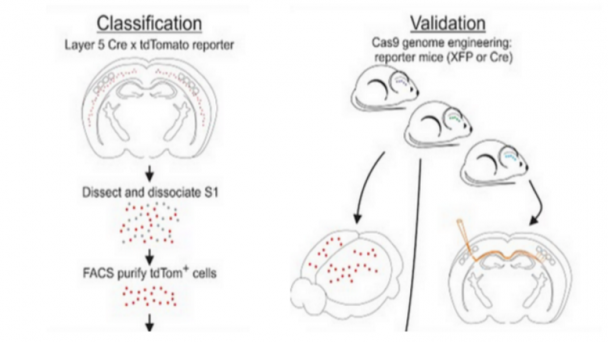
To understand what makes neurons distinct, Dr. Ngai’s team will explore one major type of mouse brain cell, pinpointing genes responsible for differentiating them into subtypes and will also test whether each subtype has unique functions, using a new technique that labels them with tagged genes.

NIH Webpage

Project Description

Unraveling the complexity of the mammalian brain is one of the most challenging problems in biology today. A major goal of neuroscience is to understand how circuits of neurons and non-neuronal cells process sensory information, generate movement, and subserve memory, emotion and cognition. Elucidating the properties of neural circuits requires an understanding of the cell types that comprise these circuits and their roles in processing and integrating information. However, since the description of diverse neuronal cell types over a century ago by Ramon y Cajal, we have barely scratched the surface of understanding the diversity of cell types in the brain and how each individual cell type contributes to nervous system function. Current approaches for classifying neurons rely upon features including the differential expression of small numbers of genes, cell morphology, ...

OnAir Post: Single Cell Transcriptomics Classification

Ngai Lab

Director, John Ngai Helen Wills Neuroscience Institute

The Ngai Lab focuses on the molecular mechanisms underlying the development and function of the vertebrate olfactory system using molecular, genomic, computational and behavioral approaches. The Ngai Lab is also leveraging high-throughput genomic and genome engineering techniques. Ngai Lab aims to make significant discoveries on the molecules, cells and circuits underlying the development, regeneration and function of the nervous system during normal processes and disease.


Web Information

Website:   https://sites.google.com/site/ngaineuro/home

Contact Information

Email:  jngai(at)berkeley.edu Phone: (510) 642-9887 Address: University of California, Berkeley Department of Molecular & Cell Biology 265 Life Sciences Addition #3200 Berkeley, CA 94720-3200

Research

Olfactory Stem Cells and Neural Regeneration

The generation of neuronal diversity in the nervous system requires the specification and differentiation of a multitude of cellular lineages. Successive developmental programs control the generation of individual neuronal types, cell migration, axon extension, and ultimately the formation of functional synaptic connections. The specific genetic programs underlying the differentiation of mature neurons from their progenitors remain incompletely characterized, in part because of the difficulty in studying neuronal progenitor cells in their native environments.

In the vertebrate olfactory system, primary sensory neurons are continuously regenerated throughout adult life via the proliferation and differentiation of multipotent neural progenitor cells. This feature makes the olfactory system particularly amenable for ...

OnAir Post: Ngai Lab

John J. Ngai, PhD – Berkeley

Professor of Neurobiology, Coates Family Professor of Neuroscience, Helen Wills Neuroscience Institute Director, Ngai Lab
My focus is understanding the molecular and cellular mechanisms underlying the function, development and regeneration of the vertebrate olfactory system. My lab uses a wide range of experimental tools and model systems, including molecular biology, genomics, computational biology and behavior to study these processes using the mouse and zebrafish as model systems.


Web Information

Faculty Research page:  http://mcb.berkeley.edu/faculty/all/ngaij Full Directory Information: http://mcb.berkeley.edu/directory/search/detail/62 Lab:  https://sites.google.com/site/ngaineuro/home

Contact Information

Emailjngai@socrates.berkeley.edu Phone: (510) 642-9885 Address: Ngai Lab University of California, Berkeley 142 Life Sciences Addition # 3200 Berkeley, CA 94720-3200


Research Interests

Our lab is interested in understanding the molecular and cellular mechanisms underlying the function, development and regeneration of the vertebrate olfactory system. We use a wide range of experimental tools and model systems, including molecular biology, genomics, computational biology and behavior to study these processes using the mouse and zebrafish as model systems. We are also developing genomics and genome engineering technologies to characterize the neuronal diversity in the cerebral cortex and other regions of the nervous system.


Current Projects

Olfactory Stem Cells and Neural Regeneration. In the vertebrate olfactory system, primary sensory neurons are continuously regenerated throughout adult life via the proliferation and differentiation of multipotent neural progenitor cells. This feature ...

OnAir Post: John J. Ngai, PhD – Berkeley

UC Berkeley-Zeiss BrainMIC

University of California, Berkeley and Carl Zeiss Microscopy are investing $12 million to create the Berkeley Brain Microscopy Innovation Center (BrainMIC).

The BrainMIC will fast-track microscopy development for emerging neurotechnologies and will run an annual course to teach researchers how to use the new technologies. The UC Berkeley Helen Wills Neuroscience Institute is creating a program that will generate innovative devices and analytic tools in engineering, computation, chemistry, and molecular biology to enable transformative brain science from studies of human cognition to neural circuits in model organisms.


Web Information

Helen Wills Neuroscience Institute website:  http://neuroscience.berkeley.edu/ (no website yet for the Brain MIC) Brain Imaging Center (BIC):  neuroscience.berkeley.edu/BIC-campus-resource/ Zeiss Neuroscience Research: zeiss.com/microscopy/en_us/solutions/bioscience-research-areas/neuroscience-research
Contact Information

Email: At Zeiss contact Dr. Jochen Tham  at jochen.tham@zeiss.com

Organization

Director: Staff Directory

Background

The BRAIN Initiative Fact Sheet 9/30/14

University of California, Berkeley and Carl Zeiss Microscopy are announcing $12 million to create infrastructure for neurotechnology development:

The University of California, Berkeley (UC Berkeley) has invested in the Helen Wills Neuroscience Institute to create a program that will generate innovative devices and analytic tools in engineering, computation, chemistry, and molecular biology to enable transformative brain science from studies of human cognition to neural circuits ...

OnAir Post: UC Berkeley-Zeiss BrainMIC

Optical control of synaptic transmission

Principal Investigator: Richard  Kramer UC Berkeley Helen Wills Neuroscience Institute Title: ” Optical control of synaptic transmission for in vivo analysis of brain circuits and behavior” BRAIN Category: Large-Scale Recording-Modulation – Optimization (RFA NS-14-008)

Dr. Kramer’s team will develop light-triggered chemical compounds that selectively activate or inhibit neurotransmitter receptors on neurons, to precisely control the signals sent between brain cells in behaving animals.

NIH Webpages

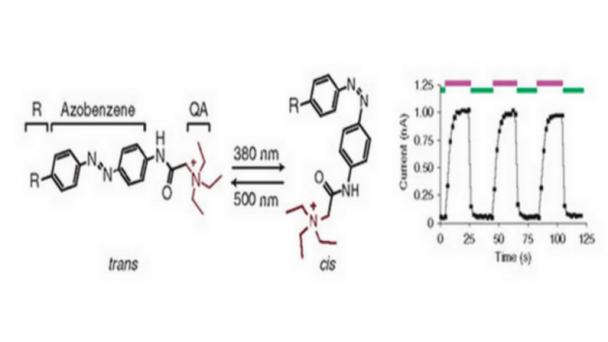
Targeting Specific Channels and Receptors for Photocontrol – We have developed a strategy for photocontrol of particular ion channels and receptors with “photoswitchable tethered ligands” (PTLs).

Project Description

Optogenetics has revolutionized neuroscience by making it possible to use heterologously expressed light-gated ion channels and pumps to stimulate or inhibit action potential firing of genetically selected neurons in order to define ther roles in brain circuits and behavior. Since the flow of information through neural circuits depends on synaptic transmission between cells, an important next technological step is to bring optogenetic control to the neurotransmitter receptors of the synapse. The Optogenetic Pharmacology that we propose makes this possible. In this approach genetically-engineered neurotransmitter receptor channels and G protein coupled receptors (GCPRs) from synapse are derivatized with synthetic Photoswitched Tethered Ligands (PTLs) and thereby made controllable by light. ...

OnAir Post: Optical control of synaptic transmission

MRI Corticography (MRCoG)

Principal Investigator: David Alan Feinberg Helen Wills Neuroscience Institute Title: “MRI Corticography (MRCoG): Micro-scale Human Cortical Imaging” BRAIN Category: Next Generation Human Imaging (RFA MH-14-217)

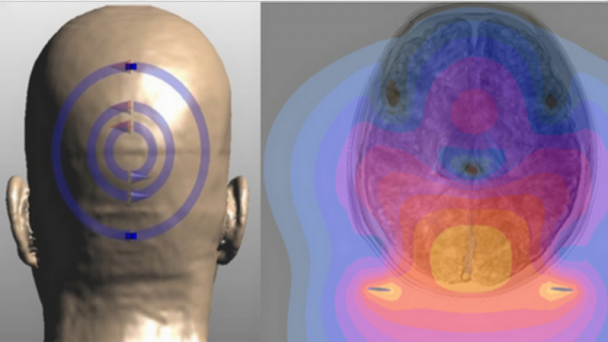
To image the activity and connections of the brain’s cortex on a micro scale – with dramatically higher resolution than existing scanners – Dr. Feinberg’s group will employ high sensitivity MRI coils that focus exclusively on the brain’s surface.

NIH Webpages

Project Description

MRI is the only technology that can image the connectivity of the human brain in vivo and non-invasively. However, neither BOLD fMRI nor diffusion-based fiber tracking has been able to break the barrier of 1-mm voxel spatial resolution. Yet, 1-mm voxel contains roughly 50,000 neuronal cells and the human cortex is less than 5 mm thick. The disparity between the spatial scales has thus created a large gap between MRI studies of the whole brain and optical imaging and cell recordings of groups of neurons. The overarching objective of this proposal is to bring noninvasive human brain imaging into the microscale resolution and begin to bridge studies of neuronal circuitry and network organization in the human brain. Our breakthrough technology, termed MR Corticography (MRCoG), will achieve dramatic gains in spatial and temporal resolutions by focusing exclusively to the cortex. Higher-sensitivity ...

OnAir Post: MRI Corticography (MRCoG)

Advanced MRI Technologies (AMRIT)

AMRIT is a research and development company in the field of medical and scientific imaging. The main objective is to find new uses for MRI and to provide the technical knowledge needed to conduct medical and neuroscience studies with the advanced MRI methods. The specific focus of AMRIT is in brain, heart and cancer studies with magnetic resonance imaging.

OnAir Post: Advanced MRI Technologies (AMRIT)

NIH Neuroscience Seminar – Feb. 11, 2013

TITLE: Regulation of glutamate receptors and synaptic plasticity in the brain

AUTHOR: Richard Huganir, Ph.D., University of California, Berkeley

TIME: 12:00:00 PM DATE: Monday, Feb 11, 2013

Archived NIH Videocast 

Abstract

Dr Huganir’s laboratory is credited for examining the molecular mechanisms underlying the regulation of neurotransmitter receptor function with a focus on glutamate receptors. Their studies have suggested that regulation of receptor function may be a major mechanism for the regulation of synaptic plasticity in the nervous system in health and disease and may be an important determinant of animal behavior.

Profile

Professor and Director of the Department of Neuroscience at Johns Hopkins University; Co-Director, Brain Science Institute; and HHMI investigator. Member of Multi-Council Working Group (NIMH council)

Huganir’s lab is credited for examining the molecular mechanisms underlying the regulation of neurotransmitter receptor function with a focus on glutamate receptors. Their studies have suggested that regulation of receptor function may be a major mechanism for the regulation of synaptic plasticity in the nervous system in health and disease.


About the NIH Neuroscience Seminars

NIH Neuroscience Seminar Series website

The NIH Neuroscience Seminar Series features lectures and discussions with leading neuroscientists. Sponsored by NINDS, NIMH, NIA, NIDCD, NIDA, NICHD,NEI,NIAAA,NIDCR, NHGRI and NCCIH, ...

OnAir Post: NIH Neuroscience Seminar – Feb. 11, 2013

Skip to toolbar