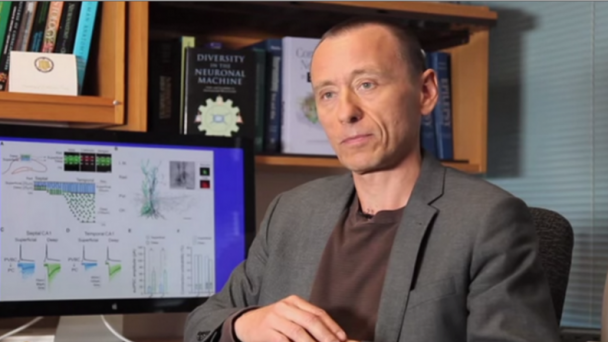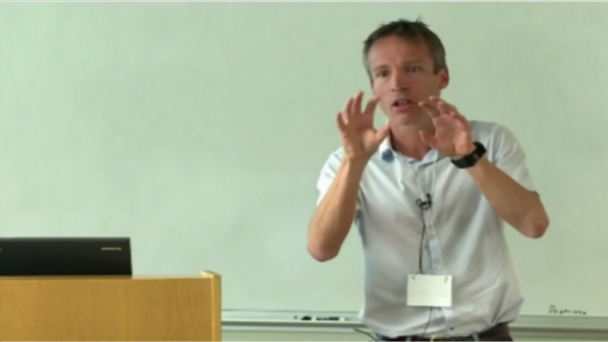
Mark Steyvers, PhD – UC Irvine


Professor, Cognitive Sciences UC Irvine Principal Investigator, Memory and Decision Laboratory

Dr. Steyvers research focuses on Wisdom of Crowds; Aggregating human judgments; Computational models of the mind; Machine Learning and Statistics; Memory and Decision Making.


Web Information

Department webpage: http://www.faculty.uci.edu/profile.cfm?faculty_id=5064

Memory and Decision Laboratory websitehttp://psiexp.ss.uci.edu/research/madlab.htm

Google Scholar: https://scholar.google.com/citations?user=szUb_isAAAAJ&hl=en

Contact Information

Email: msteyver@uci.edu

Phone: (949) 824-7642

Address: University of California, Irvine 2316 Social & Behavioral Sciences Gateway Building Mail Code: 5100 Irvine, CA 92697


Biosketch

2000 – 2002 Postdoctoral fellow. Stanford University

1995 – 2000 PhD, Indiana University, Joint degree in Cognitive Psychology and Cognitive Science. 1994

BA, University of Amsterdam, Psychology (Cum Laude)

See CV


Research Interests

Higher order cognition (memory/ decision-making/ inductive inference)

Computational modeling / Bayesian data analysis

Wisdom of crowds / Collective Intelligence / Crowdsourcing

Machine learning

Cognitive neuroscience (joint models for behavior and imaging data)

Computational Psychotherapy (joint models for text, coding, and patient data)

My research interests span a diverse set of topics in cognitive science such as wisdom of crowds, episodic and semantic memory, dynamic decision making, and causal reasoning. In each of these areas, I combine mathematical and computational modeling with behavioral experiments. The models and experiments are tightly coupled: I try to formulate empirical questions with the goals of constraining, developing, or testing between alternative computational models of how people learn, process, and represent information. My ...

OnAir Post: Mark Steyvers, PhD – UC Irvine
UC Irvine Neuroscience

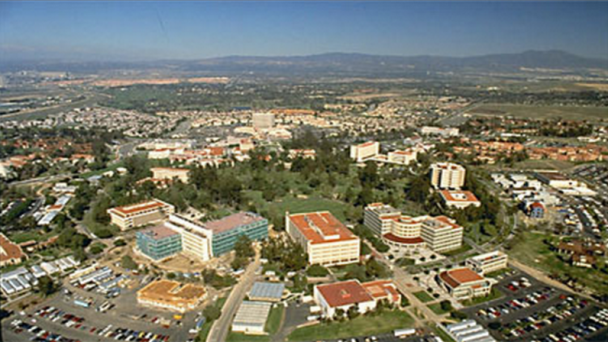
UC Irvine’s neuroscience efforts are primarily focused on the Department of Anatomy & Neurobiology in the School of Medicine and the Department of Neurobiology and Behavior in the School of Biological Sciences.

Research projects aim to discover treatments and cures for epilepsy, Alzheimer’s disease, stroke, learning and memory disorders, drug addiction, ALS (Lou Gehrig’s disease), deafness and other hearing disorders, spinal cord injury, Parkinson’s disease, dementia, mental retardation and to learn more about systems neuroscience, learning and memory, cell signaling, and hearing research.


Web Information

Department of Anatomy & Neurobiology Website:  anatomy.uci.edu/ Department of Neurobiology and Behavior website: neurobiology.uci.edu/ Brain Initiative Grant – “Towards a Complete Description of the Circuitry Underlying Memory replay”

Organization

Chair Department of Anatomy & Neurobiology: Ivan Soltesz Chair Department of Neurobiology and Behavior: Marcelo Wood mwood@uci.edu

Department of Neurobiology and Behavior

The Department of Neurobiology and Behavior is made up of a community of faculty, students, postdoctoral fellows and staff who share a common goal: creating an exciting intellectual environment that optimizes our research and teaching missions. Our faculty are highly distinguished both nationally and internationally. Presently two of our faculty are in the National Academy of Science, two in the American Academy of Arts and Sciences, two in the Royal Society of London, and ...

OnAir Post: UC Irvine Neuroscience

Soltesz Lab: GABAergic interneurons in the hippocampus

https://www.youtube.com/watch?v=KiVdY6XZAL0Video can’t be loaded because JavaScript is disabled: How GABAergic interneurons in the hippocampus choose their postsynaptic partners (https://www.youtube.com/watch?v=KiVdY6XZAL0)

“How GABAergic interneurons in the hippocampus choose their postsynaptic partners”

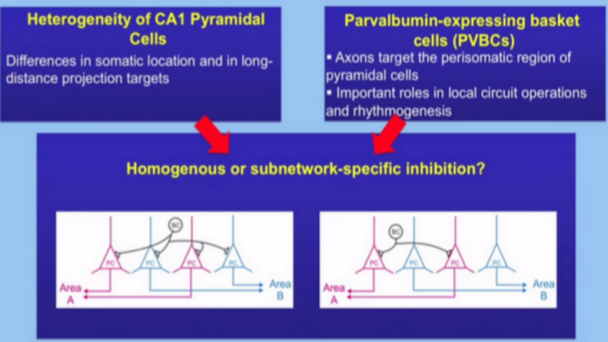
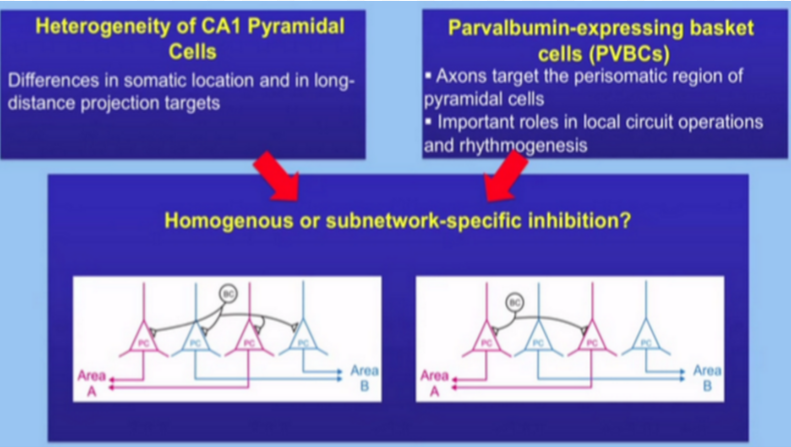
The CA1 region consists of heterogeneous pyramidal cells. In this video, Drs. Ivan Soltesz, Sang-Hun Lee, and Ivan Marchionni describe that GABAergic, parvalbumin expressing basket cells preferentially target specific subsets of pyramidal cells, while being selectively excited by other subsets, demonstrating nonuniform perisomatic inhibition of hippocampal output channels.

Lab Profile

Principal Investigator: Ivan Soltesz UC Irvine Neuroscience

The Soltesz Lab is interested in how brain cells communicate with each other and how the communication changes after fever-induced seizures in early childhood and after head injury. Our general goal is to understand how neuronal networks function and dysfunction, in order to discover new therapies to prevent epilepsy.

OnAir Post: Soltesz Lab: GABAergic interneurons in the hippocampus

Thinking Brain – Mysteries of the Brain

https://www.youtube.com/watch?v=lRKo_dN0IMEVideo can’t be loaded because JavaScript is disabled: Thinking Brain | Mysteries of the Brain (https://www.youtube.com/watch?v=lRKo_dN0IME)

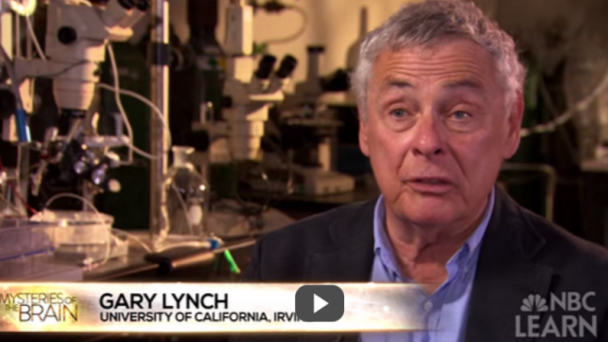
“Through neural connections, called synapses, the brain can process and store enormous amounts of information. Neuroscientist Gary Lynch at the University of California, Irvine explains how this incredibly complex communication process allows animals to learn and remember.”

“Mysteries of the Brain” is produced by NBC Learn in partnership with the NSF.

NSF BRAIN Initiative Published June 10, 2015

OnAir Post: Thinking Brain – Mysteries of the Brain

Soltesz Lab – UCIrvine

The Soltesz Lab is interested in how brain cells communicate with each other and how the communication changes after fever-induced seizures in early childhood and after head injury. Our general goal is to understand how neuronal networks function and dysfunction, in order to discover new therapies to prevent epilepsy.

OnAir Post: Soltesz Lab – UCIrvine

Ivan Soltesz, PhD – UC Irvine

Professor & Chair: Anatomy & Neurobiology, Physiology & Biophysics, and Neurobiology & Behavior Director, Soltesz Lab

Research Focus: Working to understand: traumatic brain injury, post-traumatic epilepsy, fever-induced (Febrile) seizures in childhood, learning and memory deficits. 

Scientific Focus: functions, development and plasticity of hippocampal interneuronal networks. Physiological basis of hyperexcitability. Mechanisms of selective neuronal vulnerability.

Web Information

Webpage: anatomy.uci.edu/soltesz.html UC Irvine Neuroscience Brain Initiative Grant – “Towards a Complete Description of the Circuitry Underlying Memory replay”

Contact Information

Email: isoltesz@uci.edu Phone: 949-824-3957 and 3967 Address: Dep’t Anatomy & Neurobiology 117 Irvine Hall School of Medicine University of California Irvine, California 92697-1280


Biography

1983-1988

Diploma in Biology L. Eotvos University, Budapest, Hungary

1988-1989

Ph.D., Comparative Physiology L. Eotvos University, Budapest, Hungary

1989-1990

Postdoctoral Research Fellow, MRC Anatomical Neuropharmacology Unit Oxford University, England

1990-1991

Postdoctoral Researcher, Dept of Visual Science, Institute of Opthalmology University of London, U.K.

1991-1992

Post-graduate Postdoctoral Researcher, Centre de Recherche en Neurobiologie Université Laval, Quebec

1992-1993

Postdoctoral Researcher, Dept of Neurology and Neurological Sciences Stanford University, Palo Alto, California

1993-1995

Postdoctoral Researcher, Dept of Anesthesiology and Pain Management UT Southwestern, Dallas, Texas

1995-1999

Assistant Professor, Dept.’s of Anatomy & Neurobiology and Physiology & Biophysics University of California, Irvine, California

1999-2003

Associate Professor, Dept.’s of Anatomy & Neurobiology and Physiology & Biophysics University of California, Irvine, California

2002-2003

Associate Professor, Dept. of Neurobiology & Behavior University of California, Irvine, California

2001-present

Fellow, Center for the Neurobiology of Learning & Memory University of California, Irvine, California

2003-present

Professor, ...

OnAir Post: Ivan Soltesz, PhD – UC Irvine

David Feinberg, MD/PhD – UCSF


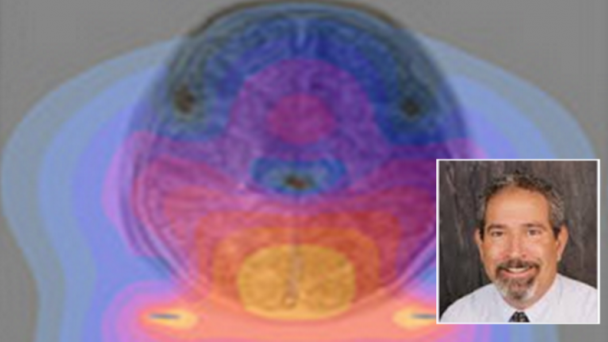
Adjunct professor of neuroscience at UC Berkely and of Radiology at UCSF Board Certified Diagnostic Radiologist and Neuroradiologist President, Advanced MRI Technologies (AMRIT)

Dr. Feinberg is an internationally recognized expert on Magnetic Resonance Imaging (MRI), with numerous publications and research studies to his credit. In addition, he holds many patents in MRI technology.


Web Information

Redwood Regional Medical Group webpage: rrmginc.com/physicians Helen Wills Neuroscience Institute Brain Initiative Grant

Contact Information

Email: david.feinberg@advancedmri.com Phone: 707-829-2933 Address: Advanced MRI Technologies 652 Petaluma Ave, Suite J Sebastopol, CA 95472


Biography

Dr. Feinberg completed his B.A., M.S. and Ph.D., at the University of California, Berkeley. After completing his Ph.D, Dr. Feinberg attended the University of Miami, School of Medicine’s ‘Ph.D to M.D’ medical program. He remained on the east coast for his internship and residency at Brigham and Womens Hospital (Harvard Medical School), and at NYU Medical Center. He has a fellowship in Neuroradiology from Washington University. He received his board certification in Diagnostic Radiology in 1997.

Dr. Feinberg is an internationally recognized expert on Magnetic Resonance Imaging (MRI), with numerous publications and research studies to his credit. In addition, he holds many patents in MRI technology.

In his spare time he enjoys cycling, hiking and traveling.

Articles

From UC Berkely News 9/30/15

Surface imaging of the brain

David Feinberg, a UC ...

OnAir Post: David Feinberg, MD/PhD – UCSF

Circuitry Underlying Memory replay

Principal Investigator: Ivan Soltesz UC Irvine Neuroscience Title: “Towards a Complete Description of the Circuitry Underlying Memory replay” BRAIN Category: Understanding Neural Circuits (RFA NS-14-009)

Dr. Soltesz’s team will combine computer brain modeling and large-scale recordings of hundreds of neurons to understand how the brain generates sharp-wave-ripples, a neuronal activity pattern essential for learning and memory.

NIH Webpages

How GABAergic interneurons in the hippocampus choose their postsynaptic partners

Project Description

The function of a brain region is an emergent property of many cell types. The criteria needed to understand a network have been established in studies of invertebrate “simple” networks, but there has not yet been an attempt to provide such a full, mechanistic understanding of any network in the vertebrate brain. We believe that the time is now ripe for such an effort. Specifically, we propose to understand how the CA3 network in the hippocampus generates sharp-wave-ripples (SWR). These events are of great interest because of their cognitive function: they represent replay of episodic memory sequences and are required for subsequent memory recall, as demonstrated at the behavioral level. Our efforts to understand the SWR will build on previous work establishing the cell types of the hippocampus. However, to meet ...

OnAir Post: Circuitry Underlying Memory replay

Skip to toolbar