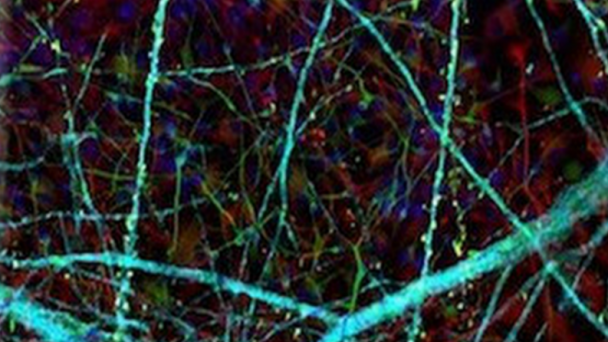
UCLA Neuroscience

UCLA is the home of an outstanding and vibrant neuroscience community, including laboratories in diverse departments in the David Geffen School of Medicine, the College and the Samueli School of Engineering.

UCLA offers graduate training in Neuroscience through the Interdepartmental PhD Program for Neuroscience (NS-IDP). The program includes about 150 laboratories in diverse areas spanning the field from molecular analysis to genetics and behavior. Students learn modern problem solving skills and use state of the art approaches to explore a deeper understanding of how the brain processes information.


Web Information

Website: neuroscience.ucla.edu/ BRAIN Initiative Grant– “Defining cell types, lineage, and connectivity in developing human fetal cortex” BRAIN Initiative Grant– “Novel Genetic Strategy for Sparse Labeling and Manipulation of Mammalian Neurons”

Contact Information

Email: felixs@ucla.edu Phone: ext. 4-5733 AddressUCLA Brain Research Institute 1506 Gonda (Goldschmied) Neuroscience and Genetics Research Center 695 Charles Young Drive South, Los Angeles, CA 90095

Organization

Chair: Felix E. Schweizer, Neurobiology Vice-Chair: Tom O’Dell, Physiology

Graduate Program

The Interdepartmental PhD Program in Neuroscience (NSIDP) is one of eighteenGraduate Programs in Biosciences at UCLA. The NSIDP has an independent admissions process and an independent curriculum, but all programs share some of the administrative structures.

Neuroscience research at UCLA is not restricted to an individual department. In fact ...

OnAir Post: UCLA Neuroscience
Stress and the teenager’s brain

https://www.youtube.com/watch?v=mhO9sPEsLzAVideo can’t be loaded because JavaScript is disabled: How does stress affect a teenager’s brain? – Science Nation (https://www.youtube.com/watch?v=mhO9sPEsLzA)

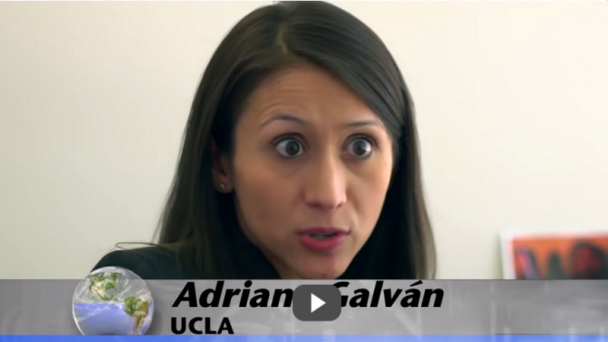
“How does stress affect a teenager’s brain?”

With support from the National Science Foundation, UCLA Psychologist Adriana Galvan is investigating the effects of daily stress on a teen’s cognition and brain function. She is monitoring the daily stress of teens by having them carry a personal digital device that provides daily measures of stress over two weeks. She is also scanning their brains and measuring their stress hormone levels. By taking this multi-method approach, Galvan is learning how daily stress influences cognitive neurodevelopment in teens.

NSF BRAIN Initiative Science Nation – April 2, 2014

Description

Ever wonder what is going on in the brain of a teenager, especially one who is stressed out? UCLA Psychologist Adriana Galvan is on a quest to find out. With support from the National Science Foundation, she’s investigating the effects of daily stress on a teen’s cognition and brain ...

OnAir Post: Stress and the teenager’s brain

Genetic Dissection of Basal Ganglia Circuitry

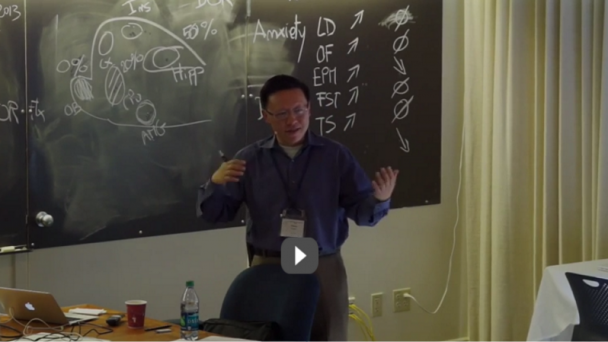
https://www.youtube.com/watch?v=QydWI8UWEkEVideo can’t be loaded because JavaScript is disabled: X. William Yang, UCLA (https://www.youtube.com/watch?v=QydWI8UWEkE)

“Genetic Dissection of Basal Ganglia Circuitry:Novel Insights into Opiate Reward” from the Cellular Biology of Addiction course 8/11/213

Video published on Nov. 4, 2013 by CSHL Leading Strand

X. William Yang Profile

Professor, Psychiatry and Biobehavioral Sciences, UC Los Angeles Director, X. William Yang Research Group

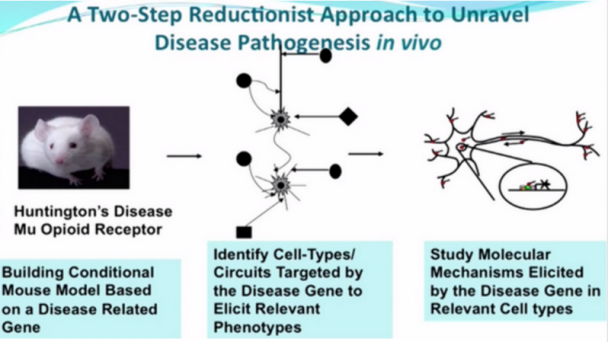
Yang is interested in using the mouse molecular genetic approach to study the pathogenesis of neurodegenerative diseases. One recurring theme in neurodegenerative diseases is that a widely expressed mutant protein can cause highly selective degeneration of a subset of neurons. The pathogenesis of such selective neurodegeneration remains unclear. Currently, we are focusing on Huntington’s disease (HD) to study the molecular and cellular mechanisms underlying the disease.


OnAir Post: Genetic Dissection of Basal Ganglia Circuitry

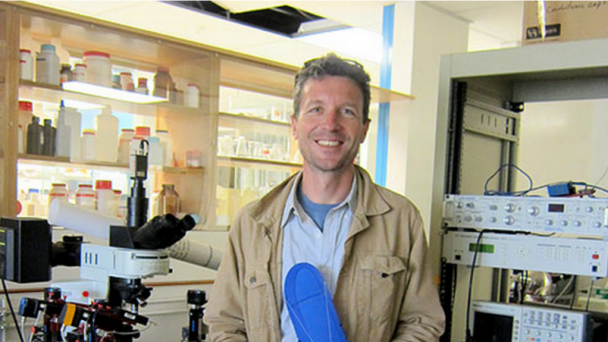
Massimo Scanziani, PhD – UCSD


Professor, Neurobioloby section, UC San Diego Director, Scanziani Lab

The goal of Scanziani’s research is to understand the circuits controlling the spatial and temporal structure of cortical activity. Towards this goal his lab uses in vivo and in vitro electrophysiological, imaging and anatomical approaches. Model systems are the rodent’s somatosensory cortex and hippocampus. His lab focuses on the role played by elementary cortical circuits resulting from the interaction between excitatory and inhibitory neurons.

Web Information

Webpage: biology.ucsd.edu/research/faculty/mscanziani HHMI page: hhmi.org/scientists/massimo-scanziani UCSD Neuroscience  Brain Initiative Grant– “Classifying Cortical Neurons by Correlating Transcriptome with Function”

Contact Information

Email: mscanziani@ucsd.edu Phone: (858) 822-3840 Address: Center for Neural Circuits and Behavior, Room 213 9500 Gilman Dr. La Jolla CA 92093-0634


Biography

BS, biochemistry, Swiss Federal Institute of Technology PhD, neurophysiology, University of Zurich and Swiss Federal Institute of Technology

From HHMI page

As a child in Rome, Massimo Scanziani grew up on a steady diet of culture. Discussions at the family dinner table revolved around history, literature, and art—not neuroscience. But a deep interest in nature led him to study science and the mysteries of the brain. Although his career path diverged from the marvels of Roman antiquities and the nuances of Renaissance frescoes, Scanziani wants to understand how we think about such things. In short, he wants to eavesdrop on ...

OnAir Post: Massimo Scanziani, PhD – UCSD

X. William Yang Research Group – UCLA

Yang Lab's research is focused on applying comprehensive molecular and genetic approaches to study the pathogenesis of Huntington’s disease (HD) and Parkinson’s disease (PD), as well as exploring the molecular genetics and circuitry of the basal ganglia (BG), a brain region targeted in various neurodegenerative and neuropsychiatric disorders. The overarching approach of our lab is to develop genetic mouse models of these diseases, or create mice that carry mutations in the genes.

OnAir Post: X. William Yang Research Group – UCLA

X. William Yang, MD/PhD – UCLA


Professor, Psychiatry and Biobehavioral Sciences, UC Los Angeles Director, X. William Yang Research Group

Yang is interested in using the mouse molecular genetic approach to study the pathogenesis of neurodegenerative diseases. One recurring theme in neurodegenerative diseases is that a widely expressed mutant protein can cause highly selective degeneration of a subset of neurons. The pathogenesis of such selective neurodegeneration remains unclear. Currently, we are focusing on Huntington’s disease (HD) to study the molecular and cellular mechanisms underlying the disease.

Web Information

Webpage: bioscience.ucla.edu/faculty/x-william-yang UCLA Neuroscience BRAIN Initiative Grant– “Novel Genetic Strategy for Sparse Labeling and Manipulation of Mammalian Neurons”

Contact Information

Email: xwyang@mednet.ucla.edu Phone: 310-267-2761 Address: 695 Charles Young Drive, #3309 Los Angeles, CA 90095 695 Charles Young Drive, Gonda 3506B Los Angeles, CA 90095

Biography

Dr. X. William Yang is a professor in the Department of Psychiatry & Biobehavioral Sciences at David Geffen School of Medicine at UCLA. He is also a member of the Center for Neurobehavioral Genetics at Semel Institute for Neuroscience & Human Behaviors, and a member of the Brain Research Institute at UCLA. He has served as a regular member at the NIH’s Cell Death in Neurodegeneration (CDIN) Study Section, a Scientific Advisory Board member of the Hereditary Disease Foundation, and a faculty member for Faculty 1000 Medicine?s Neurogenetics ...

OnAir Post: X. William Yang, MD/PhD – UCLA

Scanziani Lab – UCSD

Principal Investigator: Massimo Scanziani UC San Diego’s Neuroscience

The goal of Scanziani Lab’s research is to understand the mechanisms by which elementary circuits of neurons control the spatial and temporal structure of cortical activity. Towards this goal they use in vivo and in vitro electrophysiological, imaging and anatomical techniques as well as behavioral approaches. Their model system is the rodent’s sensory cortex.

Web Information

Website:  scanzianilab.org/ Brain Initiative Grant – “Classifying Cortical Neurons by Correlating Transcriptome with Function”

Contact Information

Email: massimo@ucsd.edu Phone: (858) 822-3840 Address: Center for Neural Circuits and Behavior, Room 213 9500 Gilman Dr. La Jolla CA 92093-0634

Research

Sensations and thoughts result from the coordinated activity of neuronal populations in space and time. The goal of my research is to understand the mechanisms by which elementary circuits of neurons control the spatial and temporal structure of cortical activity. Towards this goal we use in vivo and in vitro electrophysiological, imaging and anatomical techniques as well as behavioral approaches. Our model system is the rodent’s sensory cortex.

Our work is revealing the logic and the mechanisms by which elementary circuits, the building blocks of cortical architecture, orchestrate cortical activity.

Publications

Visual Cortex

Xue M, Atallah BV, Scanziani M.

Equalizing exitation-inhibition ratios across visual cortical neurons.

Nature 511: 596-600 (2014) [pdf]

Bortone DS, Olsen SR, ...

OnAir Post: Scanziani Lab – UCSD

Geschwind Lab – UCLA

Principal Investigator: Daniel H Geschwind UCLA Neuroscience

The Geschwind laboratory is dedicated to improve treatment and understanding of neurodevelopmental and neurodegenerative conditions, focusing on autism spectrum disorders, dementia, neural repair, and inherited ataxia. The lab leverages the fields of genetics and genomics, coupled with basic neurobiology, to obtain a systems level understanding of disease. The lab has pioneered the application of gene expression and network methods in neurologic and psychiatric disease.

Web Information

Website:  geschwindlab.neurology.ucla.edu/node Brain Initiative Grant

Contact Information

Emailindividual contacts Phone: (310) 794-6570 Address: UCLA Neurogenetics Program 2309 Gonda Bldg, 695 Charles E. Young Dr. South Los Angeles, CA 90095-1761

Research

The Geschwind laboratory is dedicated to improve treatment and understanding of neurodevelopmental and neurodegenerative conditions, focusing on autism spectrum disorders, dementia, neural repair, and inherited ataxia. Our work leverages the fields of genetics and genomics, coupled with basic neurobiology, to obtain a systems level understanding of disease. We have pioneered the application of gene expression and network methods in neurologic and psychiatric disease, working in collaboration with dozens of other laboratories to connect molecular pathways to nervous system function. Our over-arching goal is to develop new therapeutics for nervous system disorders for which disease-altering therapies are not currently available. Plot of a module of genes co-expressed during human cortical development. These ...

OnAir Post: Geschwind Lab – UCLA

Daniel H Geschwind, MD/PhD – UCLA


Professor of Human Genetics and of Neurology and Psychiatry, UCLA School of Medicine Director, Neurogenetics Program and the Center for Autism Research and Treatment (CART) Co-director, UCLA Center for Neurobehavioral Genetics Director, Geschwind Lab

Geschwind lleverages genetics and genomics to understand neurodevelopment and neurodegenerative disease mechanisms developing new treatments for these disorders. Dr. Geschwind also fosters large-scale collaborative patient resources for genetic research and data sharing.

Web Information

Webpage: geschwindlab.neurology.ucla.edu/person-category/principal-investigator UCLA Neuroscience Brain Initiative Grant

Contact Information

Email: dhg@mednet.ucla.edu Phone: 310 794-6570 Address: 2506 Gonda 695 Charles E. Young Dr. South Los Angeles CA 90095


Biography

Dr. Geschwind obtained A.B. degrees in psychology and chemistry at Dartmouth College and his M.D./Ph.D. at Yale School of Medicine prior to completing his internship, residency, and postdoctoral fellowship at UCLA. He joined the UCLA faculty in 1997.


Research

Dr. Geschwind’s laboratory leverages genetics and genomics to understand neurodevelopment and neurodegenerative disease mechanisms, with the goal of developing new treatments for these disorders. In addition to his research, Dr. Geschwind has put considerable effort into fostering large-scale collaborative patient resources for genetic research and data sharing. He advocates strongly for data and biomaterial sharing, having provided scientific oversight for the Autism Genetic Research Exchange (AGRE) and has served on numerous scientific advisory boards, including the Faculty of 1000 Medicine, the Executive ...

OnAir Post: Daniel H Geschwind, MD/PhD – UCLA

Picturing the Brain – Paul Thompson

https://www.youtube.com/watch?v=qkYEfWazIfcVideo can’t be loaded because JavaScript is disabled: Picturing the Brain (https://www.youtube.com/watch?v=qkYEfWazIfc)

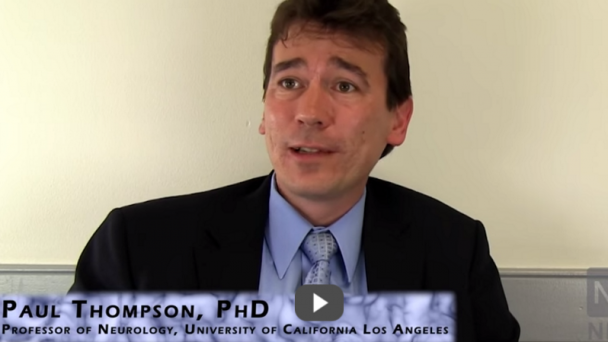
Dr. Paul Thompson talks about the work that he does at the Lab of Neuro Imaging (LONI) at UCLA.

He discusses brain health, the latest brain imaging technology and projects like ENIGMA, which involves a world-wide effort to create a brain database.

Published on July 13m 2013 by NIBIBgov

OnAir Post: Picturing the Brain – Paul Thompson

Genetic Sparse Labeling Mammalian Neuron

Principal Investigator: X. William Yang UCLA Neuroscience Title: “Novel Genetic Strategy for Sparse Labeling and Manipulation of Mammalian Neurons” BRAIN Category: Tools for Cells and Circuits (RFA MH-14-216)

Dr. Yang’s team will develop a new way to genetically target specific neurons, incorporating streamlined imaging and mapping methods that will enable the detection of sparse populations of cells that often elude existing methods.


NIH Webpages

Project Description

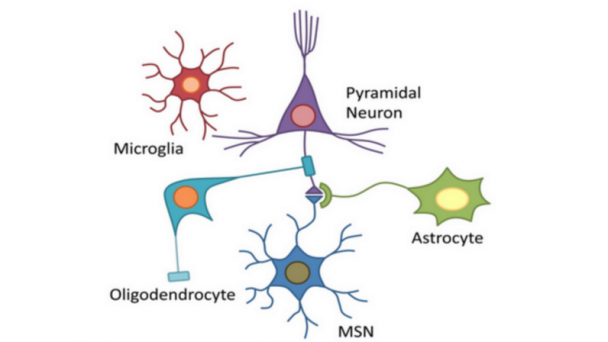
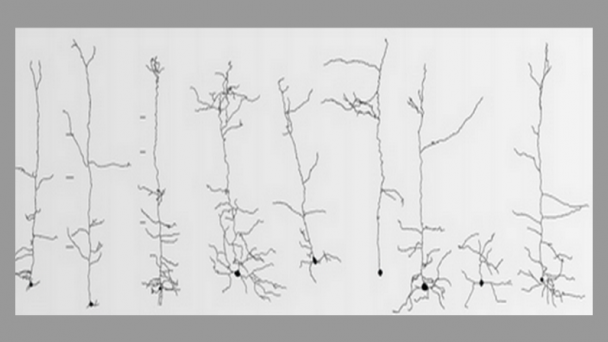
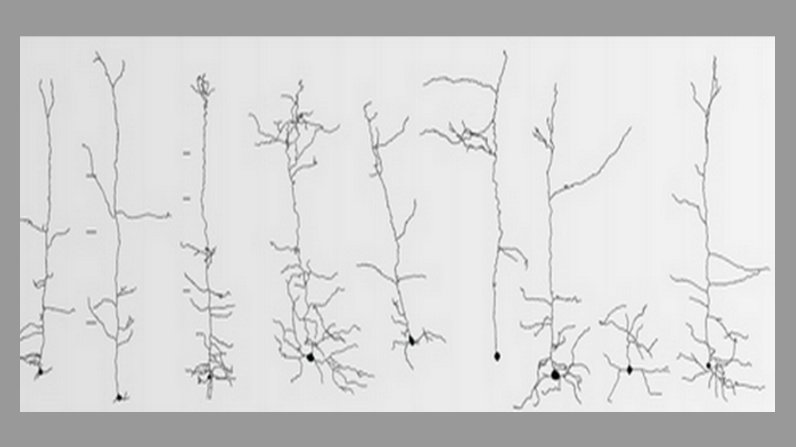
Cajal revolutionized the study of the brain through the use of the Golgi stain to label cells sparsely and stochastically in a fashion that revealed a neuron’s morphology in its entirety. Although genetic tools for sparse and stochastic labeling and manipulation of single neurons in Drosophila have been used extensively over the past 15 years, they have only recently become available for mammalian systems, but the latter tools are limited to only a few systems for which cell-type specific reagents (e.g. enhancers) are available or otherwise involve cumbersome manipulations. Thus, there is an important need in the field to develop robust reagents for analysis of neurons at the level of single cells. Indeed, analysis of neurons at the single identified cellular level provides critical information on the control of neuronal morphology, connectivity, physiology and plasticity. This application is in response to BRAIN ...

OnAir Post: Genetic Sparse Labeling Mammalian Neuron

Cell types in developing human fetal cortex

Principal Investigator: Daniel H Geschwind UCLA Neuroscience Title: “Defining cell types, lineage, and connectivity in developing human fetal cortex” BRAIN Category: Census of Cell Types (RFA MH-14-215)

Dr. Geschwind’s group will explore the diversity of cell types in the developing human brain, and will bring to bear state-of-the-art genetic and cellular visualization technology to map and trace the relationship between cell types across the cortex.

NIH Webpage


Project Description

Little is currently known about the number, proportion, or lineage of distinct cell types in the developing human fetal brain. Knowledge of such a component list and its functional genomic foundations is crucial for understanding the function of this complex system, its evolution, and how it is disrupted in disease. We hypothesize that comprehensive single-cell mRNA expression profiles provide an accurate and efficient rubric for a first generation classification schema that can be integrated with lineage, morphology and connectivity. We will use unsupervised learning algorithms to cluster 10,000 single cell transcriptomes derived from RNAseq of the human fetal cortical anlage, providing an unbiased model to identify and understand the resultant cell classes. We will validate these cell class determinations using in situ hybridization. We will use marker genes identified in this analysis to perform lineage tracing using cell-type ...

OnAir Post: Cell types in developing human fetal cortex

Cortical Neurons by Transcriptome

Principal Investigator: Massimo Scanziani UC San Diego’s Neuroscience Title: “Classifying Cortical Neurons by Correlating Transcriptome with Function” BRAIN Category: Census of Cell Types (RFA MH-14-215)

Dr. Scanziani’s team will record neuronal responses to different visual stimuli to discover how individual brain cell activity is linked to expression of specific genes.

NIH Webpage

Visual cortex cells

Project Description

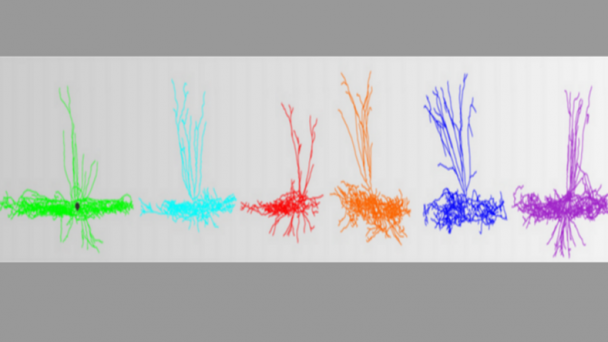
The classification of neurons into distinct types is a fundamental endeavor in neuroscience. Neuronal classification allows one to gain insight into the building blocks of the nervous system, is essential for a mechanistic understanding of the function of the nervous system and is a prerequisite for unambiguous communication between investigators. No single unequivocal categorization scheme exists yet for neurons in the mammalian cerebral cortex. The classification based on morphological characteristics has led to tremendous advances in our understanding of the nervous system, yet is often ambiguous in cortical neurons because many morphological properties are difficult to parameterize. Other classifications based on immunohistochemistry or electrophysiology have been helpful but, alone, fail to capture the rich diversity of cortical neurons. Evidence indicates that distinct neuron types express different genes. Thus, in principle, the gene expression pattern could be used to generate an unambiguous and objective classification ...

OnAir Post: Cortical Neurons by Transcriptome

Skip to toolbar