Institute for Brain and Mind @UCSD

Kavli Institute for Brain and Mind (KIBM) researchers bridge disciplinary boundaries to further understanding of the origins, evolution and mechanisms of human cognition, from the brain’s physical and biochemical machinery to the experiences and behaviors we call the mind.

Its advisory board includes scientists and clinicians from UCSD departments of cognitive science, neurobiology, psychology, psychiatry, neurosciences, radiology, and philosophy. The Scripps Research Institute, The Salk Institute for Biological Studies, and The Neurosciences Institute are also represented on the KIBM board.

Web Information

Kavli Foundation web pagehttp://www.kavlifoundation.org/university-california-san-diego

KIBM website:  http://kibm.ucsd.edu/

About KIBM

From the Kavli web page

Scientists have made great strides toward understanding how the human brain works. But as they unlock the secrets of the brain’s cellular machinery, they face a question that has occupied science and philosophy for centuries: What is the relationship between the brain and that complex set of experiences and behaviors we call the “mind?”

That question is central to the mission of the Kavli Institute for Brain and Mind at the University of California, San Diego (KIBM). Under the leadership of co-directors Nicholas Spitzer and Fred “Rusty” Gage, and associate director Ralph J. Greenspan, KIBM seeks to discover the physical and biochemical ...

OnAir Post: Institute for Brain and Mind @UCSD
UCSD Neuroscience


Summary

The University of California at San Diego (UCSD) leads the nation as the top neurosciences department in National Institutes of Health (NIH) funding.

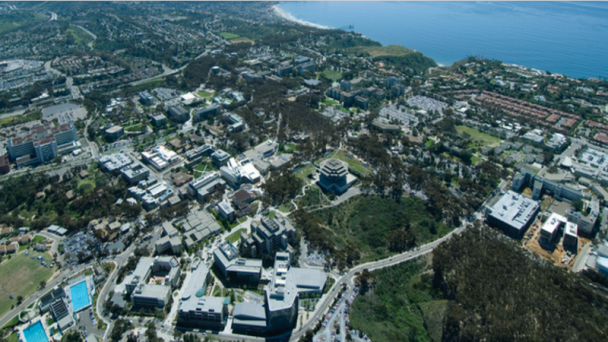
With about 120 faculty members, UC San Diego’s Neuroscience department is among the nation’s largest. The program’s labs, medical centers and clinics are located in the heart of the San Diego life sciences district. There are many research centers at UCSD including Kavli Institute for Brain and Mind; Swartz Center for Computational Neuroscience; and Research in Neuroscience at UC San Diego School of Medicine.


Information

Website: ucsd.edu/ Kavli Institute for Brain and Mind: kavlifoundation.org/university-california-san-diego Swartz Center for Computational Neuroscience: http://sccn.ucsd.edu/index.html Research in Neuroscience at UC San Diego School of Medicine: neurosciences.ucsd.edu/research/Pages/default.aspx Wikipedia Entry: wiki/University_of_California,_San_Diego BRAIN Initiative Grant – “Revealing the connectivity and functionality of brain stem circuits” Brain Initiative Grant– “Classifying Cortical Neurons by Correlating Transcriptome with Function” BRAIN Initiative Grant Optogenetic mapping of synaptic activity and control of intracellular signaling”


Research in Neuroscience at UC San Diego School of Medicine

UC San Diego leads the nation as the top neurosciences department in National Institutes of Health (NIH) funding.

With about 120 faculty members, UC San Diego’s Neuroscience department is among the nation’s largest. The program’s labs, medical centers and clinics are located in the heart of the ...

OnAir Post: UCSD Neuroscience

Ralph Greenspan, PhD – UCSD

Associate Director, Kavli Institute for Mind and Brain  Professor, Neurobiology UCSD and Director, Center for Brain Activity Mapping Co-Director, Cal-Brain

Dr. Greenspan was part of a team of six that proposed in 2012 a Brain Activity Map which morphed into the BRAIN Initiative. One of his main interests currently is to understand the role of network level activity in the nervous system and among the genes, motivated by a strong belief that the state of these networks is of major importance in determining behavior.


Web Information

UCSD web page: healthsciences.ucsd.edu/education/neurograd/faculty/Pages/ralph-greenspan.

Center for Brain Activity Mappinghttp://cbam.ucsd.edu/

Lab webpage:  http://greenspanlab.ucsd.edu/greenspan.html

Contact Information

Email: rgreenspan@ucsd.edu

Phone: 858-822-7657

Address: Kavli Institute for Brain and Mind University of California, San Diego 9500 Gilman Dr. 1859 AP&M Annex La Jolla, CA 92093-0126


Biosketch

B.A., Biology 1974 Brandeis University

Ph.D., Biology 1979 Brandeis University

Postdoctoral training 1979-1982 University of California, San Francisco

Dr. Greenspan began working on the genetic and neurobiological basis of behavior in the fruit fly (Drosophila melanogaster) as a graduate student  with one of the field’s founders, Jeffery Hall, at Brandeis University.  His work has ranged from the genetic control of nervous system development in the fruit fly and mouse, to genetic, molecular and neurobiological studies of innate and learned behaviors in the fruit fly. In the course of this work, he has ...

OnAir Post: Ralph Greenspan, PhD – UCSD

Jacopo Annese, PhD – UCSD


Summary

Assistant Professor, UCSD School of Medicine President/CEO, Institute for Brain and Society Affiliate, Krasnow Institute for Advanced Studies

Dr. Annese’s primary goal in the field of neuroscience is to conduct research that is open to public engagement and promotes the highest standards in data sharing and collaboration within the scientific community.


General Information

Institute website: Institute for Brain and Society Faculty website: UCSD School of Medicine

Email:  jannese@ucsd.edu Office Phone: 858-822-4465 Lab Phone: 858-534-3177

Address:  University of California, San Diego 3510 Dunhill Street San Diego, CA 92121


Biosketch

In 2005 Dr. Annese founded The Brain Observatory and in 2009 the laboratory was charged with the postmortem brain examination of one of the most famous medical cases in the history of neurology. The project evolved into the Digital Brain Library a novel collection of neurological and biographical data from medical patients and ordinary healthy individuals who have chosen to donate the brain to the project. The preservation and curation of their brain images and stories will help physicians and researchers understand the relationship between the brain, behavior and susceptibility to disease.

Education

University of Rome ‘La Sapienza’ Rome, Italy B.A. and M.S. Biological Sciences

University College London London M.S., M.Phil. Neurosciences

Dartmouth College Hanover, NH Ph.D. Cognitive Neuroscience

CV

Download (PDF, 152KB)

Articles

Postmortem examination of patient H.M.’s brain based on histological sectioning ...

OnAir Post: Jacopo Annese, PhD – UCSD

David Kleinfeld, PhD – UCSD


Professor of Biophysics Director, David Kleinfeld Laboratory

David Kleinfeld and his colleagues take biophysical and computational approaches to bridge phenomena at different levels in the brain, ranging from intracellular electrophysiology to multi-cellular recording to animal behavior. This provides an opportunity to discover algorithms and principles that underlie computations within nervous systems. In additional, they develop instrumentation and analysis procedures that facilitate the study of physiology.

Web Information

Neurograd Program webpage: healthsciences.ucsd.edu/education/neurograd/faculty/david-kleinfeld Lab webpage: https://physics.ucsd.edu/neurophysics/kleinfeldcv.php UCSD Neuroscience BRAIN Initiative Grant – “Revealing the connectivity and functionality of brain stem circuits”

Contact Information

Email: dk@physics.ucsd.edu Phone: 858-822-0342 Address: Physics Department UC San Diego


Biography

1984 The Neurobiology Summer School, Marine Biological Laboratory, Woods Hole. 1984 Doctor of Philosophy in Physics, University of California at San Diego. Dissertation: On the Dynamics of Electron Transfer in Photosynthetic Reaction Centers (with Prof. George Feher). 1977 Master of Science, Physics, University of Illinois at Urbana-Champaign. 1976 Bachelor of Science in Electrical Engineering (High Honors), University of Illinois at Urbana-Champaign. Senior Thesis: Growth of Ionization Tracts in Pulsed Microwave Field

Research

David Kleinfeld and his colleagues take biophysical and computational approaches to bridge phenomena at different levels in the brain, ranging from intracellular electrophysiology to multi-cellular recording to animal behavior. This provides an opportunity to discover algorithms and principles that underlie computations within nervous systems. In additional, they ...

OnAir Post: David Kleinfeld, PhD – UCSD

Eliciting brain plasticity

https://www.youtube.com/watch?v=RQ9UJXE_a8s

“Eliciting brain plasticity to keep the body moving”

With support from the National Science Foundation’s (NSF) Emerging Frontiers of Research and Innovation (EFRI) program, bioengineer Gert Cauwenberghs, of the Jacobs School of Engineering and the Institute for Neural Computation at the University of California (UC), San Diego, and his colleagues are working to understand how brain circuitry controls how we move. The goal is to develop new technologies to help patients with Parkinson’s disease and other debilitating medical conditions navigate the world on their own.

NSF BRAIN Initiative Science Nation – March 28, 2014

Description

“Parkinson’s disease is not just about one location in the brain that’s impaired. It’s the whole body. We look at the problems in a very holistic way, combine science and clinical aspects with engineering approaches for technology,” explains Cauwenberghs. “We’re using advanced technology, but in a means that is more proactive in helping the brain to get around some of its problems–in this case, Parkinson’s disease–by working with the brain’s natural plasticity, in wiring connections between neurons in different ways.”

Outcomes of this research are contributing to the system-level understanding of human-machine interactions, and motor learning and control in real world environments for humans, and are ...

OnAir Post: Eliciting brain plasticity

Terrence J. Sejnowski, PhD – UCSD/Salk


Professor of Biological Sciences at UCSD and Head ofComputational Neurobiology Laboratory (CNL) at Salk Institute Howard Hughes Medical Institute Investigator Member of the Advisory Committee to the NIH Director

Sejnowski is interested in the hippocampus and the cerebral cortex, which holds our knowledge of the world and how to interact with it. Sejnowski’s team uses sophisticated electrical and chemical monitoring techniques to measure changes that occur in the connections among nerve cells in the hippocampus during a simple form of learning.

Web Information

UCSD Webpage:   biology.ucsd.edu/research/faculty/tsejnowski

CNL Lab Website: cnl.salk.edu/

HHMI Webpage: hhmi.org/scientists/terrence-j-sejnowski

Wikipedia Entry:  wikipedia.org/wiki/Terry_Sejnowski

Contact Information

Email: tsejnowski@ucsd.edu and sejnowski@salk.edu

Phone: (858) 453-4100

Address: CNL-S c/o The Salk Institute 10010 North Torrey Pines Road La Jolla, CA 92037

Biosketch

Terrence Sejnowski is a pioneer in computational neuroscience and his goal is to understand the principles that link brain to behavior. His laboratory uses both experimental and modeling techniques to study the biophysical properties of synapses and neurons and the population dynamics of large networks of neurons. New computational models and new analytical tools have been developed to understand how the brain represents the world and how new representations are formed through learning algorithms for changing the synaptic strengths of connections between neurons. He has published over 300 scientific papers and 12 books, including The ...

OnAir Post: Terrence J. Sejnowski, PhD – UCSD/Salk

Roger Y. Tsien, PhD – UCSD


Professor of Pharmacology and Chemistry/Biochemistry, UC San Diego Investigator, Howard Hughes Medical Institute Member of the Advisory Committee to the NIH Director

Roger Tsien’s lab studies signal transduction, especially in neurons and cancer cells, with the help of designed molecules, imaging, and photochemical manipulation. The overall goal of his laboratory is to gain a better understanding of signaling inside individual living cells, in neuronal networks, and in tumors. We design, synthesize, and use new molecules that detect or manipulate biochemical signals.


Web Information

Department Webpage: pharmacology.ucsd.edu/faculty/tsien.html

Lab Website: tsienlab.ucsd.edu/

HHMI Webpage: hhmi.org/research/molecular-engineering-applied-cell-biology-and-neurobiology

Wikipedia Entrywikipedia.org/wiki/Roger_Y._Tsien

Contact Information

Email: rtsien@ucsd.edu

Phone: 858-534-4891

Address: Department of Pharmacology, University of California, San Diego, 9500 Gilman Dr., La Jolla, CA 92093-0636

Biosketch

From Wikipedia entry

Roger Yonchien Tsien (born February 1, 1952) is an American biochemist. He is a professor at the Department of Chemistry and Biochemistry, University of California, San Diego. He was awarded the 2008 Nobel Prize in chemistry “for his discovery and development of the green fluorescent protein (GFP) with two other chemists: Martin Chalfie of Columbia University and Osamu Shimomura of Boston University and Marine Biological Laboratory.

He attended Harvard University on a National Merit Scholarship, where he was elected to Phi Beta Kappa as a junior.[9] He graduated summa cum laude with a Bachelor of Science in chemistry and physics ...

OnAir Post: Roger Y. Tsien, PhD – UCSD

3 clues to understanding your brain


https://www.youtube.com/watch?v=Rl2LwnaUA-kVideo can’t be loaded because JavaScript is disabled: 3 clues to understanding your brain | VS Ramachandran (https://www.youtube.com/watch?v=Rl2LwnaUA-k)

“Vilayanur Ramachandran tells us what brain damage can reveal about the connection between celebral tissue and the mind, using three startling delusions as examples.”

Filmed march 2007 at TED 2007 Uploaded to YouTube on October 23, 2007 by TED  

TED Talks webpage

OnAir Post: 3 clues to understanding your brain

Understanding the Mind by Mapping the Brain


https://www.youtube.com/watch?v=igDuigbb-9I

“Understanding the Mind by Mapping the Brain”

Jacopo Annese, Director of the Brain Observatory at the University of California, San Diego is on a quest to collect, dissect, and digitize images of the human brain for the Digital Brain Library, which was launched with support from the National Science Foundation. Annese and his team look for connections, mapping brain structure and connecting it to human behavior.

NSF BRAIN Initiative Science Nation – August 4, 2011

Description

Neuroanatomist Jacopo Annese is looking for 1,000 brains. The Director of the Brain Observatory at the University of California, San Diego is on a quest to collect, dissect, and digitize images of the human brain for the Digital Brain Library, which was launched with support from the National Science Foundation. Annese and his team look for connections, mapping brain structure and connecting it to human behavior. He believes that with a large enough catalog of brains preserved as virtual models, scientists can explore the organ in ways unheard of, revealing new insights into what makes the brain tick. Annese is collecting data on the lives of the people who have already donated brains. He is also studying the behavior of people ...

OnAir Post: Understanding the Mind by Mapping the Brain

Flexible materials for innovative brain research

https://www.youtube.com/watch?v=o8B-RSAFkGAVideo can’t be loaded because JavaScript is disabled: How will flexible materials be used for innovative brain research? (https://www.youtube.com/watch?v=o8B-RSAFkGA)

Research within the BRAIN Initiative is using flexible materials to transform the way we study the brain. Researcher Todd Coleman discusses his research on flexible materials and how it’s being used to monitor everything from cognitive impairment to brain injuries.

For more information about the BRAIN Initiative visit: nsf.gov/brain

NSF BRAIN Initiative Published APRIL 2, 2014

OnAir Post: Flexible materials for innovative brain research

The Brain Observatory

The effort actually began a few years ago when The Brain Observatory at UC San Diego was charged with the examination of the brain of Henry G. Molaison, an amnesic who famously could not hold any memory longer than twenty seconds.

OnAir Post: The Brain Observatory

David Kleinfeld Laboratory – UCSD

Principal Investigator: David Kleinfeld UCSD Neuroscience;  Neurophysics Research

Active sensation: how orofacial behaviors, with emphasis on the vibrissa sensorimotor system, encode a stable world view through actively moving sensors. Microcirculation in the Brain: the structure and control of cortical blood flow, and variations in that flow, at the level of vascular networks down to that of individual microvessels. CNiFERs: uses of cell-based sensors of signaling molecules to study volume transmission and neuromodulation in behaving animals.


Web Information

Website:  physics.ucsd.edu/neurophysics/index.php BRAIN Initiative Grant – “Revealing the connectivity and functionality of brain stem circuits”

Contact Information

Email: dk@physics.ucsd.edu Phone: 858-822-0342 Address: Physics Department UC San Diego

Research

Active sensation:

This program addresses how orofacial behaviors, with emphasis on the vibrissa sensorimotor system, encode a stable world view through actively moving sensors.

Microcirculation in the Brain:

This program explores the structure and control of cortical blood flow, and variations in that flow, at the level of vascular networks down to that of individual microvessels.

CNiFERs:

This program creates cell-based sensors of signaling molecules to study volume transmission and neuromodulation in the brains of behaving animals.

Publications

OnAir Post: David Kleinfeld Laboratory – UCSD

Tsien Lab – UCSD

Principal Investigator: Roger Tsien Research Scientist: John Yu-Luen Lin UCSD Neuroscience

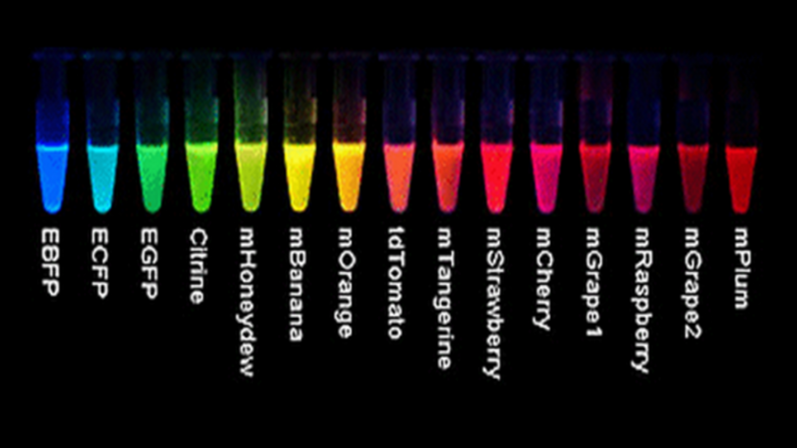
The multicolored fluorescent proteins developed in Tsien’s lab are used by scientists to track where and when certain genes are expressed in cells or in whole organisms. Typically, the gene coding for a protein of interest is fused with the gene for a fluorescent protein, which causes the protein of interest to glow inside the cell when the cell is irradiated with ultraviolet light and allows microscopists to track its location in real time. This is such a popular technique that it has added a new dimension to the fields of molecular biology, cell biology, and biochemistry.

In 2009 Tsien reported a new class far-red and infrared fluorescent proteins that have great potential in in vivo imaging.

Web Information

Website:  tsienlab.ucsd.edu/ Wikipedia Entry: wiki/Roger_Y._Tsien Brain Intiative Grant 

Contact Information

Phone: (858) 534-7009 Address: HHMI – UCSD 9500 Gilman Dr George Palade 310 La Jolla, CA 92093-0647

Research

Research Summary

Roger Tsien’s lab studies signal transduction, especially in neurons and cancer cells, with the help of designed molecules, imaging, and photochemical manipulation.

The overall goal of my laboratory is to gain a better understanding of signaling inside individual living cells, in neuronal networks, and in tumors. We ...

OnAir Post: Tsien Lab – UCSD

Connectivity of brain stem circuits

Principal Investigator: David Kleinfeld UCSD Neuroscience Title: “Revealing the connectivity and functionality of brain stem circuits” BRAIN Category: Understanding Neural Circuits (RFA NS-14-009)

Dr. Kleinfeld and his colleagues will use a variety of tools and techniques to create detailed maps of circuits in the brainstem, the region that regulates many life-sustaining functions such as breathing and swallowing, and match the circuits to actions they control.

NIH Webpages


Project Description

Neuronal circuits in the brainstem control life-sustaining functions, in addition to driving and gating active sensation through taste, smell, and touch. We propose to exploit the advent of molecular and genetic tools to undertake cell lineage marking, cell phenotyping, molecular connectomics, and methods from machine learning and image processing to construct an integrated anatomical and functional atlas of the brainstem. This will enable us to generate anatomical wiring diagrams for the brainstem circuits that control or facial actions. There are three phases to this work. (1) Reveal the identity and organization of brainstem nuclei. Motivated by striking similarities between the developmental plan for the spinal cord and brainstem, we will embrace and extend these efforts to interrogate the molecular composition of neurons that define individual nuclei with sensorimotor circuits in the murine brainstem. (2) Reveal brainstem neuronal circuits and ...

OnAir Post: Connectivity of brain stem circuits

Optogenetic mapping of synaptic activity

Principal Investigator: John Yu-Luen Lin Neuroscience at UCSD Title: “Optogenetic mapping of synaptic activity and control of intracellular signaling” BRAIN Category: Large-Scale Recording-Modulation – New Technologies (RFA NS-14-007)

Dr. Lin’s team will create molecules that, when they are triggered by a pulse of light, allow scientists to test for communication between neurons in specific circuits of the brain.

NIH Webpages

Project Description

This proposal aims to develop new molecular techniques to map activities of neurons, manipulate the strength of communication between neurons and disrupt intracellular signaling. These ‘optogenetic’ approaches will be used to further our understandings of brain function on behavior and have important implications in our understandings of neurological conditions and neurodegenerative diseases. The first goal is to develop a technique where the researchers can use optical approach to identify synaptic connections that were active during the performance of a behavior task. This reporter system can be turned on with light, which defines the window of activity reporting, and fluorescence signal can be detected if there is significant activity between two defined cell groups. Many existing approaches can only be used to map excitatory connections, whereas the proposed approach can be used to identify activities between synapses utilizing any neurotransmitters. The approach will utilize ...

OnAir Post: Optogenetic mapping of synaptic activity

Skip to toolbar