University of Utah Neuroscience Initiative

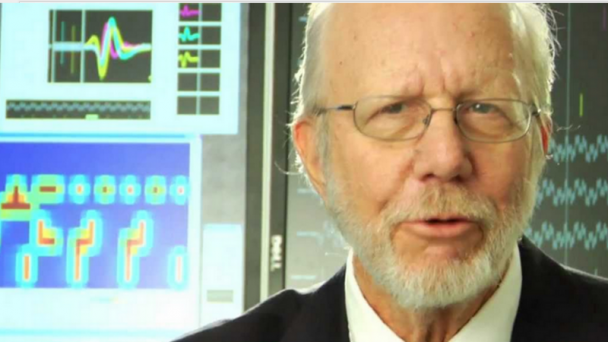
The University of Utah Health Sciences has committed $10 million to launch a Neuroscience Initiative that will catalyze interdisciplinary approaches to neuroscience research.

The goal is to deepen the understanding of the function and disorders of the nervous system and to improve patient care through innovation and integration of basic, translational, and clinical research efforts. Initial funds will be used to create a “neuroscience hub,” including space for collaborative research and neuroscience training.


Web Information

Website:   neurogateway.utah.edu/Neuroscience-Institute Twitter: twitter.com/uu_neuro

Contact Information

Emailparker.becca@utah.edu Phone: (801) 585-0343 Address:

Organization

Program Manager: Becca Parker, Ph.D.

Background

The BRAIN Initiative Fact Sheet 9/30/14

University of Utah is committing $10 million to launch a Neuroscience Initiative to support the goals of the BRAIN Initiative:

The University of Utah Health Sciences has committed $10 million to launch a Neuroscience Initiative that will catalyze interdisciplinary approaches to neuroscience research. The goal is to deepen the understanding of the function and disorders of the nervous system and to improve patient care through innovation and integration of basic, translational, and clinical research efforts. This targeted investment by the university will lay the foundation for an expanded effort to enhance neuroscience research and advance the goals of ...

OnAir Post: University of Utah Neuroscience Initiative
David Warren, PhD – Utah

Research Assistant Professor, Department of Bioengineering, University of Utah Director, Center for Neural Interfaces

Dr. Warren does research in the fundamental Properties of Micromagnetics for Peripheral and Central Nervous System. He also focuses on stimulation and reliable peripheral interfaces.


Web Information

Department web pagehttps://www.bioen.utah.edu/directory/profile.php?userID=198

Center for Neural Interfaces website: http://www.bioen.utah.edu/cni/index.html

Google Scholar: http://scholar.google.com/citations?user=KvOkV30AAAAJ&hl=en


Contact Information

Email: David.Warren@utah.edu

Phone: 801-585-2697

Address: 20 S. 2030 E., Rm. 506E Salt Lake City, UT 84112-9458


Biosketch

BSEE – Washington State University (1979) MSEE – University of Washington (1982) Ph. D. – Unversity of Utah (2006)

CV Here


Research

Fundamental Properties of Micromagnetics for Peripheral and Central Nervous System Stimulation Reliable Peripheral Interfaces

Center for Neural Interfaces

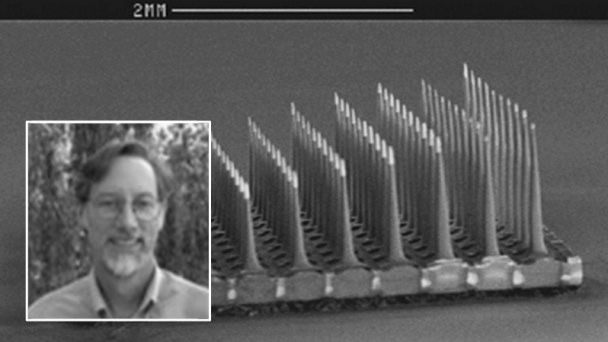
SEM image of the Utah Slanted Electrode Array (USEA). From Lab website.

The Center for Neural Interfaces was founded in 1995 as a Utah State Center of Excellence. The current focus is on the integration of biomedical technology with the physiological aspect of neuroscience and potential clinical applications. Chronically or acutely implantable neural interface devices based on the Utah Electrode Array are tested and used in the nervous system for recording or initiating neural signals, which may assist with sensory or motor functioning. The mission includes:

• Developing multichannel interfaces to ...

OnAir Post: David Warren, PhD – Utah

Rajesh Menon, PhD – Utah


USTAR Assistant Professor, Elect & Computer Engineering, University of Utah Associate Professor, Elect & Computer Engineering, University of Utah

Dr. Menon’s research lies at the intersection of optics and nanotechnology, with special foci on extending the spatial resolution of optics to the nanoscale, and applications of optics in energy. In addition to gaining a deep understanding of the basic physics of the behavior of light and matter at the nanoscale, our research is driven by many exciting applications.


Web Information

Utah webpagefaculty.utah.edu/u0676529-Rajesh_Menon/research/index.hml

Nano Institute of Utah pagenanoinstitute.utah.edu/profiles/menon.php

University of Utah Neuroscience Initiative: http://brain2015.onair.cc/university-of-utah-neuroscience-initiative/

Contact Information

Email: rmenon@eng.utah.edu

Phone: 801-585-1058

Address: The University of Utah 50 S. Central Campus Dr. Rm 3280 Joseph F. Merrill Engineering Building Salt Lake City, UT 84112

Biography

Education

Ph.D. 2003, Electrical Engineering, Massachusetts Institute of Technology M.S. 2000, Electrical Engineering, Massachusetts Institute of Technology B.E. 1998, Electrical Engineering, Nanyang Technological University

Honors & Awards

Best poster award in the category of Nanotechnology, Materials and Characterization at NanoUtah Conference for “Diffraction unlimited maskless lithography using absorbance modulation.”. Nano Utah, 10/2013 NASA Space Technology Research Opportunities – Early Stage Innovations Award for “A lightweight compact multi-spectral imager using novel computer-generated micro-optics and spectral-extraction algorithms,” (one out of 10). NASA, 06/2013 Best Paper Award at 2013 IEEE Workshop on Microelectronics and Electron Devices. IEEE, 04/2013 Early ...

OnAir Post: Rajesh Menon, PhD – Utah

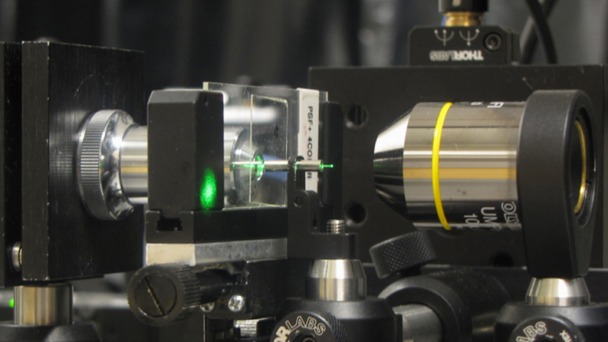
Imaging synaptic activity using super-resolution cannula microscopy

Principal Investigator: Rajesh Menon – Utah Neuroscience Title:Imaging synaptic activity deep in the brain using super-resolution cannula microscopy” BRAIN Category: Neuroengineering and Brain-inspired concepts and design (#1532591)

Objective: This project will develop a tool for high-resolution (<100-nm) imaging of synapses in freely moving animals for neuronal studies. It will accomplish this goal by the development and integration of compact and lightweight cannula microscopy with in vitro fluorescence imaging with accompanying technology and methodologies for imaging synapses.

Abstract

Award Number#1533611

Objective: This project will develop a tool for high-resolution (<100-nm) imaging of synapses in freely moving animals for neuronal studies. It will accomplish this goal by the development and integration of compact and lightweight cannula microscopy with in vitro fluorescence imaging with accompanying technology and methodologies for imaging synapses.

Non-Technical

The long-term vision of this project is to image with high resolution deep inside the brain of freely moving mice using inexpensive technologies so as to elucidate the fundamental basis of information processing and memory. Changes in synaptic strength at specific synapses are thought to underlie memory encoding and storage, yet there is very little experimental evidence for this theory in the intact brain due to technical limitations of visualizing the specific synaptic pattern involved in experience-dependent ...

OnAir Post: Imaging synaptic activity using super-resolution cannula microscopy

Richard A. Normann, PhD – Utah


Emeritus Professor of Bioengineering, University of Utah and Director, Center for Neural Interfaces Member of the Advisory Committee to the NIH Director

Dr. Normann works on neuroprosthetics, vision neurophysiology. Work is ongoing in applied and basic studies of the central nervous system. Key in this work is the development of three dimensional, silicon based electrode arrays to be used to stimulate or record from the neurons of the central nervous system.

Web Information

Bioengineering Webpage:   bioen.utah.edu/directory/profile.php?userID=70

Center for Neural Interfaces Website:  bioen.utah.edu/cni/

Contact Information

Email: normann@utah.edu

Phone: 801-581-7645

Address: 508F BPR Salt Lake City, UT 84112-9458

Research

Information processing in the vertebrate retina; phototransduction

The Normann laboratory is developing interfaces to the central and peripheral nervous systems for basic science and clinical applications. They have focused on two basic electrode array architectures: the Utah Electrode Array (UEA) consists of 100, 1.5 mm long silicon miconeedles that project out from a 4 mm x 4 mm x 0.25 mm thick substrate. The Utah Slanted Electrode Array (USEA) has a similar architecture but the lengths of the electrodes are graded from 0.5 mm to 1.5 mm. The UEA was designed for cortical applications, and the USEA was designed for use in the peripheral nervous systems.

We have used these interfaces to study parallel information processing ...

OnAir Post: Richard A. Normann, PhD – Utah

Skip to toolbar