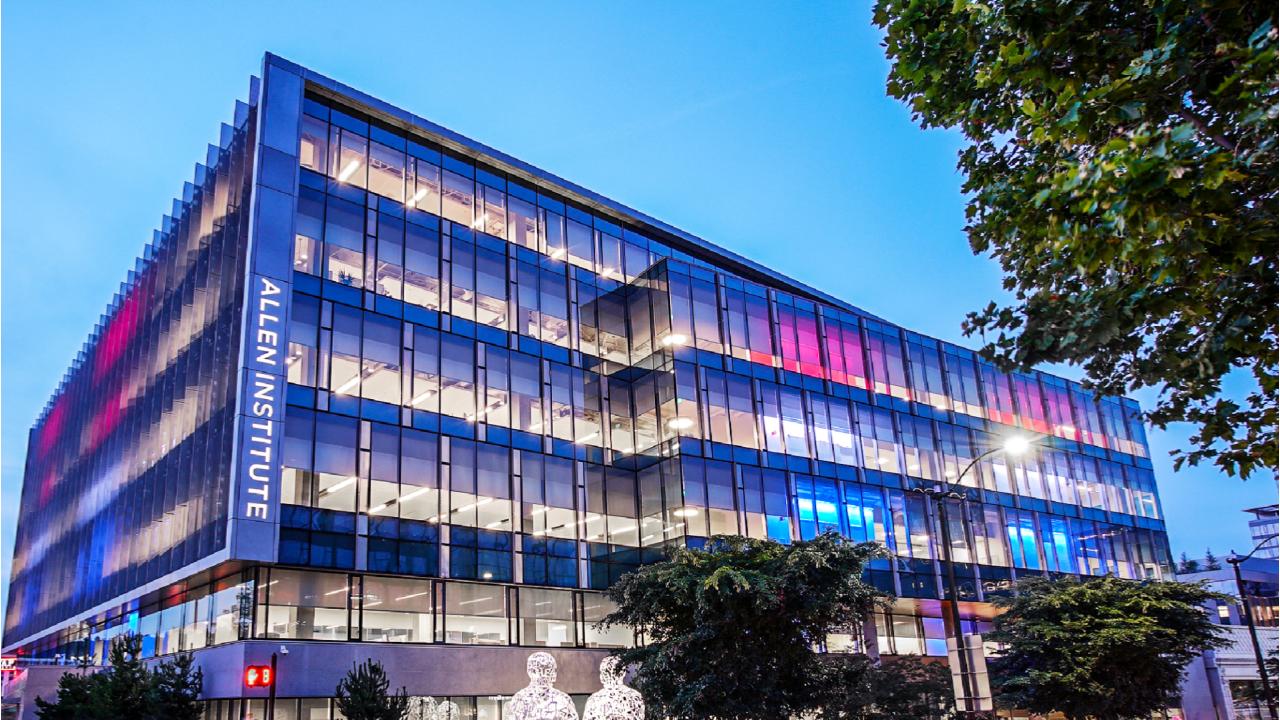
Allen Institute


Summary

Allen Institute’s mission is to accelerate the understanding of how the human brain works in health and disease. Allen has been a major catalyst and facilitator of The BRAIN Initiative.

Launched in 2003 with a seed contribution from founder and philanthropist Paul G. Allen, the Allen Institute takes on large-scale initiatives designed to push brain research forward, enabling the global scientific community to more efficiently make discoveries that bring real-world utility.

https://www.youtube.com/watch?v=bmO8-17K8jsVideo can’t be loaded because JavaScript is disabled: Allen Institute for Brain Science: Understanding the Brain (https://www.youtube.com/watch?v=bmO8-17K8js)

Information

Main Website:  alleninstitute.org Allen Brain Atlas Website:  brain-map.org BRAIN Intitiative Grant – Establishing a Comprehensive and Standardized Cell Type Characterization Platform” Twitter: twitter.com/Allen_Institute YouTube Channel:  https://www.youtube.com/user/AllenInstitute Facebook: facebook.com/AllenInstitute Wikipedia Entry: wiki/Allen_Institute_for_Brain_Science

Phone:  (206) 548-7000

Address: Mercer St. and Westlake Avenue North Seattle. Washington


Organization

Founder: Paul Allen

Founder, President and Chairman: Joyce Allen

Chief Executive Officer: Allan Jones, Ph.D.

Chief Technlogy Officer: Chinh Dang

Chief Scientific Officer: Christof Koch, Ph.D.

Chief Operating Officer: David Poston


Research

The ...

OnAir Post: Allen Institute
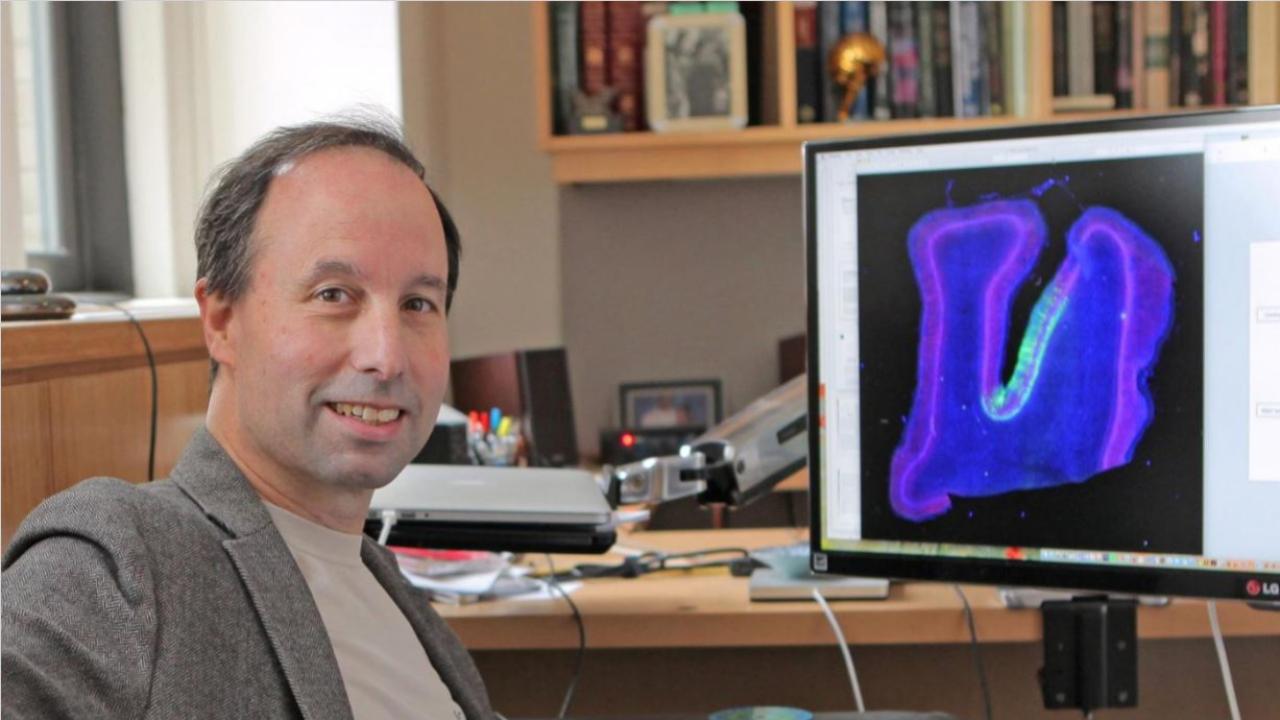
Shedding Light on Biology of Human Consciousness

Columbia scientists have identified the brain’s ‘aha!’ moment, that flash in time when you suddenly become aware of information, such as knowing the answer to a difficult question. Today’s findings in humans, combined with previous research, provide compelling evidence that this moment, this feeling of having decided pierces consciousness when information being collected by the brain reaches a critical level.

The results of this study further suggest that this piercing of consciousness shares the same underlying brain mechanisms known to be involved in making far simpler decisions. Importantly, this study offers hope that the biological foundations of consciousness may well be within our grasp.

OnAir Post: Shedding Light on Biology of Human Consciousness

Robin Hanson CN3 presentation


Summary

Dr. Robin Hanson will give a presentation to the CN3 faculty and students on his new book … The Age of Em“Work, Love and Life when Robots Rule the Earth”

Time: 11am   Date: September 27, 2016 Place: 229 Krasnow George Mason University Fairfax, Va. 22030

Broadcast details: This onAir broadcast will be streamed live from this post as well as the BHM You Tube here.


Robin Hansen Profile

Associate Professor of Economics, George Mason University Research associate, Future of Humanity Institute  Chief scientist, Consensus Point

Dr. Hanson has pioneered prediction markets, also known as information markets or idea futures, since 1988. He was the first to write in detail about people creating and subsidizing markets in order to gain better estimates on those topics.

Author of “The Age of Em: Work, Love and Life when Robots Rule the Earth”, Oxford University Press, 1 June 2016

More on Robin Hanson can be found in this post.


Scheduled Broadcast

Slides

Below are the slides Robin will be using for his presentation.

Download (PDF, 20KB)


Book

Age of Em“Work, Love and Life when Robots Rule the Earth” By Robin Hanson

From Oxford University Press Overview: A unique look into the possible technological future of the human race

Draws upon an unusually wide command of academic consensus and standard analytical tools across economics, ...

OnAir Post: Robin Hanson CN3 presentation

HLAI 2016 conferences


Summary

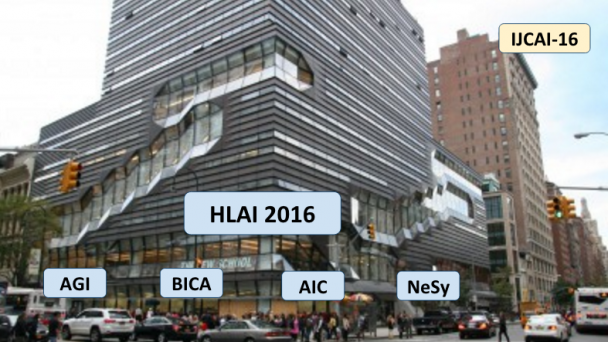
HLAI 2016, the joint multi-level conference on Human-Level Artificial Intelligence focuses on the computational (re-)creation of human-level intelligence, i.e., human-level (or strong) Artificial Intelligence.  Held on July 16-19, 2016  at the New School in NYC following IJCAI, 16 – International Joint Conference on Artificial Intelligence.

AGI, the Conference Series on Artificial General Intelligence BICA, Annual International Conferences on Biologically Inspired Cognitive Architectures AIC, Workshops on Artificial Intelligence and Cognition NeSy, Workshops on Neural-Symbolic Learning & Reasoning


HLAI 2016

The Joint Multi-Conference on Human-Level Artificial Intelligence

HLAI 2016, held at The New School in New York City on July 16-19, 2016, is a joint effort between the major conferences and academic events explicitly targeting work towards the computational (re-)creation of human-level intelligence, i.e., human-level (or strong) Artificial Intelligence.

HLAI 2016 will feature several keynotes by leading thinkers from different fields relating to human-level AI research. An always up-to-date list of names and abstracts can be found here.

Venue information: HLAI 2016 is hosted by The New School at the University Center, 63 Fifth Avenue. The registration desk can be found in the lobby of the University Center building.


AGI 2016

AGI, the Conference Series on Artificial General Intelligence

Continuing the mission of the past AGI conferences, AGI-16 gathers an international group of leading ...

OnAir Post: HLAI 2016 conferences

MCWG Meeting February 8, 2016


Agenda Summary

Update on BRAIN Overview of BRAIN Award Portfolio Progress and Plans BRAIN Team A: Cell and Circuit Technologies BRAIN Team B: Neural Recording/Modulation Technologies BRAIN Team C: Human Imaging and Non-Invasive Neuromodulation BRAIN Team D: Training BRAIN Team E: Understanding Circuit Function Neuroethics Work Group DOE Partnership Coordination Activities

Videocast

browser does not support iframe


Meeting Overview

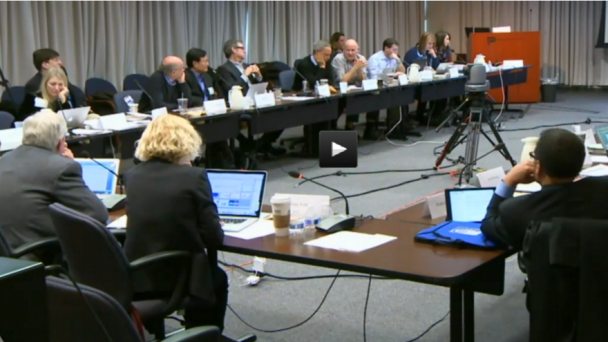
The purpose of the meeting is to receive feedback and guidance on funding opportunity announcements, submitted applications, and strategic planning for the NIH component of The BRAIN Initiative. The MCWG is comprised of 10 representatives from the Advisory Councils of the 10 participating BRAIN Institutes/Centers (including NINDS), 5 at-large members, and ex officio representatives from the other participating federal agencies. The meeting will also provide an opportunity for private entities/foundations to present on their contribution to BRAIN, including but not limited to: Allen Brain Institute, Kavli, Simons Foundation, HHMI/Janelia Farms. Information presented and gathered at this meeting will support the development of future funding opportunity announcements for the Initiative, set to continue until 2025.


Agenda

Download (PDF, 392KB)

OnAir Post: MCWG Meeting February 8, 2016

Center for Neural Engineering – PSU

Summary

The Penn State Center for Neural Engineering is a university-wide Center, bridging the campuses and Colleges of Engineering and Science at University Park, with the College of Medicine at Hershey. It is housed within facilities of the Department of Neurosurgery and theDepartment of Engineering Science and Mechanics.

The Center has resident core faculty, with a considerable number of faculty Affiliates drawn from University Park and Hershey.The Center enables the successful conduct of interdisciplinary research and acquisition of funding for projects that individual Penn State scientists could not perform on their own.

Categories: Penn State Neuroscience, Neural Engineering


Information

Web page

Emaillabs@esm.psu.edu Twitter:  twitter.com/PSUESM Phone: 814.865.4523 Address: Dept. of Engineering Science and Mechanics The Pennsylvania State University 212 Earth-Engineering Sciences Building University Park, PA 16802

Director: Steven J. Schiff


About

The Center is positioned to facilitate and enable collaboration between faculty from the Huck Institutes for the Life Sciences, Materials Research, and Neuroscience Institutes at Penn State, and forms a physical conduit for faculty and students from across the Engineering Departments, the Integrative Biosciences Neuroscience Program, Physics, Mathematics, and Biology, as well as trainees and faculty from Neurosurgery, Neurology, and Psychiatry.

The Center for Neural Engineering provides the core facilities to:

Coordinate collaboration between Departments at ...

OnAir Post: Center for Neural Engineering – PSU

Steven Schiff

Categories: Penn State Neuroscience, NIH BRAIN Researchers, Neural Engineering, Neuroethics people, Neuromodulation researchers, Mason Neuroscience Alumni

Research interests include neural engineering, neurosurgery, epilepsy, Parkinson's Disease, wave mechanics, brain machine interfaces, EEG, electrical fields, and control theory.

OnAir Post: Steven Schiff

Implantable Brain MEMS-MAGSS


Summary

Principal Investigator(s): Steven J. Schiff and Srinivas Tadigadapa Title: Implantable brain microelectromechanical magnetic sensing and stimulation (MEMS-MAGSS) Category: Large-Scale Recording and Modulation Project Number: 1R21EY026438-01     NIH webpage Lab:  Center for Neural Engineering   University: Penn State Neuroscience

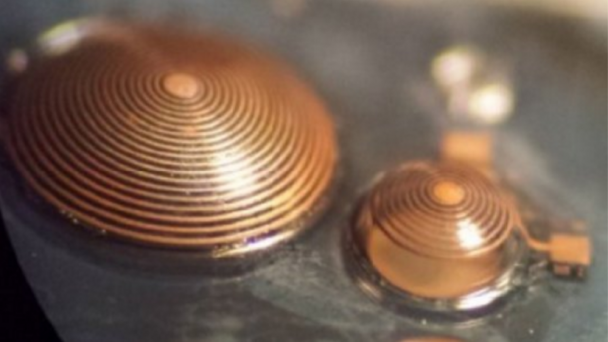
We seek to offer proof-of-concept testing and development of a novel class of MEMS-MAGSS technology. This project would produce a ‘first-of-kind’ technology capable of 1) cellular resolution detection of spiking activity in neurons, 2) cellular level modulation of neuronal firing, 3) adaptve noise cancellation enabling use outside of magnetically shielded environments, 4) room-temperature operation enabling packaging for long-term implantation within with biological tissue for animal or human use, and 5) a clear translational pathway for long-term human implantation across a person’s life-span.

Categories: Penn State Neuroscience, NIH 2015-16 grants, and Research (Neuromodulation)


Project Description

This NIH BRAIN Initiative R21 will initiate development of a completely Implantable Brain Microelectromechanical Magnetic Sensing and Stimulation (MEMS-MAGSS) technology. Significance: We seek to offer proof-of-concept testing and development of a novel class of MEMS-MAGSS technology, to address the NIH BRAIN Initiative: New Concepts and Early-Stage Research for Large-Scale Recording and Modulation in the Nervous System (R21). The current state of the art for large-scale recording of neuronal activity does not have cellular resolution for sensing and ...

OnAir Post: Implantable Brain MEMS-MAGSS

Retrieving memories from early Alzheimer’s


Summary

In the early stages of Alzheimer’s disease, patients are often unable to remember recent experiences. However, a new study from MIT suggests that those memories are still stored in the brain — they just can’t be easily accessed.

The MIT neuroscientists report in Nature that mice in the early stages of Alzheimer’s can form new memories just as well as normal mice but cannot recall them a few days later.

“Memory retrieval by activating engram cells in mouse models of early Alzheimer’s disease” By Roy et al | Nature, 2016 Mar 24


Article in Nature

Memory retrieval by activating engram cells in mouse models of early Alzheimer’s disease

Readcube PDF

By Dheeraj S. Roy, Autumn Arons, Teryn I. Mitchell, Michele Pignatelli, Tomás J. Ryan and Susumu Tonegawa Nature | March 24, 2016 | 531(7595):508-12

Abstract

Alzheimer’s disease (AD) is a neurodegenerative disorder characterized by progressive memory decline and subsequent loss of broader cognitive functions1. Memory decline in the early stages of AD is mostly limited to episodic memory, for which the hippocampus has a crucial role

OnAir Post: Retrieving memories from early Alzheimer’s

Elizabeth Marincola on open access

https://www.youtube.com/watch?v=9ztwFtF-lgAVideo can’t be loaded because JavaScript is disabled: What happens when science, money, and freedom of information collide? (https://www.youtube.com/watch?v=9ztwFtF-lgA)


Summary

What happens when science, money, and freedom of information collide?

A free flow of information goes to the heart of science, says Elizabeth Marincola, but an arcane system has commoditized data instead. Can web-based, open-access publishing level advance knowledge — and turn a profit?

Elizabeth Marincola is the CEO of the Public Library of Science, and the former President of the nonprofit membership organization Society for Science & the Public (SSP) and publisher of Science News, the award-winning magazine.

Published May 7, 2013 | by TEDMED TEDMED page

OnAir Post: Elizabeth Marincola on open access

INS 2015 Annual Meeting

The 2015 INS Annual Meeting will be held October 15-16 in Chicago, IL, prior to the Society for Neuroscience Annual Meeting. The INS public program will be held at the Northwestern University Hughes Auditorium, 303 E. Superior Street on October 15.

The main meeting sessions will be held on October 16 at the Art Institute of Chicago, 230 South Columbus Drive. A meeting program with session descriptions and speaker bios is now available. Sign-up to get email notifications from INS.

Web Information

Meeting web pages: http://www.neuroethicssociety.org/annual-meeting

Program

The 2015 INS Annual Meeting will be held October 15-16 in Chicago, IL, prior to the Society for Neuroscience Annual Meeting. The INS public program will be held at the Northwestern University Hughes Auditorium, 303 E. Superior Street on October 15. The main meeting sessions will be held on October 16 at the Art Institute of Chicago, 230 South Columbus Drive. A meeting program with session descriptions and speaker bios is now available. Sign-up to get email notifications from INS.

Thursday, October 15

Northwestern University Hughes Auditorium 303 E Superior Street, Chicago, IL

Welcome

5:00pm Barbara J. Sahakian, INS President & University of Cambridge

Is Professional Football Safe? Could We Make It Safer? Perspectives from Neuroscience, Law, and Ethics

Public Program 5:00 – ...

OnAir Post: INS 2015 Annual Meeting

Trees of the Brain Presentation

This inaugural event of the series, which is sponsored by the George Mason University Bookstore, was held in the Fenwick Library Main Reading Room, on Tuesday, March 29th, at 2:30 p.m.

OnAir Post: Trees of the Brain Presentation

Neuroscience Digest – 11.23.15

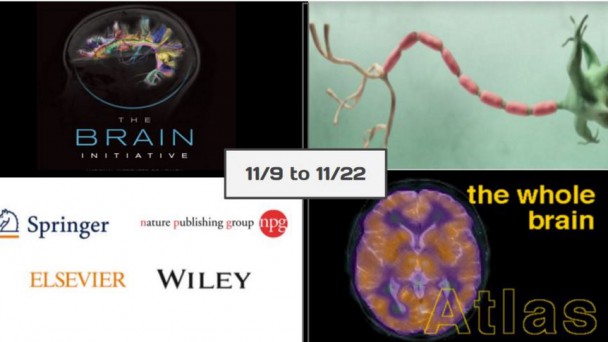
From Monday November 9 to Sunday November 22, 2015 Focus this week on Neuroscience Resources for Brain Projects.

Featured Opportunity

BRAIN Initiative Funding Opportunities

The BRAIN Initiative has numerous active funding opportunities.

The active and closed funding opportunities are organized into seven categories: Brain Cell Types, Tools for Circuit Diagrams, Monitor Neural Activity, Precise Interventional Tools, Theory and Data Analysis Tools, Advance Human Neuroscience, and Integrated Approaches.

Featured Print Media

Academic neuroscience journals

This post has a list of Publishers and their neuroscience related journals. Most of the journals listed here require a subscription to access.

To view posts on Open Access Journals, go to this category.

Featured Images

The Whole Brain Atlas – Harvard Med

The Whole Brain Atlas is an online resource for central nervous system imaging developed by Keith Johnson, MD, and Alex Becker, PhD. It is jointly supported by the Brigham and Women’s Hospital Departments of Radiology and Neurology, Harvard Medical School, the Countway Library of Medicine, and the American Academy of Neurology.

The site has six main sections: (1) a neuroimaging primer for those with limited knowledge of the imaging vocabulary; (2) a normal anatomy atlas; (3) cerebrovascular disease; (4) neoplastic disease; (5) ...

OnAir Post: Neuroscience Digest – 11.23.15

BigNeuron

A community effort to find out what is exactly the state-of-the-art of single neuron reconstruction, standardize the protocols, and establish a Big Data resource for neuroscience.

OnAir Post: BigNeuron

BrainFacts.org

The site is a public information initiative of The Kavli Foundation, the Gatsby Charitable Foundation, and the Society for Neuroscience, all leading global nonprofit organizations working to advance brain research. Leading neuroscientists from around the world form the BrainFacts.org editorial board.

OnAir Post: BrainFacts.org

Brain Observatories

The authors of the original proposal for the Brain Activity Map (BAM) Project, which inspired the White House’s BRAIN Initiative, are proposing the creation of a national network of neurotechnology centers.

These “brain observatories” would enhance and accelerate the BRAIN Initiative by leveraging the success and creativity of individual laboratories to develop novel neurotechnologies.

Co-authors of the Brain Observatories proposal.

Brain Observatories press release

A national network of neurotechnology centers for the BRAIN Initiative

EurekAlert Oct. 15, 2015 Columbia University

Neuron article

The authors of the original proposal for the Brain Activity Map (BAM) Project, which inspired the White House’s BRAIN Initiative, issued today a position statement in Neuron proposing the creation of a national network of neurotechnology centers. These “brain observatories” would enhance and accelerate the BRAIN Initiative by leveraging the success and creativity of individual laboratories to develop novel neurotechnologies.

Now in its second year, the BRAIN Initiative is a large-scale, decade-long scientific project with a budget of $300 Million for FY16, that involves more than 100 laboratories throughout the country and has also inspired similar large-scale brain research projects worldwide. On April 2, 2013, President Obama launched the BRAIN Initiative to “accelerate the development and ...

OnAir Post: Brain Observatories

Trees of the Brain, Roots of the Mind – by Giorgio Ascoli

The human brain is often described as the most complex object in the universe. Tens of billions of nerve cells-tiny tree-like structures—make up a massive network with enormous computational power.

In this book, Giorgio Ascoli reveals another aspect of the human brain: the stunning beauty of its cellular form. Doing so, he makes a provocative claim about the mind-brain relationship.

Information

MIT Press Webpagehttps://mitpress.mit.edu/books/trees-brain-roots-mind

Trees of the Brain website

Overview

If each nerve cell enlarged a thousandfold looks like a tree, then a small region of the nervous system at the same magnified scale resembles a gigantic, fantastic forest. This structural majesty—illustrated throughout the book with extraordinary color images—hides the secrets behind the genesis of our mental states. Ascoli proposes that some of the most intriguing mysteries of the mind can be solved using the basic architectural principles of the brain. After an overview of the scientific and philosophical foundations of his argument, Ascoli links mental states with patterns of electrical activity in nerve cells, presents an emerging minority opinion of how the brain learns from experience, and unveils a radically new hypothesis of the mechanism determining what is learned, what isn’t, and why. Finally, considering ...

OnAir Post: Trees of the Brain, Roots of the Mind – by Giorgio Ascoli

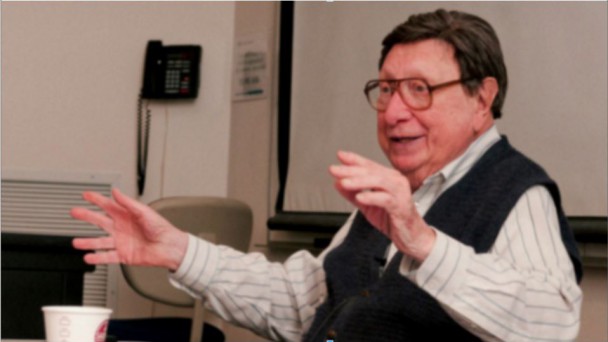
Harold Morowitz (1928-2016)


Summary

Founding Director, Krasnow Institute for Advanced Studies Professor, Molecular Biophysics and Biochemistry, Yale University Eminent Scholar, GMU Molecular Neuroscience Department and Robinson Fellow

Biophysicist Harold Morowitz became a Robinson Professor after a long career of teaching and research at Yale University as Professor of Molecular Biophysics and Biochemistry and serving for five years as Master of Pierson College. Dr. Morowitz was interested in philosophical foundations of neurobiology and the problem of consciousness.


Information

Web:  Robinson web page     Wikipedia Entry Email: morowitz@gmu.edu Phone: 703.993.4334 Location: Krasnow Institute


Biosketch

Born Dec. 4, 1927, died March 22, 2016.

From Robinson web page

Biophysicist Harold Morowitz became a Robinson Professor after a long career of teaching and research at Yale University as Professor of Molecular Biophysics and Biochemistry and serving for five years as Master of Pierson College. The author of several books, Morowitz has written extensively on the thermodynamics of living systems, as well as on popular topics in science. Included in those publications are Mayonnaise and the Origins of Life, Cosmic Joy and Local Pain, The Thermodynamics of Pizza, Entropy and the Magic Flute,and The Kindly Dr. Guillotin. In his current research, Morowitz is investigating the interface of biology and information sciences and continues his exploration of the origins ...

OnAir Post: Harold Morowitz (1928-2016)

Skip to toolbar