Neuroscience Digest – Nov. 2016


Summary

Featured News

A ‘Locked-In’ Woman Can Now Use Her Thoughts to Communicate Allen Brain Observatory: Visualizing the brain in action Could light alleviate Alzheimer’s symptoms? Mind-wandering as spontaneous thought: a dynamic framework NIH Announces BRAIN Initiative Cell Census Network (BICCN) Requests for Applications NIH BRAIN Initiative Announces 108 Awards in Fiscal Year 2016 A human brain network derived from coma-causing brainstem lesions


Consciousness

A human brain network derived from coma-causing brainstem lesions David Fischer et al | Neurology | Nov. 10, 2016

Abstract

Objective: To characterize a brainstem location specific to coma-causing lesions, and its functional connectivity network.

Methods: We compared 12 coma-causing brainstem lesions to 24 control brainstem lesions using voxel-based lesion-symptom mapping in a case-control design to identify a site significantly associated with coma. We next used resting-state functional connectivity from a healthy cohort to identify a network of regions functionally connected to this brainstem site. We further investigated the cortical regions of this network by comparing their spatial topography to that of known networks and by evaluating their functional connectivity in patients with disorders of consciousness.

Results: A small region in the rostral dorsolateral pontine tegmentum was significantly associated with coma-causing lesions. In healthy adults, this brainstem site was functionally connected to the ventral anterior insula ...

OnAir Post: Neuroscience Digest – Nov. 2016
Neuroscience Digest – Oct. 2016


Summary

Digest for October 2016

Featured News: Imaging the Neural Symphony Relative Citation Ratio (RCR) Building brains in a dish Considering ethics now before radically new brain technologies get away from us Engineers reveal fabrication process for revolutionary transparent graphene neural sensors 2-Minute Neuroscience: Medulla Oblongata


General

Building brains in a dish: Prospects for growing cerebral organoids from stem cells Mason JO, Price DJ

Abstract

The recent development of organoid techniques, in which embryonic brain-like tissue can be grown from human or mouse stem cells in vitro offers the potential to transform the way in which brain development is studied. In this review, we summarize key aspects of the embryonic development of mammalian forebrains, focussing in particular on the cerebral cortex and highlight significant differences between mouse and primates, including human. We discuss recent work using cerebral organoids that has revealed key similarities and differences between their development and that of the brain in vivo. Finally, we outline the ways in which cerebral organoids can be used in combination with CRISPR/Cas9 genome editing to unravel genetic mechanisms that control embryonic development of the cerebral cortex, how this can help us understand the causes of neurodevelopmental disorders and some of the key challenges which will have to be resolved before organoids can become a ...

OnAir Post: Neuroscience Digest – Oct. 2016

Neuroscience Digest – Sept. 2016


Summary

Digest for September 2016

Featured News:  “One Hundred Year Study on Artificial Intelligence (AI100)” “The Anatomical Problem Posed by Brain Complexity and Size” “Magnetite pollution nanoparticles in the human brain” “BRAIN Publication Roundup – August 2016” “Fundamentals of Neuroscience Part 1: Electrical Properties of the Neuron” “Neuroscientists just figured out what causes Deja Vu (and it’s not a glitch in the matrix)” “Bioelectronic neural pixel” “Highest-resolution map of the entire human brain created”


Alzheimers

Magnetite pollution nanoparticles in the human brain

Barbara A. Maher et al PNAS | September 6, 2016

We identify the abundant presence in the human brain of magnetite nanoparticles that match precisely the high-temperature magnetite nanospheres, formed by combustion and/or friction-derived heating, which are prolific in urban, airborne particulate matter (PM). Because many of the airborne magnetite pollution particles are <200 nm in diameter, they can enter the brain directly through the olfactory nerve and by crossing the damaged olfactory unit. This discovery is important because nanoscale magnetite can respond to external magnetic fields, and is toxic to the brain, being implicated in production of damaging reactive oxygen species (ROS). Because enhanced ROS production is causally linked to neurodegenerative diseases such as Alzheimer’s disease, exposure to such airborne PM-derived magnetite nanoparticles might need to be examined ...

OnAir Post: Neuroscience Digest – Sept. 2016

Neuroscience Digest – Aug. 2016

Digest for the period of July 23 to Aug. 26, 2016 

Featured Post

A multi-modal parcellation of human cerebral cortex By Matthew Glasser et al | Nature July 20, 2016

Abstract

Understanding the amazingly complex human cerebral cortex requires a map (or parcellation) of its major subdivisions, known as cortical areas. Making an accurate areal map has been a century-old objective in neuroscience. Using multi-modal magnetic resonance images from the Human Connectome Project (HCP) and an objective semi-automated neuroanatomical approach, we delineated 180 areas per hemisphere bounded by sharp changes in cortical architecture, function, connectivity, and/or topography in a precisely aligned group average of 210 healthy young adults. We characterized 97 new areas and 83 areas previously reported using post-mortem microscopy or other specialized study-specific approaches. To enable automated delineation and identification of these areas in new HCP subjects and in future studies, we trained a machine-learning classifier to recognize the multi-modal ‘fingerprint’ of each cortical area. This classifier detected the presence of 96.6% of the cortical areas in new subjects, replicated the group parcellation, and could correctly locate areas in individuals with atypical parcellations. The freely available parcellation and classifier will enable substantially improved neuroanatomical precision for studies of the structural and ...

OnAir Post: Neuroscience Digest – Aug. 2016

Neuroscience Digest – July 23, 2016

Digest for the period of July 10 to July 22, 2016 

Featured Post

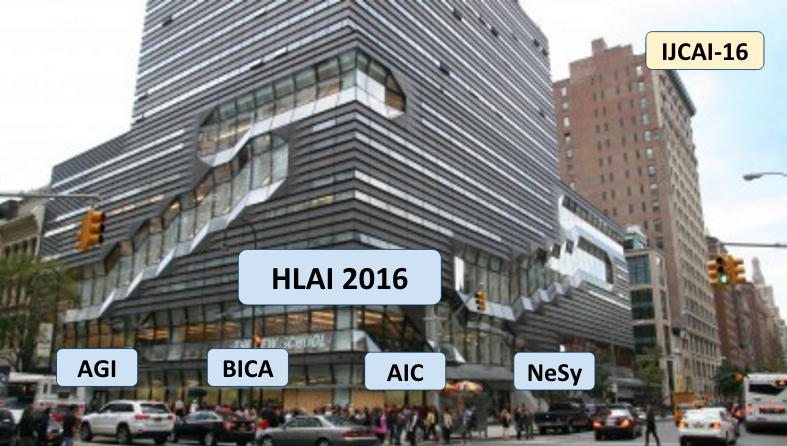
HLAI 2016 conferences

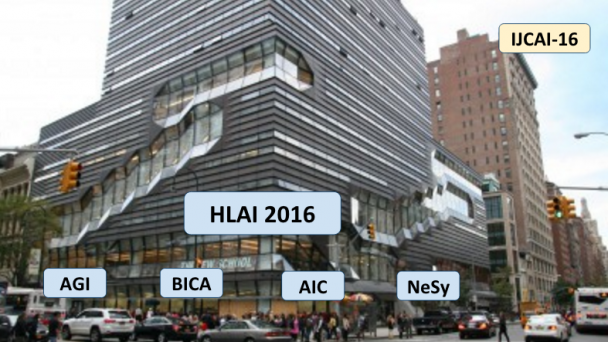
HLAI 2016, the joint multi-level conference on Human-Level Artificial Intelligence focuses on the computational (re-)creation of human-level intelligence, i.e., human-level (or strong) Artificial Intelligence. Held on July 16-19, 2016 at the New School in NYC following IJCAI, 16 – International Joint Conference on Artificial Intelligence.

AGI, the Conference Series on Artificial General Intelligence BICA, Annual International Conferences on Biologically Inspired Cognitive Architectures AIC, Workshops on Artificial Intelligence and Cognition NeSy, Workshops on Neural-Symbolic Learning & Reasoning


Science

The 7 biggest problems facing science, according to 270 scientists 

1- Academia has a huge money problem

2- Too many studies are poorly designed. Blame bad incentives.

3- Replicating results is crucial. But scientists rarely do it.

4- Peer review is broken

5- Too much science is locked behind paywalls

6- Science is poorly communicated to the public

7- Life as a young academic is incredibly stressful


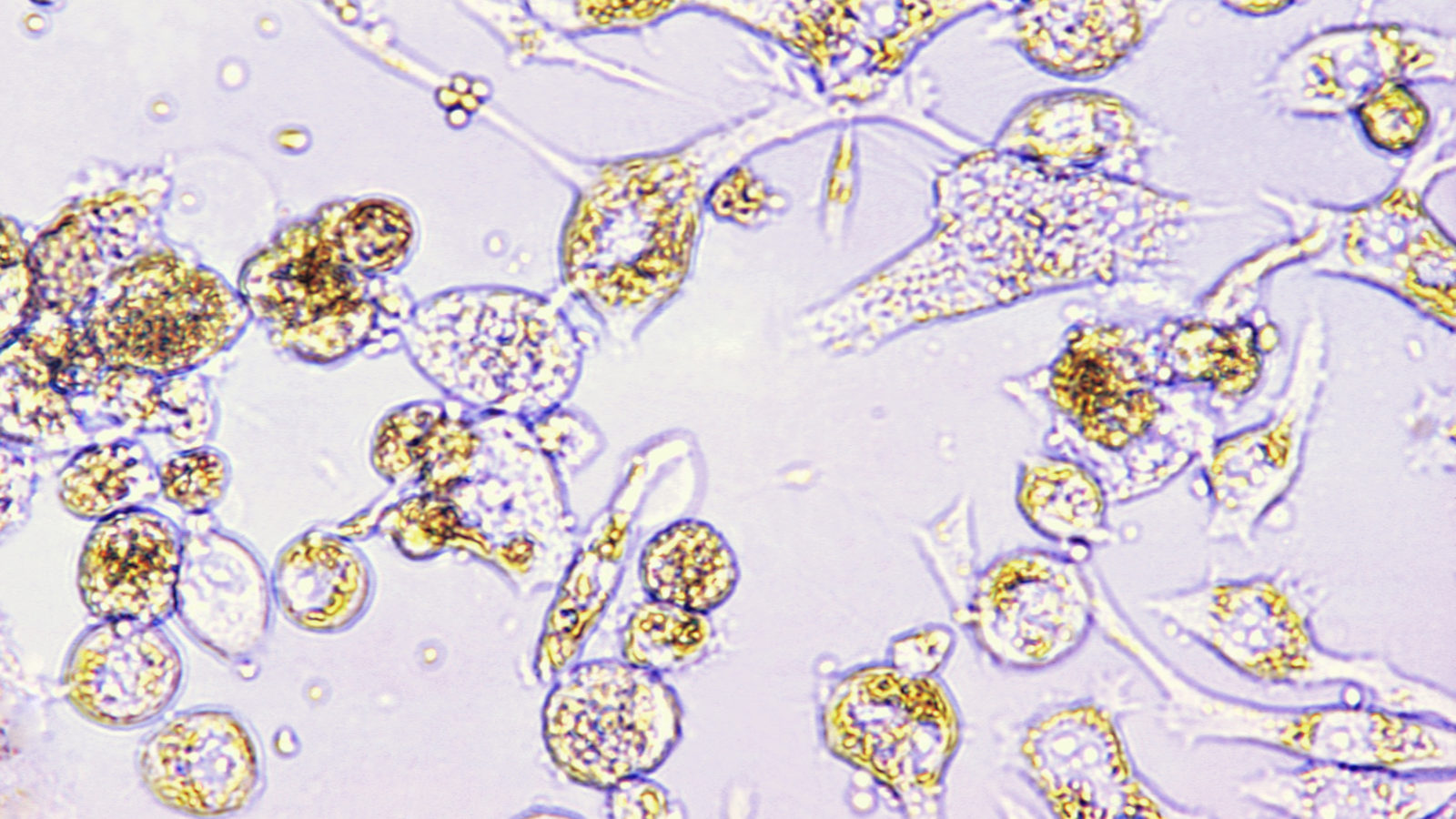
Thousands of studies used the wrong cells, and journals are doing nothing Ivan Oransky and Evan Marcus | July 22, 2016

Source: DR. A.J. SULZER/CDC

Recent estimates suggest that between ...

OnAir Post: Neuroscience Digest – July 23, 2016

Neuroscience Digest – July 10, 2016


Featured Post

Khan Academy – Nervous System Videos

The titles of the videos from Khan Academy Medicine include: Neuroanatomy Introduction to neural cell types; Anatomy of a neuron; Overview of neuron structure; Synapse structure; Structure of the nervous system Neurophysiology – Overview of neuron function;  Sodium-potassium pump; Electrotonic and action potentials; Neuron resting potential mechanism; Saltatory conduction in neurons; and Functions of the nervous system Molecular Neuroscience – Neuronal synapses (chemical);  Types of neurotransmitters; Types of neurotransmitter receptors; and Cerebral cortex Glial Cells – Astrocytes; Microglia; and Oligodendrocytes Autonomic Nervous System – Autonomic Nervous system Overview; Motor unit; Muscle stretch reflex; Upper motor neurons; Peripheral somatosensation; and Somatosensory tracts

Sample video below

https://www.youtube.com/watch?v=L82bDTBMGUUVideo can’t be loaded because JavaScript is disabled: Introduction to neural cell types | Organ Systems | MCAT | Khan Academy (https://www.youtube.com/watch?v=L82bDTBMGUU)

News

BRAIN Publication Roundup – June 2016

Improved method for optimizing resolution of magnetic particle imaging with important medical applications… New technique allows for successful 3D imaging of deep brain tissue in awake animals… Development of a stable deep brain stimulation electrode for long-term implantation…

Johns ...

OnAir Post: Neuroscience Digest – July 10, 2016

Neuroscience Digest – July 3, 2016


Digest for the week of June 27 to July 3, 2016.

News

This new device can visualize your thoughts (sort of) Washington Post | June 29, 2016 | Karen Turner

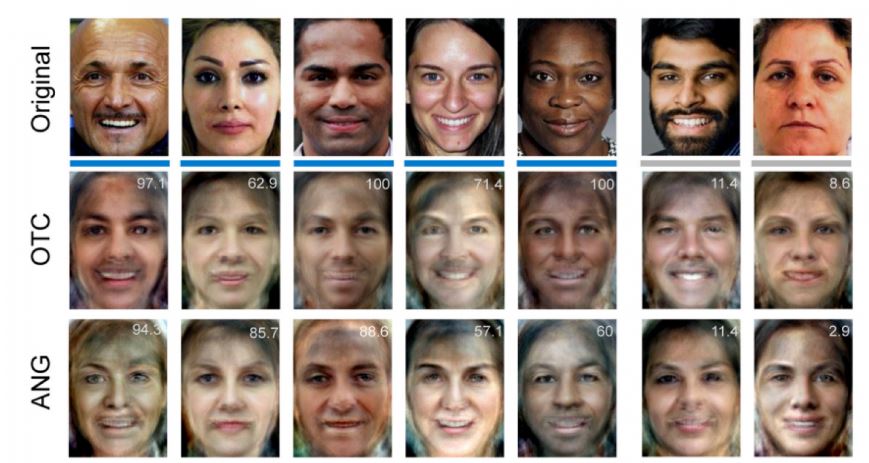
We know this brain region ‘lights up’ when people remember something, but there has been a lot of debate about why it lights up,” Kuhl said. “Our major finding was that patterns of activity within this brain region carry information about what people are remembering.”

Based on this article, Reconstructing Perceived and Retrieved Faces from Activity Patterns in Lateral Parietal Cortex in Journal of Neuroscience by Hongmi Lee and Brice A. Kuhl | June 1, 2016

The OTC — occipitotemporal cortex, which handles visual inputs — set of images represents the machine’s output when the participant was actively observing the picture. The ANG — angular gyrus part of the brain, which processes memory retrieval — set shows the memory-reconstructed version. The five images on the left are the most accurate recreations, while the two on the right are the least accurate. (Courtesy of the Journal of Neuroscience)

Researchers Devise Tool to Improve Imaging of Neuronal Activity in the Brain NC State News |June 27, 2016 | Matt ...

OnAir Post: Neuroscience Digest – July 3, 2016

Neuroscience Digest – 6/20 to 6/26/16

News

Philosophers Make Pitch for Artificial Intelligence Values By Melanie Ruiz June 21, 2016 OZY

Video featuring Nick Bostrom, Jerry Kaplan et al


Spurned by science, memory researchers came roaring back By Carl Zimmer June 23, 2016 STAT News

A decade ago, Andre Fenton and Todd Sacktor came to a remarkable conclusion about rodent brains — and likely human brains too. Their discovery — that a single molecule called PKMzeta alters neurons to create long-term memories — was hailed as a major scientific advance. That praise ended in 2013, when two teams of scientists published research showing that PKMzeta wasn’t necessary to make memories. Ever since, Fenton and Sacktor have been trying to prove they were right all along, presenting a new series of experiments as evidence. STAT’s Carl Zimmer brings you the story of their scientific struggle and what it might mean for the ways our brains work.


NINDS Seeking Exceptional Candidates for the Position of Director of the NIH BRAIN Initiative

Could deep-learning systems radically transform drug discovery? Kurzweil AI June 17, 2016

Scientists at Insilico Medicine have developed a new drug-discovery engine that they say is capable of predicting therapeutic use, ...

OnAir Post: Neuroscience Digest – 6/20 to 6/26/16

Neuroscience Digest – 5.22.16

​Featured Post

Researchers say the findings raise the possibility of developing future treatments that might reverse some of the memory loss in early-stage Alzheimer’s.Illustration: Jose-Luis Olivares/MIT…From MIT News

Retrieving memories from early Alzheimer’s

In the early stages of Alzheimer’s disease, patients are often unable to remember recent experiences. However, a new study from MIT suggests that those memories are still stored in the brain — they just can’t be easily accessed.

The MIT neuroscientists report in Nature that mice in the early stages of Alzheimer’s can form new memories just as well as normal mice but cannot recall them a few days later.

“Memory retrieval by activating engram cells in mouse models of early Alzheimer’s disease” By Roy et al | Nature, 2016 Mar 24


Featured Center

Center for Neural Engineering – PSU

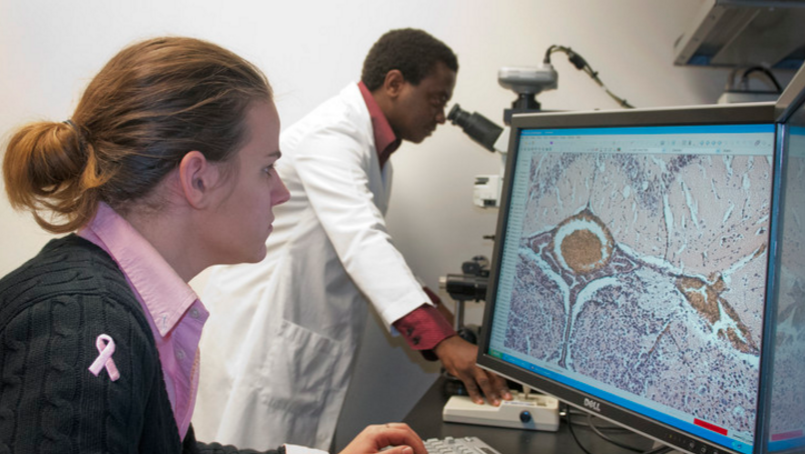
Anna Robuccio, a junior at Penn State studying neurobiology, examined brain samples on a microscopy screen while post doctorate scholar Paddy Ssentongo reviewed the sample under a microscope. Source: website

The Penn State Center for Neural Engineering is a university-wide Center, bridging the campuses and Colleges of Engineering and Science at University Park, with the College of Medicine at Hershey. ...

OnAir Post: Neuroscience Digest – 5.22.16

Neuroscience Digest – 11.23.15

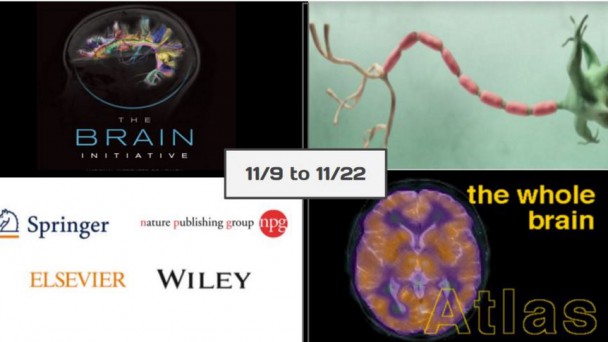
From Monday November 9 to Sunday November 22, 2015 Focus this week on Neuroscience Resources for Brain Projects.

Featured Opportunity

BRAIN Initiative Funding Opportunities

The BRAIN Initiative has numerous active funding opportunities.

The active and closed funding opportunities are organized into seven categories: Brain Cell Types, Tools for Circuit Diagrams, Monitor Neural Activity, Precise Interventional Tools, Theory and Data Analysis Tools, Advance Human Neuroscience, and Integrated Approaches.

Featured Print Media

Academic neuroscience journals

This post has a list of Publishers and their neuroscience related journals. Most of the journals listed here require a subscription to access.

To view posts on Open Access Journals, go to this category.

Featured Images

The Whole Brain Atlas – Harvard Med

The Whole Brain Atlas is an online resource for central nervous system imaging developed by Keith Johnson, MD, and Alex Becker, PhD. It is jointly supported by the Brigham and Women’s Hospital Departments of Radiology and Neurology, Harvard Medical School, the Countway Library of Medicine, and the American Academy of Neurology.

The site has six main sections: (1) a neuroimaging primer for those with limited knowledge of the imaging vocabulary; (2) a normal anatomy atlas; (3) cerebrovascular disease; (4) neoplastic disease; (5) ...

OnAir Post: Neuroscience Digest – 11.23.15

Brain Projects Digest – 10.11.15

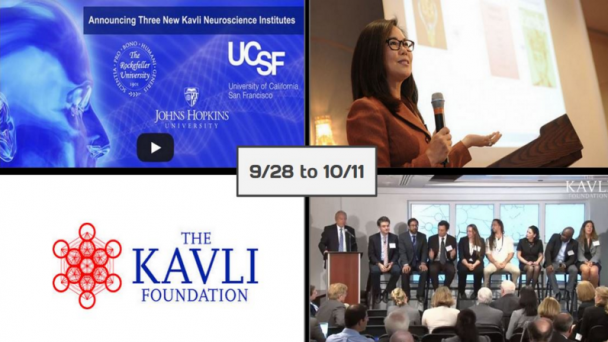
From Monday September 28 to Sunday October 11, 2015 Focus this week on The Kavli Foundation

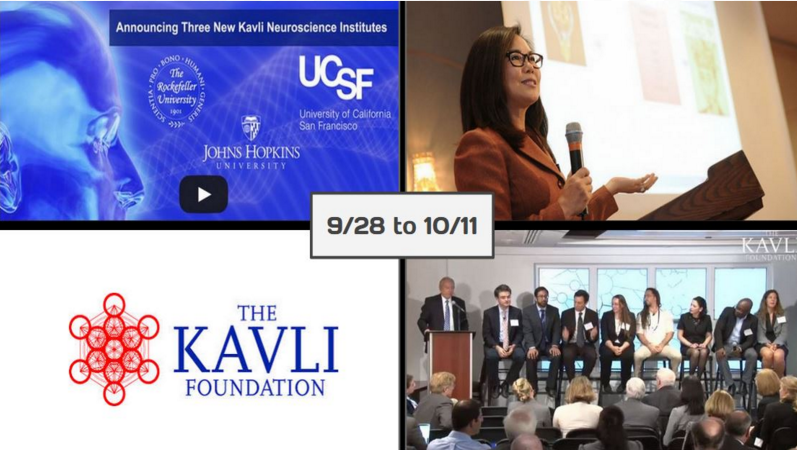
Clockwise from upper left:News of the Week: Kavli and University Partners Commit $100 Million to Brain ResearchPerson of the Week: Miyoung Chun, PhD – KavliEvent of the Week: Special Symposium: Neuroscience in the 21st CenturyOrganization of the Week:The Kavli Foundation

Featured News

Kavli and University Partners Commit $100 Million to Brain Research

WASHINGTON, D.C. – Thursday, October 1, 2015 – The Kavli Foundation and its university partners announced today the commitment of more than $100 million in new funds to enable research aimed at deepening our understanding of the brain and brain-related disorders, such as traumatic brain injuries (TBI), Alzheimer’s disease and Parkinson’s disease.

Funds will be used to strengthen public/private BRAIN Initiative; establish new neuroscience institutes at Johns Hopkins University, The Rockefeller University and the University of California, San Francisco.

Featured Person

Miyoung Chun, PhD – Kavli

Miyoung Chun is Executive Vice President of Science Programs at The Kavli Foundation.

Dr. Chun’s career spans a wide range of experience in academia and industry. Her academic career began as an Assistant Professor of Biochemistry and a member of Whitaker Cardiovascular Institute at ...

OnAir Post: Brain Projects Digest – 10.11.15

Skip to toolbar