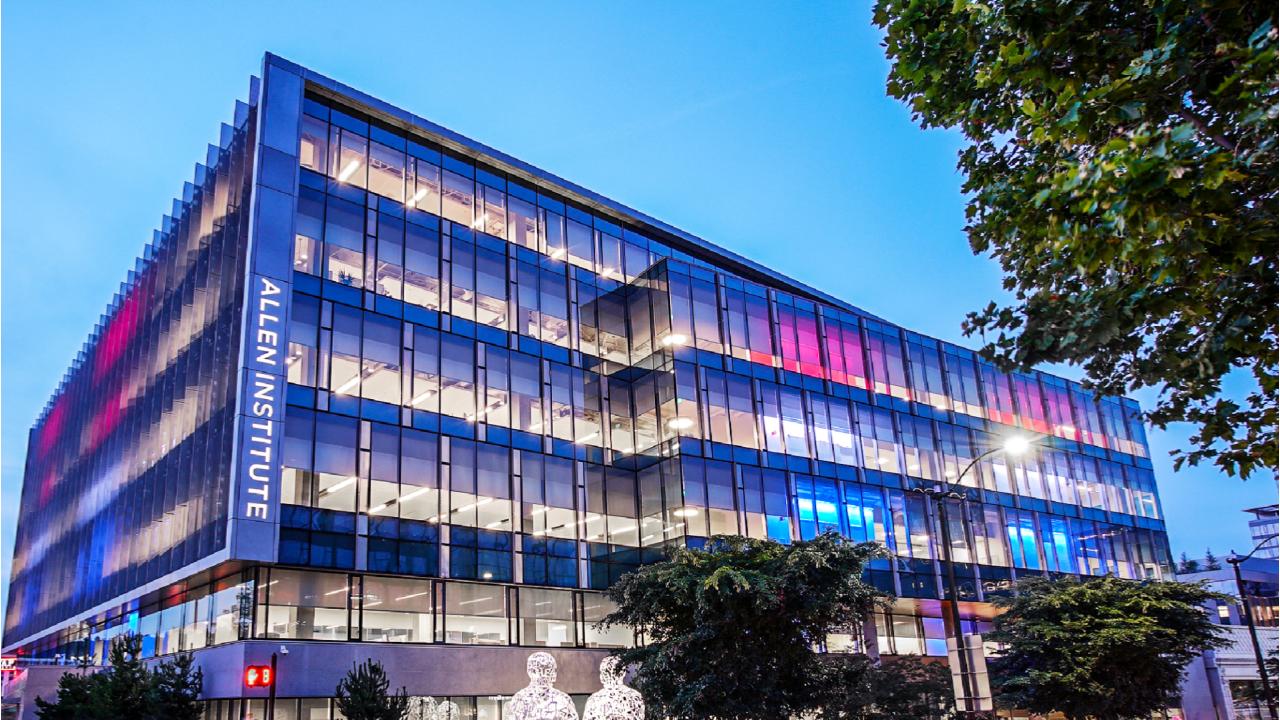
Allen Institute


Summary

Allen Institute’s mission is to accelerate the understanding of how the human brain works in health and disease. Allen has been a major catalyst and facilitator of The BRAIN Initiative.

Launched in 2003 with a seed contribution from founder and philanthropist Paul G. Allen, the Allen Institute takes on large-scale initiatives designed to push brain research forward, enabling the global scientific community to more efficiently make discoveries that bring real-world utility.

https://www.youtube.com/watch?v=bmO8-17K8jsVideo can’t be loaded because JavaScript is disabled: Allen Institute for Brain Science: Understanding the Brain (https://www.youtube.com/watch?v=bmO8-17K8js)

Information

Main Website:  alleninstitute.org Allen Brain Atlas Website:  brain-map.org BRAIN Intitiative Grant – Establishing a Comprehensive and Standardized Cell Type Characterization Platform” Twitter: twitter.com/Allen_Institute YouTube Channel:  https://www.youtube.com/user/AllenInstitute Facebook: facebook.com/AllenInstitute Wikipedia Entry: wiki/Allen_Institute_for_Brain_Science

Phone:  (206) 548-7000

Address: Mercer St. and Westlake Avenue North Seattle. Washington


Organization

Founder: Paul Allen

Founder, President and Chairman: Joyce Allen

Chief Executive Officer: Allan Jones, Ph.D.

Chief Technlogy Officer: Chinh Dang

Chief Scientific Officer: Christof Koch, Ph.D.

Chief Operating Officer: David Poston


Research

The ...

OnAir Post: Allen Institute

Kavli Foundation


Summary

The Kavli Foundation is continuing its support for the goals of the BRAIN Initiative and for innovative brain research. Consistent with its commitment in 2013, Kavli and its University Partners have commited $100 Million to brain research by forming three new Kavli Institutes in addition to supporting its existing four institutes.

The Kavli Foundation, based in Oxnard, California, is dedicated to the goals of advancing science for the benefit of humanity and promoting increased public understanding and support for scientists and their work.


Information

Website:  kavlifoundation.org/ YouTube Channel:  youtube.com/user/KavliFoundation Twitter:  twitter.com/KavliFoundation Facebook: facebook.com/KavliFoundation Wikipedia Entry: wiki/The_Kavli_Foundation

Email: Contact form Phone: 805.983.6000 Address: The Kavli Foundation 1801 Solar Drive , Suite 250 Oxnard, CA 93030


Board of Directors

Rockell N. Hankin, LLB Chairman of the Board

Robert W. Conn, PhD President and Chief Executive Officer

Mary Sue Coleman President Emerita, University of Michigan

Thomas E. Everhart President Emeritus, California Institute of Technology

Douglas K. Freeman, Esq. Senior Managing Director, First Foundation Advisors

Richard A. Meserve President Emeritus, Carnegie Institution for Science

Gunnar K. Nilsen President, BizArch Advisors

Henry T. Yang Chancellor, University of California, Santa Barbara


Officers and Staff

Robert W. Conn, PhD President and Chief Executive Officer

Miyoung Chun, PhD Executive Vice President of Science Programs

James Cohen Director of Communications and Public Outreach

Judy Darley Human Resources Manager and Chief of Staff

Christopher Martin Ph.D. Science Program Officer

Nadine ...

OnAir Post: Kavli Foundation

Partners & The BRAIN Initiative

Over $300 million has been pledged to support the BRAIN Initiative. The five participating federal agencies are NIH, NSF, DARPA, FDA and IARPA. Major non-governmental commitments have come from numerous participants including the original private sector partners - Allen Institute, HHMI, and Kavli Foundation.

OnAir Post: Partners & The BRAIN Initiative

BU Neuroscience

Boston University is creating a new Center for Integrated Life Science and Engineering (CILSE) for interdisciplinary research which will bring together outstanding scientists and engineers from across the University to work collaboratively in the areas of neuroscience and biological design.

CILSE will comprise 170,000 square feet. Its core resources will include a shared equipment facility for Cognitive Neuroimaging. Three new research Centers will be launched including the Center for Systems Neuroscience and the Center for Sensory Communication and Neural Technology.


Web Information

BU Neuroscience Website:  http://www.bu.edu/neuro/

Graduate Program for Neuroscience:  http://www.bu.edu/neuro/graduate/

Center for Systems Neuroscience:  http://www.bu.edu/csn/

Center for Sensory Communication and Neural Technology (formerly CompNet):  http://compnet.bu.edu/


Contact Information

Director of Graduate Program for Neuroscience, Shelley Russek: srussek@bu.edu

Director of Center for Systems Neuroscience, Michael Hasselmo:  hasselmo@bu.edu

Director of Center for Sensory Communication and Neural Technology, Barbara Shinn-Cunningham: shinn@bu.edu


BU Neuroscience

The Neuroscience Mission of BU resonates with a shared belief that major discoveries will come from innovative thinking and an interdisciplinary community of faculty and students.

The broad range of neuroscience research at BU is coordinated through a unified community of investigators from multiple research groups of our Charles River and MED campuses.

Centers bridge the efforts of  individual laboratories and their leaders via scientific retreats, innovative workshops, and collaborative research grants that stimulate ...

OnAir Post: BU Neuroscience

SfN – Society for Neuroscience

This nonprofit organization now has nearly 40,000 members in more than 90 countries and 130 chapters worldwide.

SfN is committed to advancing the understanding of the brain and nervous system by creating venues where great science gets shared, providing professional development for neuroscience professionals, promoting public education and general education in neuroscience research, and informing legislators and other policymakers about new developments.

OnAir Post: SfN – Society for Neuroscience

University of Utah Neuroscience Initiative

The University of Utah Health Sciences has committed $10 million to launch a Neuroscience Initiative that will catalyze interdisciplinary approaches to neuroscience research.

The goal is to deepen the understanding of the function and disorders of the nervous system and to improve patient care through innovation and integration of basic, translational, and clinical research efforts. Initial funds will be used to create a “neuroscience hub,” including space for collaborative research and neuroscience training.


Web Information

Website:   neurogateway.utah.edu/Neuroscience-Institute Twitter: twitter.com/uu_neuro

Contact Information

Emailparker.becca@utah.edu Phone: (801) 585-0343 Address:

Organization

Program Manager: Becca Parker, Ph.D.

Background

The BRAIN Initiative Fact Sheet 9/30/14

University of Utah is committing $10 million to launch a Neuroscience Initiative to support the goals of the BRAIN Initiative:

The University of Utah Health Sciences has committed $10 million to launch a Neuroscience Initiative that will catalyze interdisciplinary approaches to neuroscience research. The goal is to deepen the understanding of the function and disorders of the nervous system and to improve patient care through innovation and integration of basic, translational, and clinical research efforts. This targeted investment by the university will lay the foundation for an expanded effort to enhance neuroscience research and advance the goals of ...

OnAir Post: University of Utah Neuroscience Initiative

GE Brain Health Initiative

The Initiative will build on and coordinate multiple efforts within the company, including corporate venture capital, open innovation, R&D, and health care lines of business. This includes previously announced efforts at GE, such as the work that the company has done to convene the traumatic brain injury community and support for “Brain Trust” meetings of thought leaders.

OnAir Post: GE Brain Health Initiative

Inscopix


Inscopix believes that uncovering causal neural circuit dynamics is the key to truly understanding the brain.

Inscopix recognize that current challenges in studying brain function and dysfunction are handicapped by the inability to monitor large groups of neurons at single-cell resolution. Inscopix understands the need to acquire large-scale neural circuit activity data in naturally behaving subjects. With their flagship miniaturized microscope system, nVista HD,  Inscopix is enabling you to gather unprecedented data sets in any brain area in awake behaving subjects, to make breakthrough scientific discoveries.


Web Information

Website:  inscopix.com/ YouTube Channel:  youtube.com/channel Twitter:  twitter.com/Inscopix

Contact Information

Email:  info@inscopix.com Phone: 1 (650) 600-3886 Address: 2462 Embarcadero Way Palo Alto, CA 94303

Organization

Chief Scientist and Co-Founder: Mark Schnitzer, PhD Team Directory

Background

The BRAIN Initiative Fact Sheet 9/30/14

Inscopix is doubling the number of grants that it will award to advance the mechanistic understanding of the brain:

Inscopix is a provider of end-to-end solutions for imaging and interpreting large-scale neural activity during natural behavior. This past summer, in response to the BRAIN Initiative, Inscopix launched a $1 million scientific grant program, Deciphering Circuit Basis of Disease (DECODE), to catalyze the mechanistic understanding of the brain in health and disease. ...

OnAir Post: Inscopix

HHMI


Summary

Howard Hughes Medical Institute (HHMI) invested more than $70 million to support the goals of the BRAIN Initiative during the past year, and plans a similar level of commitment in 2015.

HHMI supports the BRAIN Initiative at its Janelia Research Campus and in the laboratories of HHMI Investigators at universities throughout the United States. This investment has been focused on developing new imaging technologies and understanding how information is stored and processed in neural networks.


Information

Website:  hhmi.org/  YouTube Channel:  youtube.com/user/biointeractive Twitter:  twitter.com/hhminews Facebook:  facebook.com/HowardHughesMed Wikipedia Entry: wiki/Howard_Hughes_Medical_Institute

Email:   contact form Phone: 301-215-8500 Address: 4000 Jones Bridge Road Chevy Chase, MD 20815-6789


Organization

President: Robert Tjian Senior Executive Team Trustees Scientific Review Board (SRB) Medical Advisory Board (MAB) Science Education Advisory Board (SEAB) Scientific Officers

Background

The BRAIN Initiative Fact Sheet 9/30/14

Howard Hughes Medical Institute invested more than $70 million to support the goals of the BRAIN Initiative during the past year, and plans a similar level of commitment in 2015:

Howard Hughes Medical Institute (HHMI) has invested more than $70 million to support the BRAIN Initiative during the past year at its Janelia Research Campus and in the laboratories ...

OnAir Post: HHMI

Simons Foundation & The BRAIN Initiative

The Simons Foundation’s mission is to advance the frontiers of research in mathematics and the basic sciences. Simons sponsors a range of programs that aim to promote a deeper understanding of our world.

The Life Sciences division launched the Simons Collaboration on the Global Brain in Spring 2014. The collaboration supports projects that use new technologies to record the activity of large neural populations at single-cell resolution, in combination with mathematical analyses, to investigate how neural coding and dynamics represent and process information relevant to internal cognitive states and behavior.


Web Information

Website: simonsfoundation.org/ Simons Collaboration on the Global Brain: Wikipedia Entry:  wiki/James_Harris_Simons

Contact Information

Phone: 646.654.0066 Address: Simons Foundation 160 Fifth Avenue, 7th Floor New York, NY 10010

Organization

Director of Simons Collaboration on the Global Brain: David W. Tank Life Sciences Staff

BRAIN Initiative

The BRAIN Initiative Fact Sheet 9/30/14

The Simons Foundation is announcing alignment of $62 million Simons Collaboration on the Global Brain with the goals of the BRAIN Initiative:

In the spring of 2014, the Simons Foundation launched the Simons Collaboration on the Global Brain with a $60 million investment over the next five years. The goal of this collaboration, directed by David ...

OnAir Post: Simons Foundation & The BRAIN Initiative

Brain & Behavior Research Foundation


The Brain & Behavior Research Foundation is committed to alleviating the suffering caused by mental illness by awarding grants that will lead to advances and breakthroughs in scientific research. 

In recognition of the critical role that basic research plays in understanding the brain, the Foundation is committing to a $2 million increase in its annual support for the most promising young scientists nationwide conducting neurobiological research to support the goals of the BRAIN Initiative through its Young Investigator Grants.


Web Information

Website:  bbrfoundation.org/

YouTube Channel:  youtube.com/BBRFoundation

Twitter:   twitter.com/bbrfoundation

Facebook:  facebook.com/bbrfoundation

Wikipedia Entry:  wiki/Brain_Behavior_Research_Foundation

Contact Information

Emailinfo@bbrfoundation.org.

Phone: 646-681-4888

Address: Brain & Behavior Research Foundation

90 Park Avenue, 16th Floor

New York, NY 10016

Organization

President: Jeffrey Borenstein, M.D.

Board of Directors

Scientific Council

Staff Directory


Background

The BRAIN Initiative Fact Sheet 9/30/14

The Brain & Behavior Research Foundation is committing to a $2 million increase in its annual support for young scientists working on the goals of the BRAIN Initiative:

The Brain & Behavior Research Foundation invests in cutting-edge research projects to understand, treat, and ultimately prevent and cure mental illness. In recognition of the critical role that basic research plays in understanding the brain, ...

OnAir Post: Brain & Behavior Research Foundation

Pediatric Brain Foundation


The Pediatric Brain Foundation formerly the Children’s Neurobiological Solutions Foundation is committing to expanding their Pediatric Brain Mapping Project and to developing mechanisms to connect their patients with ongoing or future clinical trials.

The Pediatric Brain Foundation seeks to expedite the search for treatment and cures for children with neurological disorders as well as to provide important information to parents and patients on recent advances in pediatric neurology.


Web Information

Website:  cnsfoundation.org/ YouTube Channel:   Twitter:  twitter.com/cnsfoundation Facebook: facebook.com/cnsfoundation Blog:  cnsfoundation.org/blog

Contact Information

Emailnfo@cnsfoundation.org Phone: (310) 889.8611 Address: 1223 Wilshire Blvd., #937 Santa Monica, CA 90403

Organization

Director: Alex Richmond Advisors

Background

The BRAIN Initiative Fact Sheet 9/30/14

The Children’s Neurobiological Solutions Foundation is committing to expanding their Pediatric Brain Mapping Project and to developing mechanisms to connect their patients with ongoing or future clinical trials:

The Children’s Neurobiological Solutions Foundation (CNS Foundation) seeks to expedite the search for treatment and cures for children with neurological disorders as well as to provide important information to parents and patients on recent advances in pediatric neurology. CNS Foundation’s Pediatric Brain Mapping Project aims to identify all children living with pediatric neurological disorders and CNS Foundation is committing to doubling the ...

OnAir Post: Pediatric Brain Foundation

Pacific Northwest NeuroNeighborhood

The Pacific Northwest NeuroNeighborhood is dedicated to fostering the development of our emerging Neuro-related cluster in the Northwest.

The Northwest NeuroNeighborhood includes the University of Washington, the Allen Institute, Oregon Health & Science University, and 50 companies based in Oregon and Washington. A pilot BRAIN Initiative ‘regional cluster’  this year will bring together the research, clinical, industry, academic, education, public, and advocacy communities around the BRAIN Initiative themes.


Web Information

Website:  nwnn.org/  YouTube Channel:   Twitter:  twitter.com/NWNeuroNeighbor

Contact Information

Email: contact form

Organization

Director: People

Background

The BRAIN Initiative Fact Sheet 9/30/14

The Pacific Northwest is announcing plans to develop a vibrant neurotechnology regional cluster:

The Pacific Northwest Neuroscience Neighborhood (University of Washington, the Allen Institute for Neuroscience, Oregon Health & Science University, and 50 companies based in Oregon and Washington) will pilot a BRAIN Initiative ‘regional cluster’ in the spring and summer of 2015 to bring together the research, clinical, industry, academic, education, public, and advocacy communities to highlight and build on the BRAIN Initiative themes and goals in the Pacific Northwest. By aligning a series of neuroscience events and conferences, this “BRAIN BRIDGE” aims to be an innovative model for ...

OnAir Post: Pacific Northwest NeuroNeighborhood

Neurotechnology Architecting Network

The Neurotechnology Architecting Network is committing to mentoring and training innovators who will develop new technologies to meet the goals of the BRAIN Initiative:

The Neurotechnology Architecting Network is an open organization of innovators across many for- and non-profit institutions who are developing tools and technologies to reveal how the brain works. This network will aim to create a distributed “neurotech valley” that will disseminate these tools to further both the basic understanding of the brain, as well as its repair.

Web Information

Website:   neuroarchitecting.org/ YouTube Channel:  

Contact Information

Email: info@neuroarchitecting.org

Selected Companies

Kendall Research Systems Leaf Labs Neuromatic Devices 3Scan

Background

The BRAIN Initiative Fact Sheet 9/30/14

The Neurotechnology Architecting Network is committing to mentoring and training innovators who will develop new technologies to meet the goals of the BRAIN Initiative:

The Neurotechnology Architecting Network is an open organization of innovators across many for- and non-profit institutions who are developing tools and technologies to reveal ow the brain works. In support of the goals of the BRAIN Initiative, the Neurotechnology Architecting Network is committing to mentoring and training innovators who will design, prototype, assess, and distribute at least a dozen technologies for mapping, ...

OnAir Post: Neurotechnology Architecting Network

Salk Institute for Biological Studies

The Salk Institute was established in the 1960s by Jonas Salk, M.D., the developer of the polio vaccine.

Today the major areas of study at Salk are: molecular biology and genetics, neurosciences, and plant biology. Salk research provides new understanding and potential new therapies and treatments for a range of diseases—from cancer, AIDS and Alzheimer’s disease, to cardiovascular disorders, anomalies of the brain and birth defects.


Web Information

Website: http://www.salk.edu/ Neuroscience Research Centers: salk.edu/centers/ Neuroscience Laboratories: salk.edu/faculty/neuroscience_laboratories Wikipedia Entry: wiki/Salk_Institute_for_Biological_Studies Brain Initiative Grant – Epigenomic mapping approaches for cell-type classification in the brain”

Contact Information

Email: webmaster@salk.edu Phone: 858.453.4100 Address: Salk Institute for Biological Studies 10010 N Torrey Pines Rd La Jolla, CA 92037

About Salk

Mission Statement

Every cure has a starting point. Like Dr. Jonas Salk when he conquered polio, Salk scientists are dedicated to innovative biological research. Exploring the molecular basis of diseases makes curing them more likely. In an outstanding and unique environment we gather the foremost scientific minds in the world and give them the freedom to work collaboratively and think creatively. For over 50 years this wide-ranging scientific inquiry has yielded life-changing discoveries impacting human health. We are home to Nobel Laureates and members of the National Academy of Sciences who train and mentor the next generation of ...

OnAir Post: Salk Institute for Biological Studies

Mayo Clinic Neuroscience

Mayo Clinic has multiple centers of neuroscience research activity.  In Rochester Minnesota, the main organizational center is the Department of Physiology and Biomedical Engineering and in Florida, the Department of Neuroscience at Mayo Clinic.

Other Mayo Neuroscience related programs  and centers include a PhD program in Neurobiology, an Alzheimer’s Disease Research Center, Center for Advanced Imaging Research, Migraine Research Program, Parkinson’s Disease Research Center, and the Traumatic Brain Injury Program.


Web Information

Website: Department of Physiology and Biomedical Engineering Department of Neuroscience at Mayo Clinic in Florida: mayo.edu/research/department-neuroscience-florida Wikipedia Entry:   wikipedia.org/wiki/Mayo_Clinic Brain Initiative Grant – “Neurotransmitter Absolute Concentration Determination with Diamond Electrode”

Department of Physiology and Biomedical Engineering

Laboratories of primary and joint appointees in the Department of Physiology and Biomedical Engineering:

Biomechanics and Motion Laboratories Bone Histomorphometry – Michael J. Yaszemski Cardiovascular Molecular Imaging – Martin G. Rodriguez-Porcel Cell Imaging and Physiology – Gary C. Sieck Computer-aided Molecular Design – Yuan-Ping Pang Developmental and Regenerative Neurobiology – John R. Henley Gastrointestinal Physiology – Gianrico Farrugia Hepatic Vascular Cell Signaling – Vijay H. Shah Human Integrative Physiology – Michael J. Joyner Kidney Development and Cyst Formation – Caroline R. Sussman Liver Pathobiology – Gregory J. Gores Lung Deformation Injury – Rolf D. Hubmayr Magnetic Resonance ...

OnAir Post: Mayo Clinic Neuroscience

Cold Spring Harbor Laboratory

Summary

Cold Spring Harbor Laboratory (CSHL) is a private, not-for-profit research and education institution at the forefront of molecular biology and genetics.

CSHL research generates knowledge that will yield better diagnostics and treatments for cancer, neurological diseases and other major diseases, and that will lead to improved and more diverse food resources and more efficient biofuels. The Watson School of Biological Sciences trains the next generation of scientists through an innovative Ph.D. program and other educational offerings.


Information

Website:  http://www.cshl.edu/ Wikipedia Entry: wikipedia.org/wiki/Cold_Spring_Harbor_Laboratory BRAIN Grant – “Towards quantitative cell type-based mapping of the whole mouse brain” BRAIN Grant – “An optogenetic toolkit for the interrogation and control of single cells.”

Email:  contact info Phone: 516-367-8800 Address: One Bungtown Road Cold Spring Harbor, NY 11724

President and Chief Executive Officer:  Bruce W. Stillman Leadership


Neuroscience

CSHL neuroscientists focus on understanding how neural activity and neural circuitry underlie behavior, and how disruptions in these circuits lead to neurological and neuropsychiatric disorders such as Alzheimer’s disease, autism, schizophrenia and depression. These questions are addressed in two model systems—rodents and Drosophila—using molecular, cellular, genetic, developmental, theoretical, physiological and behavioral approaches.

Neuroscience research at CSHL is highly collaborative, and can be divided into three broad themes: sensory processing, cognition, and cognitive disorders.  The sensory processing group addresses basic questions about sensory representations (auditory, olfactory ...

OnAir Post: Cold Spring Harbor Laboratory

Brain Canada and the BRAIN initiative

The 10 NIH Institutes that are part of the NIH BRAIN Initiative announce a new partnership, formalized by a letter of agreement, with the Brain Canada Foundation (Brain Canada) to support the involvement of Canadian researchers in the NIH BRAIN Initiative.

Brain Canada will seek partners and provide grant support for Canadian researchers through the Canada Brain Research Fund that provides a 1:1 match of funds raised from other sources.

NIH Notice Number: NOT-MH-15-020

Web Information

Brain Cananda Foundation websitehttp://braincanada.ca/

Twitterhttps://twitter.com/BrainCanada

Contact Information

Email: programs@braincanada.ca

Phone: 514-989-2989

Address: 1200 McGill College Avenue Suite 1600 Montreal, Quebec H3B 4G7

Contact person: Inez Jabalpurwala

NIH contact people:

Gregory K. Farber, Ph.D. National Institute of Mental Health (NIMH) Telephone:  301-435-0778 Email:  farberg@mail.nih.gov

Ned Talley, Ph.D. National Institute of Neurological Disorders and Stroke (NINDS) Telephone:  301-496-1917 Email:  talleye@mail.nih.gov

Purpose

The 10 NIH Institutes that are part of the NIH BRAIN Initiative announce a new partnership, formalized by a letter of agreement, with the Brain Canada Foundation (Brain Canada) to support the involvement of Canadian researchers in the NIH BRAIN Initiative.  Both NIH and the Brain Canada Foundation believe that the ambitious goals of the BRAIN Initiative can best be attained by collaboration across disciplinary boundaries as well as geographic boundaries.  Brain Canada will seek partners and provide grant ...

OnAir Post: Brain Canada and the BRAIN initiative

Australia and the BRAIN Initiative

The NIH and NHMRC have agreed to cooperate in the BRAIN Initiative involving Australian and U.S. scientists. NIH has now released the Notice of Intent to Publish a Funding Opportunity Announcement for BRAIN Initiative: Foundations of Non-Invasive Human Brain Imaging and Neuro-Recording Techniques (R01) and Participation by the Australian National Health and Medical Research Council.

The NIH’s Notice of Intent on August, 7, 2015 can be found on the National Institutes of Health website. More information is expected in September 2015 – watch Research Tracker.

Web Information

NHMRC websitehttps://www.nhmrc.gov.au/

NIH Noticie: http://grants.nih.gov/grants/guide/notice-files/NOT-MH-15-022.html

Twitterhttps://twitter.com/BrainCanada

Contact Information

Emailbrain@nhmrc.gov.au

Phone: +61 2 6217 9450

Address: National Health and Medical Research Council GPO Box 1421 Canberra ACT 2601

NIH contact people:

Gregory K. Farber, Ph.D. National Institute of Mental Health (NIMH) Telephone:  301-435-0778 Email:  farberg@mail.nih.gov

Ned Talley, Ph.D. National Institute of Neurological Disorders and Stroke (NINDS) Telephone:  301-496-1917 Email:  talleye@mail.nih.gov

Purpose

The NIMH, with other NIH Institutes and Centers (ICs) that are part of the BRAIN Initiative, intends to promote a new initiative by publishing a Funding Opportunity Announcement (FOA) to solicit applications for research on the foundations of non-invasive human brain imaging and neuro-recording techniques.  The ...

OnAir Post: Australia and the BRAIN Initiative

UT System Neuroscience Institute

The U.T. BRAIN initiative funds $20 million in support of a virtual U.T. System Neuroscience and Neurotechnology Research Institute.

The institute’s purpose is to promote trans-disciplinary, multi-institutional research projects focused on neuroscience and neurotechnology challenges that will transform the fields of imaging, neurocomputation, and molecular mapping; the development of neuro-devices; and basic/translational/clinical investigations in intractable neurological diseases.


Web Information

Website:  utsystem.edu/sites/neuroscience/ut-system-neuroscience-institute neUroTransmitter Blog:  utsystem.edu/sites/neuroscience/blog

Contact Information

Email: Tom Jacobs tjacobs@utsystem.edu or Andrew Hughes anhughes@utsystem.edu

Organization

Advisory Board Neuroscience Council Working Groups

Background

The BRAIN Initiative Fact Sheet 9/30/14

University of Texas System is announcing alignment of more than $20 million in equipment, faculty resources, and seed grants with the goals of the BRAIN Initiative:

In 2013, the University of Texas (UT) System organized a multi-campus Neuroscience Council in response to the BRAIN Initiative. The Council brings together top researchers from UT’s 15 academic and health institutions to explore new convergent research that takes advantage of faculty expertise in disciplines such as engineering, computer science, mathematics, materials science, physics, and chemistry, along with cutting-edge resources such as the 10-petaflop supercomputer at UT Austin. The UT System has also created a Neuroscience and Neurotechnology Research Institute that ...

OnAir Post: UT System Neuroscience Institute

University of Pittsburgh Brain Institute

The University of Pittsburgh Brain Institute focuses on unlocking the mysteries of normal and abnormal brain function.

The Brain Institute will support the efforts of more than 150 neuroscientists at the university and create seven new Centers, including the NeuroTech Center, which capitalizes on the University’s advances in brain-computer interfaces for paralyzed individuals, and the NeuroDiscovery Center, which will provide unique resources to enable innovative basic science research.


 Web Information

Website:  neurobio.pitt.edu/about.html Wikipedia Entry: wiki/University_of_Pittsburgh_School_of_Medicine

Contact Information

Email: blaney@bns.pitt Phone: (412) 648-9000 Address: Department of Neurobiology School of Medicine University of Pittsburgh E1440 BSTWR 200 Lothrop Street Pittsburgh, PA 15213-2536

Organization

Scientific Director: Peter L. Strick, Ph.D

Background

The BRAIN Initiative Fact Sheet 9/30/14

University of Pittsburgh is announcing more than $65 million in funding for the University of Pittsburgh Brain Institute:

In January 2014, the University of Pittsburgh announced the creation of a Brain Institute focused on unlocking the mysteries of normal and abnormal brain function. The Brain Institute will support the efforts of more than 150 neuroscientists at the university and create seven new Centers, including the NeuroTech Center, which capitalizes on the University’s advances in brain-computer interfaces for paralyzed individuals, and the NeuroDiscovery Center, which will provide unique resources to enable innovative basic science research. ...

OnAir Post: University of Pittsburgh Brain Institute

Google and The BRAIN Initiative


Google engineers are building tools and developing infrastructure to analyze petabytescale datasets generated by the BRAIN Initiative:

Google is working closely with the Allen Institute to develop scalable computational solutions to advance scientific understanding of the brain and with Janelia Research and several academic partners. Google is building the software tools and supporting infrastructure needed to analyze petabyte-scale datasets generated by the BRAIN Initiative to better understand the brain’s computational circuitry and the neural basis for human cognition.


Web Information

Website:   

Contact Information

Email: Phone: Address:

Organization

Director:

Background

The BRAIN Initiative Fact Sheet 9/30/14

Google engineers are building tools and developing infrastructure to analyze petabytescale datasets generated by the BRAIN Initiative:

Google is working closely with the Allen Institute to develop scalable computational solutions to advance scientific understanding of the brain and with Janelia Research and several academic partners. Google is building the software tools and supporting infrastructure needed to analyze the datasets generated by the BRAIN Initiative to better understand the brain’s computational circuitry and the neural basis for human cognition.

OnAir Post: Google and The BRAIN Initiative

GSK Bioelectronics R&D


Our vision for bioelectronic medicines is one of miniature, implantable devices that can be attached to individual peripheral nerves anywhere in the viscera. 

Such devices would be able to decipher and modulate neural signalling patterns, bringing about therapeutic effects targeted at single functions of specific organs. GSK operates an exploratory research funding program; we have established a $50 million venture arm dedicated to technology and early bioelectronic treatment manifestations and an innovation challenge focussed on rapidly bringing visceral nerve research platforms to the community.

Web Information

Website: http://www.gsk.com/en-gb/partnerships/bioelectronics-randd/


Contact Information

Emailroy.m.katso@gsk.com

Background

The BRAIN Initiative Fact Sheet 9/30/14

GlaxoSmithKline is announcing up to $5 million in new funding for the research community to develop innovative peripheral neurotechnologies:

In 2013, GlaxoSmithKline (GSK) announced its ambition to develop new treatments for disease through neuronal control of visceral organs systems, an area where GSK believes there is opportunity for translation of innovative neurotechnology to create precision treatments for chronic diseases such as asthma, hypertension, and arthritis. Since then, the GSK Bioelectronic Medicines program has furthered work in the research community in this area through multiple efforts, including exploratory funding for academic scientists, a $50 million venture capital fund, and ...

OnAir Post: GSK Bioelectronics R&D

Photonics Industry Neuroscience Group


Leaders of the National Photonics Initiative (NPI), an alliance of top scientific societies uniting industry and academia to raise awareness of photonics, launched its Photonics Industry Neuroscience Group at the White House BRAIN Initiative launch conference.

Members of the NPI industry group are committing to invest upwards of $30 million in existing and future research and development spending over the next three years to advance optics and photonics technology in support of the White House BRAIN Initiative.


Web Information

Website: lightourfuture.org/  

Contact Information

Email: epappas@podestagroup.com (media contact) Phone: 231.357.6330

Organization

Director:

Background

The BRAIN Initiative Fact Sheet 9/30/14

U.S. Photonics Industry Leaders are committing $30 million to tackle challenges of the BRAIN Initiative:

The National Photonics Initiative (NPI), an alliance of major scientific societies, industry and academic organizations, is convening a Photonics Industry Neuroscience Group to focus on developing new optics and photonics technologies in support of the BRAIN Initiative. This multidisciplinary industry group is comprised of influential U.S. industry leaders including Accumetra, LLC; Agilent, Applied Scientific Instrumentation; Coherent; Hamamatsu; Inscopix, Inc.; Spectra—Physics; and THORLABS. The Photonics Industry Neuroscience Group will work closely with the BRAIN Initiative leadership and with the neuroscience research community to advance optics and photonics research ...

OnAir Post: Photonics Industry Neuroscience Group

UC Berkeley-Zeiss BrainMIC

University of California, Berkeley and Carl Zeiss Microscopy are investing $12 million to create the Berkeley Brain Microscopy Innovation Center (BrainMIC).

The BrainMIC will fast-track microscopy development for emerging neurotechnologies and will run an annual course to teach researchers how to use the new technologies. The UC Berkeley Helen Wills Neuroscience Institute is creating a program that will generate innovative devices and analytic tools in engineering, computation, chemistry, and molecular biology to enable transformative brain science from studies of human cognition to neural circuits in model organisms.


Web Information

Helen Wills Neuroscience Institute website:  http://neuroscience.berkeley.edu/ (no website yet for the Brain MIC) Brain Imaging Center (BIC):  neuroscience.berkeley.edu/BIC-campus-resource/ Zeiss Neuroscience Research: zeiss.com/microscopy/en_us/solutions/bioscience-research-areas/neuroscience-research

Contact Information

Email: At Zeiss contact Dr. Jochen Tham  at jochen.tham@zeiss.com

Organization

Director: Staff Directory

Background

The BRAIN Initiative Fact Sheet 9/30/14

University of California, Berkeley and Carl Zeiss Microscopy are announcing $12 million to create infrastructure for neurotechnology development:

The University of California, Berkeley (UC Berkeley) has invested in the Helen Wills Neuroscience Institute to create a program that will generate innovative devices and analytic tools in engineering, computation, chemistry, and molecular biology to enable transformative brain science from studies of human cognition to neural circuits ...

OnAir Post: UC Berkeley-Zeiss BrainMIC

Carnegie Mellon ‘BrainHub’

The Carnegie Mellon University (CMU) BrainHub initiative spans across CMU’s colleges and schools, involving nearly 50 faculty and over 150 scientists.

A major facet of this initiative is increasing collaboration among faculty from disciplines such as computer science and engineering with those taking biological and behavioral approaches to neuroscience. Linking brain science to behavior via the application of machine learning, statistics, and computational modeling will be a hallmark of CMU’s efforts, along with commercialization of the new technologies and applications.


Web Information

Brain Hub:  cmu.edu/research/brain

Neuroscience Programs and Centers:  cmu.edu/neuro/


Contact Information

Email: gbalbier@andrew.cmu.edu Phone: 412-268-9718 Address: Brain Hub 5000 Forbes Avenue Pittsburgh, PA 15213

Executive Director: Gerry Balbier Facutly Experts


Research Areas

Sharing the World’s Brain Research Data

Researchers around the world are collecting vast amounts of data from the brain at a rapid pace. We believe that much can be learned by combining the global collection of data. We are creating new tools that will index, aggregate and share this global data, making it accessible in powerful new ways. Faculty experts in this area »

Mapping & Exploring the Interconnectivity of the Brain and Behavior

The brain is made up of billions of neurons, which make billions of connections to communicate information. While scientists have been ...

OnAir Post: Carnegie Mellon ‘BrainHub’

Skip to toolbar