Combining genetics, genomics & anatomy

Principal Investigator: Sacha B. Nelson Brandeis University Title: Combining genetics, genomics, and anatomy to classify cell types across mammals” BRAIN Category: Census of Cell Types (RFA MH-14-215)

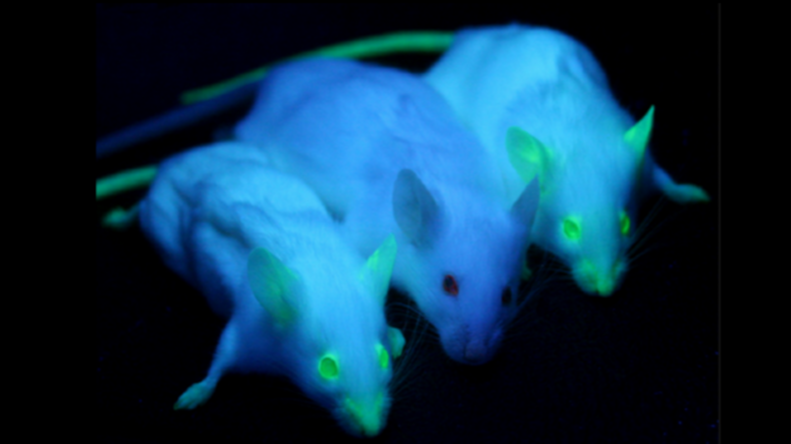
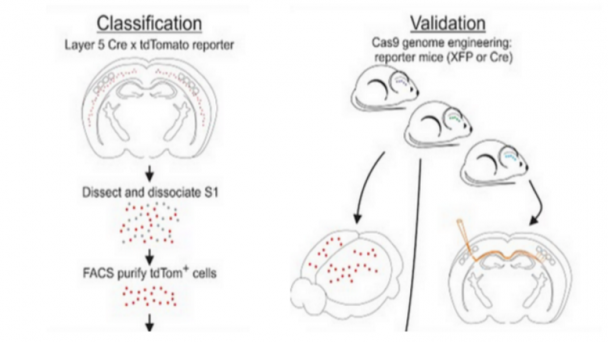
To gain a deeper understanding of how cells have evolved specialized features, Dr. Nelson and colleagues will create transgenic strains of rats and mice that carry identical genetic modifications in many different cell types and see how the properties of these cells diverge across species.

Two mice expressing enhanced green fluorescent protein under UV-illumination flanking one plain mouse from the non-transgenic parental line. Source: wikipedia

NIH webpage


Project Description

Recent genetic advances have driven significant progress in scientists’ abilities to classify and map neuronal cell types within the brains of mode organisms like laboratory mice. To better delineate neuronal cell types in the human brain, however, it is critical to have a deeper understanding of the way that neuronal cell types evolve across mammals. As a first step toward achieving this understanding, corresponding neuronal cell types will be directly compared in two closely related mammalian species: mice and rats. By closely examining differences in the properties of these cells, including the genes they express, we hope to identify genomic elements that control the properties ...

OnAir Post: Combining genetics, genomics & anatomy
Single Cell Transcriptomics Classification

PI: John J. Ngai, Ngai Lab Helen Wills Neuroscience Institute Title: “Classification of Cortical Neurons by Single Cell Transcriptomics” BRAIN Category: Census of Cell Types (RFA MH-14-215)

To understand what makes neurons distinct, Dr. Ngai’s team will explore one major type of mouse brain cell, pinpointing genes responsible for differentiating them into subtypes and will also test whether each subtype has unique functions, using a new technique that labels them with tagged genes.

NIH Webpage

Project Description

Unraveling the complexity of the mammalian brain is one of the most challenging problems in biology today. A major goal of neuroscience is to understand how circuits of neurons and non-neuronal cells process sensory information, generate movement, and subserve memory, emotion and cognition. Elucidating the properties of neural circuits requires an understanding of the cell types that comprise these circuits and their roles in processing and integrating information. However, since the description of diverse neuronal cell types over a century ago by Ramon y Cajal, we have barely scratched the surface of understanding the diversity of cell types in the brain and how each individual cell type contributes to nervous system function. Current approaches for classifying neurons rely upon features including the differential expression of small numbers of genes, cell morphology, ...

OnAir Post: Single Cell Transcriptomics Classification

Cell Type Characterization Platform

PI: Hongkui Zeng, Allen Brain Atlases Allen Institute for Brain Science Title: “Establishing a Comprehensive and Standardized Cell Type Characterization Platform” BRAIN Category: Census of Cell Types (RFA MH-14-215)

Dr. Zeng’s group will characterize cell types in brain circuits controlling sensations, such as vision and emotions, as a first step to better understand information processing across circuits. The data generated will be posted as a public online resource for the scientific community.

NIH Webpage

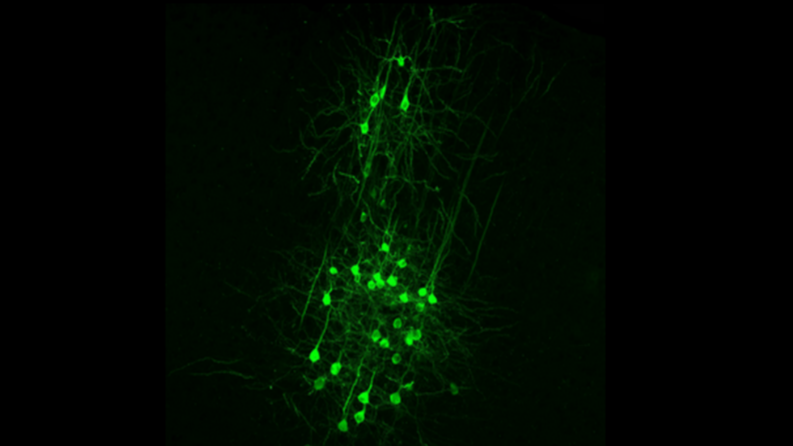
“The combination of fluorescent imaging and optogenetic stimulation is a powerful way to learn both where cells are in space, when they are active or silent, and how they interact with other cells in the circuits they form,” says Zeng.” The new tools we have created open doors to identifying and learning more about the many different types of cells in our brains: the first crucial step to understanding how information is encoded by neural circuits.”

Project Description

The brain circuit is an intricately interconnected network of a vast number of neurons with diverse molecular, anatomical and physiological properties. Neuronal cell types are fundamental building blocks of neural circuits. To understand the principles of information processing in the brain circuit, it is essential to have a ...

OnAir Post: Cell Type Characterization Platform

Quantitative cell type-based mapping

Principal Investigator: Pavel Osten Cold Spring Harbor Laboratory Title: “Towards quantitative cell type-based mapping of the whole mouse brain” BRAIN Category: Census of Cell Types (RFA MH-14-215)

The Osten team will develop an automated system to image different types of brain cells and their connections in mice, to pinpoint differences between males and females, across the lifespan.

NIH Webpages

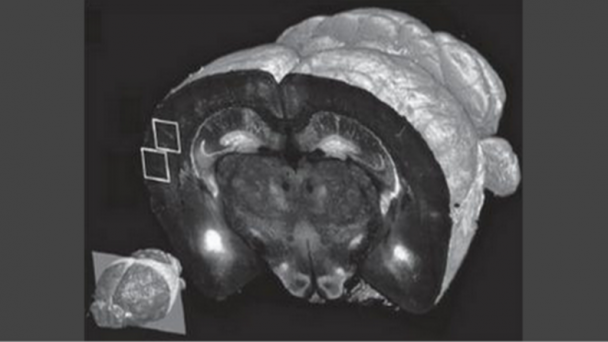
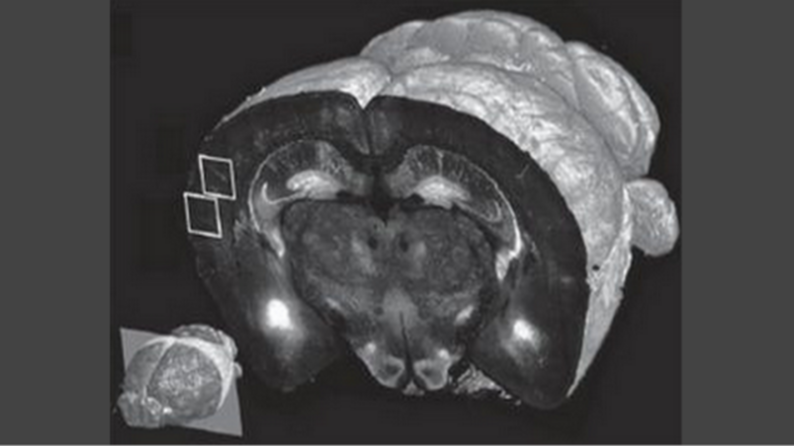
3-D rendering of coronal section of a mouse brain imaged with STP tomography at 20x at a resolution of half a micron. GFP-expressing pyramidal neurons in hippocampus and cortex are targeted.

Project Description

The mouse brain comprises ~70 million neurons and ~30 million glia and other cells. Neurons have been traditionally classified based on their morphology, connectivity, stimulus-response, gene expression, and location in the brain. While we know reasonably well the main cell types that are present at different brain locations, we have little quantitative knowledge about brainwide cell type distribution. In addition, cell type-based brainwide connectivity, especially at the level of projection patterns of single neurons, also remains largely unmapped. This knowledge gap prevents us from incorporating the accumulated cell type-based cellular data into comprehensive circuit models of mammalian brain function. Here we propose to develop a largely automated methodology ...

OnAir Post: Quantitative cell type-based mapping

Neuronal Subtypes By Cell Transcriptomics

Principal Investigator: Joshua R  Sanes Neuroscience@Harvard Title: “Comprehensive Classification Of Neuronal Subtypes By Single Cell Transcriptomics” BRAIN Category: Census of Cell Types (RFA MH-14-215)

Dr. Sanes and colleagues will use new methods of genetic screening to comprehensively catalog and distinguish different kinds of cells across species and brain regions.

NIH Webpages

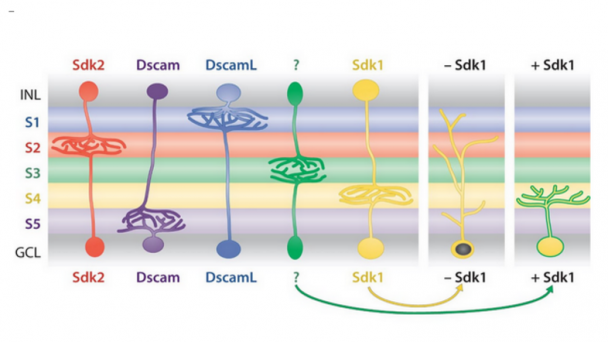
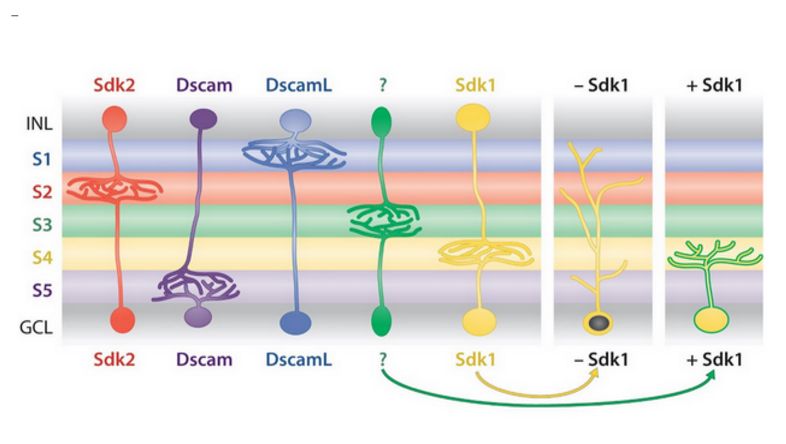
Immunoglobulin Superfamily Code for Laminar Specificity in Retina

Project Description

To understand the brain, we need a “parts list” of its cell types. The list will need to integrate molecular, functional and morphological data, but of these, molecular classification is best suited for comprehensive categorization and the only approach that can lead directly to genetically accessing the types; such access is essential in order to mark and manipulate neurons and to allow rigorous comparison of neurons from normal and diseased brains. We will apply the emerging method of single-cell transcriptional profiling (scRNA-seq) to this task. We will first rigorously compare and optimize cutting- edge methods for cell isolation, transcriptional profiling, and computational analysis to establish an efficientand effective pipeline for categorization. Then, we will apply our suite of methods to two brain regions – mouse retina and zebrafish habenula – that differ in several ways but share key features: ...

OnAir Post: Neuronal Subtypes By Cell Transcriptomics

Epigenomic mapping cell-type classification

Principal Investigator: Joseph R Ecker Salk Institute for Biological Studies Title: “Epigenomic mapping approaches for cell-type classification in the brain” BRAIN Category: Census of Cell Types (RFA MH-14-215)

Dr. Ecker’s group will use signatures of epigenetics, the switching on-and-off of genes in response to experience, in mouse frontal cortex to help identify different classes of cells and understand their function.

NIH Webpages

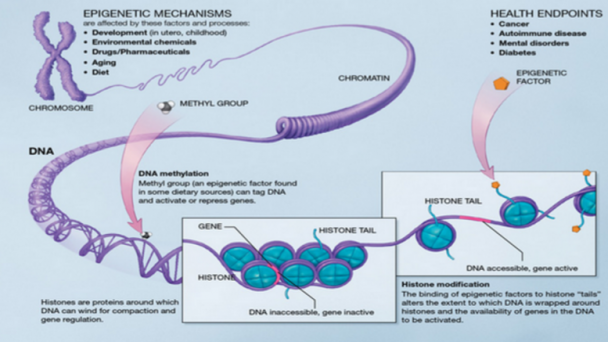
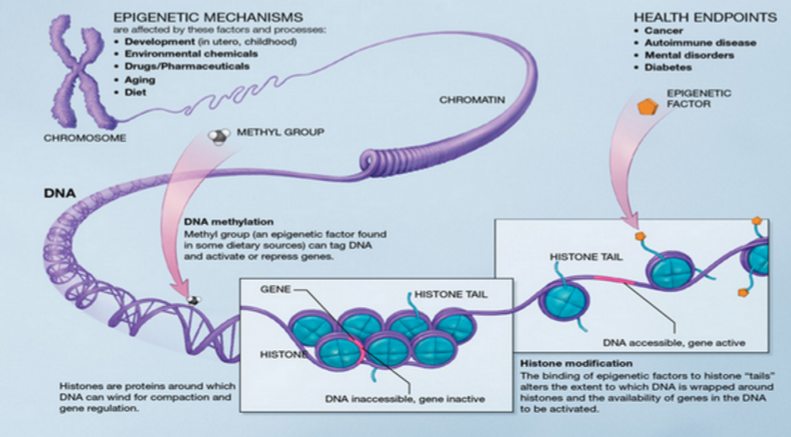
A Scientific Illustration of How Epigenetic Mechanisms Can Affect HealthEpigenetic mechanisms are affected by several factors and processes including development in utero and in childhood, environmental chemicals, drugs and pharmaceuticals, aging, and diet. DNA methylation is what occurs when methyl groups, an epigenetic factor found in some dietary sources, can tag DNA and activate or repress genes. Histones are proteins around which DNA can wind for compaction and gene regulation. Histone modification occurs when the binding of epigenetic factors to histone “tails”; alters the extent to which DNA is wrapped around histones and the availability of genes in the DNA to be activated. All of these factors and processes can have an effect on people’s health and influence their health possibly resulting in cancer, autoimmune disease, mental disorders, or diabetes among other illnesses. NIH Common Fund.

Project ...

OnAir Post: Epigenomic mapping cell-type classification

Cell types in developing human fetal cortex

Principal Investigator: Daniel H Geschwind UCLA Neuroscience Title: “Defining cell types, lineage, and connectivity in developing human fetal cortex” BRAIN Category: Census of Cell Types (RFA MH-14-215)

Dr. Geschwind’s group will explore the diversity of cell types in the developing human brain, and will bring to bear state-of-the-art genetic and cellular visualization technology to map and trace the relationship between cell types across the cortex.

NIH Webpage


Project Description

Little is currently known about the number, proportion, or lineage of distinct cell types in the developing human fetal brain. Knowledge of such a component list and its functional genomic foundations is crucial for understanding the function of this complex system, its evolution, and how it is disrupted in disease. We hypothesize that comprehensive single-cell mRNA expression profiles provide an accurate and efficient rubric for a first generation classification schema that can be integrated with lineage, morphology and connectivity. We will use unsupervised learning algorithms to cluster 10,000 single cell transcriptomes derived from RNAseq of the human fetal cortical anlage, providing an unbiased model to identify and understand the resultant cell classes. We will validate these cell class determinations using in situ hybridization. We will use marker genes identified in this analysis to perform lineage tracing using cell-type ...

OnAir Post: Cell types in developing human fetal cortex

Cortical Neurons by Transcriptome

Principal Investigator: Massimo Scanziani UC San Diego’s Neuroscience Title: “Classifying Cortical Neurons by Correlating Transcriptome with Function” BRAIN Category: Census of Cell Types (RFA MH-14-215)

Dr. Scanziani’s team will record neuronal responses to different visual stimuli to discover how individual brain cell activity is linked to expression of specific genes.

NIH Webpage

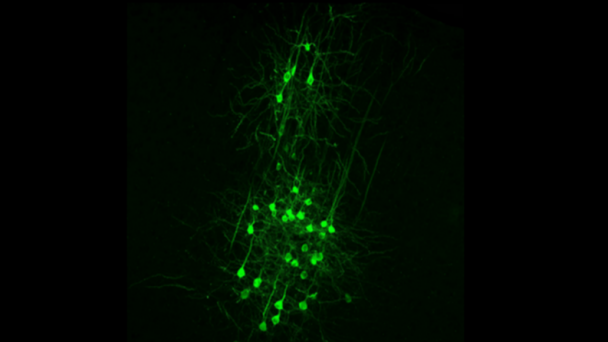
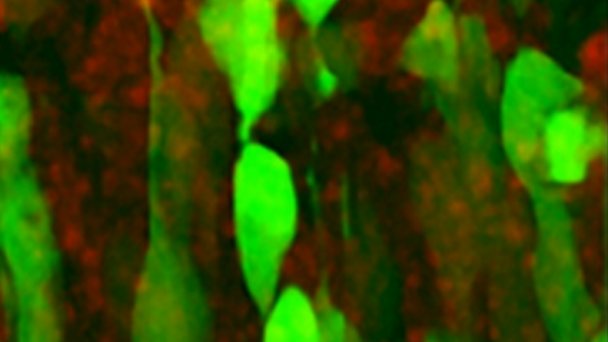
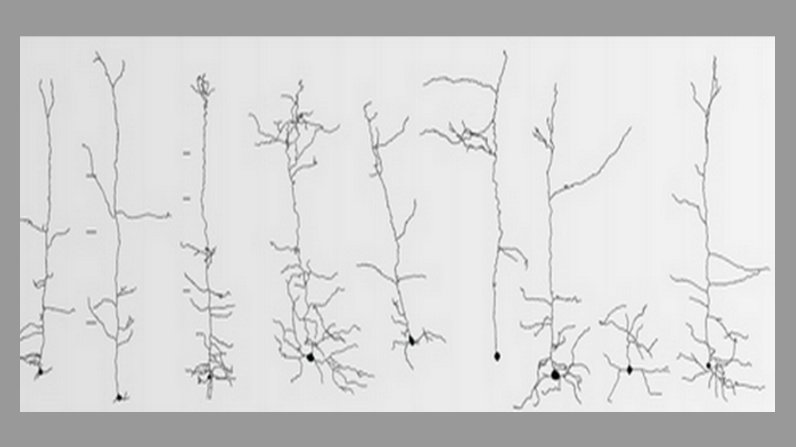
Visual cortex cells

Project Description

The classification of neurons into distinct types is a fundamental endeavor in neuroscience. Neuronal classification allows one to gain insight into the building blocks of the nervous system, is essential for a mechanistic understanding of the function of the nervous system and is a prerequisite for unambiguous communication between investigators. No single unequivocal categorization scheme exists yet for neurons in the mammalian cerebral cortex. The classification based on morphological characteristics has led to tremendous advances in our understanding of the nervous system, yet is often ambiguous in cortical neurons because many morphological properties are difficult to parameterize. Other classifications based on immunohistochemistry or electrophysiology have been helpful but, alone, fail to capture the rich diversity of cortical neurons. Evidence indicates that distinct neuron types express different genes. Thus, in principle, the gene expression pattern could be used to generate an unambiguous and objective classification ...

OnAir Post: Cortical Neurons by Transcriptome

Massively Parallel Single Cell Analysis

Principal Investigator: Arnold Kriegstein UCSF Neuroscience Title: “Mapping the Developing Human Neocortex by Massively Parallel Single Cell Analysis” BRAIN Category: Census of Cell Types (RFA MH-14-215)

By combining genetic, molecular and physiological techniques at the single cell level, Dr. Kriegstein and colleagues will classify diverse cell types in the prefrontal cortex of developing human brain tissue.

NIH webpage

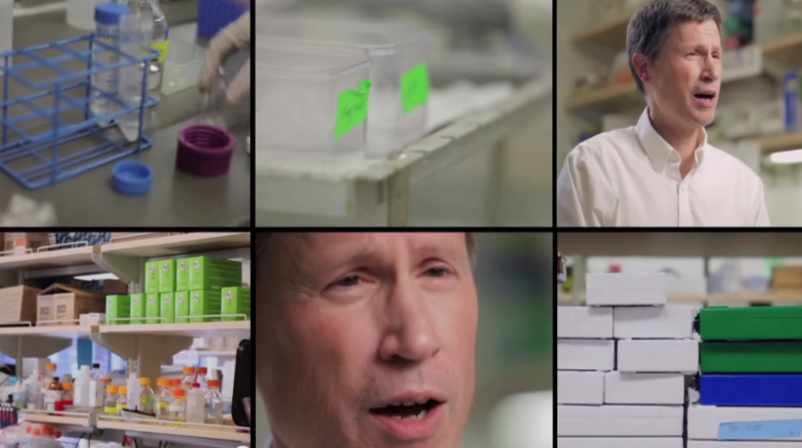
Image from video “UCSF scientists: the power of stem cell biology”

Project Description

This proposal seeks to create a single cell resolution map of the developing human neocortex. We propose to determine the number of different subtypes of neural stem and progenitor cells that generate the cerebral cortex, and then follow the developmental trajectories of the newborn neurons they produce to obtain an understanding of the diversity of cortical neurons that will ultimately form the adult cortex. We plan a novel approach to this problem by integrating surveys of single cell gene expression and physiology in human cortical cells from multiple brain regions at a series of developmental stages. In collaboration with Fluidigm Corporation, we have developed innovative strategies for massively parallel profiling of molecular and physiological properties of primary human cortical cells using microfluidic technologies, cellular barcoding, and timelapse microscopy. We now ...

OnAir Post: Massively Parallel Single Cell Analysis

Cell-Type Classification in the Human Brain

Principal Investigator: Nenad Sestan Yale Neuroscience Title: “A Novel Approach for Cell-Type Classification and Connectivity in the Human Brain” BRAIN Category: Census of Cell Types (RFA MH-14-215)

Dr. Sestan’s group will substantially advance the profiling of cell types – their molecular identities and connections – made possible by a new method of better preserving brain tissue to maintain cell integrity.

NIH webpage


Project Description

The human brain is arguably the most complex biological structure. Understanding how many different cell types exist in the human brain and mapping neural connections are critical tasks to better understand the development and function of the brain. This is particularly challenging in the human brain due to inherent limitations of working with postmortem tissue. This grant is specifically addressing these tasks in the human brain as well as a closely related non-human primate, Rhesus macaque, and a commonly studied mammalian organism, the mouse. The objective of this proposal is to employ novel methods and approaches to generate a systematic inventory/census of cell types and connections in the developing and adult human, macaque monkey and mouse prefrontal cortex (PFC). We have chosen PFC for this project due both to its importance in higher cognitive functions as well as for the alterations observed in PFC ...

OnAir Post: Cell-Type Classification in the Human Brain

Skip to toolbar