Joshua R Sanes, PhD – Harvard


Professor of Molecular and Cellular Biology, Harvard University Director, Sanes Lab and Center for Brain Science

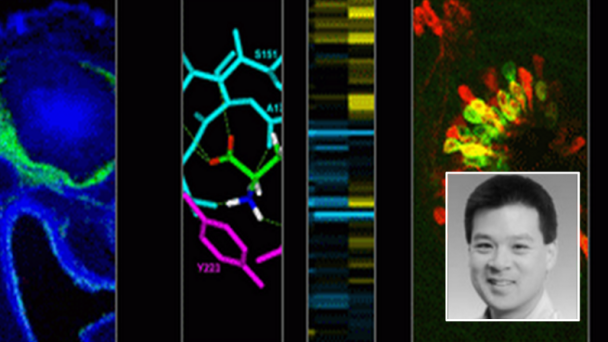
Key questions that Joshua Sanes is exploring is how are complex neural circuits assembled in young animals and how do they process information in adults? To understand how these circuits form, we mark retinal cell types transgenically, map their connections, seek recognition molecules that mediate their connectivity, use genetic methods to manipulate these molecules, and assess the structural and functional consequences of removing or swapping them.

Web Information

Webpage: mcb.harvard.edu/mcb/faculty/profile/joshua-r-sanes/ Center for Brain Science website:  cbs.fas.harvard.edu/ Neuroscience@Harvard Brain Initiative Grant

Contact Information

Email: sanesj@mcb.harvard.edu Phone: 617-496-8683

Address: NW 335.30 Northwest Building 52 Oxford St Cambridge, MA  02138


Biography

 From PNAS 12/27/04

Mental Fascination

Sanes was born in 1949 in Buffalo, NY, and “wanted to be a scientist when I was pretty young,” he says. His father, who owned an automobile parts supply store, was an avid reader, and there were many books around the house for Sanes to read. Sanes often picked up the popularized science books on psychoanalysis prevalent in the 1950s. Sanes attributes his fascination with mental illness to reading these books, especially while in junior high school. By the time he went to high school, Sanes was already working in the laboratory of a ...

OnAir Post: Joshua R Sanes, PhD – Harvard
Joseph R. Ecker, PHD – Salk


Professor Plant Molecular and Cellular Biology Laboratory Howard Hughes Medical Institute and Gordon and Betty Moore Foundation Investigator Salk International Council Chair in Genetics Director, Ecker Lab

Ecker is one of the nation’s leading authorities on the molecular biology and genetics of plants. He is interested in understanding the roles of genetic and ‘epigenetic’ processes in cell growth and development thereby understanding the complexity of gene regulatory processes that underlie development and disease in plants and humans.

Ecker is one of the nation’s leading authorities on the molecular biology and genetics of plants. He is interested in understanding the roles of genetic and ‘epigenetic’ processes in cell growth and development thereby understanding the complexity of gene regulatory processes that underlie development and disease in plants and humans.


Web Information

Webpage: salk.edu/faculty/ecker.html Salk Institute for Biological Studies  Brain Initiative Grant

Contact Information

Email: ecker@salk.edu Address: 10010 N Torrey Pines Rd City: La Jolla, CA 92037


Biography

BA, Biology/Chemistry, The College of New Jersey, Ewing, N.J. PhD, Microbiology, Pennsylvania State University College of Medicine Postdoctoral fellow, Stanford University School of Medicine


Research

Joseph R. Ecker, a professor in the Plant Biology Laboratory, is one of the nation’s leading authorities on the molecular biology and genetics of plants. Ecker was a principal investigator in the multinational ...

OnAir Post: Joseph R. Ecker, PHD – Salk

Sacha Nelson, MD, PhD – Brandeis


Professor of Biology, Brandeis University Director, Nelson Lab

Sacha Nelson’s research focuses on understanding the cell types and circuits that comprise the mammalian neocortex, and how these circuits are altered by normal experience and during disease. His work employs a combination of electrophysiology, anatomy and mouse genetics and genomics to define cortical cell types and to identify alterations in cortical connectivity in epilepsy and autism spectrum disorders.

Web Information

Webpage:   http://www.bio.brandeis.edu/faculty/nelson.html Brain Initiative Grant

Contact Information

Emailnelson@brandeis.edu Phone: 781-736-3181 Address: Carl J. Shapiro Science Center, 1-21


Biography

B.A., B.S., Brown University M.D., University of California, San Diego Ph.D., University of California, San Diego


Research

The mammalian neocortex is our most complex organ and plays an indispensable role in many human behaviors. Impaired function of cortical circuits are central to a diverse set of neurological and psychiatric diseases including autism spectrum disorders, epilepsy, schizophrenia and Alzheimer’s disease.  Despite their functional and clinical importance, the cell types that comprise the neocortex and the molecular mechanisms that specify their properties and connectivity are only partly understood. We study the development and function of the neocortex in the laboratory mouse using a combination of genetic, genomic and electrophysiological approaches. Question that we focus on include: “What genetic and epigenetic mechanisms allow different cell ...

OnAir Post: Sacha Nelson, MD, PhD – Brandeis

Nenad Sestan, MD/PhD – Yale


Professor of Neurobiology, of Genetics and of Psychiatry, Yale University Director, Sestan Lab

Research Interests- the evolution and development of neuronal circuits of the human cerebral cortex. Research in the Sestan Lab investigates how neurons acquire distinct identities and form precise connections in the developing cerebral cortex, a part of the brain involved in a variety of higher cognitive, emotional, sensory, and motor functions. The Lab also studies how these developmental processes have changed during evolution and in human disorders.

Web Information

Webpage:  medicine.yale.edu/neurobiology/people/nenad_sestan.profile Yale Neuroscience BRAIN Initiative Grant – “A Novel Approach for Cell-Type Classification and Connectivity in the Human Brain”

Contact Information

Email: nenad.sestan@yale.edu Phone: (203) 737-2190 Address: Department of Neurobiology PO Box 208001 333 Cedar Street New Haven, CT 06520-8001


Biography

PhD Yale University School of Medicine (1999) MD University of Zagreb (1995)


Research Summary

Research in our laboratory investigates how neurons acquire distinct identities and form precise connections in the developing cerebral cortex, a part of the brain involved in a variety of higher cognitive, emotional, sensory, and motor functions. We also study how these developmental processes have changed during evolution and in human disorders. We study these problems for primarily two reasons. The first reason is to explore what it is about our brain that makes us human. The most important distinction between humans and other ...

OnAir Post: Nenad Sestan, MD/PhD – Yale

Massimo Scanziani, PhD – UCSD


Professor, Neurobioloby section, UC San Diego Director, Scanziani Lab

The goal of Scanziani’s research is to understand the circuits controlling the spatial and temporal structure of cortical activity. Towards this goal his lab uses in vivo and in vitro electrophysiological, imaging and anatomical approaches. Model systems are the rodent’s somatosensory cortex and hippocampus. His lab focuses on the role played by elementary cortical circuits resulting from the interaction between excitatory and inhibitory neurons.

Web Information

Webpage: biology.ucsd.edu/research/faculty/mscanziani HHMI page: hhmi.org/scientists/massimo-scanziani UCSD Neuroscience  Brain Initiative Grant– “Classifying Cortical Neurons by Correlating Transcriptome with Function”

Contact Information

Email: mscanziani@ucsd.edu Phone: (858) 822-3840 Address: Center for Neural Circuits and Behavior, Room 213 9500 Gilman Dr. La Jolla CA 92093-0634


Biography

BS, biochemistry, Swiss Federal Institute of Technology PhD, neurophysiology, University of Zurich and Swiss Federal Institute of Technology

From HHMI page

As a child in Rome, Massimo Scanziani grew up on a steady diet of culture. Discussions at the family dinner table revolved around history, literature, and art—not neuroscience. But a deep interest in nature led him to study science and the mysteries of the brain. Although his career path diverged from the marvels of Roman antiquities and the nuances of Renaissance frescoes, Scanziani wants to understand how we think about such things. In short, he wants to eavesdrop on ...

OnAir Post: Massimo Scanziani, PhD – UCSD

Arnold Kriegstein, MD/PhD – UCSF


Director, Eli and Edythe Broad Center of Regeneration Medicine and Stem Cell Research, UC San Francisco, Department of Neurology

Kriegstein’s research in our lab focuses on the way in which neural stem and progenitor cells produce neurons, and ways in which this information can be used for cell based therapies to treat diseases of the nervous system. He has found that radial glial cells, long thought to simply guide nerve cells during migration, are neuronal stem cells in the developing brain.

Web Information

Webpage: ucsf.edu/directory/faculty/arnold-kriegstein-md-phd UCSF Profiles: profiles.ucsf.edu/arnold.kriegstein#toc-id1 UCSF Neuroscience BRAIN Initiative Grant –  “Mapping the Developing Human Neocortex by Massively Parallel Single Cell Analysis”

Contact Information

Email: KriegsteinA@stemcell.ucsf.edu Phone: (415) 476-0766 Address:35 Medical Center Way RMB-1038, Box 0525 San Francisco, CA 94143-0525


Biography

Dr. Kriegstein received BA from Yale University and his MD and PhD degrees from New York University in 1977 where his thesis advisor was Dr. Eric Kandel. He subsequently completed Residency training in Neurology at the Brigham and Women’s Hospital, Children’s Hospital, and Beth Israel Hospital in Boston. He has held academic appointments at Stanford University, Yale University, and Columbia University. In 2004 he joined the Neurology Department at the University of California, San Francisco. He is currently the John Bowes Distinguished Professor in Stem Cell and Tissue Biology and Founding Director ...

OnAir Post: Arnold Kriegstein, MD/PhD – UCSF

Daniel H Geschwind, MD/PhD – UCLA


Professor of Human Genetics and of Neurology and Psychiatry, UCLA School of Medicine Director, Neurogenetics Program and the Center for Autism Research and Treatment (CART) Co-director, UCLA Center for Neurobehavioral Genetics Director, Geschwind Lab

Geschwind lleverages genetics and genomics to understand neurodevelopment and neurodegenerative disease mechanisms developing new treatments for these disorders. Dr. Geschwind also fosters large-scale collaborative patient resources for genetic research and data sharing.

Web Information

Webpage: geschwindlab.neurology.ucla.edu/person-category/principal-investigator UCLA Neuroscience Brain Initiative Grant

Contact Information

Email: dhg@mednet.ucla.edu Phone: 310 794-6570 Address: 2506 Gonda 695 Charles E. Young Dr. South Los Angeles CA 90095


Biography

Dr. Geschwind obtained A.B. degrees in psychology and chemistry at Dartmouth College and his M.D./Ph.D. at Yale School of Medicine prior to completing his internship, residency, and postdoctoral fellowship at UCLA. He joined the UCLA faculty in 1997.


Research

Dr. Geschwind’s laboratory leverages genetics and genomics to understand neurodevelopment and neurodegenerative disease mechanisms, with the goal of developing new treatments for these disorders. In addition to his research, Dr. Geschwind has put considerable effort into fostering large-scale collaborative patient resources for genetic research and data sharing. He advocates strongly for data and biomaterial sharing, having provided scientific oversight for the Autism Genetic Research Exchange (AGRE) and has served on numerous scientific advisory boards, including the Faculty of 1000 Medicine, the Executive ...

OnAir Post: Daniel H Geschwind, MD/PhD – UCLA

Hongkui Zeng, PhD – Allen Institute


Senior Director, Research Science Allen Institute Research and Development

Zeng explores novel technologies and develop high-throughput paradigms for generating large-scale, public datasets and tools to fuel neuroscience discovery. Zeng  has broad scientific experience and a keen interest in using a combined molecular, genetic and physiological approach to unravel mechanisms of brain circuitry and potential approaches for treating brain diseases.


https://www.youtube.com/watch?v=73lUjX_8-T4Video can’t be loaded because JavaScript is disabled: Hongkui Zeng: 2011 Allen Institute for Brain Science Symposium (https://www.youtube.com/watch?v=73lUjX_8-T4)

Web Information

Allen Webpage: alleninstitute.org/hongkui-zeng Allen Brain Atlases Allen Institute for Brain Science

Contact Information

Email:  hongkuiz@alleninstitute.org 


Biography

Hongkui Zeng joined the Allen Institute in 2006. She leads the Research and Development program to explore novel technologies and develop high-throughput paradigms for generating large-scale, public datasets and tools to fuel neuroscience discovery. Since joining the Allen Institute, she has led several research programs or projects, including the Transgenic Technology program, the Human Cortex Gene Survey project, the Allen Mouse Brain Connectivity Atlas project, and the Mouse Cell Types program. She has broad scientific experience and a keen interest ...

OnAir Post: Hongkui Zeng, PhD – Allen Institute

Pavel Osten, MD, PhD – CSHL


Associate ProfessorCold Spring Harbor Laboratory Principal Investigator: Osten Lab

To understand what’s going wrong in illnesses like autism and schizophrenia, we need to know more about how neural circuits are connected in the healthy brain. We’ve developed advanced imaging methods to draw the first whole-brain activation map in the mouse.  Now we’re applying that technology to study changes in brain activity in mice whose behavior models human autism and schizophrenia.


Web Information

Webpage: cshl.edu/Faculty/osten-pavel Brain Initiative Grant

Contact Information

Emailosten@cshl.edu Phone: (516) 367-6990 Address: One Bungtown Road Cold Spring Harbor, NY 11724


Biography

M.D., Medical School of Charles University, Prague, 1991 Ph.D., SUNY Downstate Brooklyn, 1995


Research

To understand what’s going wrong in illnesses like autism and schizophrenia, we need to know more about how neural circuits are connected in the healthy brain. We’ve developed advanced imaging methods to draw the first whole-brain activation map in the mouse.  Now we’re applying that technology to study changes in brain activity in mice whose behavior models human autism and schizophrenia.

Pavel Osten’s lab works on identification and analysis of brain regions, neural circuits, and connectivity pathways that are disrupted in genetic mouse models of autism and schizophrenia. Osten hypothesizes that (1) systematic comparison of multiple genetic mouse models will allow determination ...

OnAir Post: Pavel Osten, MD, PhD – CSHL

John J. Ngai, PhD – Berkeley

Professor of Neurobiology, Coates Family Professor of Neuroscience, Helen Wills Neuroscience Institute Director, Ngai Lab

My focus is understanding the molecular and cellular mechanisms underlying the function, development and regeneration of the vertebrate olfactory system. My lab uses a wide range of experimental tools and model systems, including molecular biology, genomics, computational biology and behavior to study these processes using the mouse and zebrafish as model systems.


Web Information

Faculty Research page:  http://mcb.berkeley.edu/faculty/all/ngaij Full Directory Information: http://mcb.berkeley.edu/directory/search/detail/62 Lab:  https://sites.google.com/site/ngaineuro/home

Contact Information

Emailjngai@socrates.berkeley.edu Phone: (510) 642-9885 Address: Ngai Lab University of California, Berkeley 142 Life Sciences Addition # 3200 Berkeley, CA 94720-3200


Research Interests

Our lab is interested in understanding the molecular and cellular mechanisms underlying the function, development and regeneration of the vertebrate olfactory system. We use a wide range of experimental tools and model systems, including molecular biology, genomics, computational biology and behavior to study these processes using the mouse and zebrafish as model systems. We are also developing genomics and genome engineering technologies to characterize the neuronal diversity in the cerebral cortex and other regions of the nervous system.


Current Projects

Olfactory Stem Cells and Neural Regeneration. In the vertebrate olfactory system, primary sensory neurons are continuously regenerated throughout adult life via the proliferation and differentiation of multipotent neural progenitor cells. This feature ...

OnAir Post: John J. Ngai, PhD – Berkeley

Skip to toolbar