Ecker Lab – Salk

Principal Investigator: Joseph R Ecker Salk Institute for Biological Studies

Being able to study the epigenome in great detail and in its entirety will provide a better understanding of plant productivity and stress resistance, the dynamics of the human genome, stem cells’ capacity to self-renew and how epigenetic factors contribute to the development of tumors and disease. We are now exploring how DNA methylation effects the development of human embryonic stem (hES) cells as well as induced pluripotent stem (IPS) cells as they are induced to differentiate into other types of cells.


Web Information

Website:  pbio.salk.edu/pbioe/members Brain Initiative Grant

Contact Information

Phone: (858) 453-4100 x1752 Address: Salk Institute Genomic Analysis Laboratory 10010 N. Torrey Pines Road La Jolla, CA 92037

Research

The development of DNA sequencing technologies that produce vast amounts of sequence information has triggered a paradigm shift in biology, enabling massively parallel surveying of complex nucleic acid populations. The diversity of applications to which these technologies have already been applied demonstrates the immense range of cellular processes and properties that can now be studied at the single-base resolution. These applications include, but are not limited to, the sequencing of genomes to uncover nucleotide polymorphisms and structural variation, as well as epigenomes to reveal sites of DNA–protein interaction and ...

OnAir Post: Ecker Lab – Salk

Nelson Lab – Brandeis

Principal Investigator: Sacha B. Nelson Brandeis University

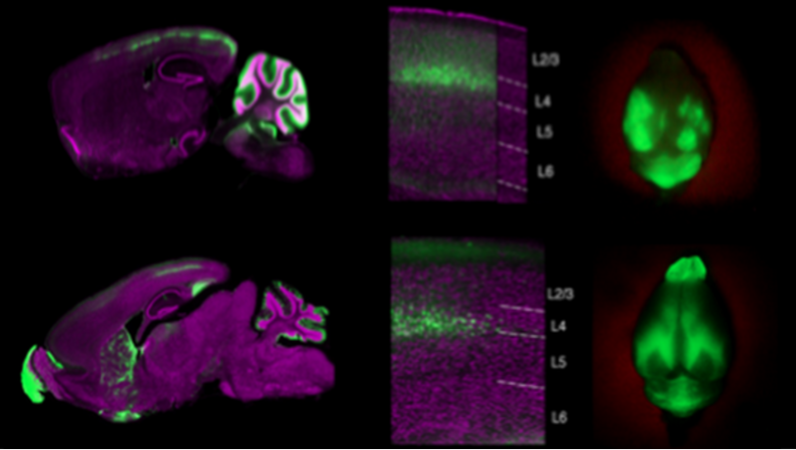
Despite their functional and clinical importance, the cell types that comprise the neocortex and the molecular mechanisms that specify their properties and connectivity are only partly understood. Nelson Lab studies the development and function of the neocortex in the laboratory mouse using a combination of genetic, genomic and electrophysiological approaches.

In our approach to examining the neocortex we use new driver strains developed here and by our collaborators to genetically or virally deliver mutant alleles to specific neuronal cell types. We monitor effects on physiology and connectivity using patch clamp recording and high resolution anatomy. To evaluate changes in gene expression we developed methods for manually sorting fluorescent neurons and performing genome-wide expression profiling. Nelson Lab

Web Information

Website: bio.brandeis.edu/nelsonlab/ Brain Initiative Grant

Contact Information

Email: nelson@brandeis.ed Phone: (781) 736-3181 Address: Brandeis University 415 South Street, Waltham, MA 02454 Shapiro Science Center Room 1-15

Research

The Nelson Lab is located in the recently constructed Shapiro Science Center at Brandeis University located in Waltham, Massachusetts and is a member of the National Center for Behavioral Genomics. We are primarily interested in examining the mammalian neocortex. Our lab combines electrophysiology, advanced imaging techniques, mouse genetics and high throughput gene expression analysis allowing us ...

OnAir Post: Nelson Lab – Brandeis

Sestan Lab – Yale

Principal Investigator: Nenad Sestan Yale Neuroscience

The Sestan Lab’s research centers on understanding the molecular and cellular basis of how neurons acquire distinct identities and form proper synaptic connections in the cerebral cortex, a part of the brain that is critical for cognition, perception and behavior. The Lab also studies how these complex developmental processes have evolved and become compromised in human disorders, such as autism. An important element of our research is the integration of complementary approaches.


Web Information

Website:  medicine.yale.edu/lab/sestan/ BRAIN Initiative Grant – “A Novel Approach for Cell-Type Classification and Connectivity in the Human Brain”

Contact Information

Email: sestanlab@yale.edu Phone: 203.737.1435 Address: Sterling Hall of Medicine 333 Cedar Street, SHM C-316C New Haven, CT 06510

Research Interests

Our research centers on understanding the molecular and cellular basis of how neurons acquire distinct identities and form proper synaptic connections in the cerebral cortex, a part of the brain that is critical for cognition, perception and behavior. We also study how these complex developmental processes have evolved and become compromised in human disorders, such as autism. An important element of our research is the integration of complementary approaches that combines 1) analyses of evolutionarily conserved developmental mechanisms using the genetically tractable mouse model, 2) comparative genomic and cellular analyses of non-human primates and humans to identify human-specific features of ...

OnAir Post: Sestan Lab – Yale

Scanziani Lab – UCSD

Principal Investigator: Massimo Scanziani UC San Diego’s Neuroscience

The goal of Scanziani Lab’s research is to understand the mechanisms by which elementary circuits of neurons control the spatial and temporal structure of cortical activity. Towards this goal they use in vivo and in vitro electrophysiological, imaging and anatomical techniques as well as behavioral approaches. Their model system is the rodent’s sensory cortex.

Web Information

Website:  scanzianilab.org/ Brain Initiative Grant – “Classifying Cortical Neurons by Correlating Transcriptome with Function”

Contact Information

Email: massimo@ucsd.edu Phone: (858) 822-3840 Address: Center for Neural Circuits and Behavior, Room 213 9500 Gilman Dr. La Jolla CA 92093-0634

Research

Sensations and thoughts result from the coordinated activity of neuronal populations in space and time. The goal of my research is to understand the mechanisms by which elementary circuits of neurons control the spatial and temporal structure of cortical activity. Towards this goal we use in vivo and in vitro electrophysiological, imaging and anatomical techniques as well as behavioral approaches. Our model system is the rodent’s sensory cortex.

Our work is revealing the logic and the mechanisms by which elementary circuits, the building blocks of cortical architecture, orchestrate cortical activity.

Publications

Visual Cortex

Xue M, Atallah BV, Scanziani M.

Equalizing exitation-inhibition ratios across visual cortical neurons.

Nature 511: 596-600 (2014) [pdf]

Bortone DS, Olsen SR, ...

OnAir Post: Scanziani Lab – UCSD

Center of Regeneration Medicine and Stem Cell Research – UCSF

Director: Arnold Kriegstein UCSF Neuroscience

The Center’s organization is designed to foster collaborations derived from work on different organs and tissue systems. Accordingly, the laboratories and research efforts are organized along a series of pipelines, each focusing on a particular tissue or organ system, and including basic research as well as translational research directed toward clinical applications. A basic researcher and a clinician direct each pipeline.

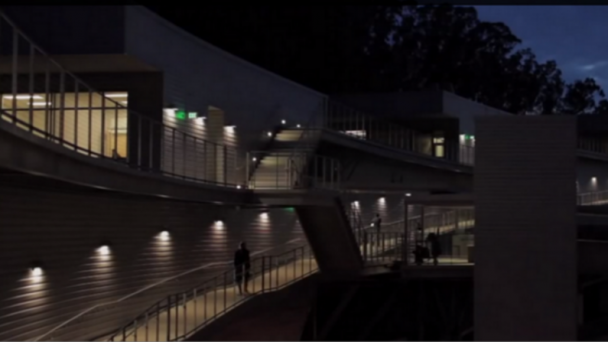
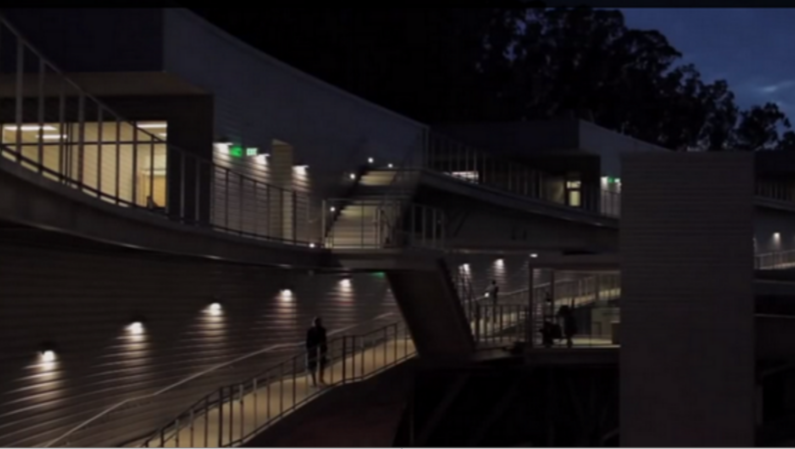
The Ray and Dagmar Dolby Regeneration Medicine Building which will be located on the Parnassus Campus is the new headquarters for the Center of Regeneration Medicine and Stem Cell Research. Designed by New York architect Rafael Viñoly, it has a series of split-level floors with terraced grass roofs and solar orientation. Open labs flow into each other, with office/interaction areas located on the circulation route between the labs, allowing for the entire research community in the building to interact.

Web Information

Website:  stemcell.ucsf.edu/ BRAIN Initiative Grant –  “Mapping the Developing Human Neocortex by Massively Parallel Single Cell Analysis”

Contact Information

Email: KriegsteinA@stemcell.ucsf.edu Phone: (415) 476-0766 Address:35 Medical Center Way RMB-1038, Box 0525 San Francisco, CA 94143-0525

About

Since 1981, when the University of California, San Francisco’s Gail Martin, PhD, co-discovered embryonic stem cells in mice and coined the term embryonic stem cell, ...

OnAir Post: Center of Regeneration Medicine and Stem Cell Research – UCSF

Geschwind Lab – UCLA

Principal Investigator: Daniel H Geschwind UCLA Neuroscience

The Geschwind laboratory is dedicated to improve treatment and understanding of neurodevelopmental and neurodegenerative conditions, focusing on autism spectrum disorders, dementia, neural repair, and inherited ataxia. The lab leverages the fields of genetics and genomics, coupled with basic neurobiology, to obtain a systems level understanding of disease. The lab has pioneered the application of gene expression and network methods in neurologic and psychiatric disease.

Web Information

Website:  geschwindlab.neurology.ucla.edu/node Brain Initiative Grant

Contact Information

Emailindividual contacts Phone: (310) 794-6570 Address: UCLA Neurogenetics Program 2309 Gonda Bldg, 695 Charles E. Young Dr. South Los Angeles, CA 90095-1761

Research

The Geschwind laboratory is dedicated to improve treatment and understanding of neurodevelopmental and neurodegenerative conditions, focusing on autism spectrum disorders, dementia, neural repair, and inherited ataxia. Our work leverages the fields of genetics and genomics, coupled with basic neurobiology, to obtain a systems level understanding of disease. We have pioneered the application of gene expression and network methods in neurologic and psychiatric disease, working in collaboration with dozens of other laboratories to connect molecular pathways to nervous system function. Our over-arching goal is to develop new therapeutics for nervous system disorders for which disease-altering therapies are not currently available. Plot of a module of genes co-expressed during human cortical development. These ...

OnAir Post: Geschwind Lab – UCLA

Sanes Lab – Harvard

Principal Investigator: Joshua R  Sanes Neuroscience@Harvard

The Sanes Lab wants to learn how neural circuits are assembled in young animals and how they process information in adults. A particular focus is identification and analysis of synaptic recognition molecules responsible for the amazing specificity of connections that underlies complex neural processing. We use a combination of genetic, molecular, histological and electrophysiological approaches to address these issues.  Our main model system is the mouse retina.

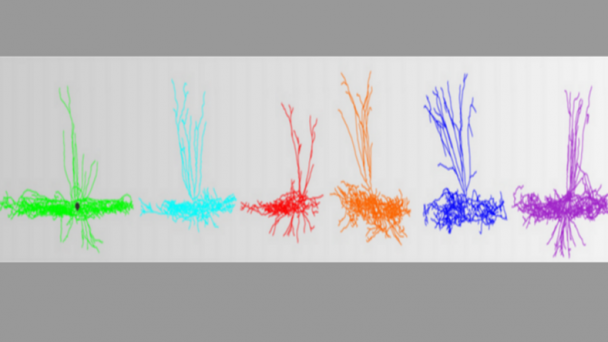
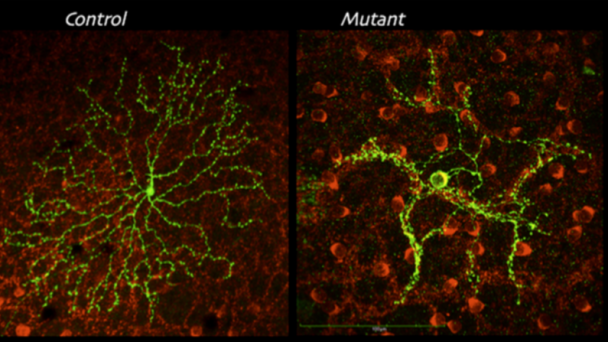
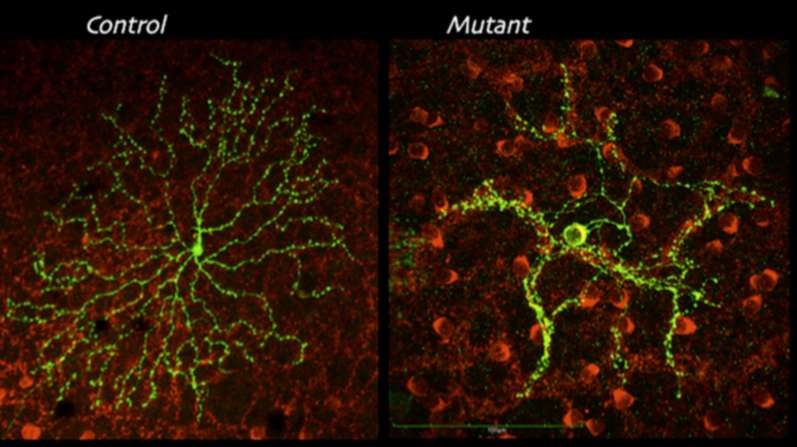
Wild Type and Protocadherin-Mutant Starburst Amacrine Cells. Sanes Lab

Web Information

Website:  saneslab.mcb.harvard.edu Brain Initiative Grant

Contact Information

Email: kpike@fas.harvard.edu Phone: 617-496-8787 Address: NW 335.30 Northwest Building 52 Oxford St Cambridge, MA  02138

Research

Key questions in neuroscience are: how are complex neural circuits assembled in young animals and how do they process information in adults? The retina may be the first part of the mammalian brain for which satisfactory answers to these questions will be obtained. The retina is about as complex as any other part of the brain, but it has several features that facilitate analysis: it is accessible, compact, and structurally regular, and we already know a lot about what it does. Visual information is passed from retinal photoreceptors to interneurons to retinal ganglion cells (RGCs) and then on to the rest of the ...

OnAir Post: Sanes Lab – Harvard

Osten Lab – CSHL

Principal Investigator: Pavel Osten Cold Spring Harbor Laboratory

Osten’s lab works on identification and analysis of brain regions, neural circuits, and connectivity pathways that are disrupted in genetic mouse models of autism and schizophrenia. Osten and colleagues have developed the first systematic approach to the study of neural circuits in mouse models of psychiatric diseases, based on a pipeline of anatomical and functional methods for analysis of mouse brain circuits employing serial two-photon (STP) tomography.

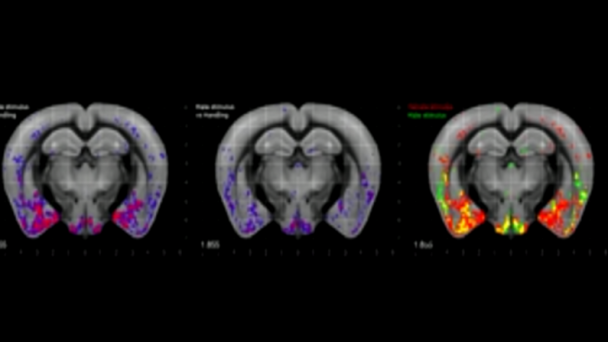
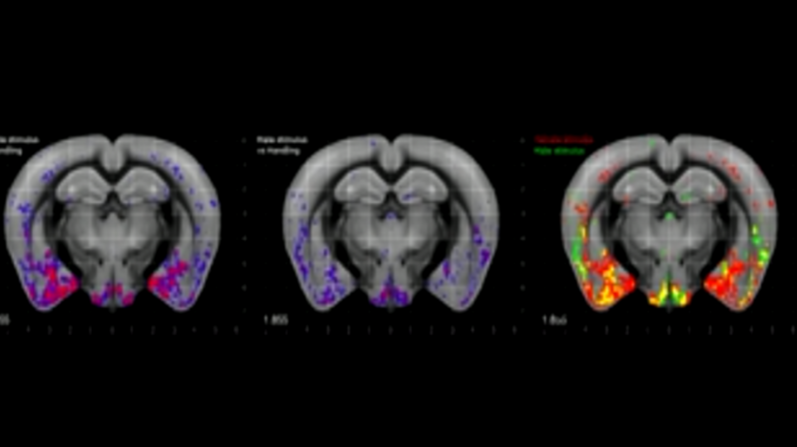
Still image from movie of how the Osten lab maps active brain regions at cellular resolution during social behavior. Eureka Alert

Web Information

Brain Initiative Grant

Contact Information

Emailosten@cshl.edu Phone: (516) 367-6990 Address: One Bungtown Road Cold Spring Harbor, NY 11724

Research

CSHL team introduces automated imaging to greatly speed whole-brain mapping efforts

Cold Springs Harbor News by Peter Tarr

Cold Spring Harbor, N.Y. – A new technology developed by neuroscientists at Cold Spring Harbor Laboratory (CSHL) transforms the way highly detailed anatomical images can be made of whole brains.  Until now, means of obtaining such images – used in cutting-edge projects to map the mammalian brain — have been painstakingly slow and available only to a handful of highly specialized research teams.

By ...

OnAir Post: Osten Lab – CSHL

Ngai Lab

Director, John Ngai Helen Wills Neuroscience Institute

The Ngai Lab focuses on the molecular mechanisms underlying the development and function of the vertebrate olfactory system using molecular, genomic, computational and behavioral approaches. The Ngai Lab is also leveraging high-throughput genomic and genome engineering techniques. Ngai Lab aims to make significant discoveries on the molecules, cells and circuits underlying the development, regeneration and function of the nervous system during normal processes and disease.


Web Information

Website:   https://sites.google.com/site/ngaineuro/home

Contact Information

Email:  jngai(at)berkeley.edu Phone: (510) 642-9887 Address: University of California, Berkeley Department of Molecular & Cell Biology 265 Life Sciences Addition #3200 Berkeley, CA 94720-3200

Research

Olfactory Stem Cells and Neural Regeneration

The generation of neuronal diversity in the nervous system requires the specification and differentiation of a multitude of cellular lineages. Successive developmental programs control the generation of individual neuronal types, cell migration, axon extension, and ultimately the formation of functional synaptic connections. The specific genetic programs underlying the differentiation of mature neurons from their progenitors remain incompletely characterized, in part because of the difficulty in studying neuronal progenitor cells in their native environments.

In the vertebrate olfactory system, primary sensory neurons are continuously regenerated throughout adult life via the proliferation and differentiation of multipotent neural progenitor cells. This feature makes the olfactory system particularly amenable for ...

OnAir Post: Ngai Lab

Quantitative cell type-based mapping

Principal Investigator: Pavel Osten Cold Spring Harbor Laboratory Title: “Towards quantitative cell type-based mapping of the whole mouse brain” BRAIN Category: Census of Cell Types (RFA MH-14-215)

The Osten team will develop an automated system to image different types of brain cells and their connections in mice, to pinpoint differences between males and females, across the lifespan.

NIH Webpages

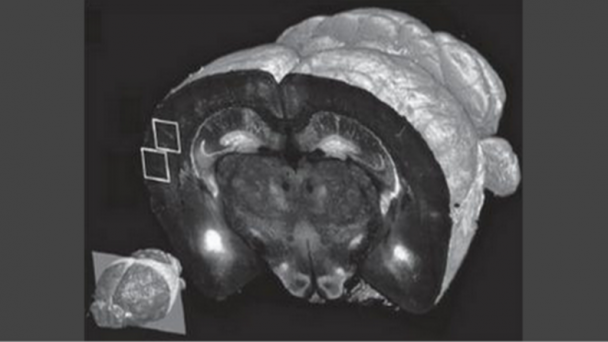
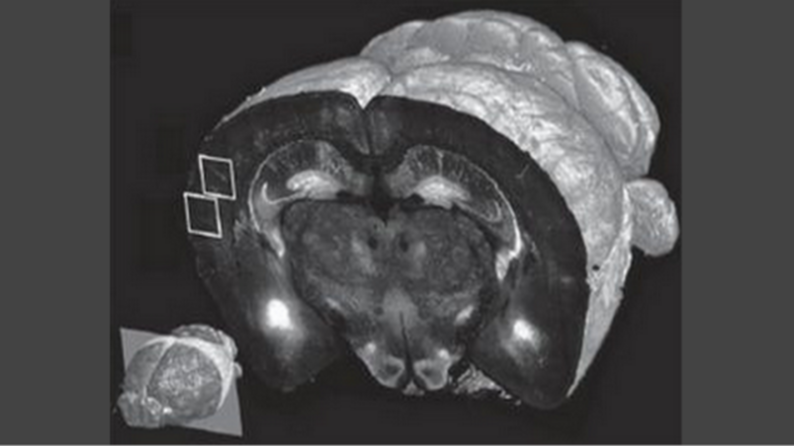
3-D rendering of coronal section of a mouse brain imaged with STP tomography at 20x at a resolution of half a micron. GFP-expressing pyramidal neurons in hippocampus and cortex are targeted.

Project Description

The mouse brain comprises ~70 million neurons and ~30 million glia and other cells. Neurons have been traditionally classified based on their morphology, connectivity, stimulus-response, gene expression, and location in the brain. While we know reasonably well the main cell types that are present at different brain locations, we have little quantitative knowledge about brainwide cell type distribution. In addition, cell type-based brainwide connectivity, especially at the level of projection patterns of single neurons, also remains largely unmapped. This knowledge gap prevents us from incorporating the accumulated cell type-based cellular data into comprehensive circuit models of mammalian brain function. Here we propose to develop a largely automated methodology ...

OnAir Post: Quantitative cell type-based mapping

Skip to toolbar