Magnetic Particle Imaging (MPI)

Principal Investigator: Lawrence Wald Neuroscience@Harvard Title: “Magnetic Particle Imaging (MPI) for Functional Brain Imaging in Humans” BRAIN Category: Next Generation Human Imaging (RFA MH-14-217)

The Wald team plans to use an iron-oxide contrast agent to track blood volume, which will permit dramatically more sensitive imaging of human brain activity than existing methods.

NIH Webpages

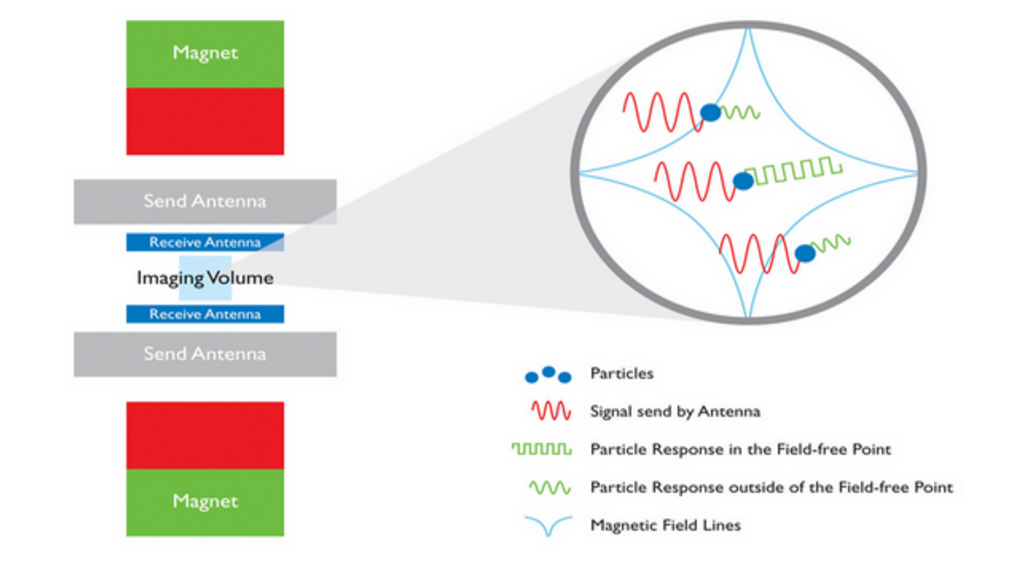
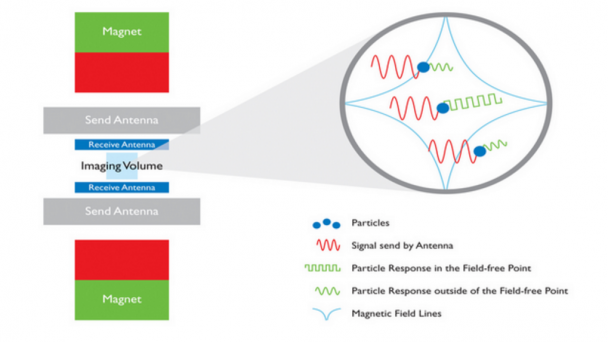
Schematic set up and operating principle of the Magnetic Particle Imaging technology. Phillips MPI.

Project Description

In this planning grant we propose several engineering developments to advance Magnetic Particle Imaging (MPI) to replace MRI as the next-generation functional brain imaging tool for human neuroscience. We assemble a group of technology experts to solve a myriad of identified and unidentified barriers, we employ simulation and bench-top experiments to characterize and test solutions for these technical obstacles and validate solutions by bench testing specific sub-sections of the imager. Finally we simulate the overall performance of the planned device and assess its benefit for human functional brain imaging. MPI is a young but extremely promising technology that uses the nonlinear magnetic response of iron- oxide nanoparticles to localize their presence in the body. MPI directly detects the nanoparticle’s magnetization rather than using secondary effects on the Magnetic Resonance relaxation times. ...

OnAir Post: Magnetic Particle Imaging (MPI)
Imaging Brain Function with Portable MRI

Principal Investigator: Michael Garwood Institute for Translational Neuroscience, University of Minnesta Title: “Imaging Brain Function in Real World Environments & Populations with Portable MRI” BRAIN Category: Next Generation Human Imaging (RFA MH-14-217)

By employing smaller, less cumbersome magnets than used in existing MRI, Dr. Garwood and colleagues will create a downsized, portable, less expensive brain scanner.

NIH Webpages

Project Description

Functional magnetic resonance imaging (fMRI) continues to play a critical role in understanding the human brain. Yet current fMRI technology is far less than ideal for studying brain function due to the unnatural environment and restricting space of the magnet bore. Furthermore, fMRI cannot be performed on subjects who have metallic implants in their body (e.g., the elderly, soldiers and veterans), or who are impaired by certain physical disabilities as occurs in a variety of neurological and vestibular disorders. Finally, due to its expense and infrastructure requirements, MRI’s predominant accessibility to wealthier institutions has resulted in a highly biased subject sampling and a shortage of studies in non-western environments and cultures. The general methodology used to obtain MR images today is essentially the same as that used approximately 4 decades ago. One major drawback of such methodology is that the tolerated magnetic field variation over the brain is ...

OnAir Post: Imaging Brain Function with Portable MRI

Advancing MRI & MRS Technologies

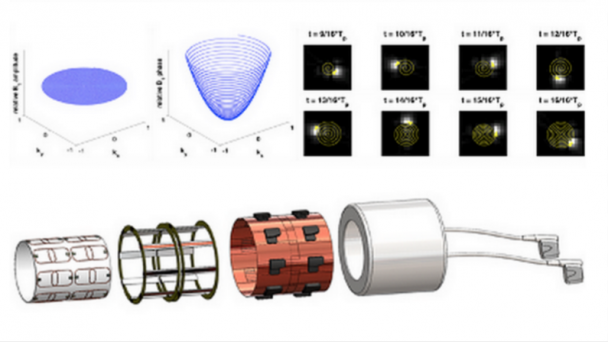
Principal Investigator: Wei Chen Institute for Translational Neuroscience, University of Minnesota Title: “Advancing MRI & MRS Technologies for Studying Human Brain Function and Energetics” BRAIN Category: Next Generation Human Imaging (RFA MH-14-217)

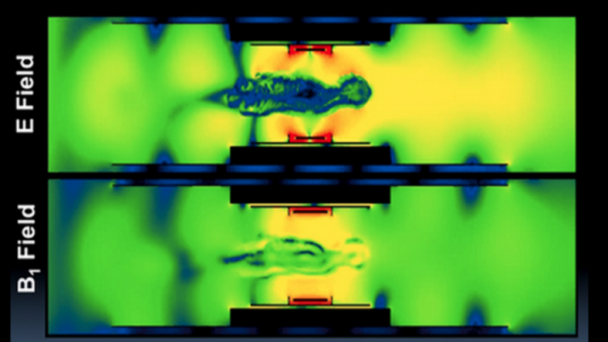
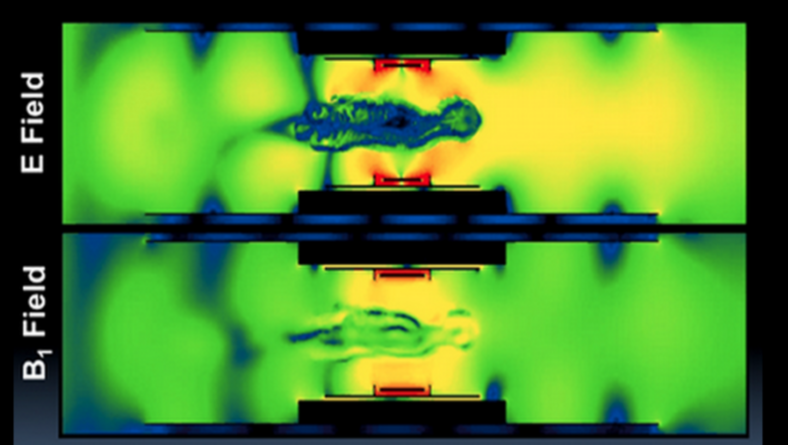
Dr. Chen’s team will achieve unprecedented higher resolution magnetic resonance imaging and spectroscopy scanning by integrating ultra-high dielectric constant material and ultra-high-field techniques.

NIH Webpages

Engineering for Ultrahigh field Magnetic Resonance Imaging (MRI) and Spectroscopy (MRS)

Project Description

Magnetic resonance (MR) imaging (MRI) and in vivo MR spectroscopy (MRS) techniques have become indispensable tools for imaging brain structure, function, connectivity, neurochemistry and neuroenergetics, and for investigating neurological disorders. However, it remains a challenge to achieve superior MRI/MRS detection sensitivity, spatial and temporal imaging resolutions adequate for addressing fundamental and challenging neuroscience questions even with the most advanced technology. The prevailing paradigms for improving MRI/MRS performance largely invoke increasing the magnetic field strength, which may have reached practically achievable limits for human studies due to many technological and safety (i.e., high specific absorption rate (SAR)) concerns, and increasing the receiver channel count which is also ultimately limited due to noise characteristics of coils of decreasing size. To alleviate these major limitations, this R24 proposal relies on the interdisciplinary research efforts and ...

OnAir Post: Advancing MRI & MRS Technologies

MRI Neuro-Electro-Magnetic Oscillations

Principal Investigator: Allen W Song Duke Institute for Brain Sciences Title: “Path Toward MRI with Direct Sensitivity to Neuro-Electro-Magnetic Oscillations” BRAIN Category: Next Generation Human Imaging (RFA MH-14-217)

Dr. Song’s group will develop a scanner technology sensitive enough to image brain activity in high resolution by directly tuning in the electromagnetic signals broadcast by neurons.

NIH Webpages

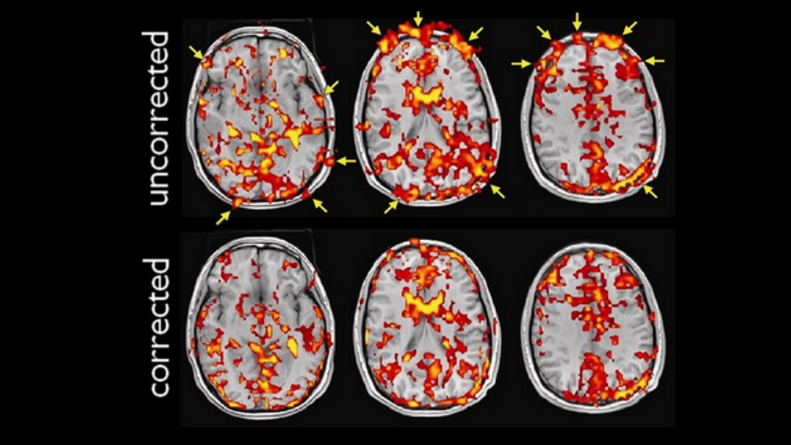
Spiral imaging is a fast MRI technique that is widely used in functional MRI. It is, however, vulnerable to spatial and temporal variations of the static magnetic field (B0) caused by susceptibility effects, subject motion, physiological noise, and system instabilities, resulting in blurring artifacts. To address these issues, we have developed a novel off-resonance correction method, based on k-space energy spectrum analysis (KESA), for inherent and dynamic B0 mapping and deblurring in spiral imaging. This method can generate a B0 map from the k-space data at each time point, without requiring any additional data acquisition or pulse sequence modification, and correct for the blurring caused by both spatial and temporal B0 variations, resulting in a high spatial and temporal fidelity.

Project Description

In response to the NIH RFA-MH-14-217 on “Planning for Next Generation Human Brain Imaging”, we propose a comprehensive plan to organize the ...

OnAir Post: MRI Neuro-Electro-Magnetic Oscillations

Vascular Interfaces for Brain Imaging

PI: Robert Desimone Massachusetts Institute of Technology Title: “Vascular Interfaces for Brain Imaging and Stimulation” BRAIN category: Next Generation Human Imaging (RFA MH-14-217)

Dr. Desimone’s project will access the brain through its network of blood vessels to less invasively image, stimulate and monitor electrical and molecular activity than existing methods.

NIH Webpages

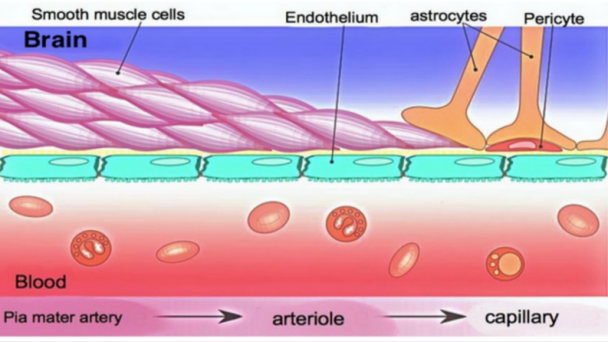
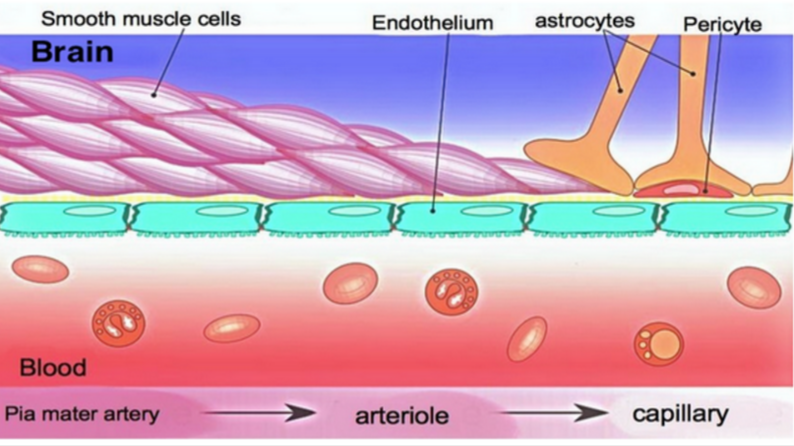
Sketch showing constitution of blood vessels inside the brain. Credit: Armin Kübelbeck

Project Description

Functional MRI (fMRI), EEG, and other completely noninvasive modalities for large-scale imaging of human brain activity have pioneeringly revealed many human brain functions, but cannot reach the single-neuron, single-spike level of neural code analysis possible in animals obtained using electrodes. This is partly due to the indirect methods of observation employed (e.g., blood flow for fMRI) and due to blurring of signals over distance by the skull (e.g., for EEG). In contrast, invasive approaches such as trans-cranially implanted multi- electrode arrays can achieve single-cell, single-spike resolution, but they necessitate opening of the skull – and, for implanted arrays, damage of the brain tissue – limiting utility to a small fraction of the population, those undergoing neurosurgery for some intractable brain disorder that justifies the risk. Trans-cranially implanted arrays also degrade i performance over time ...

OnAir Post: Vascular Interfaces for Brain Imaging

Ultrasonic neuromodulation in vivo

PI: Doris Ying  Tsao California Institute of Technology Title: “Dissecting human brain circuits in vivo using ultrasonic neuromodulation” BRAIN category: Next Generation Human Imaging (RFA MH-14-217)

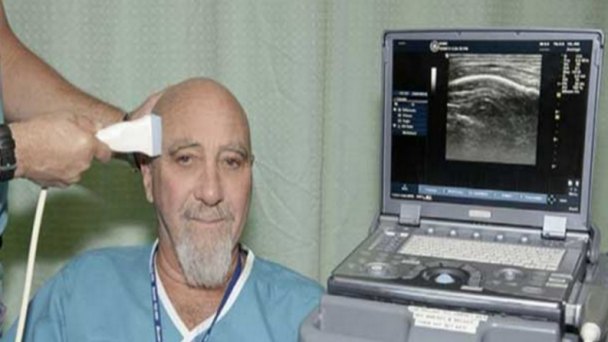
In rodents, monkeys and eventually humans, Dr. Tsao’s team will explore use of non-invasive, high resolution ultrasound to impact neural activity deep in the brain and modify behavior.

NIH Webpages


Project Description

A dream of neuroscience is to be able to non-invasively modulate any given region of the human brain with high spatial resolution. This would open new horizons for understanding human brain function and connectivity, and create completely new options for the non-invasive treatment of brain diseases such as intractable epilepsy, depression, and Parkinson’s disease. Current non-invasive brain stimulation methods such as transcranial magnetic stimulation (TMS) and transcranial electrical stimulation (TES) can be applied only to superficial cortical areas, with crude 1 cm-scale resolution, limits placed upon these techniques by fundamental physics. Ultrasonic neuromodulation, the use of ultrasound as an energy modality to affect the activity of the brain, could overcome these limitations and thereby transform both basic and clinical human neuroscience. In fact, the engineering challenge of non-invasively focusing ultrasound to mm-sized regions, either shallow or deep in the brain, has been solved: clinical studies have already demonstrated ...

OnAir Post: Ultrasonic neuromodulation in vivo

Micro-Dose, Wearable PET Brain Imager

Principal Investigator:  Julie Brefczynski-Lewis WVU Center for Neuroscience Title: Imaging the Brain in Motion: The Ambulatory Micro-Dose, Wearable PET Brain Imager BRAIN Category: Next Generation Human Imaging (RFA MH-14-217)

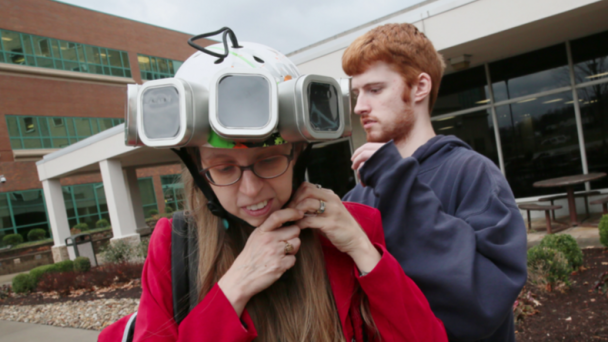
Dr. Brefczynski-Lewis and co-workers will engineer a wearable PET scanner that images activity of the human brain in motion – for example, while taking a walk in the park.

NIH Webpages

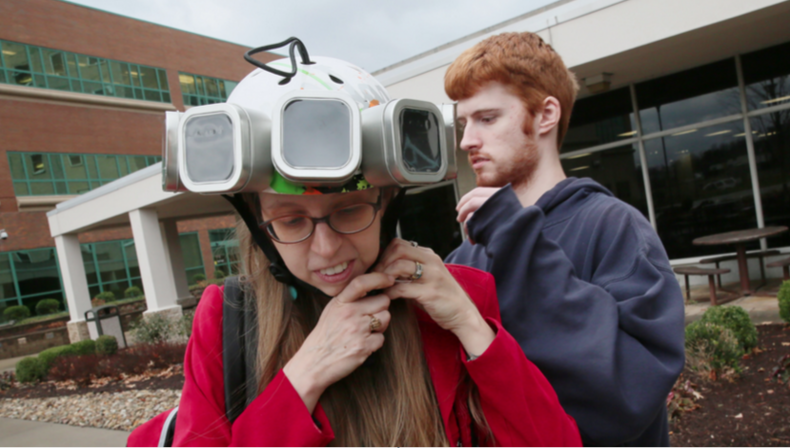
Brefczynski-Lewis, assisted by graduate student Chris Bauer, dons her PET-helmet prototype to demonstrate the device’s portability. (Lois Raimondo/For The Washington Post)

Project Description

Our vision is to design the first truly mobile molecular brain imager that can be used on healthy subjects to study the functioning of the human brain during motion. The ultimate goal is to be able to image subjects during a proverbial “walk in the park” and other natural activities. We selected PET technology as the most likely to succeed in the next decade to provide the desired functionality of such a brain imager. While MRI is an exceptionally powerful and versatile imaging modality, and there are even upright MRIs for structural brain scans, for functional fMRI scans the subjects must stay still and in horizontal position inside a narrow bore of a strong-field MRI magnet. What we ...

OnAir Post: Micro-Dose, Wearable PET Brain Imager

Imaging in vivo neurotransmitter modulation


Project Description

Neuronal depolarization and neurotransmitter release underlie some of the most fundamental components of normal physiology and the etiology of brain pathophysiology. There is a tremendous need for high temporal resolution measurements of neurotransmitter release and its modulation of brain neuronal networks. While there has been progress in measuring neuronal depolarization in vivo in small animals, the current overall methodology of deployment, excitation and measurement of signal from voltage sensitive dyes (VSDs) commonly entails craniotomy and other invasive measures, and thus is currently only practical in rodent studies. We aim to develop a transformative brain imaging technique which will allow minimally invasive/non-invasive imaging of neuronal depolarization and related neurotransmitter release ultimately in the living human brain. While challenging methodologically, we believe that our team of multidisciplinary experts consisting of neuroscientists, neuropharmacologists, electrical and bioengineers, and brain imaging physicists and chemists, will be able to plan over a period of three years a practical and clear path to the development of such a potentially paradigm-shifting imaging technique. To do so, we propose three Aims. Aim 1 is to develop voltage sensitive probes for sub-millisecond measurements of membrane potentials and action potentials of cortical neurons in humans and other primates in vivo. ...

OnAir Post: Imaging in vivo neurotransmitter modulation

MRI Corticography (MRCoG)

Principal Investigator: David Alan Feinberg Helen Wills Neuroscience Institute Title: “MRI Corticography (MRCoG): Micro-scale Human Cortical Imaging” BRAIN Category: Next Generation Human Imaging (RFA MH-14-217)

To image the activity and connections of the brain’s cortex on a micro scale – with dramatically higher resolution than existing scanners – Dr. Feinberg’s group will employ high sensitivity MRI coils that focus exclusively on the brain’s surface.

NIH Webpages

Project Description

MRI is the only technology that can image the connectivity of the human brain in vivo and non-invasively. However, neither BOLD fMRI nor diffusion-based fiber tracking has been able to break the barrier of 1-mm voxel spatial resolution. Yet, 1-mm voxel contains roughly 50,000 neuronal cells and the human cortex is less than 5 mm thick. The disparity between the spatial scales has thus created a large gap between MRI studies of the whole brain and optical imaging and cell recordings of groups of neurons. The overarching objective of this proposal is to bring noninvasive human brain imaging into the microscale resolution and begin to bridge studies of neuronal circuitry and network organization in the human brain. Our breakthrough technology, termed MR Corticography (MRCoG), will achieve dramatic gains in spatial and temporal resolutions by focusing exclusively to the cortex. Higher-sensitivity ...

OnAir Post: MRI Corticography (MRCoG)

Skip to toolbar