Harvard Neuroscience

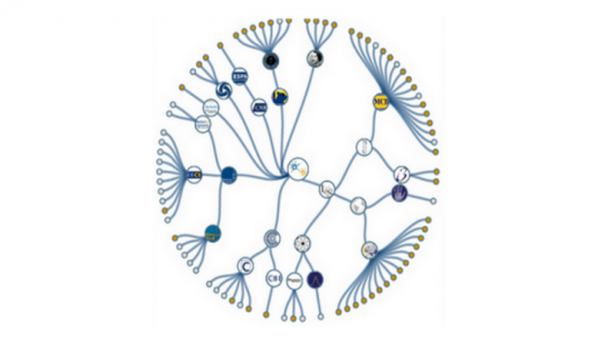
The Program in Neuroscience draws together neuroscientists from across Harvard. The physical home base of the program is located at the Longwood Campus of Harvard Medical School, in the Department of Neurobiology.

Research sites include the Longwood Medical Area, Cambridge Campus, Massachusetts General Hospital, and the McLean Hospital. The Center for Brain Science unites many neuroscience labs and houses in the newly established Swartz Program in Theoretical Neuroscience.

Web Information

Website: dms.hms.harvard.edu/neuroscience/prospective/AboutPIN Research Sites: dms.hms.harvard.edu/neuroscience/prospective/ResearchSites Brain Initiative Grant – “Comprehensive Classification Of Neuronal Subtypes By Single Cell Transcriptomics” BRAIN Initiative Grant– “Magnetic Particle Imaging (MPI) for Functional Brain Imaging in Humans” BRAIN Initiative Grant– “Mapping neuronal chloride microdomains” Brain Initiative Grant– “Neural circuits in zebrafish: form, function and plasticity”

Contact Information

Email: karen_harmin@hms.harvard.edu Phone: (617) 432-0912 Address: Program in Neuroscience Harvard Medical School 220 Longwood Avenue Goldenson 129 Boston, MA 02115

About the Program in Neuroscience

Mission Statement: We are an inter-departmental Ph.D. program for training in neuroscience. Our mission is to provide students with the instruction, research experience, and mentoring they need to become leaders in research and education.

Who we are: The Program in Neuroscience draws together neuroscientists from across Harvard. The physical home base of the program is located at the Longwood Campus of Harvard Medical School, in the Department of Neurobiology. Most coursework occurs at this campus, ...

OnAir Post: Harvard Neuroscience
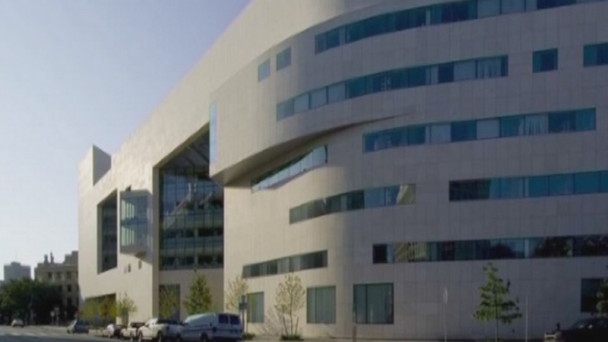
MIT Neuroscience

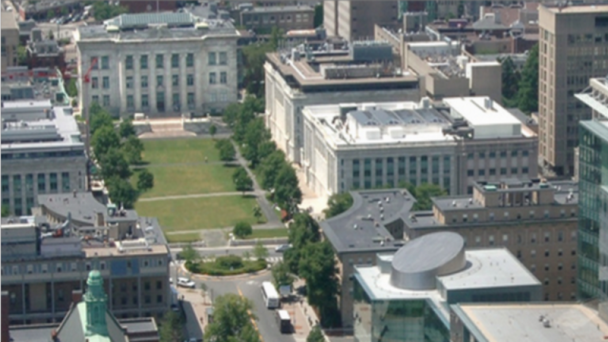
MIT has numerous academic and research programs related to neuroscience. Key institutions include the Department of Brain, and Cognitive Sciences, Department of Biological Engineering, and the MIT Media Lab.

Important neuroscience related centers include: Center for Neurobiological Engineering (CNBE); McGovern Institute Neurotechnology (MINT) program; Simons Center for the Social Brain (SCSB); Synthetic Biology Center;Picower Center for Learning and Memory; and the Martinos Imaging Center at MIT.

Grant Information

Brain Initiative Grant – “Advancing MRI & MRS Technologies for Studying Human Brain Function and Energetics” Brain Initiative Grant – “Novel technologies for nontoxic transsynaptic tracing”“Novel technologies for nontoxic transsynaptic tracing” Brain Initiative Grant – “Ultra-Multiplexed Nanoscale In Situ Proteomics for Understanding Synapse Types” Brain Initiative Grant – “Calcium sensors for molecular fMRI” Brain Initiative Grant – “Next generation high-throughput random access imaging, in vivo” Brain Initiative Grant – “Cortical circuits and information flow during memory-guided perceptual decisions”

Department of Brain and Cognitive Sciences

Undergraduate program

Graduate program

Postdoctoral Program

Open Courseware

People

48 faculty members,over 200 graduate & undergraduate students, 180 researchers and post-docs and 36 staff

Department Head: James Dicarlo, PhD

Department of Biological Engineering

Academic Programs

Faculty

MIT Media Lab

Research

People

Research Centers 

Center for Neurobiological Engineering (CNBE)

OnAir Post: MIT Neuroscience

John Hopkins Neuroscience

John Hopkins has two primary centers for neuroscience research: The Solomon Snyder Department of Neuroscience in the School of Medicine and the Department of Psychological and Brain Sciences in the School of Arts & Sciences.

Current research ranges from investigating the development of the nervous system, synaptic plasticity and the molecular and cellular mechanisms of learning and memory to the neural basis of higher brain function such as perception and decision-making.

Web Information

Department of Neuroscience website: neuroscience.jhu.edu/about/contact-us/ Department of Psychological and Brain Sciences website:  pbs.jhu.edu/ Brain Initiative Grant – “Imaging in vivo neurotransmitter modulation of brain network activity in realtime”

Contact Information

Department of Neuroscience Phone: 410-614-2447 AddressThe Johns Hopkins University School of Medicine Department of Neuroscience 1003 Wood Basic Science Building 725 N. Wolfe St. Baltimore, MD 21205 Director, : Rick Huganir

Department of Psychological and Brain Sciences Phone: (410) 516-7055 Address: Department of Psychological & Brain Sciences The Johns Hopkins University 3400 N. Charles St. Baltimore, MD 21218-2686

Solomon H. Snyder Department of Neuroscience

Welcome from the Director

Welcome to the Solomon H. Snyder Department of Neuroscience at Johns Hopkins University. The Department, founded in 1980 by brain science pioneer Sol Snyder, is one of the first Neuroscience Departments in the country. With 32 primary faculty, 4 adjunct faculty and 69 secondary faculty conducting research in all areas of neuroscience ranging from ...

OnAir Post: John Hopkins Neuroscience

Helen Wills Neuroscience Institute

The Helen Wills Neuroscience Institute (HWNI) at UC Berkeley is an active, collaborative research community that investigates fundamental questions about how the brain functions.

Using approaches from many disciplines (including biophysics, chemistry, cognitive science, computer science, genetics, mathematics, molecular and cell biology, physics, and physiology), HWNI seeks to understand how the brain generates behavior and cognition, and to better understand, diagnose and treat neurological disorders.

Web Information

Website:  http://neuroscience.berkeley.edu/ Partnership with Zeiss: UC Berkeley-Zeiss BrainMIC Twitter:  https://twitter.com/UCBerkeleyNeuro Wikipedia Entry: http://en.wikipedia.org/wiki/Helen_Wills_Neuroscience_Institute BRAIN Grant – “Classification of Cortical Neurons by Single Cell Transcriptomics” BRAIN Grant – “MRI Corticography (MRCoG): Micro-scale Human Cortical Imaging” BRAIN Grant – ”Optical control of synaptic transmission for in vivo analysis of brain circuits and behavior”

Contact Information

Phone: 510.642.2593 Address:UC Berkeley 175 Li Ka Shing Center, MC#3370 Berkeley, CA 94720

DirectorEhud Isacoff Admin & Staff

Research & Technology Centers

Advances in understanding brain function and brain disorders are often enabled by cutting-edge technology. The Helen Wills Neuroscience Institute fosters technological advances by sponsoring Technology Centers. These centers bring together physical scientists (e.g., from physics, chemistry, computer science, and engineering) and neuroscientists to develop tools for neuroscience research, and apply these tools to advance our understanding of the brain.

Center for Neural Engineering and Prostheses (CNEP)

Deep ...

OnAir Post: Helen Wills Neuroscience Institute

Duke Institute for Brain Sciences


Summary

Duke Institute for Brain Sciences (DIBS) was created as a cross-school, campus-wide, interdisciplinary Institute with a commitment to building an interactive community of brain science research and scholarship.

DIBS encourages innovation and collaborations that transcend the boundaries of traditional disciplines, bringing together a diverse community of academics from the biomedical sciences, social sciences, physical sciences, humanities, law, business, public policy, mathematics, computer science and engineering.

Information

Website:   http://www.dibs.duke.edu/ Brain Initiative Grant – “Path Toward MRI with Direct Sensitivity to Neuro-Electro-Magnetic Oscillations”

Email:  contact form Phone: (919) 684-3422 Address: Duke University Box 91003 Levine Science Research Center, Room B107 450 Research Drive Durham, North Carolina 27708

Organization

Director: Michael Platt


About the Duke Institute for Brain Sciences

Duke Institute for Brain Sciences was created in 2007 as a cross-school, campus-wide, interdisciplinary Institute with a commitment to building an interactive community of brain science research and scholarship. DIBS encourages innovation and collaborations that transcend the boundaries of traditional disciplines, bringing together a diverse community of academics from the biomedical sciences, social sciences, physical sciences, humanities, law, business, public policy, mathematics, computer science and engineering.

Our Mission:

to advance interdisciplinary research and education that transforms our understanding of brain function and translates into innovative solutions for health and society

Our Vision:

an interactive community of scholars—faculty, students, postdoctoral fellows and staff—who ...

OnAir Post: Duke Institute for Brain Sciences

Caltech Neuroscience

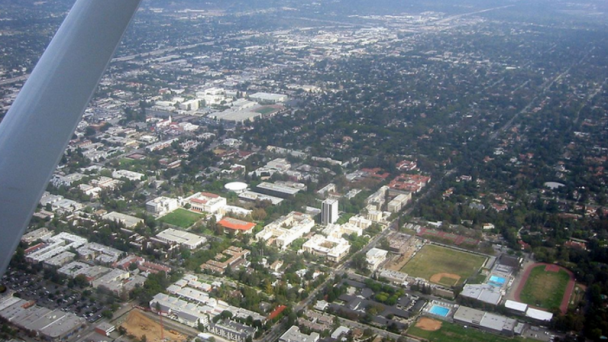
Several Caltech laboratories are applying basic science findings to animal models of brain disorders, and these translational approaches are opening up novel therapeutic avenues.

Caltech Neuroscience research spans a wide range: from the molecular function of receptors; through signaling organelles like the synapse; the structure and function of single neurons; the assembly and function of circuits of nerve cells; and the collective function of brain systems in controlling behavior, perception, memory, cognition, and emotion.


Web Information

Neurobiology website:   http://neurobiology.caltech.edu/ Computaton & Neural Systems website: http://www.cns.caltech.edu/ Wikipedia Entry: http://en.wikipedia.org/wiki/California_Institute_of_Technology BRAIN Initiative Grant – Time-Reversal Optical Focusing for Noninvasive Optogenetics BRAIN Initiative Grant – “Modular nanophotonic probes for dense neural recording at single-cell resolution” BRAIN Initiative Grant – “Integrative Functional Mapping of Sensory-Motor Pathways” BRAIN Initiative Grant – “Dissecting human brain circuits in vivo using ultrasonic neuromodulation”

Contact Information

Email: meister@caltech.edu Phone: 626) 395-1782 Address: Neurobiology California Institute of Technology 1200 E. California Blvd., MC 216-76 Pasadena, CA 91125

Executive Officer for Neurobiology: Marianne Bronner

Computation and Neural Systems

Research

The CNS faculty maintain strong connections with colleagues throughout the Division, the Institute, and the Jet Propulsion Laboratory (JPL). Our faculty collaborate with colleagues from Bioengineering, Biology, Electrical Engineering, Control and Dynamical Systems, Mechanical Engineering, Physics, Mathematics and Astronomy, and JPL.

Neurophysiology Allman : Andersen :

OnAir Post: Caltech Neuroscience

WVU Center for Neuroscience

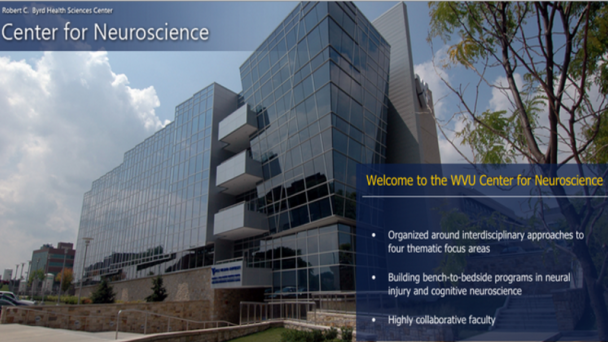
The Center for Neuroscience (CN) mission is to advance knowledge in basic and translational neuroscience through team-based interdisciplinary research.

The CN functions to integrate all neuroscience research activities across a collaborative enterprise of 40 laboratories throughout the WVU campus. Our faculty members are highly interactive and participate with trainees in regular scientific and social events where we explore recent breakthroughs and discuss the major topics in neuroscience research.


Web Information

Website: hsc.wvu.edu/wvucn/ BRAIN Initiative Grant – “Imaging the Brain in Motion: The Ambulatory Micro-Dose, Wearable PET Brain Imager”

Contact Information

Email: mpscott@hsc.wvu.edu Phone: 304.293.2930 Address: WVU Center for Neuroscience PO Box 9304 Morgantown, WV 26506-9304

Organization

Director: George Spirou

WVU Health Sciences Center

Message from the Director

The Center for Neuroscience (CN) mission is to advance knowledge in basic and translational neuroscience through team-based interdisciplinary research.

The CN functions to integrate all neuroscience research activities across a collaborative enterprise of 40 laboratories throughout the WVU campus. Our faculty members are highly interactive and participate with trainees in regular scientific and social events where we explore recent breakthroughs and discuss the major topics in neuroscience research.

Rather unique for research institutions, the WVU CN serves as the hub of activity across a broad array of neuroscience research topics to serve the entire ...

OnAir Post: WVU Center for Neuroscience

Institute for Translational Neuroscience

The University of Minnesta’s Institute for Translational Neuroscience (ITN) grew out of the Presidential Initiative on Brain Function across the Lifespan.The Institute is not a brick and mortar entity but an umbrella organization.

The Institute’s main goal has been to retain and recruit neuroscience researchers who exemplify the institute’s mission to make discoveries through team work.The Institute’s second goal is to foster and encourage collaboration amongst the scholars, researchers and centers.

Web Information

Website: itn.umn.edu/index.htm Brain Initiative Grant– “Advancing MRI & MRS Technologies for Studying Human Brain Function and Energetics” BRAIN Initiative Grant – “Imaging Brain Function in Real World Environments & Populations with Portable MRI”

Contact Information

Email: oydx004@umn.edu Phone: 612-626-4951 Address: Wallin Medical Biosciences Building Room 3-114 2101 6th Street S.E. Minneapolis, MN 55455

Organization

Director: Harry T. Orr

Institute for Translational Neuroscience

The Institute for Translational Neuroscience (ITN) was established in 2007 as a presidential university-wide initiative in order to promote the transfer of discoveries in the basic neurosciences to clinical practice. The institute is charged to enhance basic science discovery with new knowledge leading to subsequent clinical trials and establishment of new therapeutic principles or tools. The institute aims to attract and recruit top scientists to shape discoveries that will lead to tomorrow’s cures. The lTN exemplifies how different disciplines, departments ...

OnAir Post: Institute for Translational Neuroscience

Skip to toolbar