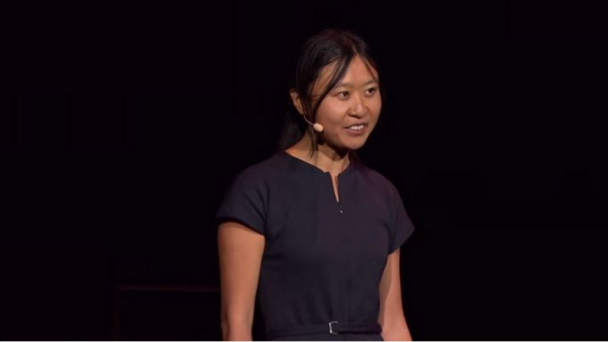
Doris Ying Tsao, PhD – Caltech


Professor of biology and biological engineering at Caltech Director, Tsao Lab

Doris Ying Tsao is a systems neuroscientist interested in the neural mechanisms underlying primate vision i.e. how visual objects are represented in the brain, and how these representations are used to guide behavior. She is investigating mechanisms at multiple stages in the visual hierarchy. Techniques we use include: electrophysiology, fMRI, electrical microstimulation, anatomical tracing, psychophysics, and mathematical modeling.

Web Information

Website:  cns.caltech.edu/people/faculty/tsao Lab:   brain2015.onair.cc/tsao-lab/

Contact Information

Email: dortsao@caltech.edu Phone: 626-395-1702 Address: 34 Broad

Biography

Harvard University PhD 2002 Neuroscience (Advisor: Margaret Livingstone)

California Institute of Technology BS 1996 Biology and Math

Research

I am a systems neuroscientist interested in the neural mechanisms underlying primate vision. The central problem I want to understand is how visual objects are represented in the brain, and how these representations are used to guide behavior. To address this, my lab is investigating mechanisms at multiple stages in the visual hierarchy, from early processes for segmenting visual input into discrete objects, to midand high-level perceptual processes for assigning meaningful identity to specific objects, to processes by which these perceptual representations govern behavior. Techniques we use include: electrophysiology, fMRI, electrical microstimulation, anatomical tracing, psychophysics, and mathematical modeling.

Publications

2013

Ohayon S, Grimaldi P, Schweers N, Tsao D. Saccade modulation evoked by ...

OnAir Post: Doris Ying Tsao, PhD – Caltech
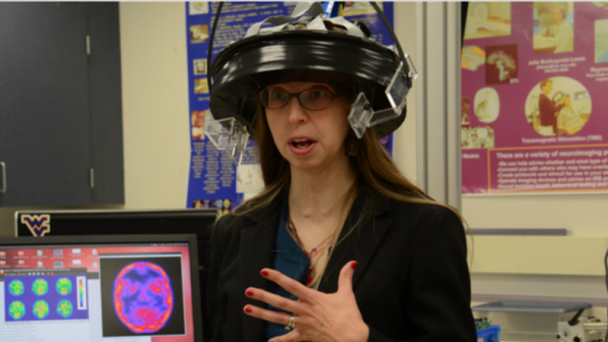
Julie Brefczynski-Lewis, PhD – WVU


Research Assistant Professor, Department of Physiology Director, Brefczynski-Lewis Lab

Brefczynski-Lewis studies how we perceive people we love and people we don’t like, both famous and political, and how training in compassion can affect those perceptions. She is examining the neural and physiological correlates of the liked and disliked persons and how these change after training in compassion. Grudge forgiveness study: fMRI response to the face of the grudge person, as well as cardio and reactive measures will be tested before and after the intervention.


Web Information

Webpage:  directory.hsc.wvu.edu/UserDetails/36369 WVU Center for Neuroscience BRAIN Initiative Grant – “Imaging the Brain in Motion: The Ambulatory Micro-Dose, Wearable PET Brain Imager”

Contact Information

Emailjblewis@hsc.wvu.edu Phone: 304-293-6898 Address: Radiology Research One Medical Center Drive HSC South, PO Box 9236 Morgantown, WV 26506-9236

Biography

Medical College of Wisconsin, Doctor of Philosophy (PhD), Cell Biology, Neurobiology and Anatomy 1996 – 2004

Lawrence University, Bachelor of Arts (B.A.), Biology with Interdisciplinary Neuroscience 1993 – 1997

Research

My research experience has been in studying the neural correlates of cognitive, affective and social processes. Specifically I have focused in recent years in examining the effects of training in compassion meditation and empathy on brain activation and behavior. I have a publication and a private grant in ...

OnAir Post: Julie Brefczynski-Lewis, PhD – WVU

Michael Garwood, PhD – Minnesota


Professor, University of Minnesota Center for Magnetic Resonance Research

Garwood focus has been on developing cutting-edge MRI and MR spectroscopy techniques and on exploiting them in studies of tissue function, metabolism, and microstructure. An emphasis has been on identifying and validating quantitative metrics to assess normal and disease states non-invasively with imaging, and on applying them to learn about metabolism, hemodynamics, and tissue micro-environment.


Web Information

Webpage:  cmrr.umn.edu/facultystaff/gar.shtml Institute for Translational Neuroscience BRAIN Initiative Grant

Contact Information

Email: gar@cmrr.umn.edu Phone: 612-626-2001 Address: 1-211B CMRR

Research

For the past 26 years, researchers in the Garwood laboratory have had a focus on developing cutting-edge MRI and MR spectroscopy techniques and on exploiting them in studies of tissue function, metabolism, and microstructure. An emphasis has been on identifying and validating quantitative metrics to assess normal and disease states non-invasively with imaging, and on applying them to learn about metabolism, hemodynamics, and tissue micro-environment. On the technical side, the Garwood group has recently made a significant advancement in the way MRI is performed – a technique called SWIFT. SWIFT exploits time-shared RF excitation and acquisition to preserve signals from water molecules possessing extremely short transverse relaxation times, T2 and T2*. With SWIFT, ...

OnAir Post: Michael Garwood, PhD – Minnesota

Dean Foster Wong, MD/PhD – JHU


Professor, Johns Hopkins Medicine Department of Radiology and Radiological Science Radiology Vice Chair, Research Administration and Training Director Section of High Resolution Brain PET Imaging, Division of Nuclear Medicine

Dr. Wong has used PET scanning to uncover key insights into brain chemistry and to identify receptors for the major neurotransmitters. He oversaw the first dopamine PET receptor imaging in human beings; led the first study suggesting D2 dopamine receptors in schizophrenia, and how dopamine is transported in and out of cells.

Web Information

Webpage: neuroscience.jhu.edu/resources/directory/faculty/dean-f.-wong-m.d.-ph.d/ Brain Initiative Grant

Contact Information

Email: dfwong@jhmi.edu Phone: 410-955-8433 Address: Johns Hopkins University School of Medicine Department of Neuroscience 1003 Wood Basic Science Building 725 N. Wolfe St. Baltimore, MD 21205

Biography

MD (University of Toronto)

PhD (Johns Hopkins University)

Research

In vivo Neurochemistry with PET, SPECT and MRI

The use of novel methods in positron emission tomography (PET) and single photon emission computed tomography (SPECT) have, in the past few decades, been used to study a wide variety of neuropsychiatric illness, basic brain chemistry and pharmacology. Our focus is on the design, development and application of radiopharmaceuticals imaged PET and SPECT for the study of in vivo brain chemistry. Our research extends from collaborations in basic chemistry ...

OnAir Post: Dean Foster Wong, MD/PhD – JHU

Allen Song, PhD – Duke


Professor of Radiology, Neurobiology, Psychiatry and Behavioral Science and Biomedical Engineering Director, Duke-UNC Brain Imaging and Analysis Center

Allen Song’s research interests focus on the acquisition methodology, processing strategies and contrast mechanism for functional MRI. Additional interests include the application of innovative fMRI acqusition and analysis methods to study functional neuroanatomy.

Web Information

Webpage:  biac.duke.edu/people/asong Duke Institute for Brain Sciences  Brain Initiative Grant

Contact Information

Emailallen.song@duke.edu Phone: (919) 684-1215 Address: Duke-UNC Brain Imaging and Analysis Center Duke University Hock Plaza, Suite 501 2424 Erwin Road Durham, NC 27705

Biography

Ph. D., 1995, Medical College of Wisconsin (Biophysics)

Post-Doctoral Fellowship, Lab of Brain and Cognition, NIH

Research

Research Interests

The acquisition methodology, processing strategies and contrast mechanism for functional MRI. Additional interests include the application of innovative fMRI acqusition and analysis methods to study functional neuroanatomy.

Research Statement

The research in this lab is concerned with the advancement of fMRI data acquisition methods that includes the development of real-time imaging using echo-planar and spiral data acquisition with high-order shimming control, development of robust and reliable single-shot image acquisition methods and optimization of the acquisition methods for improved functional sensitivity and specificity.

Our lab is also focused on understanding the contrast mechanism of the functional MRI, which includes the source localization of the functional signal using the blood ...

OnAir Post: Allen Song, PhD – Duke

Robert Desimone, PhD – MIT


Doris and Don Berkey Professor of Neuroscience, Department of Brain and Cognitive Sciences, Massachusetts Institute of Technology Director, McGovern Institute for Brain Research and Desimone Lab

Robert Desimone studies the brain mechanisms that allow us to focus our attention on a specific task while filtering out irrelevant distractions. Our brains are constantly bombarded with sensory information. The ability to distinguish relevant information from irrelevant distractions is a critical skill, one that is impaired in many brain disorders.


Web Information

McGovern Webpage: mcgovern.mit.edu/principal-investigators

Lab page:  desimonelab.org/robert-desimone/

Department of Brain and Cognitive Sciences page: bcs.mit.edu/people/desimone

MIT Neuroscience: brain2015.onair.cc/mit-neuroscience/

Contact Information

E-mail: desimone@mit.edu

Phone:  617-324-2077

Address: MIT Bldg 46-3160 | 43 Vassar Street | Cambridge, MA 02139

Biography

Robert Desimone is Director of the McGovern Institute and Professor in the Brain and Cognitive Sciences Department. Prior to coming to MIT, he was Director of the NIMH Intramural Research Program, the largest mental health research center in the world. Desimone received his B.A. from Macalester College and his Ph.D. from Princeton University . He is a member of the National Academy of Sciences and the American Academy of Arts of Sciences, and a recipient of numerous awards, including the Troland Prize of the National Academy of Sciences, and the Golden Brain Award of ...

OnAir Post: Robert Desimone, PhD – MIT

David Feinberg, MD/PhD – UCSF


Adjunct professor of neuroscience at UC Berkely and of Radiology at UCSF Board Certified Diagnostic Radiologist and Neuroradiologist President, Advanced MRI Technologies (AMRIT)

Dr. Feinberg is an internationally recognized expert on Magnetic Resonance Imaging (MRI), with numerous publications and research studies to his credit. In addition, he holds many patents in MRI technology.


Web Information

Redwood Regional Medical Group webpage: rrmginc.com/physicians Helen Wills Neuroscience Institute Brain Initiative Grant

Contact Information

Email: david.feinberg@advancedmri.com Phone: 707-829-2933 Address: Advanced MRI Technologies 652 Petaluma Ave, Suite J Sebastopol, CA 95472


Biography

Dr. Feinberg completed his B.A., M.S. and Ph.D., at the University of California, Berkeley. After completing his Ph.D, Dr. Feinberg attended the University of Miami, School of Medicine’s ‘Ph.D to M.D’ medical program. He remained on the east coast for his internship and residency at Brigham and Womens Hospital (Harvard Medical School), and at NYU Medical Center. He has a fellowship in Neuroradiology from Washington University. He received his board certification in Diagnostic Radiology in 1997.

Dr. Feinberg is an internationally recognized expert on Magnetic Resonance Imaging (MRI), with numerous publications and research studies to his credit. In addition, he holds many patents in MRI technology.

In his spare time he enjoys cycling, hiking and traveling.

Articles

From UC Berkely News 9/30/15

Surface imaging of the brain

David Feinberg, a UC ...

OnAir Post: David Feinberg, MD/PhD – UCSF

Lawrence Wald, Phd – Harvard Med


Associate Professor in Radiology, Harvard Medical School Associate Biophysicist, Massachusetts General Hospital Director, MGH NMR Core, Martinos Center

Technique development for high field imaging of the Brain. Development of 7 Tesla scanner and coils for imaging human brain function, highly parallel phased array coil development for 3T and 7T, Parallel transmit methods for B1+ mitigation in the head at 7T, and highly accelerated echo volume imaging.

Web Information

Webpage:  martinos.org/user/5615 Harvard Catalyst Profile: https://connects.catalyst.harvard.edu/Profiles/display/Person/42452 Neuroscience@Harvard  Brain Initiative Grant

Contact Information

Email: wald@nmr.mgh.harvard.edu Phone: 617-724-9706 Address: Building 75, Room 2.109 13th Street Charlestown, MA 02129 USA


Biography

PhD Physics, U.C. Berkeley, 1992

Research

Technique development for high field imaging of the Brain. Development of 7 Tesla scanner and coils for imaging human brain function, highly parallel phased array coil development for 3T and 7T, Parallel transmit methods for B1+ mitigation in the head at 7T, and highly accelerated echo volume imaging.

OnAir Post: Lawrence Wald, Phd – Harvard Med

Wei Chen, PhD – Minnesota


Professor, Departments of Radiology and Biomedical Engineering, University of Minnesota Faculty, Center for Magnetic Resonance Research

Chen’s research focuses on development of magnetic resonance imaging (MRI)/spectroscopy (MRS) methodologies and technologies for noninvasively studying cellular metabolism, bioenergetics, function and dysfunction of the brain and other organs. He has been a principal investigator for a large number of NIH RO1 grants, served as grant reviewer for many funding organizations and editorial boards for imaging journals.

Web Information

Webpage:  cmrr.umn.edu/facultystaff/wei.shtml Institute for Translational Neuroscience Brain Initiative Grant

Contact Information

Email: wei@cmrr.umn.edu Phone: 612-625-8814 Address: 1-211E CMRR University of Minnesota 2021 Sixth Street SE Minneapolis, MN 55455


Biography

Dr. Chen received his B.S. degree in physical chemistry at Fudan University in Shanghai, China. In 1985, he joined Professor Ackerman’s lab as a graduate student at Washington University in St. Louis and received his Ph.D. in 1990. He spent three years as a postdoctoral fellow and research associate in Professor Shulman’s lab at Yale University Medical School. In 1994, he joined the Center for Magnetic Resonance Research (CMRR) at the University of Minnesota and became a full professor in 2002.S

Research

Dr Chen’s research focuses on development of magnetic resonance imaging (MRI)/spectroscopy (MRS) methodologies and technologies for noninvasively studying cellular metabolism, bioenergetics, function and dysfunction of the brain and other organs. ...

OnAir Post: Wei Chen, PhD – Minnesota

Skip to toolbar