BU Neuroscience

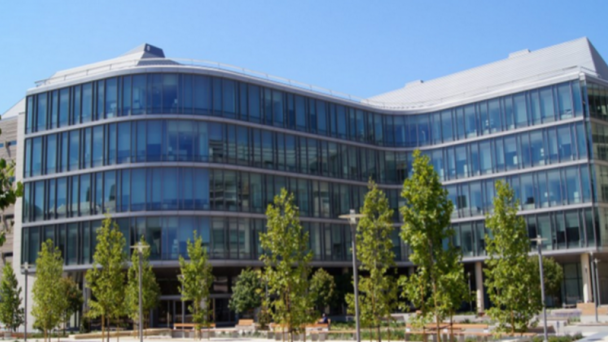
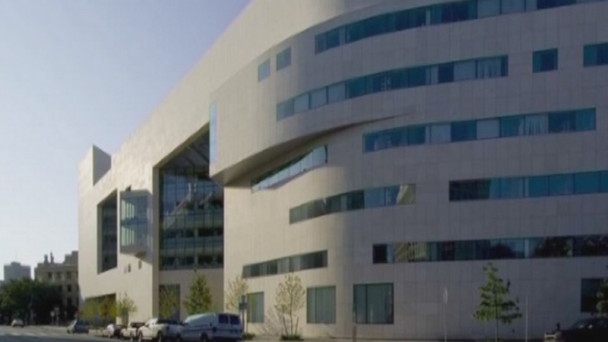
Boston University is creating a new Center for Integrated Life Science and Engineering (CILSE) for interdisciplinary research which will bring together outstanding scientists and engineers from across the University to work collaboratively in the areas of neuroscience and biological design.

CILSE will comprise 170,000 square feet. Its core resources will include a shared equipment facility for Cognitive Neuroimaging. Three new research Centers will be launched including the Center for Systems Neuroscience and the Center for Sensory Communication and Neural Technology.


Web Information

BU Neuroscience Website:  http://www.bu.edu/neuro/

Graduate Program for Neuroscience:  http://www.bu.edu/neuro/graduate/

Center for Systems Neuroscience:  http://www.bu.edu/csn/

Center for Sensory Communication and Neural Technology (formerly CompNet):  http://compnet.bu.edu/


Contact Information

Director of Graduate Program for Neuroscience, Shelley Russek: srussek@bu.edu

Director of Center for Systems Neuroscience, Michael Hasselmo:  hasselmo@bu.edu

Director of Center for Sensory Communication and Neural Technology, Barbara Shinn-Cunningham: shinn@bu.edu


BU Neuroscience

The Neuroscience Mission of BU resonates with a shared belief that major discoveries will come from innovative thinking and an interdisciplinary community of faculty and students.

The broad range of neuroscience research at BU is coordinated through a unified community of investigators from multiple research groups of our Charles River and MED campuses.

Centers bridge the efforts of  individual laboratories and their leaders via scientific retreats, innovative workshops, and collaborative research grants that stimulate ...

OnAir Post: BU Neuroscience
MIT Neuroscience

MIT has numerous academic and research programs related to neuroscience. Key institutions include the Department of Brain, and Cognitive Sciences, Department of Biological Engineering, and the MIT Media Lab.

Important neuroscience related centers include: Center for Neurobiological Engineering (CNBE); McGovern Institute Neurotechnology (MINT) program; Simons Center for the Social Brain (SCSB); Synthetic Biology Center;Picower Center for Learning and Memory; and the Martinos Imaging Center at MIT.

Grant Information

Brain Initiative Grant – “Advancing MRI & MRS Technologies for Studying Human Brain Function and Energetics” Brain Initiative Grant – “Novel technologies for nontoxic transsynaptic tracing”“Novel technologies for nontoxic transsynaptic tracing” Brain Initiative Grant – “Ultra-Multiplexed Nanoscale In Situ Proteomics for Understanding Synapse Types” Brain Initiative Grant – “Calcium sensors for molecular fMRI” Brain Initiative Grant – “Next generation high-throughput random access imaging, in vivo” Brain Initiative Grant – “Cortical circuits and information flow during memory-guided perceptual decisions”

Department of Brain and Cognitive Sciences

Undergraduate program

Graduate program

Postdoctoral Program

Open Courseware

People

48 faculty members,over 200 graduate & undergraduate students, 180 researchers and post-docs and 36 staff

Department Head: James Dicarlo, PhD

Department of Biological Engineering

Academic Programs

Faculty

MIT Media Lab

Research

People

Research Centers 

Center for Neurobiological Engineering (CNBE)

OnAir Post: MIT Neuroscience

UCSD Neuroscience


Summary

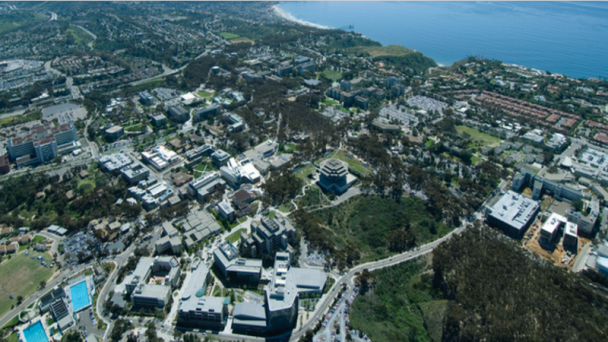
The University of California at San Diego (UCSD) leads the nation as the top neurosciences department in National Institutes of Health (NIH) funding.

With about 120 faculty members, UC San Diego’s Neuroscience department is among the nation’s largest. The program’s labs, medical centers and clinics are located in the heart of the San Diego life sciences district. There are many research centers at UCSD including Kavli Institute for Brain and Mind; Swartz Center for Computational Neuroscience; and Research in Neuroscience at UC San Diego School of Medicine.


Information

Website: ucsd.edu/ Kavli Institute for Brain and Mind: kavlifoundation.org/university-california-san-diego Swartz Center for Computational Neuroscience: http://sccn.ucsd.edu/index.html Research in Neuroscience at UC San Diego School of Medicine: neurosciences.ucsd.edu/research/Pages/default.aspx Wikipedia Entry: wiki/University_of_California,_San_Diego BRAIN Initiative Grant – “Revealing the connectivity and functionality of brain stem circuits” Brain Initiative Grant– “Classifying Cortical Neurons by Correlating Transcriptome with Function” BRAIN Initiative Grant Optogenetic mapping of synaptic activity and control of intracellular signaling”


Research in Neuroscience at UC San Diego School of Medicine

UC San Diego leads the nation as the top neurosciences department in National Institutes of Health (NIH) funding.

With about 120 faculty members, UC San Diego’s Neuroscience department is among the nation’s largest. The program’s labs, medical centers and clinics are located in the heart of the ...

OnAir Post: UCSD Neuroscience

UCSF Neuroscience

University of California at San Francisco (UCSF) has one of the largest neuroscience complexes in the world including the Sandler Neurosciences Center and Rock Hall. UCSF is ranked by NIH as the #1 department of neurology at US medical schools.

Research is done by the faculty in the Neuroscience Graduate Program and many centers including the UCSF Memory and Aging Center and the Center for Integrative Neuroscience. Affiliated centers include research at San Francisco Medical Centers and the Gladstone Institute of Neurological Disorders.

Web Information

Department of Neurology Website: neurology.ucsf.edu/ UCSF Memory and Aging Center:  memory.ucsf.edu/ Center for Integrative Neuroscience: cin.ucsf.edu/index.html UCSF Neuroscience Graduate Program: neuroscience.ucsf.edu/neurograd BRAIN Initiative Grant – ” Modular systems for measuring and manipulating brain activity” BRAIN Initiative Grant   “Mapping the Developing Human Neocortex by Massively Parallel Single Cell Analysis” BRAIN Initiative Grant – “Identification of enhancers whose activity defines cortical interneuron types”

Contact Information

Address: Sandler Neurosciences Center 675 Nelson Rising Lane, Suite 190 San Francisco, California

Sandler Neurosciences Center

In honor of Herbert and Marion Sandler’s extraordinary commitment to neurological disease research at UCSF, our new neurosciences building at Mission Bay has been named the Sandler Neurosciences Center. This 237,000 square foot facility has laboratories headed by principal investigators from the UCSF Department of Neurology, the Institute for Neurodegenerative Diseases ...

OnAir Post: UCSF Neuroscience

Mayo Clinic Neuroscience

Mayo Clinic has multiple centers of neuroscience research activity.  In Rochester Minnesota, the main organizational center is the Department of Physiology and Biomedical Engineering and in Florida, the Department of Neuroscience at Mayo Clinic.

Other Mayo Neuroscience related programs  and centers include a PhD program in Neurobiology, an Alzheimer’s Disease Research Center, Center for Advanced Imaging Research, Migraine Research Program, Parkinson’s Disease Research Center, and the Traumatic Brain Injury Program.


Web Information

Website: Department of Physiology and Biomedical Engineering Department of Neuroscience at Mayo Clinic in Florida: mayo.edu/research/department-neuroscience-florida Wikipedia Entry:   wikipedia.org/wiki/Mayo_Clinic Brain Initiative Grant – “Neurotransmitter Absolute Concentration Determination with Diamond Electrode”

Department of Physiology and Biomedical Engineering

Laboratories of primary and joint appointees in the Department of Physiology and Biomedical Engineering:

Biomechanics and Motion Laboratories Bone Histomorphometry – Michael J. Yaszemski Cardiovascular Molecular Imaging – Martin G. Rodriguez-Porcel Cell Imaging and Physiology – Gary C. Sieck Computer-aided Molecular Design – Yuan-Ping Pang Developmental and Regenerative Neurobiology – John R. Henley Gastrointestinal Physiology – Gianrico Farrugia Hepatic Vascular Cell Signaling – Vijay H. Shah Human Integrative Physiology – Michael J. Joyner Kidney Development and Cyst Formation – Caroline R. Sussman Liver Pathobiology – Gregory J. Gores Lung Deformation Injury – Rolf D. Hubmayr Magnetic Resonance ...

OnAir Post: Mayo Clinic Neuroscience

Caltech Neuroscience

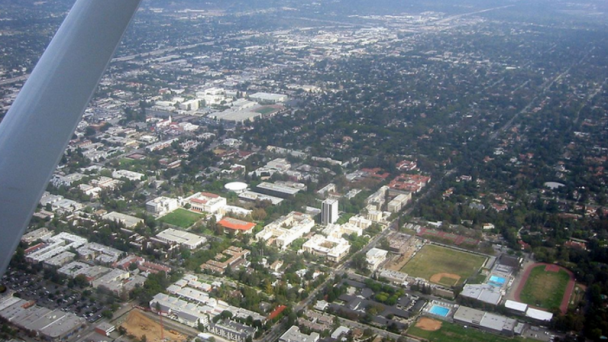
Several Caltech laboratories are applying basic science findings to animal models of brain disorders, and these translational approaches are opening up novel therapeutic avenues.

Caltech Neuroscience research spans a wide range: from the molecular function of receptors; through signaling organelles like the synapse; the structure and function of single neurons; the assembly and function of circuits of nerve cells; and the collective function of brain systems in controlling behavior, perception, memory, cognition, and emotion.


Web Information

Neurobiology website:   http://neurobiology.caltech.edu/ Computaton & Neural Systems website: http://www.cns.caltech.edu/ Wikipedia Entry: http://en.wikipedia.org/wiki/California_Institute_of_Technology BRAIN Initiative Grant – Time-Reversal Optical Focusing for Noninvasive Optogenetics BRAIN Initiative Grant – “Modular nanophotonic probes for dense neural recording at single-cell resolution” BRAIN Initiative Grant – “Integrative Functional Mapping of Sensory-Motor Pathways” BRAIN Initiative Grant – “Dissecting human brain circuits in vivo using ultrasonic neuromodulation”

Contact Information

Email: meister@caltech.edu Phone: 626) 395-1782 Address: Neurobiology California Institute of Technology 1200 E. California Blvd., MC 216-76 Pasadena, CA 91125

Executive Officer for Neurobiology: Marianne Bronner

Computation and Neural Systems

Research

The CNS faculty maintain strong connections with colleagues throughout the Division, the Institute, and the Jet Propulsion Laboratory (JPL). Our faculty collaborate with colleagues from Bioengineering, Biology, Electrical Engineering, Control and Dynamical Systems, Mechanical Engineering, Physics, Mathematics and Astronomy, and JPL.

Neurophysiology Allman : Andersen :

OnAir Post: Caltech Neuroscience

UC Davis Neurosciences

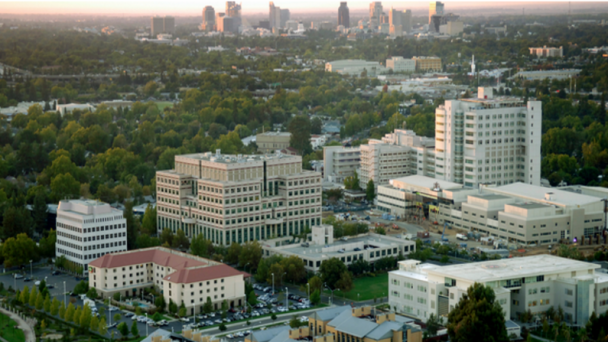
University of California Davis Neuroscience occurs both at the Sacramento campus, home of UC Davis Health System and at the UC Davis campus 15 miles west of Sacramento. 

The Center for Neuroscience is UC Davis’ hub for studying the entire scope of neuroscience, ranging from cellular and molecular neurobiology, through systems and developmental neuroscience, to studies of human perception, memory, language, and the nature of consciousness. Some of the major UC Davis Health System research centers include the UC Davis MIND Institute, Eye and Pain Medicine Centers.

Web Information

UC Davis Neurosciences Website: ucdmc.ucdavis.edu/giving/leadinginitiatives/neurosciences UC Davis Center for Neuroscience website: neuroscience.ucdavis.edu BRAIN Initiative Grant – “Large-Scale Recording-Modulation – New Technologies (RFA NS-14-007)” BRAIN Initiative Grant – “Genetically encoded reporters of integrated neural activity for functional mapping of neural circuitry”

Organization

Director Center for Neuroscience: Cameron Carter

UC Davis MIND Institute, Vision Sciences and the Eye Center, and Pain Medicine

Neurosciences is a key strategic emphasis for UC Davis, and is a campus-wide research area with collaborations across nearly every school and college.

Nearly 50 million people in the U.S. are impacted by neurological, developmental, and ophthalmological disorders, as well as chronic pain. Advances in technology have opened possibilities for faculty in the vision sciences, neurosciences and pain medicine to better ...

OnAir Post: UC Davis Neurosciences

Washington University Neuroscience

The Washington University Neuroscience Program offers outstanding neuroscience education for Ph.D. students and exciting research opportunities for Postdoctoral scientists. 

The Program includes a broad spectrum of research laboratories that study how the brain works. Neuroscience research has included the nobel-prize winning insights of Rita Levi-Montalcini and Viktor Hamburger on formation and development of the nervous sytem, through development of Positron Emission Tomography (PET) imaging, to current innovations in detection and treatment of Alzheimer’s Disease.


Web Information

Neuroscience Program website: hneuroscience.wustl.edu/ Office of Neuroscience Research website: neuroscienceresearch.wustl.edu/ BRAIN Initiative Grant – “Fast High-Resolution Deep Photoacoustic Tomography of Action Potentials in Brains”

Contact Information

Email:  susan@brainvis.wustl.edu Phone: (314) 362-7043 Address: Washington University in St. Louis One Brookings Drive, St. Louis, MO 6313 

Letter from the Directors

Welcome to the Neuroscience Program at Washington University!

How does the brain control movement and produce thoughts, emotions, sensations, memories? How can we help those people for whom diseases have affected their normal cognitive or motor abilities? These questions present the largest and most exciting challenges in modern science. From the earliest work on nerve impulses to the current imaging of human brain activities, the laboratories of Washington University have been at the forefront of training outstanding young neuroscientists.

Today that training is organized into a comprehensive Neuroscience Ph.D. program representing more than 120 faculty ...

OnAir Post: Washington University Neuroscience

University of Michigan Neuroscience

The longest-standing neuroscience graduate program in the United States, we are a collegial and interactive group that performs research across the breadth of the neuroscience field.

The University of Michigan Neuroscience program captures the excitement and interdisciplinary collaboration intrinsic to the field of neuroscience by drawing on the expertise of over 120 faculty members from more than 20 departments.Primary  research fields include: Sensory & Computational Neuroscience, Developmental Neuroscience, Cognitive Neuroscience,Behavioral Neuroscience,Molecular Neuroscience, and Clinical Neuroscience.

Web Information

Neuroscience Graduate Program website: neuroscience.med.umich.edu/ BRAIN Initiative Grant – ” Modular High-Density Optoelectrodes for Local Circuit Analysis”

Contact Information

Email: neuroscience.program@umich.edu Phone: (734) 763-9638 Address: Neuroscience Graduate Program 4137 Undergraduate Science Building (USB) 204 Washtenaw Ave. Ann Arbor, MI 48109-2215

Letter from Director

Welcome! The Graduate Program at the University of Michigan was constituted in 1971, making it the longest-standing neuroscience graduate program in the United States. We are a collegial and interactive group of 60+ students and 120 faculty that perform research across the breadth of the neuroscience field. Neuroscience graduate students on this campus form a cohesive group, which promotes interactions among the faculty, making the Graduate Program the nexus of the neuroscience community. Graduates receive a Ph.D. in Neuroscience, which provides tremendous flexibility in choosing one’s career path. There are more than ...

OnAir Post: University of Michigan Neuroscience

Skip to toolbar