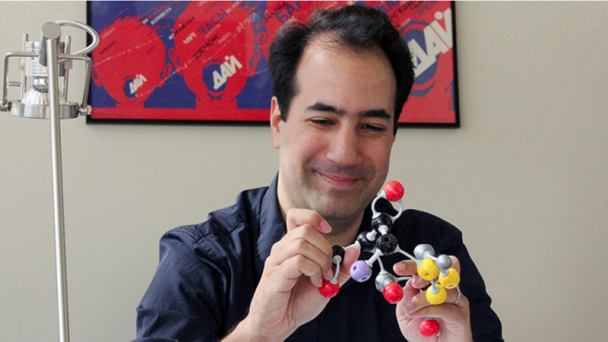
Kit S. Lam, MD/PhD – UC Davis


Professor and Chair, Department of Biochemistry and Molecular Medicine, UC Davis Professor, Hematology and Oncology, UC Davis Director, Kit Lamb Lab

Dr. Lam is an expert in combinatorial chemistry, chemical biology, drug development, molecular imaging, nanotherapeutics and medical oncology. His laboratory is engaged in the development and application of combinatorial library methods for basic research and drug discovery. Lam is also interested in signal transduction, antibiotics development, molecular immunology, chemical microarray, and proteomics.

Web Information

Webpage: ucdmc.ucdavis.edu/publish/facultybio UC Davis Center for Neuroscience BRAIN Initiative Grant – “Genetically encoded reporters of integrated neural activity for functional mapping of neural circuitry”

Contact Information

Emailkit.lam@ucdmc.ucdavis.edu Phone: (916) 734 – 0910 Address: Oak Park Research Center Building Department of Biochemistry and Molecular Medicine 2700 Stockton Blvd., Suite 2102 Sacramento, CA 95817


Biography

Education:

M.D., Stanford University School of Medicine, Palo Alto, California, 1984 Ph.D., University of Wisconsin, Madison, Wisconsin, 1980 B.A., University of Texas, Austin, Texas, 1975

Residency:

University of Arizona, Tucson, Arizona, 1984-87

Fellowships:

University of Arizona, Tucson, Arizona, 1987-89

Board Certifications:

American Board of Internal Medicine, 1987 American Board of Internal Medicine, Medical Oncology, 1989

Professional Memberships:

American Association for Cancer Research American Chemical Society American College of Physicians American Peptide Society Society of Chinese Bioscientists in America

Select Honors and Awards:

Fellow of American College of Physicians, 2008

Award of the Society of Combinatorial Sciences for pioneering contribution to and remarkable scientific accomplishments in combinatorial sciences throughout ...

OnAir Post: Kit S. Lam, MD/PhD – UC Davis
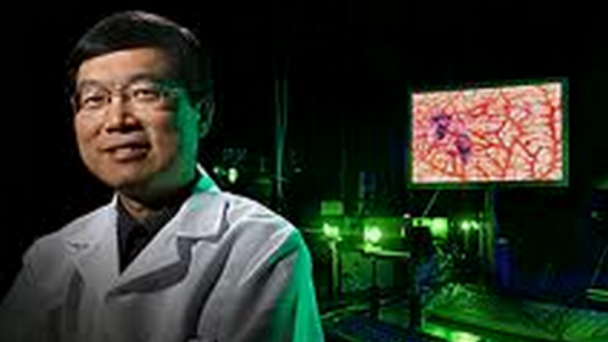
Lihong Wang, PhD – Washington U


Professor of Biomedical Engineering, Washington University Director, Optical Imaging Laboratory

His lab reported the first functional photoacoustic tomography, 3D photoacoustic microscopy (PAM), optical-resolution PAM, photoacoustic Doppler effect, photoacoustic reporter gene imaging, microwave-induced thermoacoustic tomography, the universal photoacoustic reconstruction algorithm, frequency-swept ultrasound-modulated optical tomography, time-reversed ultrasonically encoded (TRUE) optical focusing, sonoluminescence tomography, Mueller-matrix optical coherence tomography, and optical coherence computed tomography.

Web Information

Webpage: bme.wustl.edu/people/Pages/faculty-bio.aspx?faculty=19 Washington University Neuroscience Program BRAIN Initiative Grant – “Fast High-Resolution Deep Photoacoustic Tomography of Action Potentials in Brains”

Contact Information

Email: lhwang@biomed.wustl.edu Phone: (314) 935-6152 Address: One Brookings Drive Campus Box 1097 Whitaker Hall, Room 190D St. Louis, MO 63130


Biography

Lihong Wang earned his Ph.D. degree at Rice University, Houston, Texas under the tutelage of Robert Curl, Richard Smalley, and Frank Tittel and currently holds the Gene K. Beare Distinguished Professorship of Biomedical Engineering at Washington University in St. Louis.

His book entitled “Biomedical Optics: Principles and Imaging,” one of the first textbooks in the field, won the Joseph W. Goodman Book Writing Award. He also coauthored a book on polarization and edited the first book on photoacoustic tomography. Professor Wang has published more than 420 peer-reviewed articles in journals including Nature (Cover story), Science, PNAS, and PRL with an h-index of 93 (Google Scholar) and delivered over ...

OnAir Post: Lihong Wang, PhD – Washington U

Euisik Yoon, PhD – Michigan


Professor oElectrical Engineering and Computer Science and Biomedical Engineering, University of Michigan Principal Investigator, Yoon Lab

Yoon’s research group realizes self-contained microsystems that combine and process natural signals (such as bio, chemical, optical and thermal signals) as well as electrical signals on a single chip platform by integrating new MEMS/nano structures with low-power, wireless VLSI circuits and systems.

Web Information

Electrical Engineering and Computer Science webpage: web.eecs.umich.edu/~esyoon/ Biomedical Engineering webpage:  bme.umich.edu/people/index.php?un=esyoon University of Michigan Neuroscience  BRAIN Initiative Grant – ” Modular High-Density Optoelectrodes for Local Circuit Analysis”

Contact Information

Email: esyoon@umich.edu Phone: (734) 615-4469 Address: 2400 EECS Bldg., 301 Beal Avenue Ann Arbor, MI 48109-2122


Biography

Euisik Yoon received the B.S. and M.S. degrees in electronics engineering from Seoul National University in 1982 and 1984, respectively, and the Ph.D. degree in electrical engineering from the University of Michigan, Ann Arbor, in 1990.

From 1990 to 1994 he worked for the Fairchild Research Center of the National Semiconductor Corp. in Santa Clara, CA, where he engaged in researching deep submicron CMOS integration and advanced gate dielectrics. From 1994 to 1996 he was a Member of the Technical Staff at Silicon Graphics Inc. in Mountain View, CA, where he worked on the design of the MIPS microprocessor R4300i and the RCP 3-D graphic coprocessor. He took ...

OnAir Post: Euisik Yoon, PhD – Michigan

Tim Gardner, PhD – BU


Assistant Professor of Biology in Boston University Department of Biology Assistant Professor, Biomedical Engineering Principal Investigator, Gardner Lab

Gardner studies the mechanisms of temporal sequence perception and production, focusing on vocal learning in songbirds.The song circuit produces stereotyped structure over a range of time-scales from milliseconds to tens of seconds. He also develops minimally invasive electrodes that provide stable neural recordings in behaving animals.


Web Information

Webpage: bu.edu/bme/people/joint/gardner/ Lab: http://people.bu.edu/timothyg/index.html Brain Initiative Grant

Contact Information

Email: timothyg(at) bu.edu Phone: (347) 683-7642 Address: 24 Cummington Mall Room 402 Boston, MA 02215


Biography

PhD, Rockefeller University


Research

Research interests include: Neural circuits, vocal learning, time-frequency analysis, brain-machine interfaces

The Gardner lab studies the mechanisms of temporal sequence perception and production, focussing on vocal learning in songbirds.

The song circuit produces stereotyped structure over a range of time-scales from milliseconds to tens of seconds. We ask how complex songs are assembled from elementary neural units. What are the relationships between patterns of neural activity on different time-scales?

The lab also studies information processing in auditory cortex, examining how auditory signals are transformed as they move from low to high level sensory areas. How are memories for temporal patterns formed?

To address these questions, we develop minimally invasive electrodes that provide stable neural recordings in behaving animals. We also develop high-resolution signal processing algorithms ...

OnAir Post: Tim Gardner, PhD – BU

Kendall H Lee, MD/PhD – Mayo


Professor of Neurosurgery and Physiology, Mayo Clinic

The research interests of Kendall H. Lee, M.D., Ph.D., are to develop deep brain stimulation (DBS) for the treatment of Parkinson’s disease, tremor, depression, obsessive-compulsive disorder and epilepsy. Dr. Lee is fascinated with the possibility of combining sophisticated electrophysiological recordings with miniaturized analytical elements (microprocessors) to augment or repair disrupted function of the brain.

Web Information

Webpage: http://www.mayo.edu/research/faculty/lee-kendall-h-m-d-ph-d/bio-00027489 Department of Physiology and Biomedical Engineering: mayo.edu/research/department-physiology-biomedical-engineering Brain Initiative Grant

Contact Information

Email: Lee.Kendall@mayo.edu Address: Joseph Building 4-184W 200 First St. SW Rochester, MN 55905


Biography

Chief Resident – Neurosurgery Dartmouth Hitchcock Medical Center

Resident – Neurosurgery Dartmouth Hitchcock Medical Center

Internship – General Surgery Dartmouth Hitchcock Medical Center

Resident – Neurology Partners’ Neurology Program, Harvard Medical School

Internship – Internal Medicine Hospital of St. Raphael, Yale University School of Medicine

PhD Department of Neurobiology, Yale University Graduate School

MD Yale University Graduate School

M. PhilYale University Graduate School

BA – Major-Biology/Minor-Philosophy University of Colorado, Denver

Research

The research interests of Kendall H. Lee, M.D., Ph.D., are to develop deep brain stimulation (DBS) for the treatment of Parkinson’s disease, tremor, depression, obsessive-compulsive disorder and epilepsy. Dr. Lee is fascinated with the possibility of combining sophisticated electrophysiological recordings with miniaturized analytical elements (microprocessors) to augment or repair disrupted function of the brain.

Focus areas

Real-time DBS. It is currently possible to record pathological behavior in ...

OnAir Post: Kendall H Lee, MD/PhD – Mayo

Loren M Frank, PhD – UCSF


Core Faculty, Program in Biological Sciences, UCSF Physiology Department Director:  Frank Laboratory

Frank’s research interests center around learning and spatial coding in the hippocampal-cortical circuit. Frank is interested in understanding the neural correlates of learning and memory. In particular, his laboratory focuses on the circuitry of the hippocampus and adjacent regions. His goal is to examine the relationships among neural firing patterns, behavior, and anatomy to understand how the brain uses and stores information.


Web Information

Webpage: keck.ucsf.edu/physio/people/frankl.html#research UCSF Neuroscience  Brain Initiative Grant

Contact Information

Email: loren@phy.ucsf.edu Phone: 415-502-6317 Address: UCSF 513 Parnassus Box 0444 San Francisco, CA 94143-0444


Research

The ability to use experience to guide behavior (to learn) is one of the central functions of the brain. We are interested in understanding the neural correlates of learning and memory. In particular, our laboratory focuses on the circuitry of the hippocampus and adjacent regions. Our goal is to examine the relationships among neural firing patterns, behavior, and anatomy to understand how the brain uses and stores information. Ultimately we should be able to generate accurate computational models of learning to both test hypotheses concerning hippocampal-cortical interactions and to generate new predictions that can be tested experimentally.

Anatomical organization

The hippocampal formation has a unique anatomical organization in that the connectivity between adjacent hippocampal regions is ...

OnAir Post: Loren M Frank, PhD – UCSF

John Yu-Luen Lin, PhD – UCSD


Research Scientist, Tsien Lab, UC San Diego

Lin’s current research interests include developing new molecular techniques to map activities of neurons, manipulating the strength of communication between neurons and disrupting intracellular signaling. These new techniques can be used to understand how neurons encode and store information, with potential implications for ameliorating Alzheimer’s disease, addiction, traumatic brain injury, and neurodegeneration.


Web Information

Webpage: tsienlab.ucsd.edu/HTML/People/John%20Lin/John.html UCSD Neuroscience Brain Initiative Grant

Contact Information

Email: j8lin@ucsd.edu Address: HHMI – UCSD 9500 Gilman Dr George Palade 310 La Jolla, CA 92093-0647


Biography

2000-2005            Doctor of Philosophy in Physiology, University of Auckland, Auckland, New Zealand

1996-1999            Bachelor of Technology (First class honours), University of Auckland, Auckland, New Zealand

Research

Current research interests include developing methods to manipulate and monitor the activities of neurons and studying single-molecule photophysical properties of fluorescent proteins

Publications

Lin J.Y., Lin M.Z., Steinbach P. and Tsien R.Y. Characterization of engineered channelrhodopsin variants with improved properties and kinetics. (2009) Biophysical Journal. (In Press)

Sheng G., Chang G.Q., Lin J.Y., Yu Z.X., Fang Z.H., Rong J., Lipton S.A., Li S.H., Tong G., Leibowitz S.F., Li X.J. (2006)Hypothalamic huntingtin-associated protein 1 as a mediator of feeding behavior. Nature Medicine 12, 526-533

Lin J.Y., Chung K.K.H., de Castro D., Funk G.D. & Lipski J. ...

OnAir Post: John Yu-Luen Lin, PhD – UCSD

Lin Tian, PhD – UC Davis


Assistant Professor, Department of Biochemistry and Molecular Medicine, UC Davis Director, Tian Lab

The goal of Tian’s research is to invent new molecular tools for analyzing and engineering functional neural circuits. We also leverage these tools, combined with optical imaging techniques, to study molecular mechanisms of neurological disorders at system level and to empower searching for novel therapeutic treatments.

Web Information

Webpage: ucdmc.ucdavis.edu/biochem/faculty/tian/ UC Davis Neuroscience Brain Initiative Grant

Contact Information

Email: lintian@ucdavis.edu Phone: (916) 734-8070 Address: 2352 Oak Park Research Building Sacramento Campus


Biography

I was born and raised in China. After graduating from University of Science and Technology of China, I joined a interdisciplinary PhD program at Northwestern University, where I studied the mechanisms of protein processing via ubiquitin-proteasome pathway in Dr. Andreas Matouschek’s lab. I then moved to HHMI Janelia Farm as a postdoc. The highly collaborative environment at Janelia resulted in my multidisciplinary training under three principle investigators, Dr. Loren Looger, Dr. Karel Svoboda and Dr. Luke Lavis. There, my research focused on engineering optical probes for monitoring and controlling neural circuitry in living behaving animal. These new imaging techniques have greatly impacted the field of neuroscience, facilitating new types of biological experiments performed to address previously intractable questions. One indication of the impact of this ...

OnAir Post: Lin Tian, PhD – UC Davis

Changhuei Yang, PhD – Caltech


Professor of Electrical Engineering, Bioengineering and Medical Engineering, Caltech Director, Biophotonics Lab

Professor Yang’s research efforts are in the areas of novel microscopy development and time-reversal based optical focusing. Prof. Yang’s group is developing a number of technologies aimed at transforming the conventional microscope into high throughput, automated and cost-effective formats. Prof. Yang’s group is working on the use of ‘time-reversal’ techniques to undo the effect of tissue light scattering.

Web Information

Webpage:   biophot.caltech.edu/people/yang Caltech Neuroscience BRAIN Initiative Grant – Time-Reversal Optical Focusing for Noninvasive Optogenetics

Contact Information

Email:  chyang@caltech.edu Phone: (626) 395-8922 Address: Moore Laboratory MC 136-93, 262 Moore


Biography

PhD, EECS, MIT, 2002 BSc, Mathematics, MIT, 2002 MEng, EECS, MIT, 1997 BSc, Physics, MIT, 1997 BSc, EECS, MIT, 1997

Research

Professor Yang’s research efforts are in the areas of novel microscopy development and time-reversal based optical focusing. Prof. Yang joined the California Institute of Technology in 2003. He is a professor in the areas of Electrical Engineering, Bioengineering and Medical Engineering. He has received the NSF Career Award, the Coulter Foundation Early Career Phase I and II Awards, and the NIH Director’s New Innovator Award. In 2008 he was named one of Discover Magazine’s ‘20 Best Brains Under 40’. He is a Coulter Fellow, an AIMBE Fellow and an OSA Fellow.

His research efforts can be categorized ...

OnAir Post: Changhuei Yang, PhD – Caltech

Michael Roukes, PhD – CalTech


Professor of Physics, Applied Physics, and Bioengineering, CalTech Division of Engineering and Applied Sciences Director, Roukes Group

Roukes research activities are currently focused on developing advanced nanodevices, engineering them into complex systems, and using them to enable fundamental problems in neuroscience and proteomics. A continuing thread in theoretical and experimental investigations focuses on fundamental properties of nanomechanical systems.


Web Information

Lab webpage: caltech.edu/people/3185/profile Division webpage: nano.caltech.edu/people/roukes Caltech Neuroscience Brain Initiative Grant

Contact Information

Email: roukescaltech.edu Phone: 626-395-2916 Address: MC 149-33Pasadena, CA 91125


Biography

B.A., University of California (Santa Cruz), 1978; Ph.D., Cornell University, 1985. Associate Professor, Caltech, 1992-96; Professor of Physics, 1996-2002; Professor of Physics, Applied Physics, and Bioengineering, 2002-11; Abbey Professor, 2011-; Director, Kavli Nanoscience Institute, 2004-06; Co-Director, 2008-2013.


Research

Research Overview

Professor Roukes’s research focuses on nanobiotechnology, nanotechnology, nanoscale physics, nanoscale and molecular mechanics.

List of Research Areas

nanobiotechnology, nanotechnology, nanoscale physics, nanoscale and molecular mechanics

Research Centers

The Kavli Nanoscience Institute, Center for the Physics of Information

OnAir Post: Michael Roukes, PhD – CalTech

Alan Jasanoff, PhD – MIT


Associate Professor of Biological Engineering with appointments in Brain and Cognitive Sciences and Nuclear Science and Engineering, MIT Neuroscience Associate member of the McGovern Institute Principal Investigator, Jasanoff Lab

Functional magnetic resonance imaging (fMRI) has revolutionized our understanding of the human brain, but the method is now approaching the limit of its capabilities. Alan Jasanoff hopes to break through this limit and to develop new technologies for imaging the molecular and cellular phenomena that underlie brain function.

Web Information

McGovern Webpage: mcgovern.mit.edu/principal-investigators/alan-jasanoff

Lab page:  mit.edu/~jasanofflab/

Department of Brain and Cognitive Sciences page: bcs.mit.edu/people/jasanoff.html

MIT Neuroscience: neuroscience.onair.cc/mit-neuroscience/

Contact Information

Email: jasanoff@mit.edu

Phone:617-452-2538 

Address: MIT Rm. 16-561 | 77 Massachusetts Avenue | Cambridge, MA 02139


Biography

Alan Jasanoff is an associate member of the McGovern Institute and Associate Professor of Biological Engineering, with appointments in Brain and Cognitive Sciences and Nuclear Science and Engineering.  He was awarded tenure in 2011. Prior to joining the MIT faculty, he was a Whitehead Fellow at the Whitehead Institute for Biomedical Research at MIT. He was named a Raymond and Beverly Sackler Foundation Scholar in 2004 and received the McKnight Technological Innovations in Neuroscience Award in 2006. Jasanoff was also a 2007 recipient of the Director’s New Innovator Award from the National Institutes of Health.


Research

Pushing the frontiers of ...

OnAir Post: Alan Jasanoff, PhD – MIT

Skip to toolbar