Kit Lamb Lab – UCDavis

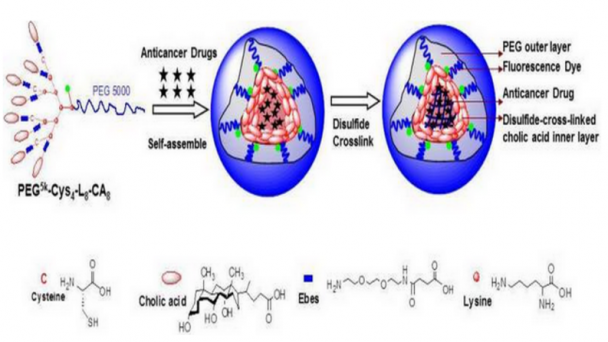
The main focus of the Lam Lab lies in discovering revolutionary and innovative methods of disease treatment on a nano-scale and molecular scale. The lab work is most related to molecular medicine, drug discovery, nanoparticle and drug-delivery techniques in cancer and other diseases. Our research is done through the use of cutting edge technologies and established procedures.

OnAir Post: Kit Lamb Lab – UCDavis

Optical Imaging Laboratory – Washington U

Optical Imaging Laboratory develops novel biophotonic tomography for early-cancer detection and functional imaging, using non-ionizing electromagnetic and ultrasonic waves. Research directions include: Photo-acoustic tomography (PAT), Thermo-acoustic tomography (TAT), Ultrasound-modulated (acousto-) optical tomography (UOT), Mueller optical-coherence tomography (M-OCT), Oblique-incidence reflectometry (OIR) and spectroscopy, and Modeling light transport in tissues.

OnAir Post: Optical Imaging Laboratory – Washington U

Yoon Lab – Michigan

Principal Investigator: Euisik  Yoon University of Michigan Neuroscience

The mission of the Yoon lab is to build self-contained microsystems that will combine and process natural signals (such as bio, chemical, optical and thermal signals) as well as electrical signals on a single chip platform by integrating new MEMS/nano structures with low-power, wireless VLSI circuits and systems. Currently, we have three main research thrusts: microfluidic systems, MEMS neural interfaces, and CMOS imaging and neural interfacing ICs.

Web Information

Website:  yoon.eecs.umich.edu/ BRAIN Initiative Grant – ” Modular High-Density Optoelectrodes for Local Circuit Analysis”

Contact Information

Email: esyoon@umich.edu Address: 1301 Beal Avenue, Ann Arbor

Research

The mission of our lab is to build self-contained microsystems that will combine and process natural signals (such as bio, chemical, optical and thermal signals) as well as electrical signals on a single chip platform by integrating new MEMS/nano structures with low-power, wireless VLSI circuits and systems. Currently, we have three main research thrusts: microfluidic systems, MEMS neural interfaces, and CMOS imaging and neural interfacing ICs.


Advanced Neural Probes

Mapping the brain and peripheral circuits may be the grandest challenge in a all of science today. Our mission is to help neuroscientists, neurologists, and other clinicians understand these amazingly complex circuits with tools that can monitor neural activity or recreate ...
OnAir Post: Yoon Lab – Michigan

Laboratory of neural circuit formation – BU

Principal Investigator, Tim Gardner
Boston University (Charles River Campus)

The Gardner lab studies the mechanisms of temporal sequence perception and production, focusing on vocal learning in songbirds. The Laboratory of neural circuit formation current research projects involve: Sensory-motor learning; High-density recording and stimulating microelectrodes, Electrode arrays for the central nervous system: tissue interaction; and Peripheral nervous system : chronic recording and stimulation for biolectric medicine.

OnAir Post: Laboratory of neural circuit formation – BU

Mayo Physiology and Biomedical Engineering Dept.

The Department of Physiology and Biomedical Engineering at Mayo has a long and rich history of scientists and physicians collaborating and translating basic discoveries. The department currently consists of 18 primary and 35 joint appointees. There are 34 doctoral students, 67 research fellows and research associates working in a variety of research areas.

OnAir Post: Mayo Physiology and Biomedical Engineering Dept.

Frank Laboratory – UCSF

The Frank Lab's goal is to understand how activity and plasticity in neural circuits underlie both learning and the ability to use learned information to make decisions. In particular, our laboratory focuses on the circuitry of the hippocampus and anatomically related regions. We use a combination of techniques, including large scale multielectrode recording, targeted optogenetic interventions and behavioral manipulations of awake, behaving animals to understand how the brain learns and remembers.

OnAir Post: Frank Laboratory – UCSF

Tsien Lab – UCSD

Principal Investigator: Roger Tsien Research Scientist: John Yu-Luen Lin UCSD Neuroscience

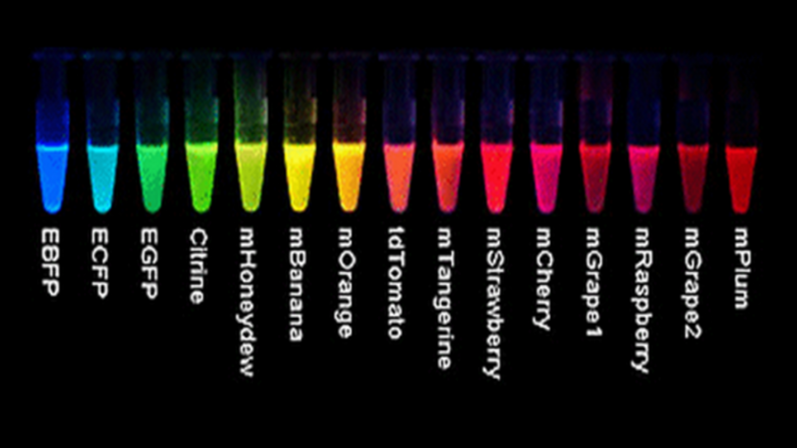
The multicolored fluorescent proteins developed in Tsien’s lab are used by scientists to track where and when certain genes are expressed in cells or in whole organisms. Typically, the gene coding for a protein of interest is fused with the gene for a fluorescent protein, which causes the protein of interest to glow inside the cell when the cell is irradiated with ultraviolet light and allows microscopists to track its location in real time. This is such a popular technique that it has added a new dimension to the fields of molecular biology, cell biology, and biochemistry.

In 2009 Tsien reported a new class far-red and infrared fluorescent proteins that have great potential in in vivo imaging.

Web Information

Website:  tsienlab.ucsd.edu/ Wikipedia Entry: wiki/Roger_Y._Tsien Brain Intiative Grant 

Contact Information

Phone: (858) 534-7009 Address: HHMI – UCSD 9500 Gilman Dr George Palade 310 La Jolla, CA 92093-0647

Research

Research Summary

Roger Tsien’s lab studies signal transduction, especially in neurons and cancer cells, with the help of designed molecules, imaging, and photochemical manipulation.

The overall goal of my laboratory is to gain a better understanding of signaling inside individual living cells, in neuronal networks, and in tumors. We ...

OnAir Post: Tsien Lab – UCSD

Tian Lab – UC Davis

The goal of Tian Lab's research is to invent new molecular tools for analyzing and engineering functional neural circuits. We also leverage these tools, combined with optical imaging techniques, to study molecular mechanisms of neurological disorders at system level and to empower searching for novel therapeutic treatments.

OnAir Post: Tian Lab – UC Davis

Biophotonics Laboratory – Caltech

Principal Investigator: Changhuei Yang Caltech Neuroscience

The Biophotonics Laboratory is focused on the development of novel tools that combine optics and microfluidics to tackle diagnostic and measurement problems in biology and medicine. The major techniques that are under development in the laboratory include the ePetri, Fourier Ptychographic microscopy, and time-reversal optical focusing.

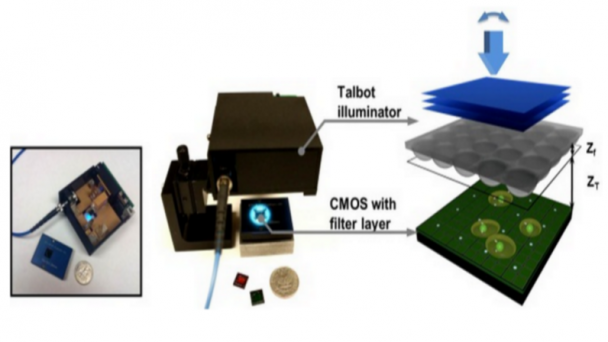
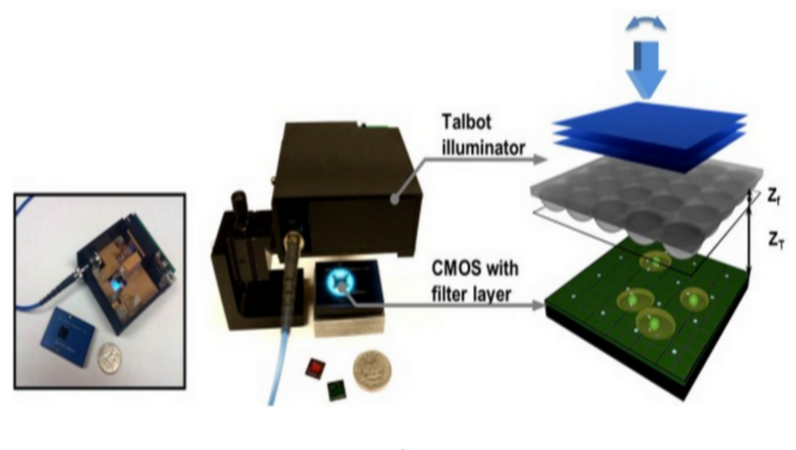
Wide Field-of-view on-chip Fluorescence Microscopy.Because of the high specificity and high sensitivity of fluorescent probes, fluorescence microscopy plays a vital role in modern clinical diagnosis and biological research. However, due to its limited field-of-view (FOV), size, and cost, conventional microscopy is becoming a bottleneck in rapidly emerging and evolving areas such as large-scale genome screening, point-of-care diagnosis, and long-term cell imaging.We have developed a wide FOV on-chip fluorescence microscopy method based on the Talbot effect, termed fluorescence Talbot microscopy (FTM)

Web Information

Website:  biophot.caltech.edu/ BRAIN Initiative Grant – Time-Reversal Optical Focusing for Noninvasive Optogenetics

Contact Information

Email:  chyang@caltech.edu Phone: (626) 395-8922 Address: Moore Laboratory MC 136-93, 262 Moore:

About the Lab

The research of the Biophotonics Laboratory, led by Professor Changhuei Yang, is focused on the development of novel tools that combine optics and microfluidics to tackle diagnostic and measurement problems in biology and medicine. The major techniques that are under development in the laboratory ...

OnAir Post: Biophotonics Laboratory – Caltech

Roukes Group – CalTech

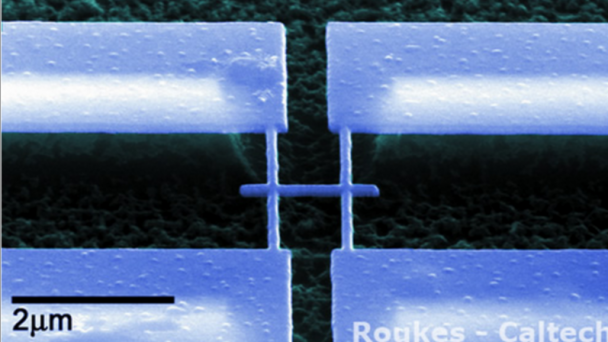
The Roukes Group is working to explore new physics at the nanoscale, and to apply this knowledge to realizing advanced tools for the biomedical and life sciences. Our group's current focus is on (a) next-gen methods for neuroscience enabled by very-large-scale integration of nanoelectronic and nanophotonic devices, (b) single-molecule mass spectrometry and molecular analysis enabled by arrays of nanoelectromechanical systems (NEMS), and (c) on the fundamental physics of NEMS.

OnAir Post: Roukes Group – CalTech

Jasanoff Lab – MIT

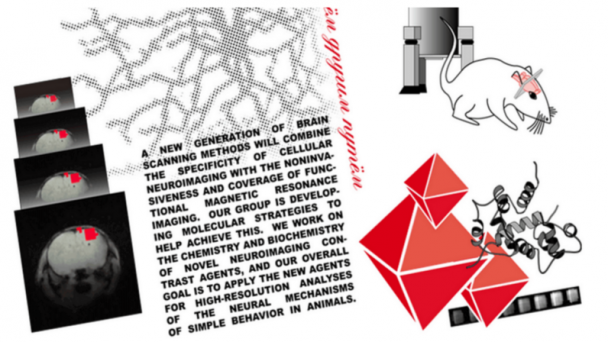
Jasanoff Lab is developing a new generation of functional magnetic resonance imaging (fMRI) methods to study the neural mechanisms of behavior.The Lab's focus is on the design and application of new contrast agents that may help define spatiotemporal patterns of neural activity with far better precision and resolution than current techniques allow. Experiments using the new agents will combine the specificity of cellular neuroimaging with the whole brain coverage and noninvasiveness of conventional fMRI.

OnAir Post: Jasanoff Lab – MIT

Skip to toolbar