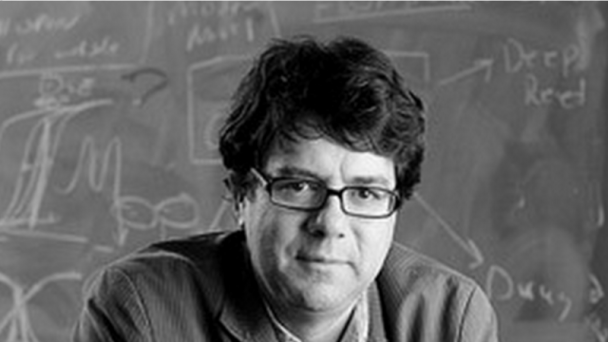
Fritjof Helmchen, PhD – Zurich


Professor, Departement of Neurophysiology, Zurich Brain Research Institute Director, Laboratory of Neural Circuit Dynamics

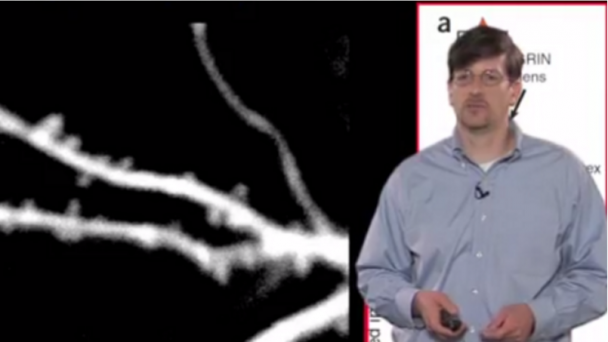
Helmchen is characterizing the properties of individual neurons in vivo and investigate how synaptic inputs are integrated in their dendrites to eventually cause action potentials that are transmitted to target neurons. Using in vivo electrophysiology and 2-photon imaging we perform both intracellular recordings from individual neurons as well as optical measurements of population activity. Development of 2-photon microscopy techniques for high-resolution imaging in living and behaving rodents.


Web Information

Webpage:  neuroscience.ethz.ch/research/molecular_cellular/helmchen Zurich Brain Research Institute BRAIN Initiative Grant – “Multi-area two-photon microscopy for revealing long-distance communication between multiple local brain circuits”

Contact Information

Email: helmchen@hifo.uzh.ch Phone: +41 44 635 3340 Address: Winterthurerstrasse 190 8057 Zurich

Research

Main Goals, Keywords

Principles of single-cell and neural network computation in the mammalian neocortex. In vivo analysis of spontaneous, sensory-evoked, and behavior-related neural activity. Neuron-glia relationships. (Synaptic integration, dendrites, excitability, synaptic plasticity, action potentials, population activity, cortical column, microcircuits)

Group Members

1 professor, 1 scientific coordinator, 5 postdocs, 6 PhD students, 4 technicians

Previous and Current Research

The outside-world is represented in the brain by the concerted activity of neuronal ensembles. We are interested how information is encoded and processed in neuronal assemblies within the local microcircuits of the intact neocortex. ...

OnAir Post: Fritjof Helmchen, PhD – Zurich
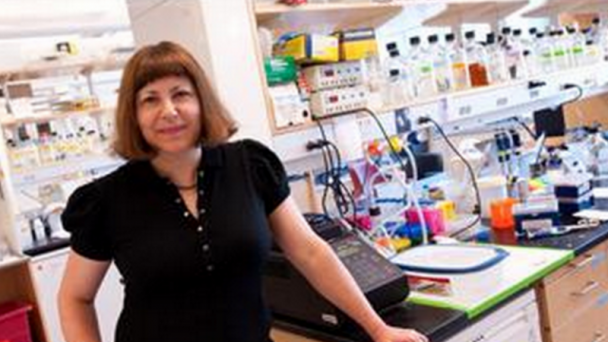
Elly Nedivi, PhD – MIT


Professor of Brain & Cognitive Sciences and Biology, MIT Neuroscience Principal Investigator, Nedivi Lab

The Nedivi lab, part of the Picower Institute for Learning and Memory, studies the cellular mechanisms that underlie activity-dependent plasticity in the developing and adult brain through studies of neuronal structural dynamics, identification of the participating genes, and characterization of the proteins they encode.

Web Information

Department of Brain and Cognitive Sciences page: biology.mit.edu/people/elly_nedivi

Picower Institute for Learning and Memory page:  picower.mit.edu/Faculty/

Lab page: web.mit.edu/nedivi-lab/

MIT Neuroscience: neuroscience.onair.cc/mit-neuroscience/

Contact Information

Email: nedivi@mit.edu

Phone: 617-253-2344

Address: Room 46-3239


Biography

Elly Nedivi received her Ph.D. in Neuroscience from Stanford University Medical School and completed her postdoctoral training at The Weizmann Institute in Israel. In 1998, after two years at Cold Spring Harbor Laboratory, she joined the faculty of the Department of Brain and Cognitive Sciences and the Picower Institute for Learning and Memory at MIT. She also has an appointment in the Department of Biology at MIT.

Selected Awards

Julie Martin Mid-Career Award in Aging Research

Edgerly Innovation Fund Award

Dean’s Education and Student Advising Award

Sloan Research Fellow

NSF POWRE Award

Ellison New Scholar Award


Research

Candidate Plasticity Genes

To understand the cellular mechanisms that underlie activity-dependent plasticity in the developing and adult brain, we are identifying and characterizing the participating genes and the function of ...

OnAir Post: Elly Nedivi, PhD – MIT

Chris Xu, PhD – Cornell

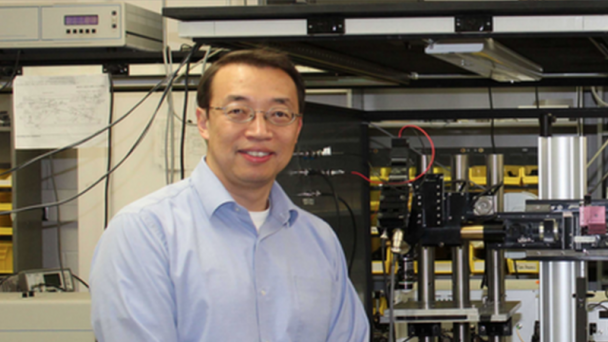
Xu's research has two main thrusts: biomedical imaging and fiber optics. He is exploring new concepts and techniques for in vivo imaging deep into scattering biological specimens, such as mouse brain; developing new medical endoscopes for non-invasive real-time diagnostics of tissues without any exogenous contrast agent and novel optical fibers and fiber-based devices for biomedical imaging and optical communications.

OnAir Post: Chris Xu, PhD – Cornell

Mark J Schnitzer, PhD – Stanford


Associate Professor of Biology and Applied Physics, Stanford HHMI Investigator Principal Investigator, Schnizer Group

Dr. Schnitzer has longstanding interests in neural circuit dynamics and optical imaging focusing on: the development and application of fiber-optic, micro-optic, and nanophotonic imaging techniques for studies of learning and memory; in vivo fluorescence imaging and behavioral studies of hippocampal-dependent cognition and learning; and development of high-throughput, massively parallel imaging techniques for studying brain function in Drosophila.


Web Information

Webpage: stanford.edu/dept/app-physics/cgi-bin/person/schnitzer-mark-j/ Stanford School of Medicine webpage: med.stanford.edu/profiles/mark-schnitzer Stanford Neurosciencs Institute Brain Initiative Grant

Contact Information

Email: mschnitz@stanford.edu Phone: 650) 723-4027 Address: James H. Clark Center – Room W080 318 Campus Drive Stanford, CA 94305


Biography

Education

Harvard University Cambridge, MA A.B. summa cum laude 1988-1992 Physics

Cambridge University Cambridge, UK Certificate 1992-1993 Mathematics Princeton University Princeton, NJ M.A. 1993-1994 Physics

Princeton University Princeton, NJ Ph.D. 1994-1999 Physics (advisor: Prof. Steven M. Block)

Positions and Honors

2008-present Investigator, Howard Hughes Medical Institute; Stanford University.

2006-present Janelia Farm Research Campus, Howard Hughes Medical Institute, Scientific Visitor Program, Ashburn VA.

2003-present Assistant Professor, Dept. of Applied Physics and Dept. of Biological Sciences; Faculty Member, Neuroscience Program, Biophysics Program, Stanford Univ., Stanford, CA.

1999-2003 Member of Technical Staff, Physical Sciences Laboratory, Biological Computation Research Department, Bell Laboratories, Lucent Technologies, Murray Hill, NJ.

1994-1999 Ph.D. Research, with Steven M. Block, Dept. of Molecular Biology, ...

OnAir Post: Mark J Schnitzer, PhD – Stanford

Serge Picaud, PhD – Vision Institute


Head of the Department of Visual Information Processing Vision Institute, Pierre and Marie Curie University

The goal of Serge Picaud’s three-dimensional holography research is to enable Neuroscientists to manipulate neural circuits in order to discover how patterns of activity relate to sensation, perception and cognition. This capability is essential for discovering how communication between neurons gives rise to healthy brain function. These insights will improve our ability to identify effective targets and methods for treating neurological diseases and disorders.


Web Information

Webpage: institut-vision.org/-picaud Brain Initiative Grant

Contact Information

Email: serge.picaud@inserm.fr Phone: 33 1 53 46 25 92 Address: The Vision Institute 17 rue Moreau 75012 Paris – France


Biography

1987-1988 Max-Planck Institut of Brain Research, (Germany,) Pr H. Wässle, 1990 PhD Marseille University, Postdoc, 1991-1995 University of Berkeley (USA) Pr. F. Werblin. 1995-2002 INSERM-ULP Strasbourg (France) Dr Dreyfus – Pr Sahel 2002 – now INSERM-UPMC Paris (France) Pr Sahel

Research

Our team investigates cellular mechanisms in retinal information processing to take advantage of this knowledge to design therapeutic or rehabilitating strategies. This project has first focused on the photoreceptor synapse with a specific emphasis on its inhibitory feedbacks. We thus demonstrated the presence of GABA and glycine receptors in mammalian cone photoreceptors.

In parallel, we examined the pathological role of GABA when discovering the origin for the toxicity of an anti-epileptic drug inhibiting the GABA-transminase ...

OnAir Post: Serge Picaud, PhD – Vision Institute

Albert Baldwin Goodell – Gray Matter Research


Principal Investigator: Gray Matter Research

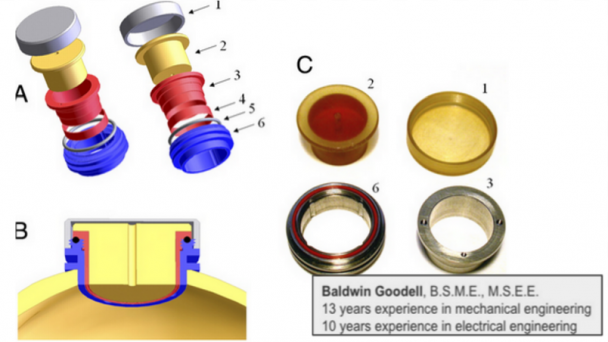
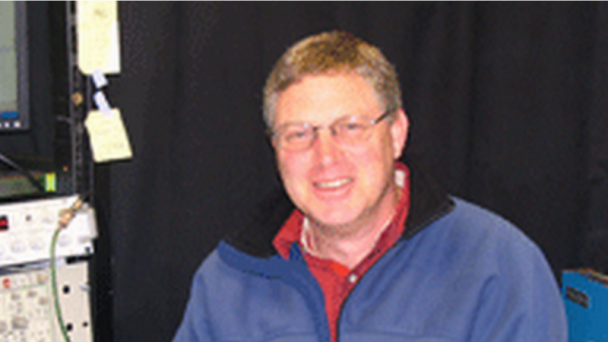
Goodell and his company Gray Matter Research focuses on Microdrive Systems and Recording Chamber Systems. For the BRAIN Initiative, Goodell and his colleagues aim to develop optrodes, which are implantable columns of lights and wires for simultaneous electrical recording of neurons and delivery of light flashes to multiple brain areas.

Web Information

Brain Initiative Grant

Contact Information

Emailbaldwin@graymatter-research.com Phone: (406) 672-1915 Address: Gray Matter Research 920 Technology Blvd. Suite 106 Bozeman, MT 59718

OnAir Post: Albert Baldwin Goodell – Gray Matter Research

Richard Kramer, PhD – Berkeley


Associate Professor of Neurobiology, UC Berkeley Director, Kramer Lab

Kramer uses a combination of optical, electrophysiological, and molecular methods to study ion channels, the proteins that generate electrical signals, and synaptic transmission, the process that allows a neuron to communicate chemically with other cells. Many of our most recent studies utilize novel chemical reagents, designed to manipulate or monitor the function of ion channels and synapses. Current Project: Optical studies of synaptic transmission in the retina.

Web Information

Webpage: vision.berkeley.edu/?p=415 UC Berkeley Helen Wills Neuroscience Institute Brain Initiative Grant

Contact Information

Email: rhkramer@berkeley.edu Phone: (510) 643-2406 Address: University of California Department of Molecular and Cell Biology 121 Life Sciences Addition Berkeley, CA 94720-3200


Research

Measuring and controlling neural activity in the retina

Neurons in the retina communicate using electrical and chemical signals. We use a combination of optical, electrophysiological, and molecular methods to study ion channels, the proteins that generate electrical signals, and synaptic transmission, the process that allows a neuron to communicate chemically with other cells. Many of our most recent studies utilize novel chemical reagents, designed to manipulate or monitor the function of ion channels and synapses.

Current Projects

Optical studies of synaptic transmission in the retina Rod and cone photoreceptors transmit information to other neurons through specialized structures called ribbon synapses. Insights into how these synapses ...

OnAir Post: Richard Kramer, PhD – Berkeley

Vincent Allen Pieribone, PhD – Yale


Professor of Cellular and Molecular Physiology and of Neurobiology, Yale University Fellow, John B. Pierce Laboratory

Dr Pieribone is developing genetically encoded fluorescent probes of membrane electrical potential. These probes allow one to use optical instruments (microscopes) to monitor the electrical activity of neurons. He has also engineered miniature imaging systems that can be head mounted on mammels and allow mobile recording of neuronal activity.

Web Information

Webpage: medicine.yale.edu/bbs/people/vincent_pieribone-3 Fluorogenetic Voltage Sensors website:  fluorogenetic-voltage-sensors.org/ Yale Neuroscience Brain Initiative Grant

Contact Information

Email: vincent.pieribone@yale.edu Phone: (203) 562-9901 x214 Address: The John B. Pierce Laboratory 290 Congress Avenue New Haven, CT 06519


Biography

B.A. New York University, Washington Square University College, Biology and Chemistry, 1986

Ph.D. New York University, Graduate School, Washington Square, Neurobiology, 1992

Research Associate, The American Museum of Natural History Scientific Board of Directors, Mystic Aquarium and Center for Exploration

Research

Research Interests

The brain uses complex and highly parallel computational paradigms to process sensory information, create and retrieve memories, and execute motor actions. The unit of this computing network is the neuron and its attendant synaptic connections. The structure and physiology of the brain makes direct study of these structures in the living organisms very difficult – neurons and synapses are tiny, very delicate, and tightly packed. Our laboratory is dedicated to the study of how neuronal ...

OnAir Post: Vincent Allen Pieribone, PhD – Yale

Skip to toolbar